

Teachable moment for Ontario’s premier
Advertisement
Read this article for free:
or
Already have an account? Log in here »
To continue reading, please subscribe:

Digital Subscription
One year of digital access for only $205*
- Enjoy unlimited reading on winnipegfreepress.com
- Read the E-Edition, our digital replica newspaper
- Access News Break, our award-winning app
- Play interactive puzzles
*First annual payment billed as $205.00 + GST for one year. This annual subscription will automatically renew at $233.00 + GST every 52 weeks (10% off the regular annual price of $259.35). Offer available to new and qualified returning subscribers only. Cancel any time.
To continue reading, please subscribe:
Add Free Press access to your Brandon Sun subscription for only an additional
$1 for the first 4 weeks*
- Enjoy unlimited reading on winnipegfreepress.com
- Read the E-Edition, our digital replica newspaper
- Access News Break, our award-winning app
- Play interactive puzzles
*Your next Brandon Sun subscription payment will increase by $1.00 and you will be charged $17.95 plus GST for four weeks. After four weeks, your payment will increase to $24.95 plus GST every four weeks.
Read unlimited articles for free today:
or
Already have an account? Log in here »
Hey there, time traveller!
This article was published 12/11/2022 (1402 days ago), so information in it may no longer be current.
A week ago, Ontario Premier Doug Ford seemed ready to abuse both legislative due process and the Charter of Rights and Freedoms to quash a strike by education workers that threatened to cripple the province’s public school system. And then, remarkably, Mr. Ford did a U-turn, avoiding a labour disruption and demonstrating that backing down from an unpopular position is a characteristic of good government.
The speed at which Mr. Ford’s Progressive Conservative government backtracked on its battle with 55,000 education workers was breathtaking.
Late last month, Mr. Ford introduced Bill 28, a law that would have imposed a contract settlement on the education workers, made it illegal for them to strike and taken away their right to challenge the law in court. To do all this, Mr. Ford was prepared to invoke the notwithstanding clause, which allows provinces to pass laws that would otherwise violate the Charter of Rights.
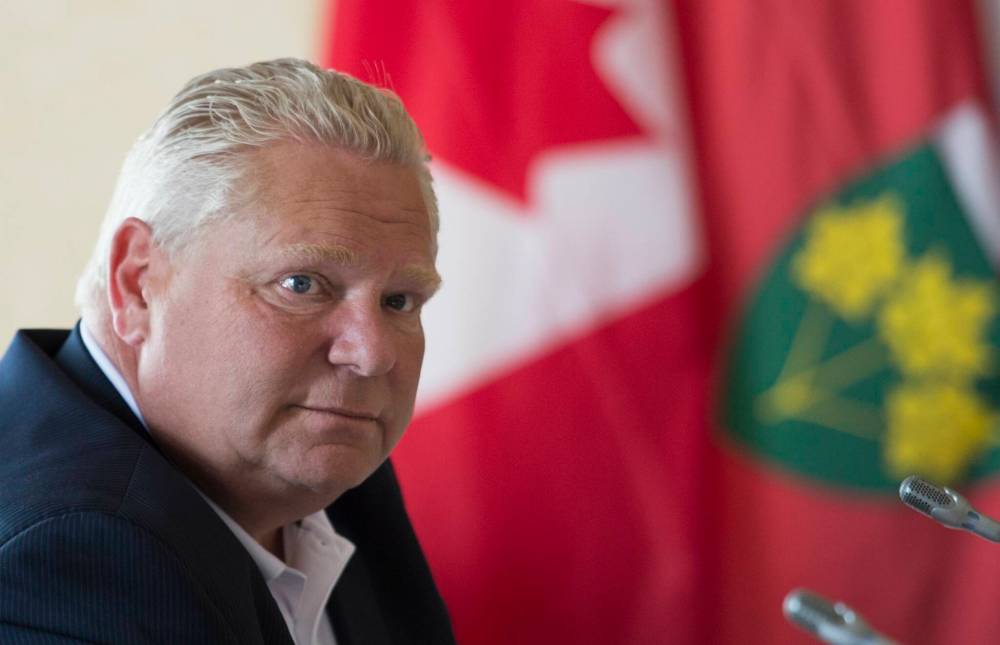
Ontario Premier Doug Ford (Jonathan Hayward / The Canadian Press files)
Mr. Ford’s unilateral attempt to deny custodians, educational assistants, administrative staff, librarians and bus drivers the right to negotiate a contract or go on strike to press their demands was shaping up to be among the ugliest moments in the history of Canadian labour relations.
And then, a moment of clarity.
Despite facing the prospect of $4,000-per-day fines for illegally striking, the education workers did in fact walk off the job, forcing the closure of most schools in the province. After two days that demonstrated the workers would not be discouraged by Mr. Ford’s tenuous legal gambit, the premier announced he would repeal Bill 28 and resume negotiations. That much-needed concession brought the workers back into the schools the next day.
There is still much work to do on reaching a new contract. However, Mr. Ford has already signalled he will submit an “improved offer” when bargaining resumes.
Not surprisingly, union leaders celebrated this turn of events. “The government blinked,” CUPE national president Mark Hancock told reporters. While that may be so, it is important to remember that in blinking, Mr. Ford was also doing the right thing.
Manitobans, meanwhile, are familiar with what it’s like to have a government that will not back down even when it’s doing the wrong thing.

Before he left politics, former premier Brian Pallister passed a law to impose wage settlements on the provincial civil service, but never proclaimed it. He did, however, use the threat of proclamation to stall contract negotiations with major bargaining groups.
Public-sector unions took Mr. Pallister to court and won a stern rebuke of the law. That decision was later overturned on appeal, and more recently the Supreme Court decided, without explanation, that it would not hear the case.
Legal maneuvering aside, the lingering shadow of that legislation and Mr. Pallister’s refusal to adopt a more conciliatory tone continue to hang over public-sector labour relations in this province.
Mr. Ford erred in drafting Bill 28, and was even more wrong in seeking to supersede the Charter to take away the right of education workers to negotiate and strike. His decision to back down and choose another path was the correct one.
Perhaps it will provide what educators call “a teachable moment” for this province’s government.