Resolve and reinvention at a gallop Her career as a jockey cut short by a devastating accident that left her paralyzed, Alyssa Selman found the fortitude to get back in the saddle
Read this article for free:
or
Already have an account? Log in here »
To continue reading, please subscribe:
Digital Subscription
One year of digital access for only $1.44 a week*
- Enjoy unlimited reading on winnipegfreepress.com
- Read the E-Edition, our digital replica newspaper
- Access News Break, our award-winning app
- Play interactive puzzles
*Billed as $5.77 plus GST every four weeks. After 52 weeks, price increases to the regular rate of $19.95 plus GST every four weeks. Offer available to new and qualified returning subscribers only. Cancel any time.
To continue reading, please subscribe:
Add Free Press access to your Brandon Sun subscription for only an additional
$1 for the first 4 weeks*
- Enjoy unlimited reading on winnipegfreepress.com
- Read the E-Edition, our digital replica newspaper
- Access News Break, our award-winning app
- Play interactive puzzles
*Your next Brandon Sun subscription payment will increase by $1.00 and you will be charged $17.95 plus GST for four weeks. After four weeks, your payment will increase to $24.95 plus GST every four weeks.
Read unlimited articles for free today:
or
Already have an account? Log in here »
Hey there, time traveller!
This article was published 16/08/2024 (797 days ago), so information in it may no longer be current.
Alyssa Selman’s life changed in the blink of an eye on June 27, 2015, the result of a catastrophic accident at Assiniboia Downs.
Her 419th career horse race would be her last.
The 29-year-old jockey, who was a trailblazer in a male-dominated industry, was thrown from her mount and suffered a fractured vertebrae and damage to her spinal cord.
Selman, a married mother of two young children at the time, was paralyzed from the chest down.
The Free Press recently caught up with Selman, who is living in the Pembina Valley region of southern Manitoba. Much has changed in the near decade since her devastating diagnosis. But some things — including her love of horses and her passion for riding — have not.
This is her story.
CARMAN — It’s a love affair that began with a bit of mischief.
Selman was seven years old when she secretly began breaking a rule her parents had set for her.
“My mom hated horses. So did my dad. But my uncle had one at my grandparents’ house. They told us kids not to ride it. We weren’t supposed to,” Selman recalled.
“So, of course, I snuck out and rode it. A lot.”
It was a painful learning experience for Selman from her perch on Tory, who was quite happy to be her partner in equine crime.
“I ate a lot of dirt from it,” she said, describing plenty of frequent falls. “But I couldn’t tell them. I would have skinned hands and skinned knees. I knew I couldn’t complain.”
Tory, it turns out, was a bit of a troublemaker. Kind of like Selman.
“Every bad trick that any of the thoroughbreds did, he had already done it,” said Selman.
But they quickly figured it out — as did Selman’s family, especially when she revealed her big life plans at the age of eight.
“I told my dad I’m going to be a jockey,” she said.
He poured cold water on the notion, suggesting genetics might have other ideas. After all, the adults in the family were at least 5-foot-6, including the women.
“He said ‘You’re going to be too tall, you’ll never be a jockey.’ That I was going to be too big,” said Selman.
“Fortunately, I stayed tiny.”
Selman had developed into a terrific rider as she hit her teens, proving to be a bit of a “horse whisperer” with the temperamental Tory and learning some valuable lessons along the way.
Once she turned 18, she faced a career crossroads.
Her original plan was to attend Lakeland College in Alberta to study interior design. But she was also dating a young man from high school who lived nearby and also had a horse, and the two of them got a summer job working as grooms at ASD.
In between making sure the animals were well taken care of, she would occasionally go for rides and caught the eye of a more seasoned track employee.
“He said ‘You look like you could ride,’” she recalled.
This led to increased responsibilities at the track which included galloping the horses in the morning to get them loose and limber.
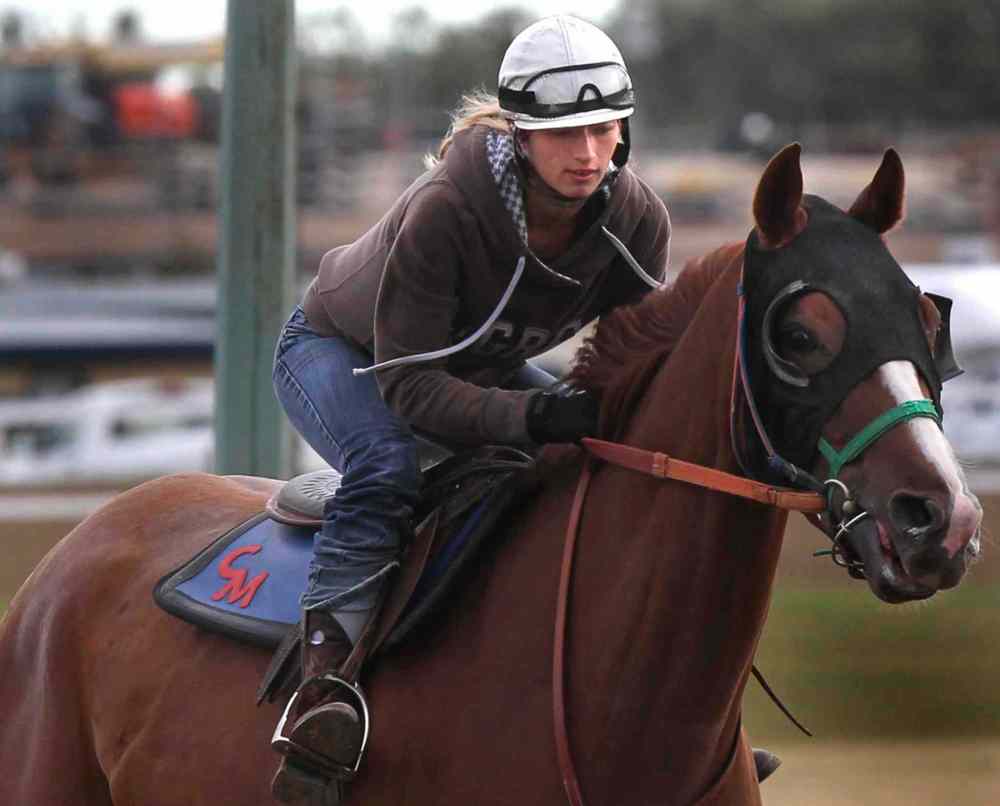
Selman pressed on and got her jockey licence in 2008 — her height had peaked at 5-foot-1 and she maxed out at 93 pounds — and made her debut later that summer at the age of 22.
She’d compete in a total of 26 races that season, with a third-place finish the best she could muster. Four of them, in fact.
However, business picked up in 2009 when Selman was on the mount for 194 races, winning 13 of them and placing in the money (top three) 51 times.
“Alyssa was a bright shining light in the backstretch of Assiniboia Downs,” said Darren Dunn, the track’s CEO.
“Her enthusiasm and love of thoroughbred horse racing could be read on her face daily. She had a very strong work ethic and thirst for learning and improving her craft.”
Sure, her job was inherently dangerous. But it wasn’t the powerful ponies that scared Selman.
“It was the people. I would stress so much about dealing with the people, and then I’d get on the horse and be like ‘Ahh, this is so relaxing,’” she said.
“I liked adrenaline. When you need it, when you want to be out there, when you need that little bit of a rush, it doesn’t seem dangerous.”
Selman had been tossed plenty of times, although never during a race. Those close calls never kept her from coming back for more.
“The horses were fun, the adrenaline, even the bad ones that wanted to kill you — ‘OK, I see where your problem is.’ But the people, the mind games, that was the hard part,” she said.
Unfortunately, Selman learned humans could cause plenty of damage. As she explained, competition can get cutthroat in a performance-based business.
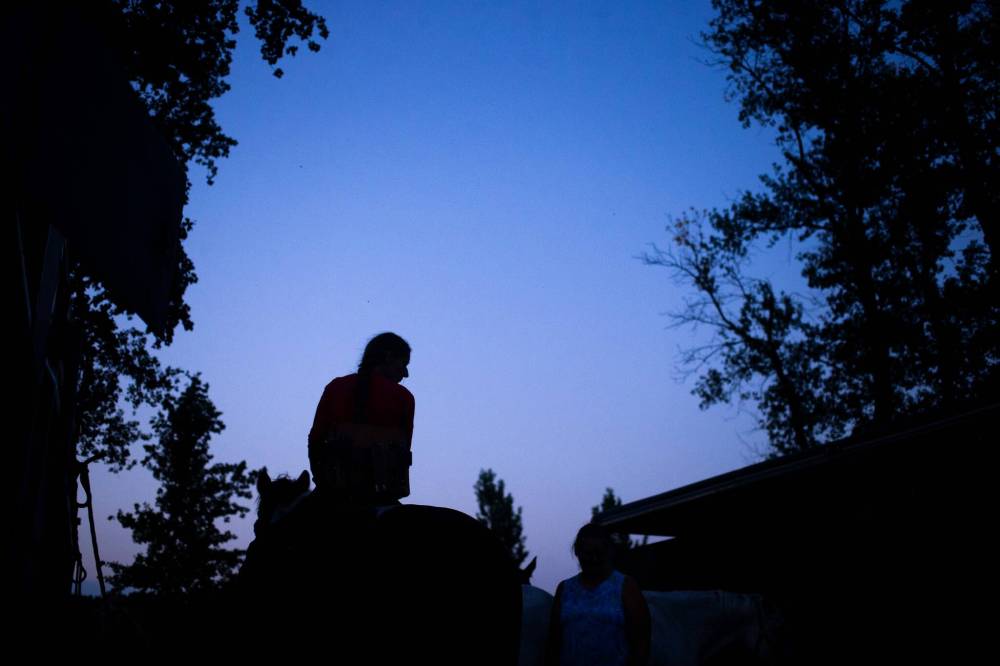
“You basically have to sell yourself to these (trainers). And it can become exhausting,” she said.
The worst were horsemen promising her plum racing spots — but only at a steep personal price.
“You can ride anything in my barn if you sleep with me,” is how she described the type of proposals that would come her way.
“Being the only female there, I got a lot of that. And I got a lot of opportunities that I did not take. Sometimes, I would get cut out because I made s——y mistakes on the track being a young rider. Those ones, I totally deserved. Those were easier to take. But I got cut out of a lot because of personal choices.”
As the 2015 season began, Selman wasn’t sure how much longer she’d keep it up. Then a parent of a seven-year-old son, Amar, and a four-year-old daughter, Ari, she had already scaled back her number of rides over the previous couple of years.
However, she’d never pass up a chance to get on board Jack, one of her all-time favourite thoroughbreds who was racing at ASD under the track name of Lord Jasmond.
One moment, Selman was driving down Portage Avenue, having just taken in a Saturday matinée Cirque du Soleil show. Her children, sister, mother and mother’s boyfriend were with her, all headed towards ASD to watch her race that evening.
Her next memory? Waking up in hospital four days later.
“I don’t remember going into the jockey’s room. I don’t remember race riding. I don’t remember anything else from that day,” said Selman.
In that sense, she was pretty much the last person involved in the horse-racing industry to learn what happened regarding an accident Dunn described as the worst in ASD history, one which “was gutting to our tight-knit community.”
While guiding Lord Jasmond down the final stretch in the sixth race, the horse clipped heels with another entrant directly in front of him.
“He was a very, very strong horse. Even in the morning galloping with him, it took everything to get around at normal speed, because he had one purpose: he wanted to run flat-out,” said Selman.
They had been together plenty of times in the past, always without incident. But on this night, one little mistake would have major consequences.
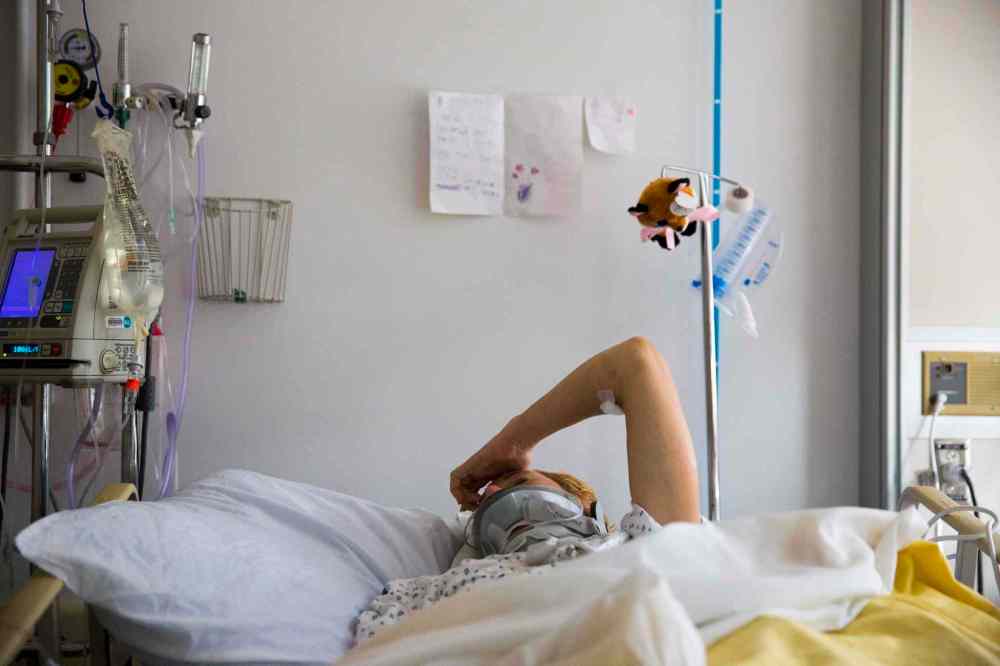
Selman has watched a replay countless times.
“I like that I can see that I didn’t do something as simple as trip on my shoelaces. I didn’t just make this silly mistake. I earned this mistake. I owned this mistake,” she said.
The horse was blind in his right eye, something Selman figures played a role in what happened. She was doing a quick over-the-shoulder check behind her when Jack got a little too close for comfort.
“He was a puller,” she said. “For him not to see out of that side, he would have kept pulling thinking it was clear, not realizing how close the horse (in front) was. That’s the most logic I can come up with. Maybe he just misjudged something because of that. Horses don’t just usually run into each other like that.”
Both tumbled to the ground, with Selman fortunate Jack didn’t land on top of her.
“I thought she was dead,” her sister, Amy Scott, said. “I ran out and fell on the ground, I was bawling in tears, I thought she was dead for sure. An absolute crumpled mess on the ground. A lot of panic. A lot of fear.”
The horse managed to come out unscathed, even winning a race a couple weeks later. Selman, however, was not nearly as fortunate.
The news hit hard and felt like a death sentence.
“I didn’t believe it. I simply did not believe,” Selman said of being told she’d never walk again.
“I remember meeting up with the surgeon and he’s like ‘This is going to be how it is the rest of your life. It will not get any better. Get used to it and learn to live with it.’”
Just getting to the point of leaving the hospital required tremendous work and patience.
1.jpg?w=1000)
“My first physio was to sit up for just five minutes a day. Just sit upright and not lie down. I remember that being the most gruelling thing, and I wanted to throw up. And I did,” she said.
“That was probably the scariest part. I was like, ‘I can’t even do this.’ If I can’t even sit up for five minutes a day, what is my life going to be like? What is the point from here?”
Fortunately, she had a supportive family and plenty of friends, including the local horse-racing community, rallying around her.
“It was huge. I had people that were there daily to help me and check in on me,” she said.
Selman credits one particular doctor in physiotherapy for planting a positive seed when he showed her videos of several paralyzed individuals participating in sports such as hockey and skiing.
He also brought in another former patient to speak directly with her, demonstrating how he easily got into and out of his truck and assembled his wheelchair.
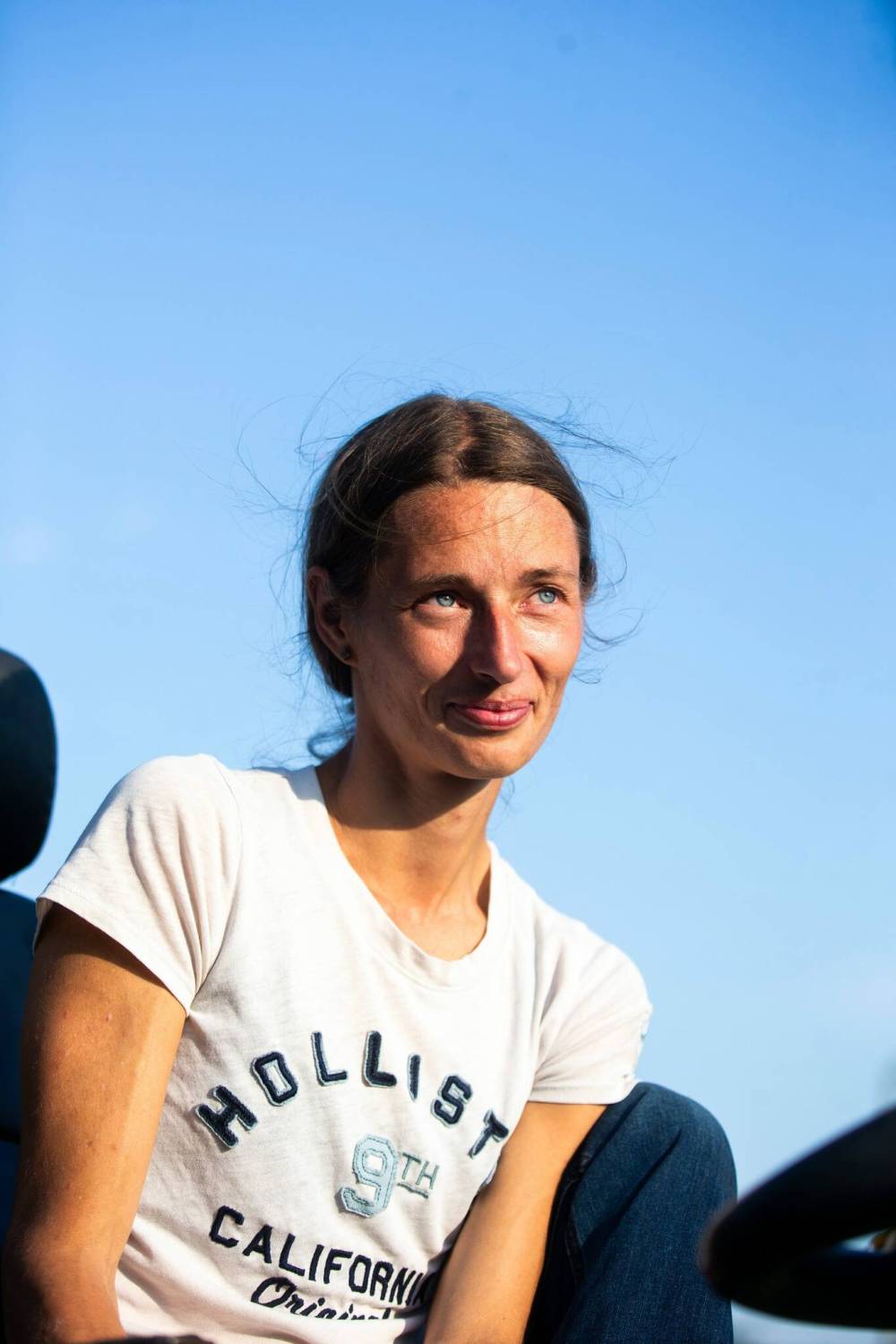
“(The doctor) was very motivational. He was like ‘This isn’t going to set you back too far.’ He kept your mind going forward on all these possibilities,” said Selman.
She was released from the Health Sciences Centre about three months after first going in, facing a whole new world which included a necessary move.
Her old house in St. Lupicin, Man., a two-story property with stairs everywhere, was not going to work. The first couple months were spent living with her mother and sister, relying on them for absolutely everything.
“I was in a slump there,” said Selman. “I couldn’t do anything for myself.”
But then a beacon in the form of a wheelchair-accessible property hit the real-estate market near Carman, close to all her family and with all the accessibility amenities she’d need for her new life.
Multiple fundraisers launched by family and friends resulted in more than $118,000 coming her way, which was used as a down payment for the four-year-old home which sits on nearly four acres.
“I think it was therapeutic for everyone in that they were able to help even in some small way while still processing the shock of what happened,” said Dunn.
Related Articles
Donations pour in to help injured Manitoba jockey1.jpg?w=100)

.jpg?w=100)

Selman’s mental health continued to improve after the move, which came one day before her 30th birthday. And so, too, did her physical health.
“It didn’t take me long to get to the maximum mobility I was going to have,” she said.
Other freedoms began to follow, including getting hand controls in her vehicle which would allow her to drive.
But then came another unexpected development — the end of her marriage.
Her husband, a fellow jockey at ASD, eventually moved to Toronto to pursue his career and she didn’t stand in his way.
“We’re still on good terms. Woodbine is a bigger, better track. He’s out there chasing dreams,” she said.
“He took all of this harder than I did and was not the best support. He handled the stress of the situation much worse than I did, and I couldn’t handle his reaction to it.
“He did not know how to deal with his emotions and feelings towards it, and the gravity of the situation and how it affected him. He was very overwhelmed with how it affected him.”
It took a couple years for Selman to really kick her own life back into gear.
“And to get over the emotional part of it and just move on,” she said.
“You’d be driving down the road and seeing people walking and you feel sorry for yourself just looking out the window. But then you have to find things to do. Something you can be good at, something you can do, some way to progress. Otherwise, you end up just feeling stuck. Stuck in the spot, feeling like you can’t do anything.”
Working in her garden and sketching helped pass the time — to a degree. But faced with figuring out the rest of her life, Selman looked to a familiar source when mapping out her future.

Animals.
She had one dog, one cat, and one horse to her name when she moved into her new residence.
“That multiplied very, very quick,” said Selman.
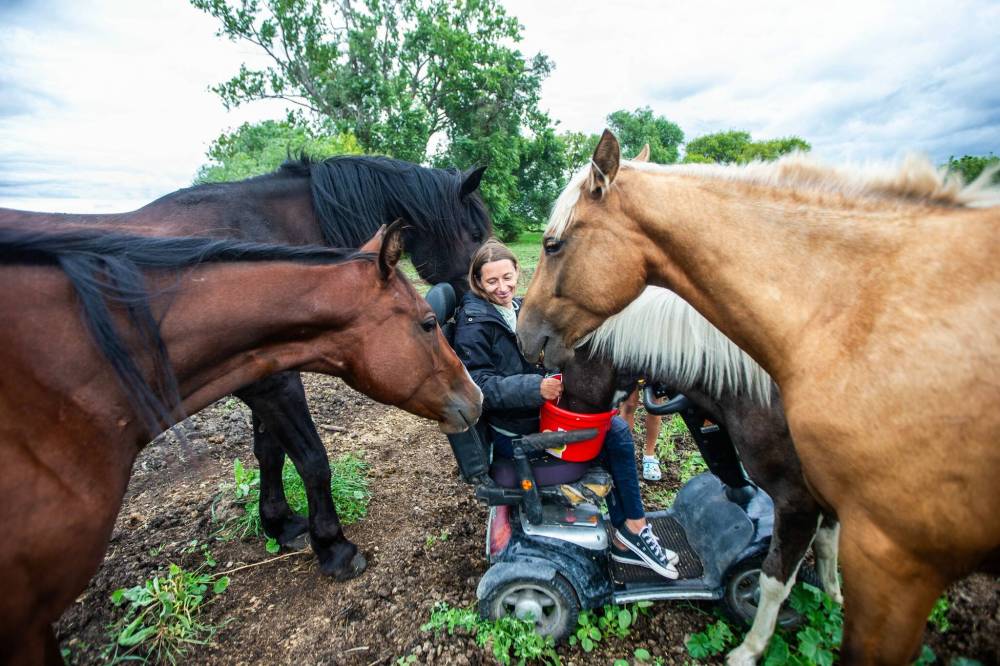
Fast forward to the present day and there are now nearly a dozen horses under her care — several of which she owns, a few belonging to other family members, and the others which are housed on behalf of friends and neighbours.
She is also the owner of 11 pet dogs — seven Catahoula Leopards (two males, five females) and four Miniature Pinschers (one male, three females), which are the source of the ongoing breeding business she’s been running for the past five years.
At times, such as last week, there were 14 additional puppies from two recent litters on her property waiting to be adopted.
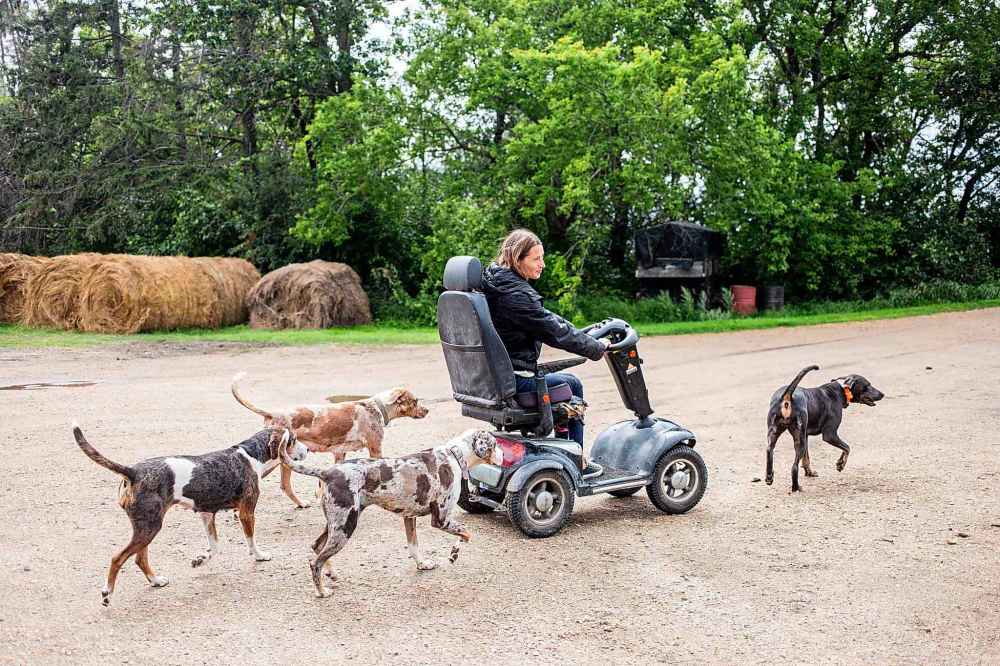
“It helps pay the mortgage,” said Selman. “And it keeps me sane, it keeps me busy.
“The more you end up feeling sorry for yourself… I think in this situation, that would be most people’s biggest problem. These guys sure keep you busy.”
One of her daily highlights is to load all the adult dogs into her car and drive about eight kilometres up the road.
“Then I let them out and they all start running back towards the house, with me following them in the car,” she said.
“There’s no houses or anything in between, but if a vehicle comes down one of the roads, I honk the horn and they all circle and get back in.”
As for her human family, Selman’s parents, as well as her sister and brother, all live in Carman.
It takes a village, and Selman’s is quite mighty. That was proven once again last year when a fundraising drive netted more than $11,000 which was used to purchase a much-needed new lightweight wheelchair.
She would never walk again. But Selman was determined to ride.
“I don’t think I ever stopped thinking, probably right from the hospital, that if I get out I’m going to have to get on a horse,” she said.
No hesitation? No apprehension?
“There was no fear mechanism that ever said not to. It never activated,” she said. “It was not something I ever questioned whether I would do.”
Her brief return to the saddle came about a year after her crash.
“It was not as exciting as you’d want it to be,” she said, describing how family members lifted her up and placed her on a horse named Max.
“It was like ‘Well, I can sit here, it’s really nice and that’s all.’ It was not exciting. I could not do anything independently or I would have fallen off.”
A far cry from her former life, and one that led to a few good cries.
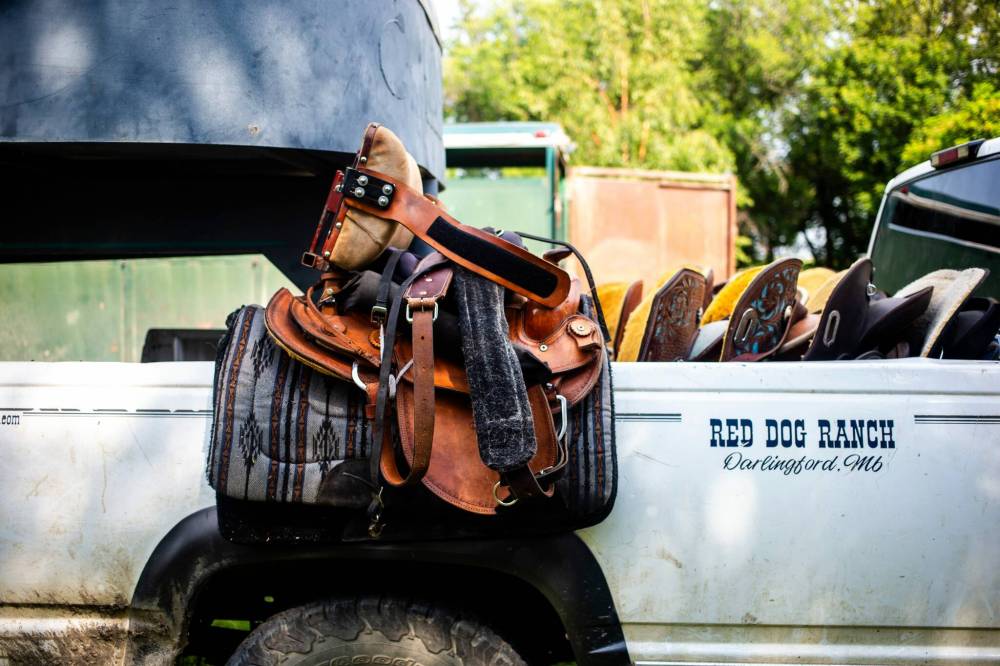
However, everything changed a few months later when she found a specialized saddle online, courtesy of a manufacturer in Arkansas who focused on equipment for people with disabilities.
She made the 4,000-kilometre round-trip drive with her grandmother to pick up it, and the $4,800 investment would prove to be one of the best ones of her life, opening the door to actually getting in motion.
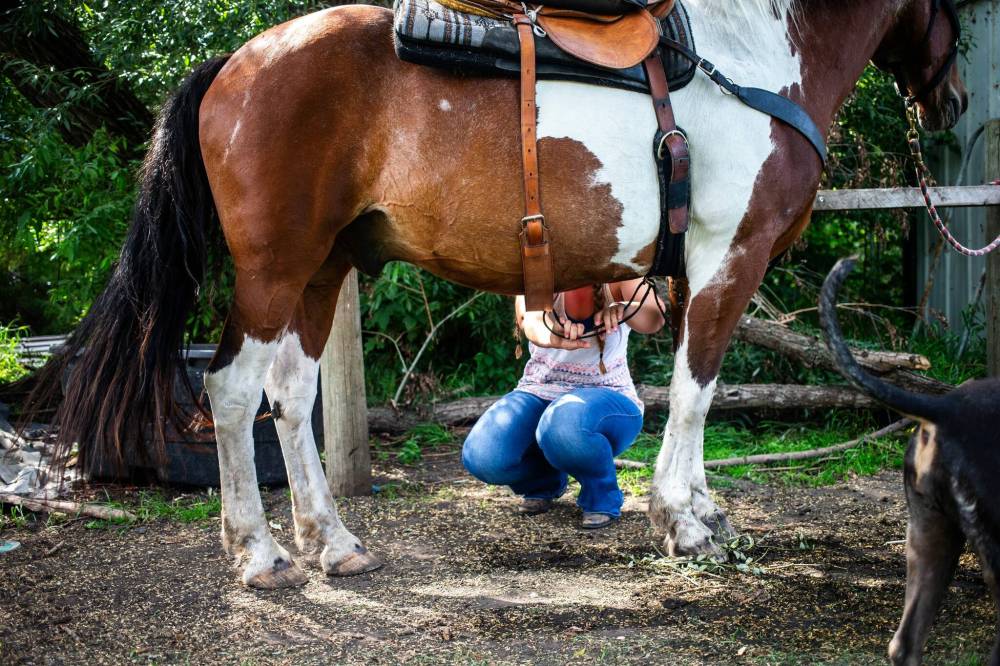
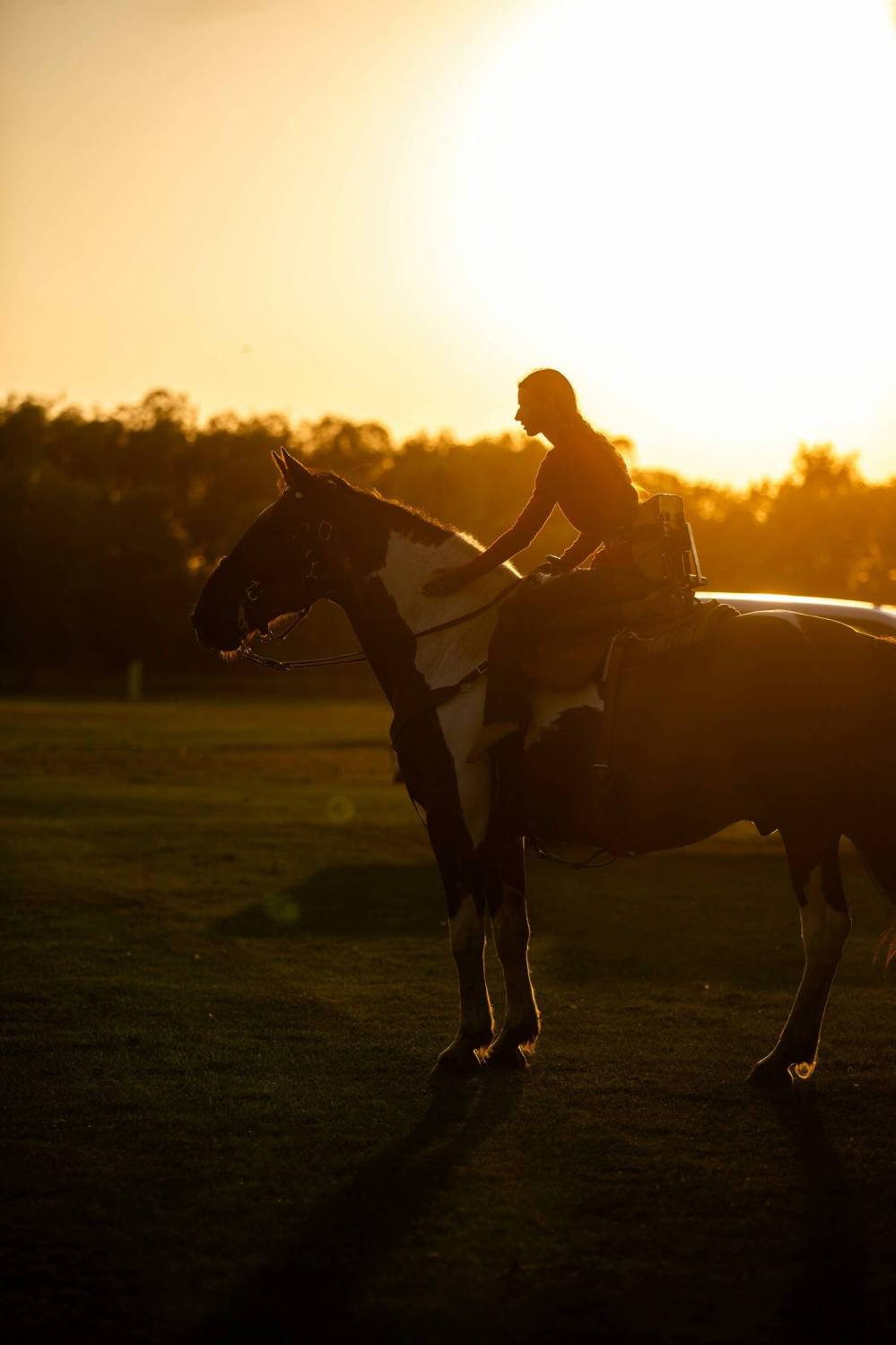
So, too, would the $500 she spent to purchase Duke, a beautiful Belgian Paint horse put up for sale by a Beausejour woman who had used the horse to give rides to children and people with special needs at local fairs and events.
It was the beginning of a beautiful relationship.
Selman was overly ambitious at first, embarking on a six-hour trail ride that left her with pressure sores all over her legs which required medical treatment.
She channelled her inner-MacGyver and made several tweaks to the saddle — using foam, gel cushions and even cut-up pool noodles to enhance the support.
“We’ve souped it up and now it’s pretty good,” she said.
It hasn’t all been smooth riding. There have been several spills, most notably one near Souris down a steep embankment in which Selman slid forward in her saddle and tipped over the front of Duke, hanging upside-down over his head.
Her legs, of course, were unable to stop her.
“I’m thinking ‘OK, I might die here, it’s been fun,” she said. “Everybody else on the ride was screaming, but I didn’t have it in me to scream.”
Her cousin ultimately came to her rescue, pulling her to safety and then piggy-backing her down the rest of the descent while their two horses made the rest of the trek without riders and waited for them at the bottom.
Selman and Duke also took a tumble during a late-night ride through a field in which they hit a grass mound.
“He’s big and heavy and clumsy. He fell on me,” she said. “I put my hand out to brace myself from this 1,600-pound horse. I thought I broke it.”
Soft-tissue damage was the diagnosis.
“At this point I’m down to one limb,” Selman said with a laugh. Family members helped her with basic daily tasks including dressing, cooking and cleaning until her arm was fully healed weeks later.
There was also another time when Duke tripped on some gravel, causing both of them to briefly fall before the horse got back up, Selman now flailing at his side “like a puppet” until her sister could set her upright.
One of her legs took the brunt of the damage that day, leading to cellulitis, which is a bacterial skin infection.
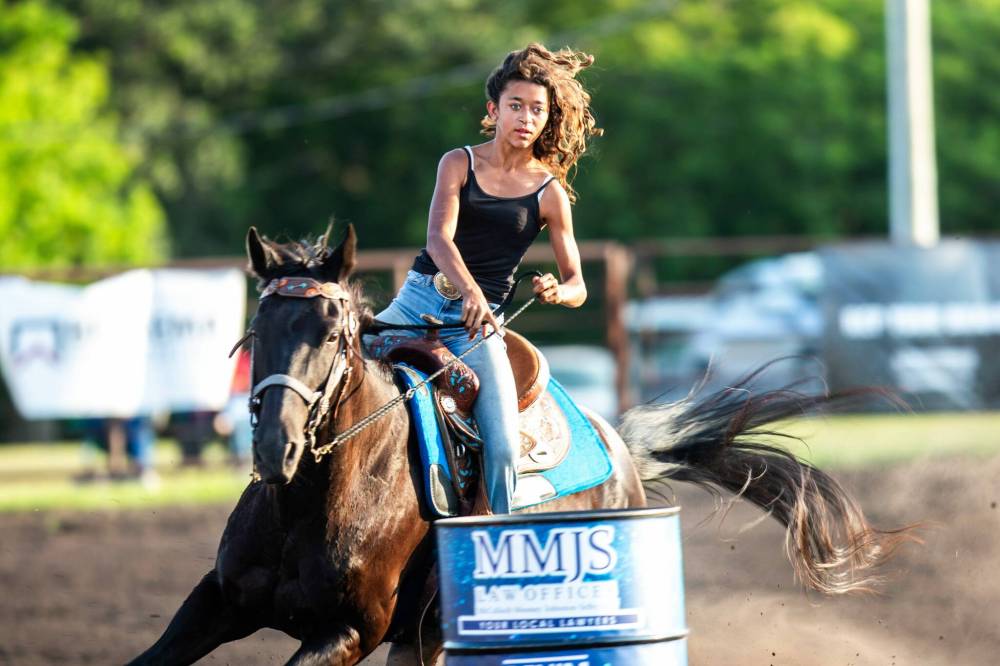
None of the above has caused Selman to consider giving it up. In fact, she’s now encouraging 13-year-old Ari to pursue her own dream of one day riding horses for a living.
“As a parent we have to pass on our skills. If she chooses to do something else, at least I have passed on my knowledge of this,” she said.
And what about all the bad actors she encountered at the track in her time?
“She will see it. I’ll prepare her, letting her know these guys are out there — don’t take that road,” she said.
Selman has no regrets about the career path she chose, even if studying interior design would have been the safer option.
“I look back and think well, there’s no way that would have been satisfying at all. Like OK, I could still walk. But would I hate it?” she said.
Her career stats read as follows: 419 races, with 25 wins, 33 places and 45 shows, and career earnings just north of $125,000.
“She continues to be thought of so highly out here at ASD and is always a very welcome addition to a race night when she stops by to say hello and check in on our sport,” said Dunn.
That’s only happened a couple times, and not for many years.
“I don’t know if I’d say it’s painful, but it’s not the same. I wanted to ride the horses. I wanted to be on them. Just watching them is not the same,” said Selman.
Advancements in technology have created hope for many in her situation, but she isn’t holding her breath waiting on a miracle.
“People are really optimistic on when they’re going to come up with a solution (for paralysis),” she said. “I am not.
“I’m optimistic it’s going to happen someday. I just don’t think it will be a day when I’m in the age category to make it relevant.”
That said, there are times when her mind has other plans — particularly when she’s asleep.
“Every once in a while I’ll have a dream that I’m up and walking,” she said. “And then I’m surprised when I wake up and it’s like ‘Ah, man, really? It’s just a dream?’”
It’s a picture-perfect mid-August evening in Carman, and seemingly the entire community has come out to the local Tuesday night Denim & Dust Barrel Racing Series that has been running weekly all summer.
There are categories for kids under 10, youth aged 11-16 and an “open” event for more-experienced riders.
A typical night will have about 100 riders and their horses fill the fairgrounds to see who can work their way the quickest around three large barrels spread around a dirt track.
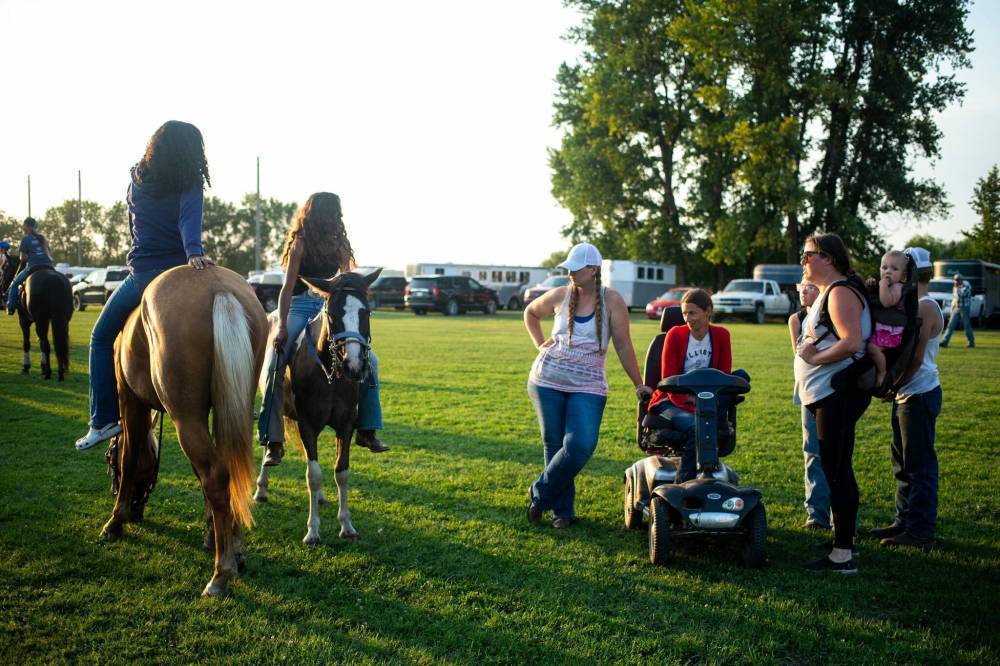
Selman has been attending regularly with her daughter and five other teenage family members and friends to cheer them on as they compete. She’s taken all the girls under her wing, as they regularly go on trail rides together (along with Selman’s sister and a few other adults).
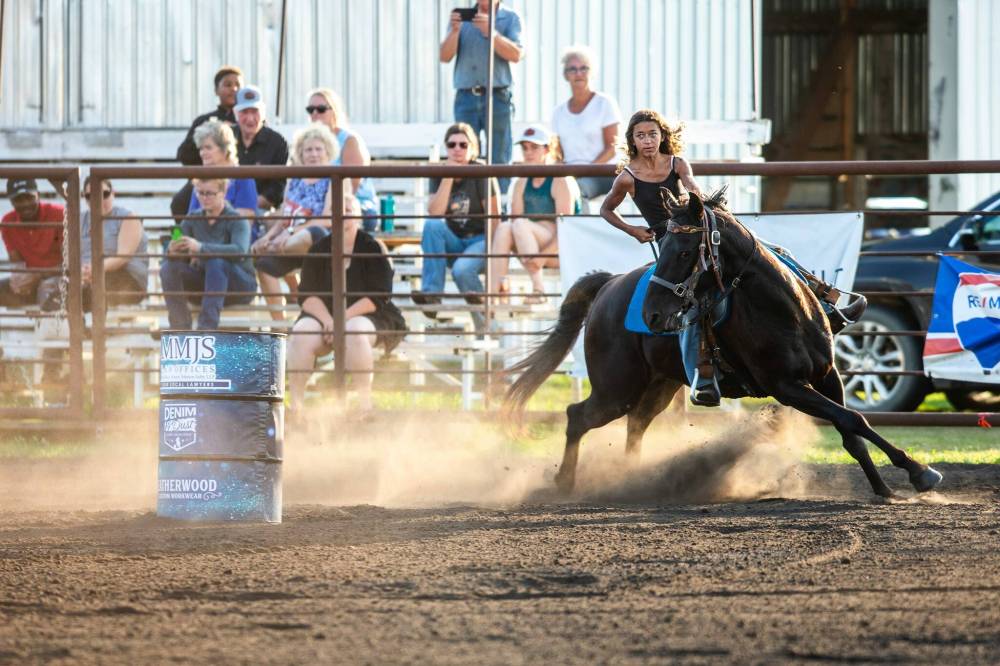
“She’s giving them a real sense of purpose,” said family friend John Teichroeb. “She’s doing something for the betterment of everybody. And something she knows and is good at, she’s passing on her knowledge.”
The improvements in the girls are noticeable, particularly on this night when several — including Ari — hit personal best times. Nobody is cheering louder than Selman, who positions herself in her wheelchair along the rail.
Her pride is evident.
“This is a great day,” Selman said.
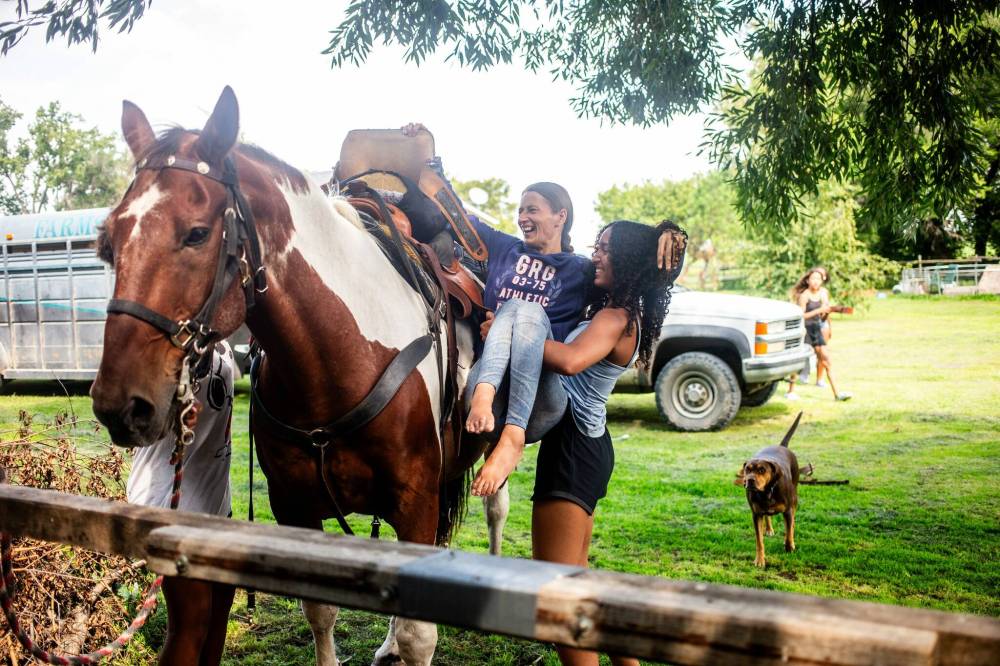
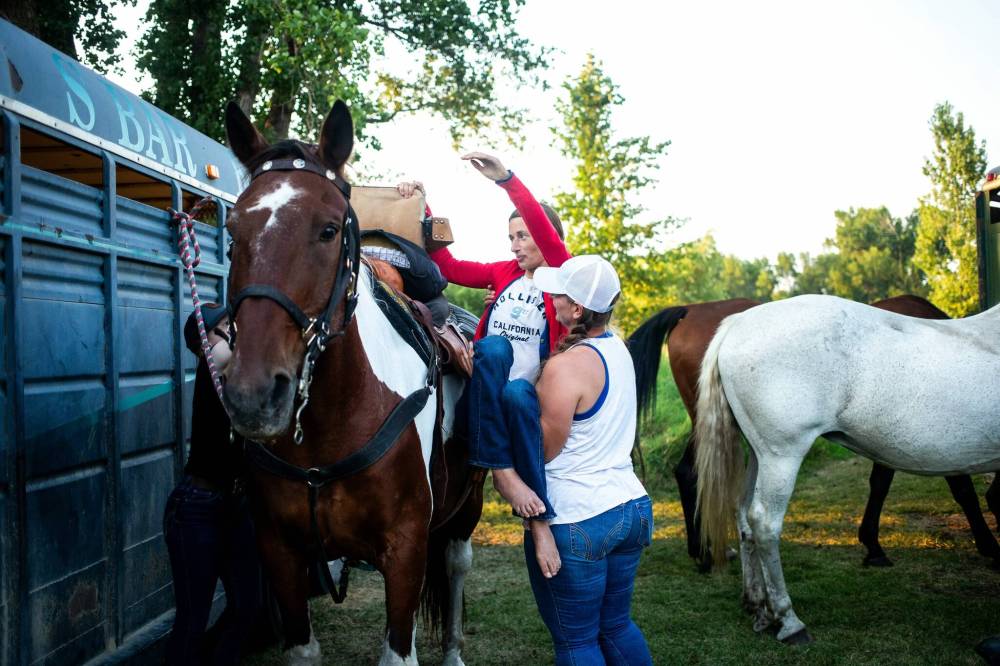
It’s about to get even better. Because when the youth competition is wrapped up and the open event is ready to begin, Selman makes her way back to the horse trailer, is plucked out of her wheelchair by her sister and placed on the back of Duke.
For the first time in years, she’s going to race.
No, it’s not a stake race at ASD. That won’t ever happen again. But considering how far she’s come in less than a decade, this is something to celebrate.
“My sister sets a very courageous example for everybody around her,” said Scott.

“It’s motivational. She doesn’t feel sorry for herself. She doesn’t feel limited. It’s never ‘Are we going to do it?’ but ‘How are we going to do it?’
“I think the things they see her do make them want to work harder. The way that she overcomes everything, it makes them think there isn’t a ‘We can’t,’ because she’s doing it.”
The obstacle for Selman was never the $40 entry fee, but rather her own insecurities at doing something so public.
But she figures she owes it to her daughter and the other girls to lead by example, especially with this being the final Tuesday event of the year.
Selman, now 38, isn’t expecting much, saying she’s not even sure the stubborn 18-year-old Duke will know what to do. He’s used to riding with multiple horses, and a solo act like this in the middle of an otherwise empty track may have him looking for the nearest exit.
The sun is just starting to set when the track announcer says “Entrant No. 22, Alyssa Selman.” It receives the loudest ovation of the evening, by far, with plenty of fellow competitors wishing her well.
It takes Duke a couple seconds to initially get going, but once he does, it’s a beautiful thing to watch.
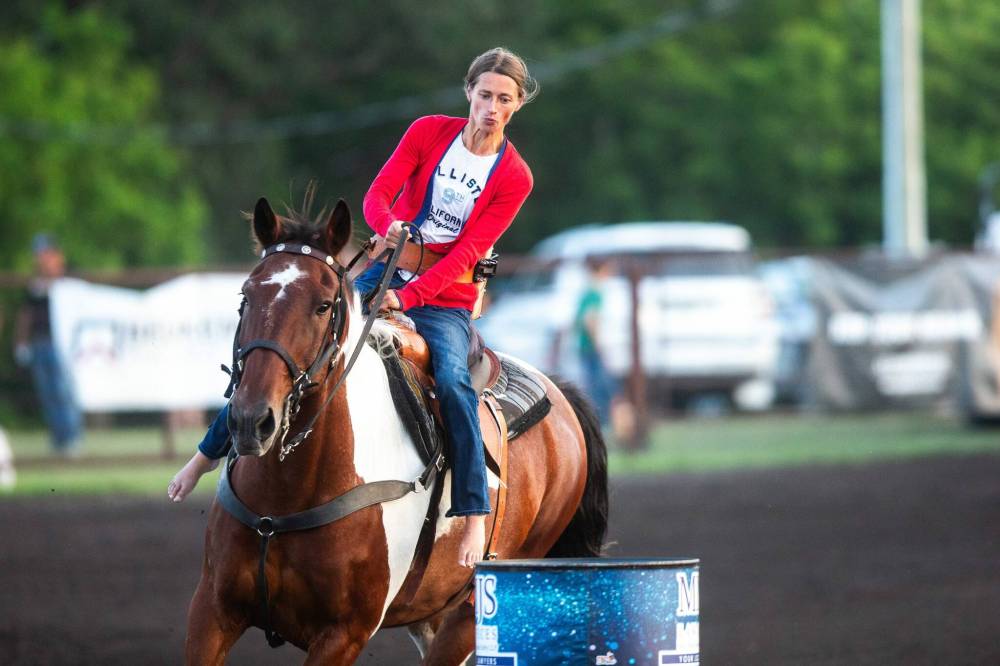
Selman is in her element, her specialized harness keeping her from bouncing too high as her legs swing to the side following the first hard cut around a barrel.
He’s picking up speed — and confidence — as they hit the second and then the third, and is now in a full-on sprint as they cross the finish line.
The smile on Selman’s face says it all.
“So flippin’ fun!” she yells out.
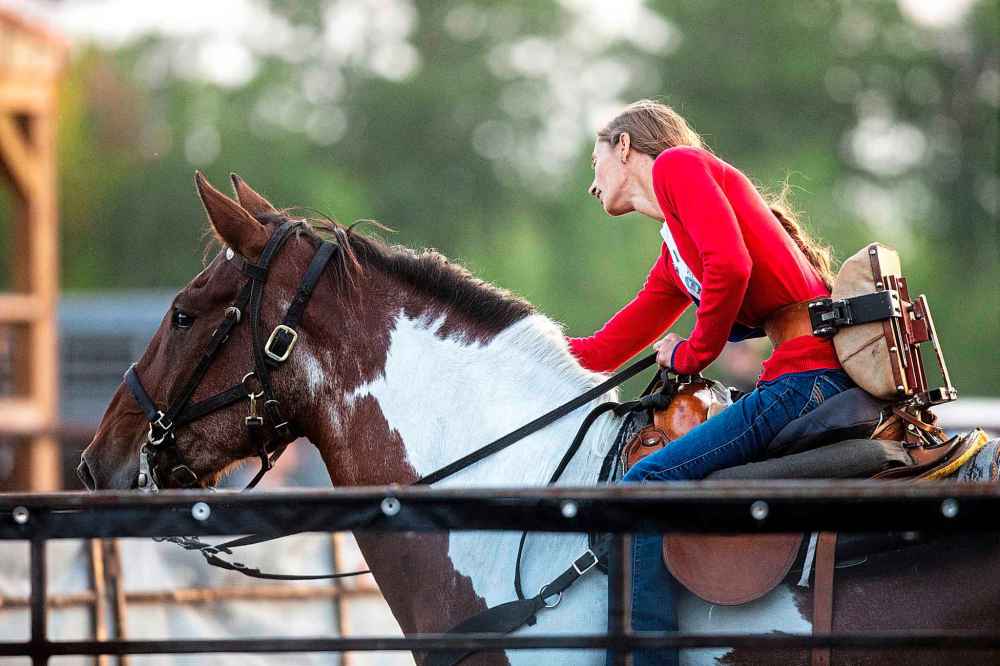
Her official time of 38.055 seconds won’t come close to cracking the top three and getting her some prize money. You need to be sub-20 seconds most nights.
But make no mistake: This is a major win.
“He actually knew more than I thought he would. He surprised me,” said Selman, who is already thinking of what comes next.
“I think I would be ready to ask more of him now that I know. I’m so glad I did it. I’m going to do it more next year.”
Scott isn’t surprised to see the sister she once thought was dead on a track now beaming with pride in her rightful place on the back of a horse, paralysis be damned.
“It’s pretty awesome, I’m not going to lie,” she said.
“I saw her at the very lowest. Gradually, she’s been stepping it up. Accomplishing something always makes you feel better.
“And riding is her life. Her life does not exist without horses.”
mike.mcintyre@freepress.mb.ca
X: @mikemcintyrewpg

Mike McIntyre is a sports reporter whose primary role is covering the Winnipeg Jets. After graduating from the Creative Communications program at Red River College in 1995, he spent two years gaining experience at the Winnipeg Sun before joining the Free Press in 1997, where he served on the crime and justice beat until 2016. Read more about Mike.
Every piece of reporting Mike produces is reviewed by an editing team before it is posted online or published in print — part of the Free Press‘s tradition, since 1872, of producing reliable independent journalism. Read more about Free Press’s history and mandate, and learn how our newsroom operates.
Our newsroom depends on a growing audience of readers to power our journalism. If you are not a paid reader, please consider becoming a subscriber.
Our newsroom depends on its audience of readers to power our journalism. Thank you for your support.