A Canadian league of their own The Pitch rolls into Winnipeg on Wednesday
Read this article for free:
or
Already have an account? Log in here »
To continue reading, please subscribe:

Digital Subscription
One year of digital access for only $205*
- Enjoy unlimited reading on winnipegfreepress.com
- Read the E-Edition, our digital replica newspaper
- Access News Break, our award-winning app
- Play interactive puzzles
*First annual payment billed as $205.00 + GST for one year. This annual subscription will automatically renew at $233.00 + GST every 52 weeks (10% off the regular annual price of $259.35). Offer available to new and qualified returning subscribers only. Cancel any time.
To continue reading, please subscribe:
Add Free Press access to your Brandon Sun subscription for only an additional
$1 for the first 4 weeks*
- Enjoy unlimited reading on winnipegfreepress.com
- Read the E-Edition, our digital replica newspaper
- Access News Break, our award-winning app
- Play interactive puzzles
*Your next Brandon Sun subscription payment will increase by $1.00 and you will be charged $17.95 plus GST for four weeks. After four weeks, your payment will increase to $24.95 plus GST every four weeks.
Read unlimited articles for free today:
or
Already have an account? Log in here »
Hey there, time traveller!
This article was published 26/01/2026 (237 days ago), so information in it may no longer be current.
Diana Matheson knew it was only a matter of time before a professional women’s soccer league would launch in Canada — but she got tired of waiting.
The idea for a league had been floating for decades.
Matheson, a two-time Olympic bronze medallist with the Canadian women’s national soccer team, remembers being a part of a contingent of active players that advocated for one back in 2007, and then several times again throughout her 14-year pro career.
FERNANDO VERGARA / THE ASSOCIATED PRESS FILES Despite the Canadian women’s team winning Olympic gold in Tokyo, it would take another four years for a pro league in Canada.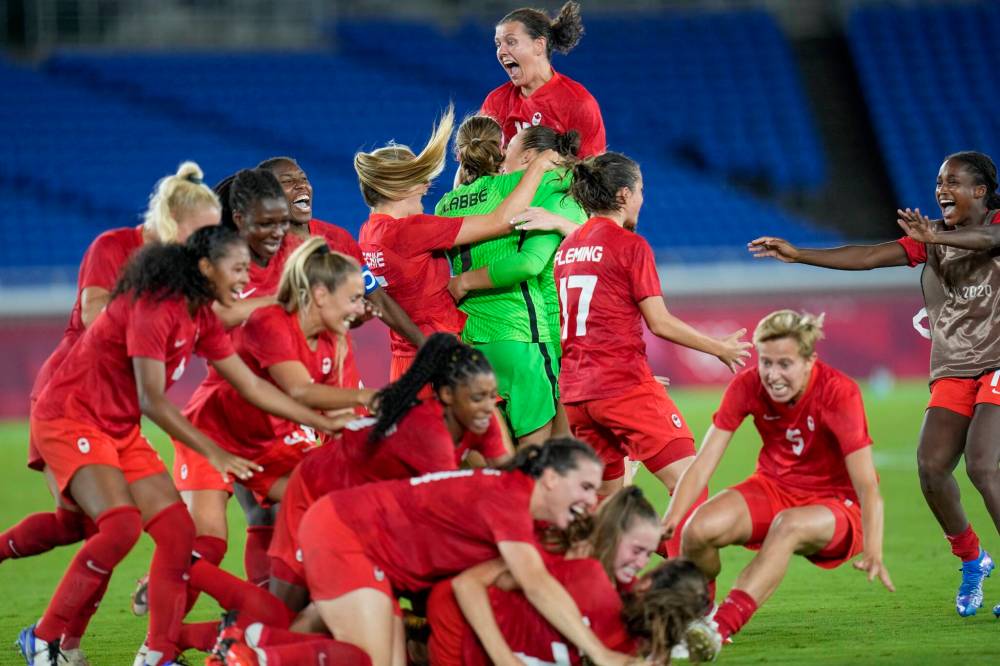
The Pitch
What: A free film screening and panel conversation about what led to the creation of the Northern Super League
When: Jan. 28, 6-8:30 p.m.
Where: Canadian Museum for Human Rights (Bonnie & John Buhler Hall)
Who: Former Canadian women’s national team soccer players, Diana Matheson and Desiree Scott, are hosted by moderator Sara Orlesky
How to attend: tickets can be purchased online at humanrights.ca
Haiti was the only other country participating in the World Cup that didn’t have a league, but there wasn’t a rush to change that.
The players’ pleas were almost always met with a pledge to work on something in the near future. To the surprise of no one, those promises stalled — just one example of the inequity that existed in Canada’s sports landscape, one filled with systemic discrimination toward women.
Not long after the Canadian Soccer Hall of Famer retired in 2021, Matheson enrolled at Queen’s Smith School of Business and another program through the Union of European Football Associations to understand the business side of soccer.
That’s when the idea for the Northern Super League was born.
“It was during the two years of school when I was doing a whole bunch of independent work on the business model of the league, and talking to tons of people, that it became really clear that nobody was actually working on anything,” Matheson told the Free Press.
“That kind of led to the light bulb of, ‘If we’re going to make this thing happen, we just got to start it ourselves.’”
“That kind of led to the light bulb of, ‘If we’re going to make this thing happen, we just got to start it ourselves.’”
The easier route — to have a pair of Canadian teams join the established National Women’s Soccer League in the U.S. — was always an option to pursue, but Matheson and other members of Project 8, the NSL’s founding organization, were adamant that Canada — a country that had proven to compete with the best countries in the world — deserved more.
“We went the harder route,” said Matheson, who, along with business partner Thomas Gilbert, founded Project 8. “We didn’t just want to be part of a U.S. league; we wanted to build in Canada and build one of the best leagues in the world. So it’s a good story about Canada, too, at a time when I think we’re looking for those things.”
SAMMY KOGAN / THE CANADIAN PRESS FILES Northern Super League founder Diana Matheson has spent her retirement advocating for a Canadian women’s soccer league, with her dream becoming a reality last year.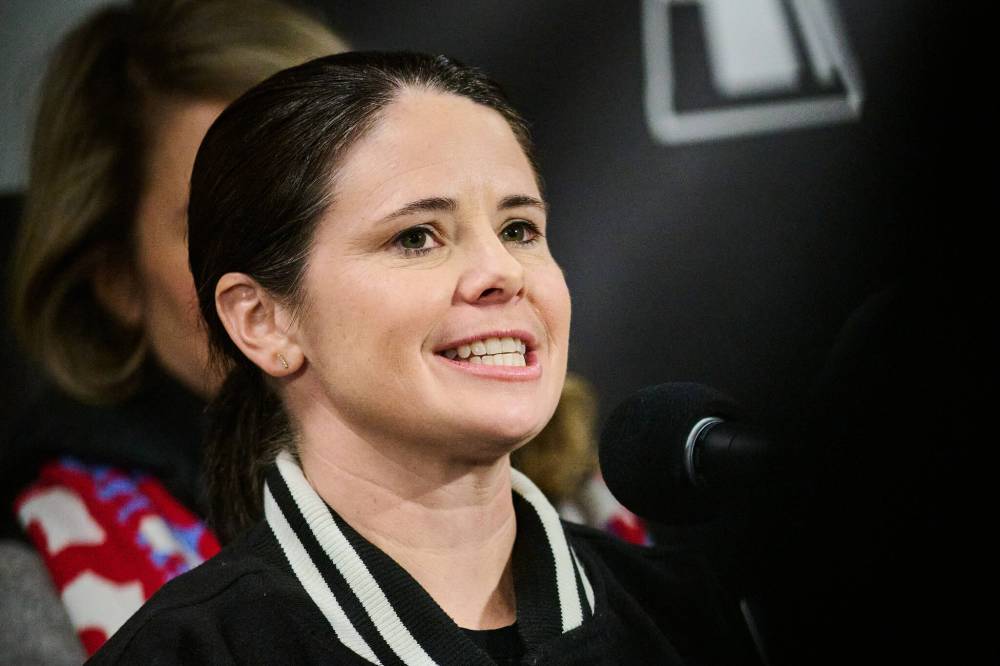
The story of the NSL is revealed in The Pitch, a documentary that shows the challenging process that Matheson and her team overcame to bring the league to life. Directed by Michèle Hozer, the film documents the ins and outs of women’s sports, including the genesis of Canadian women’s soccer and the long fight to be treated equally to men in sport.
The Pitch makes its Winnipeg premier Wednesday at the Canadian Museum for Human Rights.
Matheson, along with her former national team teammate, Winnipeg’s Desiree Scott, will be at the Canadian Museum for Human Rights for a free screening of her documentary on Wednesday.
The screening will be followed by a panel discussion, moderated by Sara Orlesky, about women in sport and the fight for gender equity in pro sports in Canada.
“It’s incredibly inspiring,” Scott said. “I joke about my friends being the most badass, inspiring people. I knew the journey of what Diana was trying to do, but the film really gives you an inside take on the hours, the lack of sleep, the commitment to bringing a pro league.
“She didn’t just talk about it, she was being about it. Her actions were inspiring.”
Matheson said she believes the film, which was released last fall, can teach everyone something about women in sport.
“… the film really gives you an inside take on the hours, the lack of sleep, the commitment to bringing a pro league.”
“Really, it was a gift, in a lot of ways, to have the last couple of years documented of this journey, which was definitely the most stressful and rewarding of my life,” she said. “I was really grateful it ended up being the story, not just of the building of the league, but very much the story of Canadian women’s soccer, and in ways, the story of women across so many industries, I think, can relate to this.”
Host to six franchises — Halifax Tides FC, Montreal Roses FC, AFC Toronto, Calgary Wild FC, Ottawa Rapid FC and the reigning champion Vancouver Rise FC — the NSL proved to be a resounding success in its inaugural season, with more than $30 million in league-wide revenue and impressive attendance numbers.
North of three million fans tuned in on television — TSN and CBC both carried matches — and more on streaming services, while 275,000 fans attended matches during the regular season and playoffs, which culminated with Vancouver winning the inaugural Diana B. Matheson Cup.
Scott, who calls herself a “big advocate for Diana Matheson and anything she does,” was still playing in the NWSL while the NSL was being formed, but was a sounding board for Matheson and other members of Project 8.
JOHN WOODS / THE CANADIAN PRESS FILES Winnipeg’s own Desiree Scott (11) will be at the screening for a roundtable after The Pitch premiers in her hometown Wednesday at the Canadian Museum for Human Rights.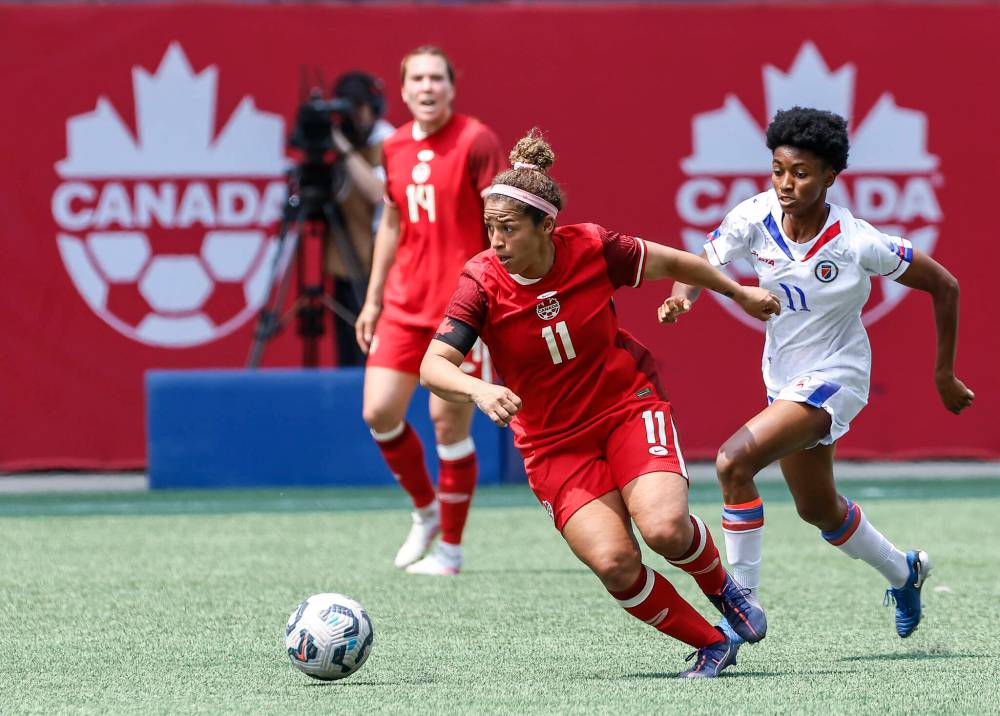
Scott had been a proponent for a Canadian league for years, but confessed she didn’t think she’d be playing in one during her career. That changed when she came out of retirement to join Ottawa Rapid FC last year. As fate would have it, Scott scored the first — and only — NSL goal of her near 20-year professional career in Ottawa’s first match in franchise history.
“It surpassed everything I hoped it would be,” said Scott, who retired again after last season.
“The quality, the people who want to do things right from the jump, and who believe in the product, believe in the fact that football can exist here and be successful — I think it’s just been done from the jump the right way with the right people, and I think that’s why this league is so successful.
“People have been waiting for this league for a long, long time, so it’s very cool to be a part of it.”
“People have been waiting for this league for a long, long time, so it’s very cool to be a part of it.”
Matheson has seen her documentary eight times now, but still struggles to pinpoint exactly how Project 8 pulled it off. The timing of the league, she explained, was impeccable, as it aligned with when more data had become available to support the value of a women’s league.
When she boiled it down, though, it started with finding one person to believe in an idea. That, she hopes, is what people take away from her documentary.
“I hope they take away that one person can make a difference,” she said. “Go find one person, then another person who believes in what you’re doing and make it happen. Don’t wait for people to do it.
“It’s not a matter of waiting to do something — let’s do it.”
winnipegfreepress.com/joshuafreysam

Josh Frey-Sam reports on sports and business at the Free Press. Josh got his start at the paper in 2022, just weeks after graduating from the Creative Communications program at Red River College. He reports primarily on amateur teams and athletes in sports. Read more about Josh.
Every piece of reporting Josh produces is reviewed by an editing team before it is posted online or published in print — part of the Free Press‘s tradition, since 1872, of producing reliable independent journalism. Read more about Free Press’s history and mandate, and learn how our newsroom operates.
Our newsroom depends on a growing audience of readers to power our journalism. If you are not a paid reader, please consider becoming a subscriber.
Our newsroom depends on its audience of readers to power our journalism. Thank you for your support.
Related Articles
Goalkeeper's stoppage-time header sends Benfica to Champions League last 16