

Chasing the Beautiful Game
Former national team soccer player looks back on global adventure as she takes in her 10th-straight men’s World Cup
Advertisement
Read this article for free:
or
Already have an account? Log in here »
To continue reading, please subscribe:

Digital Subscription
One year of digital access for only $205*
- Enjoy unlimited reading on winnipegfreepress.com
- Read the E-Edition, our digital replica newspaper
- Access News Break, our award-winning app
- Play interactive puzzles
*First annual payment billed as $205.00 + GST for one year. This annual subscription will automatically renew at $233.00 + GST every 52 weeks (10% off the regular annual price of $259.35). Offer available to new and qualified returning subscribers only. Cancel any time.
To continue reading, please subscribe:
Add Free Press access to your Brandon Sun subscription for only an additional
$1 for the first 4 weeks*
- Enjoy unlimited reading on winnipegfreepress.com
- Read the E-Edition, our digital replica newspaper
- Access News Break, our award-winning app
- Play interactive puzzles
*Your next Brandon Sun subscription payment will increase by $1.00 and you will be charged $17.95 plus GST for four weeks. After four weeks, your payment will increase to $24.95 plus GST every four weeks.
Read unlimited articles for free today:
or
Already have an account? Log in here »
When people hear I’ll be attending my 10th-straight FIFA men’s World Cup soccer tournament, they often ask me, “what was your favourite?” My answer is always the same: “All of them.”
Each had its own unique character and unforgettable moments that make it difficult to rank one above another.
It started in Rome in 1990, when I was gifted a ticket to the quarter-final matchup between Italy and Ireland. There were 73,303 of us packed tightly into the Stadio Olimpico. I had a high-up corner seat, possibly the worst view, yet it felt as though we collectively had our fingers in a wall socket. “Italia, Italia, Italia” resounded. It was magnetic, passionate and life-changing.
The context is important. I was a Canadian national team player at the time and I had attended many a match at Varsity Stadium in Toronto, where the crowds could politely be described as modest. The Canadian media didn’t cover soccer. It was viewed as a strange foreign sport.
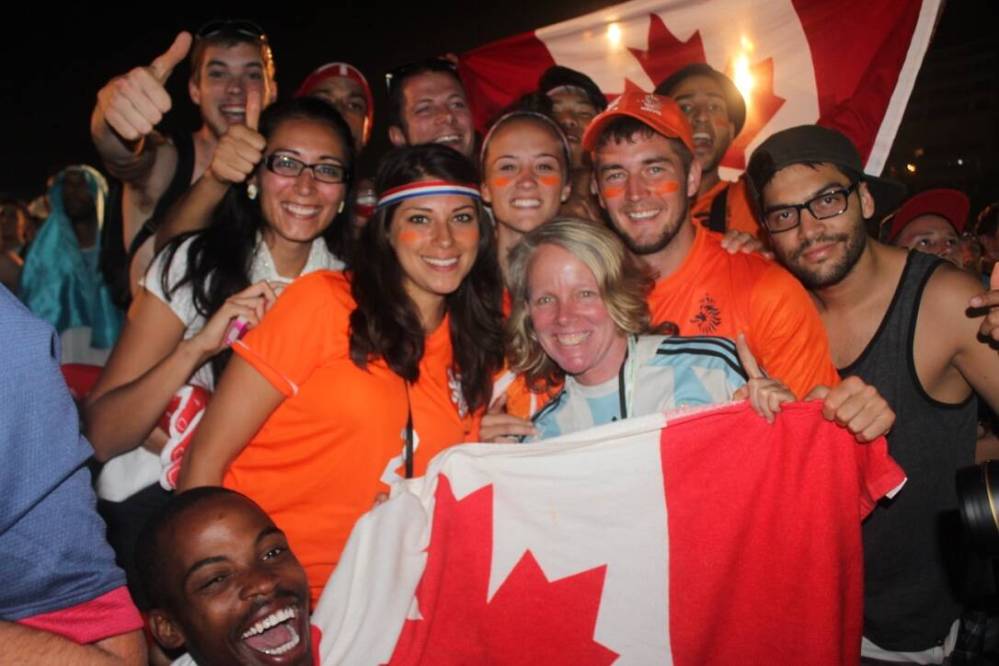
During the 1986 World Cup in Mexico, when Canada qualified for the first time, it was hard to find anyone in Toronto who knew anything about it. When Canada opened the World Cup against France, I convinced a bartender on Queen Street to find Les Rouges on a Spanish-language station, and about three of us watched our home side lose 1-0. Before the World Cup, Canada was given 1,000-to-1 odds of scoring a goal. They did not.
Nearly 40 years later, Canada has yet to win a World Cup match, although star player Alphonso Davies delivered that longed-for goal when he beat Croatian defenders for a powerful header in 2022. Our next chance to secure a “W” will be in the imminent group-stage matches against Bosnia and Herzegovina, Qatar and Switzerland.
This time, the nation cares. There will be no need to convince bartenders to find a game on TV. We’ll be making our own moments and memories, in the tradition of World Cup hosts that have come before. That first World Cup in Italy led me to the United States in 1994, France in 1998, then Japan/Korea, Germany, South Africa, Brazil, Russia and Qatar.
Here’s a look back.
ITALY 1990
My first World Cup was in Italy and the way the sport was embraced by Italians was like nothing I had seen in Canada.
There was a tense, chaotic, carnival-like collision of football fans, street parties, chants and cultural celebrations. There was also an obvious military presence, with officials fearful of hooligans.
From my lofty corner seat in Rome’s Stadio Olympico for the quarter-final match between Italy and Ireland, I watched men clasp their hands in prayer and look to the heavens before Salvatore “Totò” Schillaci scored and answered their pleas. Gli Azzurri had prevailed, 1–0.
That’s when I knew this was it. These were my people. The World Cup was my jam.
Football was a religion in Italy.
Sadly, we sat in a Venice bar when Argentina legend Diego Maradona successfully converted the winning penalty kick in the shootout to eliminate the three-time champions and hosts. Walking back to our hotel, we didn’t know what to expect from the Italians. Would they riot? Would they scream and cry in the streets?
There was a strange and lengthy muted stillness throughout the night. Italy was in mourning.
West Germany raised the FIFA World Cup Trophy.
UNITED STATES 1994
The United States had gigantic, full-capacity American-football stadiums, but the hosts had not quite embraced the Beautiful Game. It was hard to feel what the Italians would call avere il calcio nel sangue — to have football in your blood.
For FIFA, however, the tournament was a financial dream, as the American market dramatically expanded their revenues. More than 3.5 million people attended the World Cup that summer, averaging 68,991 spectators per match. It still stands as the all-time attendance record for a tournament.
FIFA is expecting between 5.5 and 6.5 million spectators at this summer’s tournament, hosted by Canada, Mexico and the U.S., despite ticket prices more in line with the cost of monthly rent or a mortgage payment.
For Americans enjoying their newly discovered soccer experience, it was puzzling to learn Colombian defender Andrés Escobar was brutally murdered back home after scoring an own goal in a 2-1 loss to the U.S. That humiliating defeat put the Americans in the round of 16, before they were eliminated by eventual champions Brazil.
It was a reminder that those “foreigners” take football very seriously.
I was at that match. I was at the final.
The spectacle of corporate success, mass-media attention and full stadiums worked perfectly for U.S. Soccer and FIFA.
Yet the moment I left the stadium and the surrounding neighbourhood, there was no indication the World Cup was being played in the country. It felt strangely void and empty.
Brazil beat Italy in the final to win its fourth World Cup.
FRANCE 1998
Surprisingly, France was similar — at first.
The World Cup experience often depends on when you arrive and how long you stay. I was there at the beginning, and the atmosphere felt flat and moody. The French were miserable, grumbling about their team’s prospects. There were plenty of exasperated bofs and merdes floating through conversations.
I looked around, searching for the magical World Cup atmosphere, but it was nowhere to be found.
My best friend worked for the French Football Federation and was much more optimistic. For a year, she had told me why the team that summer was special and why Aimé Jacquet was such a formidable coach. Her husband was the federation’s press officer. She could feel something building.
With each victory — over South Africa, Saudi Arabia, Denmark, Paraguay, Italy and Croatia — the nation moved nearer to total pandemonium. A sea of Tricolor flags flooded the streets of France for days after Les Bleus crushed Brazil 3-0 in the final. Captain Zinedine Zidane was their hero.
Reportedly, much of the population called in sick the day after the final, part of an epidemic of conveniently ill grandmothers.
JAPAN/KOREA 2002
When FIFA awarded Japan and Korea the right to co-host the tournament, the two nations promised to develop strong domestic leagues.
Japan was traditionally a baseball nation, and disciplined, rigid and stoic, but unfamiliar with the free-flowing creativity of soccer. They needed help.
What is remarkable about Japan is that when they decide to do something, they commit fully.
Unofficially ranked 99th in the world, and with their women’s team finishing last at the inaugural Women’s World Cup in 1991, many countries would have lowered their expectations. Japan instead went to work.
They established the J.League (for men) and L.League (for women), recruiting influential foreign players and coaches such as Brazilian superstar Zico. Recognizing their players were generally smaller than their European counterparts, they embraced a Brazilian style built on technical skill, short passing and teamwork.
I had the opportunity in Japan to play on a women’s corporate team called Yomiuri and it was wild to see the Beatles-like popularity of domestic players such as Kazu Miura, Kitazawa, Takeda, Ramos and eventually Sawa. By the time the 2002 World Cup arrived, Japan was a soccer-mad country with zealous fans.
Japan reached the round of 16. Their men eventually climbed as high as ninth in the FIFA world rankings, while Japan won the FIFA women’s World Cup in 2011.
Korea, however, stole the show. When the Taegeuk Warriors advanced to the semifinals by defeating Italy on a golden goal, there were scenes of chaotic national “red” euphoria. An estimated three million people flooded the streets of Seoul and beyond, a historic win for any Asian nation.
Brazil was ultimately crowned champion, beating Germany in the final.
GERMANY 2006
The real World Cup football fun began in Germany.
In 2006, FIFA introduced fan zones, allowing supporters without tickets to gather and watch matches together outdoors.
Germany did everything right.
I took a U16 girls’ team to play matches in Germany during the tournament. Every town featured outdoor festivals, beer gardens, food vendors and welcoming public spaces. It may have been the greatest World Cup ever. I even ran into Maradona while walking through a park.
Rail transportation was efficient. The Germans were friendly.
Scarred by the legacy of Nazi terror, Germany used the tournament to invite the world to celebrate alongside them. They opened their arms to visitors. Young Germans, born into the shadow of their country’s past, were eager to present a different image. They wanted a brighter reputation.
When I wrote to the German Football Association to ask whether any clubs would host our team for exhibition matches, I surprisingly received 32 invitations from across the country.
Our bus rolled into our first town, Bielefeld, where more than 100 people lined the streets waving Canadian flags.
The World Cup there was a massive success — full stadiums, packed fan zones and a non-stop celebration.
Italy defeated France in the final after France’s Zidane famously head-butted Italian defender Marco Materazzi. It was one of the most shocking finals in World Cup history and remains the moment most people remember, leading to the creation of the one of the world’s first viral online sports memes.
SOUTH AFRICA 2010
Perhaps my favourite World Cup was South Africa in 2010.
Before travelling, I had to do a little self-therapy. I had never been to Africa. The nation was still rebuilding after apartheid. Weeks before kickoff, dozens of people were injured in a stampede outside a stadium.
Would I be robbed? Injured? Killed?
Those fears were real.
One thing I love about World Cups is that they are usually among the safest times to visit a country. Security is heightened because nobody wants negative headlines involving tourists.
Apparently, the criminals went on vacation.
South Africa and FIFA established special courts where offenders were tried quickly and sentenced harshly, sometimes receiving five-year sentences for relatively minor crimes such as cellphone theft.
I found myself crossing railway tracks at midnight in Soweto without concern.
Armed with vuvuzelas (long plastic horns emitting a reverberating drone when blown), South Africa became a symphony of harmony, music and joy. The people desperately wanted to prove they deserved to host the tournament.
At the FIFA kickoff concert, leaders such as Archbishop Desmond Tutu took the stage and declared, “Everyone said we couldn’t do it. And here we are. We made it happen.”
There was barely a dry eye in the crowd.
The story was unity, beautiful stadiums, stunning landscape, safaris, and people of all colours and cultures coming together from around the world to celebrate football.
However, the awarding of the World Cup to South Africa faced scrutiny in 2015 after U.S. authorities charged FIFA officials for bribery, alleging widespread corruption including an alleged US$10-million payment to the Caribbean Football Union by FIFA in return for three votes in favour of South Africa hosting.
Spain defeated the Netherlands 1-0 in the final, to win the nation’s first World Cup.
BRAZIL 2014
Brazil, on the other hand, did not lock up its criminals when hosting. In fact, they seemed determined to relieve tourists of their belongings. Thieves pickpocketed everyone I knew.
I had a cellphone stolen from my table at a restaurant. I lost my shoes the moment I took them off to juggle a ball. I spent the rest of my night barefoot in Rio de Janeiro.
We ducked from gunfire while roaming through the favelas (shanty towns). We walked past a murder scene where an LGBTTQ+ tourist lost their life. None of it made the news. We saw brawls spread like wildfire at a bar where riot police ran in to break up the fighting.
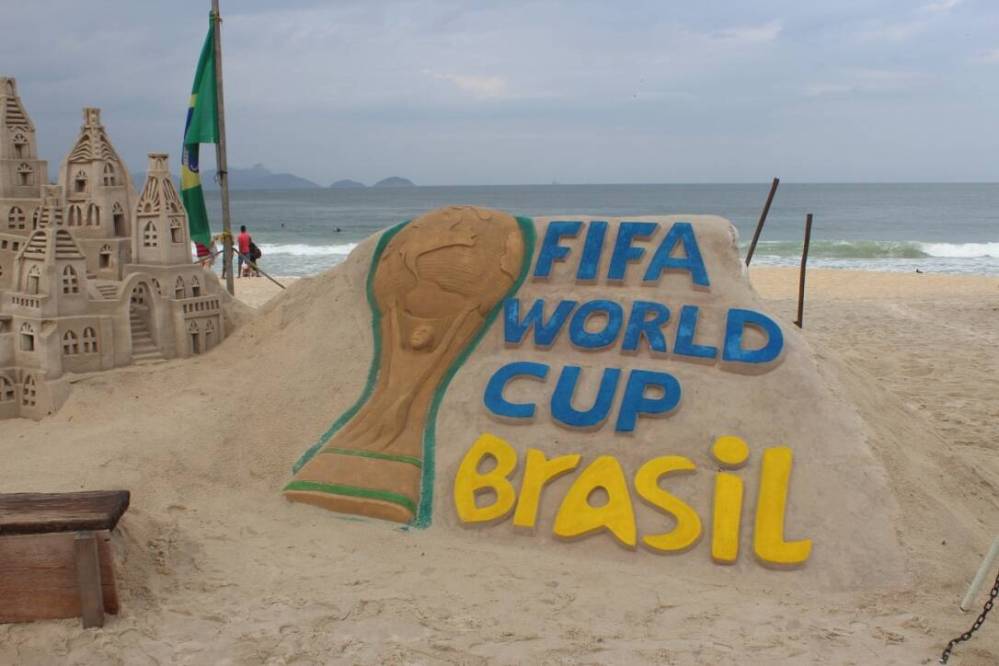
Yet the tournament itself was also an incredible experience.
Rio featured four giant public-viewing screens, including the Fan Fest on Rio de Janeiro’s famous Copacabana Beach. Vendors wandered through the crowds selling caipirinhas, and the combination of samba rhythms, football matches and potent cocktails cast a euphoric spell on the crowds.
Raucous Argentinian supporters took over the city in spirit, chanting, dancing and crashing into the waves along the South Atlantic.
The party lasted every moment until the evening of July 8.
It was then that a dark cloud formed over Rio as tens of thousands gathered to watch Brazil face Germany in the semifinals along the beach. The Samba Kings were sure to be glorious champions in their own country. Brazil is a Catholic nation and the people had been to mass. Christ the Redeemer was watching over the land. Rain began as a drizzle, but as German goals walloped the hosts, it turned into a torrential downpour, mirroring the despair of the people. Die Mannschaft destroyed Brazil by a 7-1 scoreline.
The Brazilian fans lost it. Some were in tears. Others sought revenge, and shots were fired at one of the viewing screens. Thousands scattered.
If not for the river of rain, a riot would surely have exploded, but even the local gangs and looters sought shelter from the storm.
Germany went on to defeat Argentina 1-0 in extra time to claim its fourth World Cup.
RUSSIA 2018
Russia also made for one of my most cherished World Cup experiences.
Moscow and St. Petersburg are extraordinary cities, filled with stunning architecture, rich history, museums and magnificent subway systems. I wish everyone could experience it.
Almost every tourist I met had been warned not to go: “It’s dangerous.” “The people are cold.” “You’re supporting an authoritarian state.”
The reality was far more complicated and quite the opposite, aside from President Vladimir Putin and his regime.
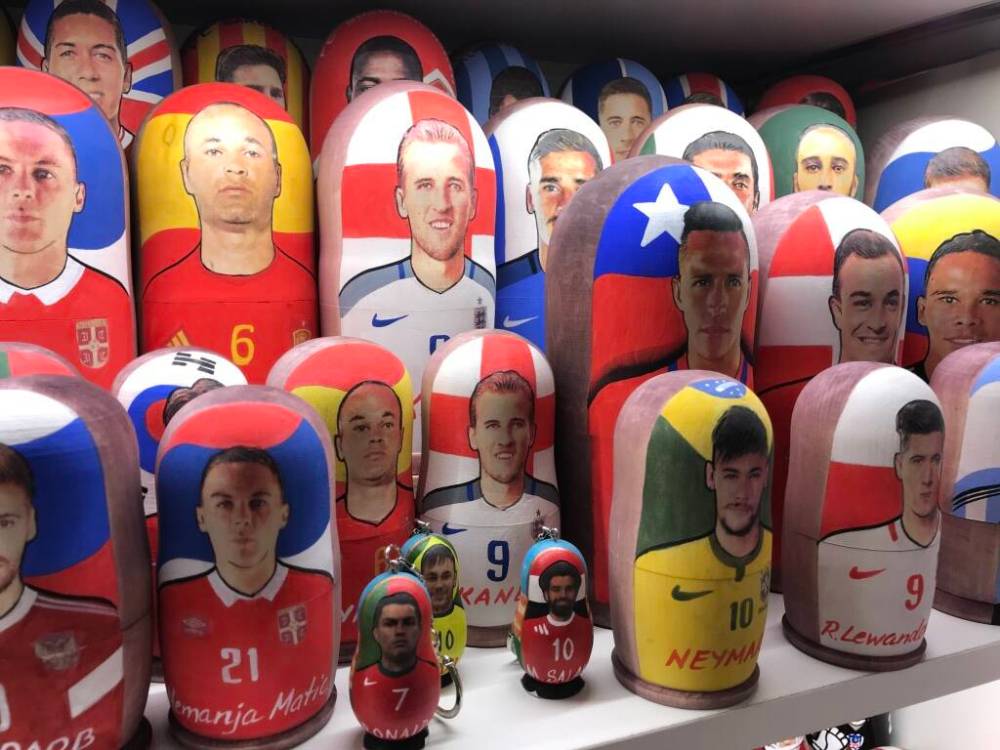
People were so friendly and helpful. The stadiums were mind-blowing. Transportation was efficient. Yes, there was a lot of security and machine guns around. No one dared to get drunk and disorderly or snatch a camera from a tourist. It was safe, joyous and festive. Russia was on glorious display and the country embraced the world.
It was also easy for fans to visit. If you bought a ticket, barring having any known criminal record, you received an automatic visa to visit Russia during the World Cup. Qatar would adopt the same system in 2022, unlike the present situation in the U.S. where tourists from many countries are facing visa challenges.
The LGBTTQ+ crisis was also a major issue. In St. Petersburg, I was surprised to encounter a gay nightclub with three floors and five bars called Club Central Station open almost 24 hours. The manager showed me the damage to his head from a steel plate after being attack walking home one night.
Locals told me that while attitudes could be conservative and that political restrictions existed, daily life was often more nuanced than international headlines suggested.
On the eve of the opening match, Moscow’s Red Square hosted a spectacular concert featuring some of Europe’s leading opera singers. Through sheer luck and a press pass, I secured a last-minute ticket and found myself only metres from Putin. I was afraid to look at him.
Russia enjoyed its best World Cup performance before losing to Croatia in the quarterfinals on penalties. France, led by Kylian Mbappé, emerged as champions.
The magical experience of such a splendid, fast-paced tournament in a beautiful country seems forever lost. After Russia attacked Ukraine, the Sbornaya were suspended by FIFA from all competitions.
QATAR 2022
The World Cup in Qatar was drastically different from the North American experiment now unfolding.
All eight stadiums were located within 22 kilometres of Doha. It was possible to attend two matches, at different venues, on a single day. Much of the surrounding infrastructure — metro lines, highways and even entire districts — did not exist before Qatar was named as the host nation.
It was also the first World Cup held in November and December to avoid temperatures exceeding 40 C in the Middle Eastern emirate.
Most excitingly, it offered a chance, finally, to support Canada.
For decades, Canadians had adopted second teams. Maybe your family roots were Italian, Spanish, Portuguese or English, and you cheered accordingly.
For the first time since 1986, we had our own team.
It was thrilling to stand alongside supporters from coast to coast wrapped in the Maple Leaf.
Despite losing all three group-stage matches, Canada outplayed second-ranked Belgium for long stretches, scored its first-ever World Cup goal against 2018 runners-up Croatia, and battled Morocco in what often felt like a home atmosphere for the opposition.
Argentina, led by Lionel Messi, went on to defeat France in one of the greatest finals ever played.
U.S., CANADA AND MEXICO 2026
At the current World Cup — which kicked off Thursday at Mexico City’s storied Azteca Stadium — Canadians will have a once-in-a-lifetime opportunity to support their national team on home soil.
This may not happen again for decades.
There is nothing quite like cheering for your own country at a World Cup. Given the growth of the game in Canada, it is difficult to imagine ever returning to a time when qualification felt impossible.
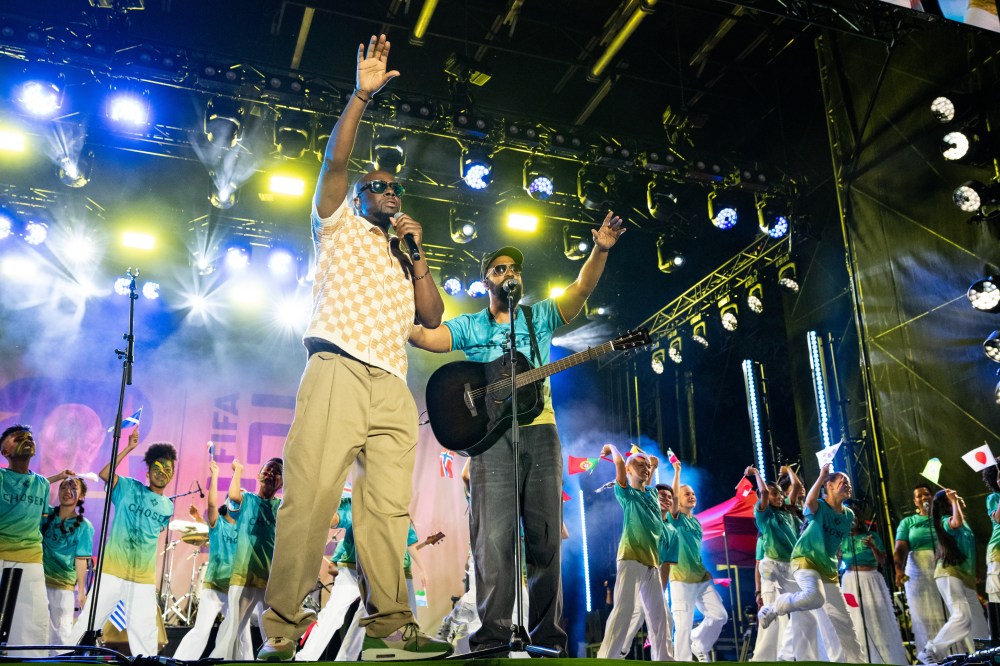
The team currently faces significant injury concerns, including for star Alphonso Davies, who ruptured his ACL last year and continues to battle post-surgery complications.
Canada will need its 12th man. The supporters in the stands can make the difference in pursuit of that long-awaited first World Cup victory.
You may also discover, as I did in Rome all those years ago, that one World Cup is never enough.
Carrie Serwetnyk is a former Canadian national team soccer player and first woman inducted to the Canadian Soccer Hall of Fame. She has attended the last nine FIFA men’s World Cups and last five women’s World Cups.
Related Articles
Australia spoils Turkey's return to the World Cup with a 2-0 victory



Advertisement Advertise With Us
Advertisement Advertise With Us