

Age in place in your community and your home
Advertisement
Read this article for free:
or
Already have an account? Log in here »
To continue reading, please subscribe:

Digital Subscription
One year of digital access for only $205*
- Enjoy unlimited reading on winnipegfreepress.com
- Read the E-Edition, our digital replica newspaper
- Access News Break, our award-winning app
- Play interactive puzzles
*First annual payment billed as $205.00 + GST for one year. This annual subscription will automatically renew at $233.00 + GST every 52 weeks (10% off the regular annual price of $259.35). Offer available to new and qualified returning subscribers only. Cancel any time.
To continue reading, please subscribe:
Add Free Press access to your Brandon Sun subscription for only an additional
$1 for the first 4 weeks*
- Enjoy unlimited reading on winnipegfreepress.com
- Read the E-Edition, our digital replica newspaper
- Access News Break, our award-winning app
- Play interactive puzzles
*Your next Brandon Sun subscription payment will increase by $1.00 and you will be charged $17.95 plus GST for four weeks. After four weeks, your payment will increase to $24.95 plus GST every four weeks.
Read unlimited articles for free today:
or
Already have an account? Log in here »
Hey there, time traveller!
This article was published 27/02/2026 (221 days ago), so information in it may no longer be current.
As baby boomers officially become seniors, many begin to look at what “home” will look like for them in the coming years.
Aging in place, living safely and independently in one’s own home and community for as long as possible, is often the preference. Home is where the heart is, after all. Fortunately, options and services exist to ensure that older people can remain where they’ve planted roots and created memories.
As a developer involved in several roles in the industry, and vice-president of Qualico Communities Winnipeg, Bryan Ward knows about considerations for aging in place in communities where clients want to spend their entire lives. He wants people to have opportunities to find and stay in the right home for as long as possible.
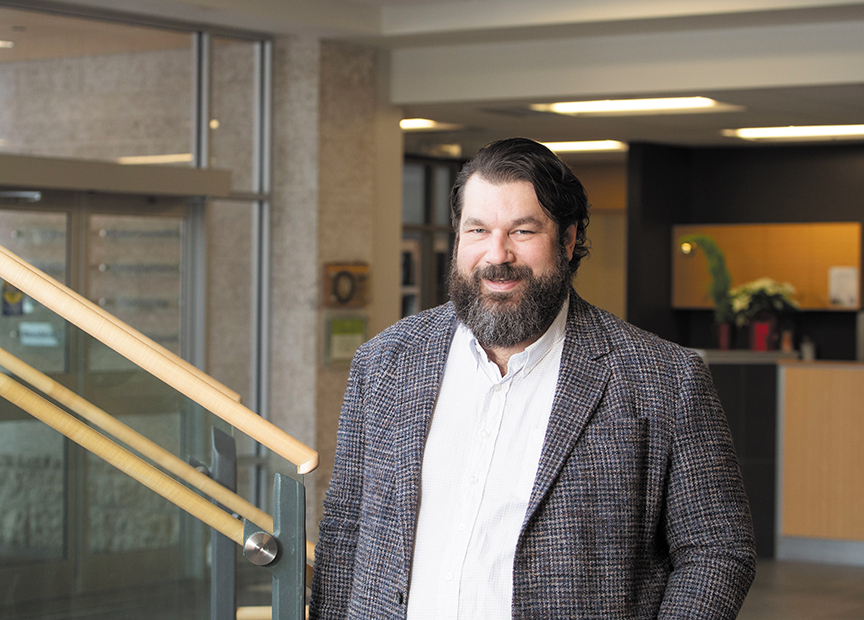
Photo by Darcy Finley
Bryan Ward, vice-president, Qualico Communities
“With Qualico, we are supported in trying new things — lots of different projects — building relationships in community and partnerships,” he says.
Qualico’s largest neighbourhoods are in Winnipeg and include Bison Run in Waverley West and Sage Creek.
Ward says there’s an increasing interest in complete communities, which allow residents to stay in the neighbourhood they know and love.
“We talk about complete community: the idea of creating opportunities to age in place — specifically being able to stay in a community as you grow older. One of the big needs is housing; making sure communities meet the needs of different ages, older folks, those with mobility issues and other changes,” he says.
“With the Sage Creek neighbourhood, we try to have the broadest cross-section of house types for the biggest part of the market: one-bedroom rentals, smaller homes, apartment style, townhomes, bungalows, condos. We recently had a builder open an assisted-living facility. We are starting to achieve that vision of a more complete neighbourhood that was planned decades ago. This kind of neighbourhood would support aging in place.”
The variety of housing options and amenities in Sage Creek is not commonly seen elsewhere, he adds.
Sage Creek and Bison Run are two of Qualico’s larger underway neighbourhoods with significant acreage to support commercial uses, higher density apartments and bus routes.

Daniel / Adobe Stock
“We talk about complete community: the idea of creating opportunities to age in place — specifically being able to stay in a community as you grow older. One of the big needs is housing; making sure communities meet the needs of different ages, older folks, those with mobility issues and other changes.”
— Bryan Ward
“The whole idea is that you can live in a neighbourhood that offers recreation and education opportunities,” Ward says. “We don’t need to leave the neighbourhood to meet daily needs. It’s what small towns are like — how they developed — trying to create all those things within new communities that we build.”
There was a time when the only housing available consisted of multiple-storey homes with numerous bedrooms, lots of steps and narrow hallways, which was a lot to look after and not easy for those with mobility or health issues. Nowadays, with the numerous housing options, homes can meet the needs of those who want to age where they are.
Downsizing to a smaller home in the area can reduce maintenance needs, leading to more comfort and time to do things that matter most.
“We try to create places that make sense to us. We work with builders that are interested in building that,” Ward says.
“People have ideas about what new communities look like from the ‘80s and ‘90s. They don’t look like that anymore. The new neighbourhoods are very different — the outdoor space, recreation, housing choices. It isn’t massive areas with the same house repeated for acres, like in the movies, the sprawling suburbia. There’s a diversity of housing and population.”
After 15 years in the field, Curtis Breslaw still appreciates the opportunity to help people continue to live where they want to be.

Photo courtesy of All Canadian Renovtions
Curtis Breslaw, co-owner of All Canadian Renovations
“I love what I do every day. We are a Certified Aging-in-Place company, and we do many renovations to suit this. I think the term ‘aging in place’ is an excellent way to let people know that they don’t have to leave their home as they get older because of mobility, ailments and normal everyday life,” says Breslaw, co-owner of All Canadian Renovations, a company specializing in home renovations.
“We have a lot of clients saying, ‘We were so worried we’d have to sell our home. We didn’t want to downsize or go to a personal care home. This was my parents’ house. We want to keep it for the kids, grandkids.’ There’s so much sentimental value.”
When clients learn that they may not need to leave their beloved home — that there are other options and that with some adjustments to their current space, they may be able to stay for another year or several more, depending on their situation — they are grateful for the services that set them up for aging in place. It’s often a time of life when independence and freedom are more important than ever.
For Breslaw, it’s about making sure clients can maintain the quality of life they’re used to.
“One of the things that’s different that we try to do with renovations, which is much easier when building new, is to try to create spaces that are accessible. The trick is to try to make them not look clinical. There are really neat grab bars for the bathroom that don’t look like they came out of hospitals. There are integrated towel bars that don’t look like an ugly bar attached to the toilet,” says Breslaw, whose team also works closely with occupational therapists to make adjustments in the home when a resident is in hospital.
“In designing a kitchen, there’s a two-tiered countertop height that doesn’t look like it’s wheelchair accessible. We try to do things in a way that makes the home esthetically pleasing.”
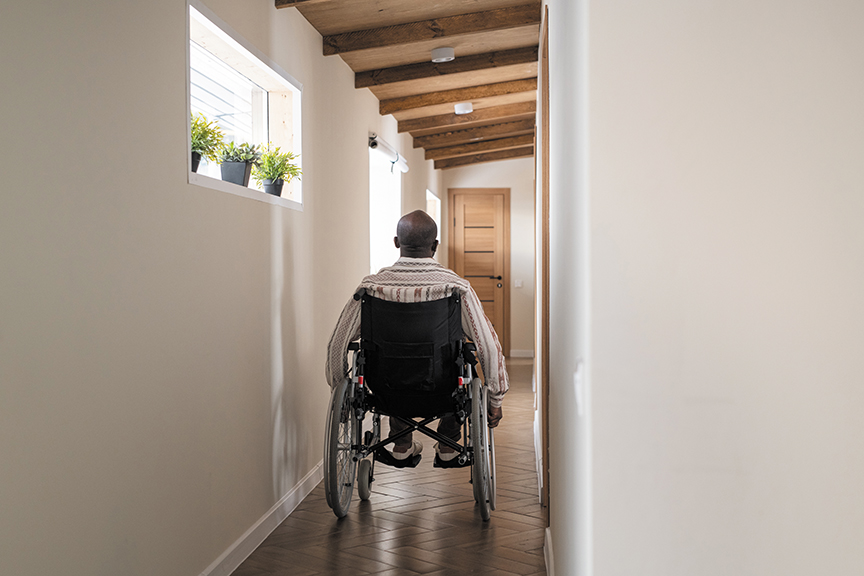
Renovations for aging in place can include widening doorways, hallways and shower entrances, installing a ramp for the stairway or even putting in an elevator. Breslaw says renovations should involve thinking ahead and taking proactive measures.
“When putting up new drywall in a bathroom that we are renovating, it’s our standard practice to put in wood backing behind the drywall. It’s strategic for future grab bars,” he says. “Even if you don’t need it today, it’s there now — so if one day you do need it, there’s support there.”
Though many renovations can be more difficult than the work would be in a new building, things can always be done to provide a safer home environment and peace of mind for residents.