

Sad ending to a remarkable story
He was the same crusader I'd met all those years ago

Advertisement
Read this article for free:
or
Already have an account? Log in here »
To continue reading, please subscribe:

Digital Subscription
One year of digital access for only $205*
- Enjoy unlimited reading on winnipegfreepress.com
- Read the E-Edition, our digital replica newspaper
- Access News Break, our award-winning app
- Play interactive puzzles
*First annual payment billed as $205.00 + GST for one year. This annual subscription will automatically renew at $233.00 + GST every 52 weeks (10% off the regular annual price of $259.35). Offer available to new and qualified returning subscribers only. Cancel any time.
To continue reading, please subscribe:
Add Free Press access to your Brandon Sun subscription for only an additional
$1 for the first 4 weeks*
- Enjoy unlimited reading on winnipegfreepress.com
- Read the E-Edition, our digital replica newspaper
- Access News Break, our award-winning app
- Play interactive puzzles
*Your next Brandon Sun subscription payment will increase by $1.00 and you will be charged $17.95 plus GST for four weeks. After four weeks, your payment will increase to $24.95 plus GST every four weeks.
Read unlimited articles for free today:
or
Already have an account? Log in here »
Hey there, time traveller!
This article was published 23/08/2011 (5477 days ago), so information in it may no longer be current.
The first time I met Jack Layton, we shared lattes and cookies at a bustling café on Broadway and talked of the NDP leadership race and his spartan campaign to go from Toronto city council to federal politics.
It was October 2002, and he was travelling alone across the country, selling memberships and grabbing whatever time he could with journalists. No entourage. No spin doctors to grease the wheels with local scribes. He flew economy class and slept on the couch at the home of a provincial NDP operative. I actually had to argue with my assignment editor to let me write something about his visit. Our coverage of the NDP leadership orbited Winnipeg MP Bill Blaikie. Few in my newsroom knew Layton, and fewer cared to know him.
Even then, Jack talked about doing what needed to be done, or saying what needed to be said, to get the NDP to stand out from the grey political middle ground. He did nothing to hide from his reputation as a verbose, opportunistic, even melodramatic politician. “I do tend to be provocative to various degrees,” Layton said. “I’m trying to provoke a change in public policy. To do that… you’ve got to be dramatic. We live in dramatic times. This doesn’t mean there’s no place for reason. But you have to wrap up your reason in drama.”
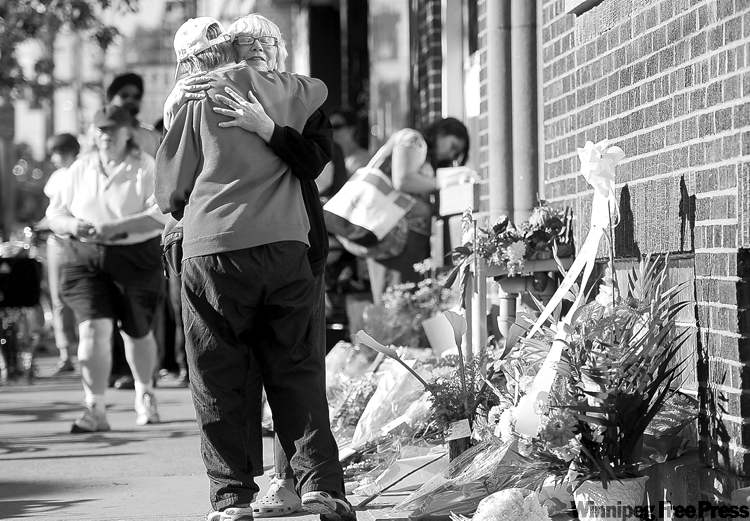
Layton left Winnipeg having made a positive impression on me, so much so I was hardly surprised when he captured the leadership in January 2003. And over the years, whenever someone would assail his verbosity, or his social democratic hyperbole, or even his too-good-to-be-true moustache, I would gently defend him as a politician who had the tools to be successful. Such is the burden borne by journalists who make the mistake of meeting, and admiring, politicians.
That is not to say anyone could have foreseen the great success he and the NDP enjoyed in last May’s election. Still, watching him campaign in Winnipeg’s North End in the very last days of the campaign, he was the same confident, unapologetic crusader I met a decade earlier.
Losing Layton now, so soon after he reached the pinnacle of his career, is a tragedy of enormous proportion. Not because he was a politician, per se. But because he was a public servant, a man who dedicated his life to electoral politics and public policy at a time when the public was particularly dismissive and disdainful about people like Layton.
The most any politician can hope for is that he or she finds the right job at the right time. In that regard, Layton fit the role of leader of a third party in the new millennium. He frequently advocated for policies that, while progressive and positive, were politically impracticable for the parties that competed to form government. Third parties may never threaten to form government, but they often act as the conscience of politics. Things that will never be uttered by more “viable” parties that cannot afford to be progressive, lest it lessen their chances at victory.
Hardcore NDP militants will quickly point to last May’s remarkable electoral success as proof you can be principled and a winner. Unfortunately, the NDP’s Orange surge was mostly an anomaly, a mathematical equation produced by a mischievous Quebec electorate. This success did not solve the NDP’s greatest challenges, namely how to remain the party of principle, and a party beholden to organized labour, and still win.
The insult to the great injury of losing Layton now is he will not have the chance to prove the cynics wrong. When it was suggested post-election the NDP should start examining a merger with the Liberal party to create a united, centre-left political party, Layton scoffed. His was a party on the rise, and his success was proof a new era of politics was dawning. Layton was going to take the Orange surge and use it as a springboard to reform Canada’s political system. He offered a vision of an electorate that would embrace common cause and collective security while rejecting selfish, special interest and ‘what’s-in-it-for-me’ politics. It may have been a steep hill to climb, but still it would have been great to watch him try.

As for the future, as much as it hurts to lose Layton, the NDP desperately needs to get beyond its miserable attempts at interim leadership. The party needs to show Canadians there is a new generation of leaders within its ranks, politicians who were to a large extent drawn to Layton’s NDP and who will now serve as the departed leader’s legacy, both to the party and to the country. Thomas Mulclair and Libby Davies and others who will no doubt vie for the leadership have the tools to carry on Layton’s work. But while Layton was still fighting for his life, it was not possible for any of them to step up. They will have that opportunity now.
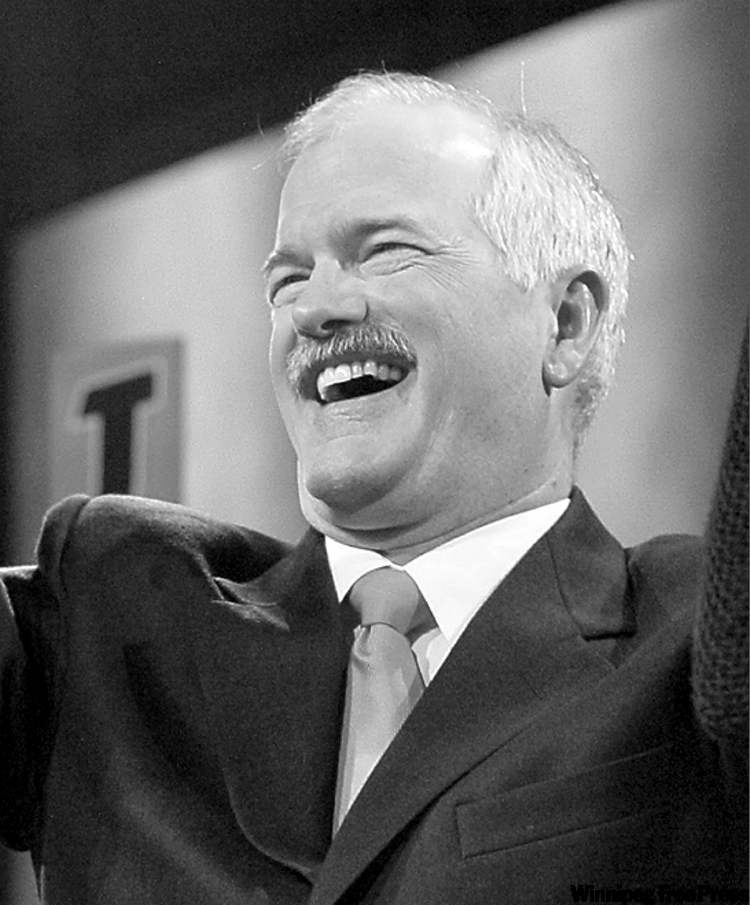
Lost in the headlines of Layton’s illness is the fact he might not have led the NDP through another election. Already in his 60s, and having led his party for nearly a decade, it would have made sense to let him go out on top as leader of the official Opposition before the next election in 2015 and pass the mantle to one of his protegés, someone who would carry on his crusade. Even though he is gone now, the terms of that crusade will be no mystery.
In Layton’s last public statement, released on Monday a few hours after we learned of his death, Layton defined the legacy he hopes will be passed on to a new leader. “My friends, love is better than anger. Hope is better than fear. Optimism is better than despair. So let us be loving, hopeful and optimistic. And we’ll change the world.”
Layton’s death is a desperately unsatisfying end to a remarkable story. It will now be up to those who flocked to his aura to ensure his success was indeed the dawning of a new political era. Jack would demand nothing less.
dan.lett@freepress.mb.ca
Dan Lett is a columnist for the Free Press, providing opinion and commentary on politics in Winnipeg and beyond. Born and raised in Toronto, Dan joined the Free Press in 1986. Read more about Dan.
Dan’s columns are built on facts and reactions, but offer his personal views through arguments and analysis. The Free Press’ editing team reviews Dan’s columns before they are posted online or published in print — part of the our tradition, since 1872, of producing reliable independent journalism. Read more about Free Press’s history and mandate, and learn how our newsroom operates.
Our newsroom depends on a growing audience of readers to power our journalism. If you are not a paid reader, please consider becoming a subscriber.
Our newsroom depends on its audience of readers to power our journalism. Thank you for your support.
The life of a public servant
- Born July 18, 1950
- 1969: Married Sally Halford. Marriage ends in 1983
- 1982: First elected to Toronto City Council
- 1985: Elected to Metropolitan Toronto council
- July 9, 1988: Married Olivia Chow
- 1988: Returned to Toronto City Council
- 1991: Ran for mayor of Toronto, lost to June Rowlands
- 1993: Ran for Parliament in Rosedale. Lost
- 1994: Elected head of the Federation of Canadian Municipalities
- 1997: Ran for Parliament in Broadview-Greenwood. Lost
- 2003: Elected leader of the federal NDP
- June 28, 2004: Elected as MP for Toronto-Danforth
- Jan. 23, 2006: Re-elected
- Sept. 10, 2006: Received 92 per cent approval rating from NDP convention in Quebec City
- Oct. 14, 2008: Re-elected
- Feb. 10, 2010: Tells public he had been diagnosed with prostate cancer
- May 2, 2011: Re-elected. NDP won a record 103 seats and official Opposition status
- July 25, 2011: Announced he will take a leave of absence to deal with another cancer
- Aug. 22, 2011: Family announced his death earlier that morning in Toronto
— The Canadian Press
Dan Lett is a columnist for the Free Press, providing opinion and commentary on politics in Winnipeg and beyond. Born and raised in Toronto, Dan joined the Free Press in 1986. Read more about Dan.
Dan’s columns are built on facts and reactions, but offer his personal views through arguments and analysis. The Free Press’ editing team reviews Dan’s columns before they are posted online or published in print — part of the our tradition, since 1872, of producing reliable independent journalism. Read more about Free Press’s history and mandate, and learn how our newsroom operates.
Our newsroom depends on a growing audience of readers to power our journalism. If you are not a paid reader, please consider becoming a subscriber.
Our newsroom depends on its audience of readers to power our journalism. Thank you for your support.
Related Articles
Letters of the Day: The loss of an icon


Advertisement Advertise With Us
Advertisement Advertise With Us