

First Nations must lead in aboriginal court: Swan
Advertisement
Read this article for free:
or
Already have an account? Log in here »
To continue reading, please subscribe:
Digital Subscription
One year of digital access for only $1.44 a week*
- Enjoy unlimited reading on winnipegfreepress.com
- Read the E-Edition, our digital replica newspaper
- Access News Break, our award-winning app
- Play interactive puzzles
*Billed as $5.77 plus GST every four weeks. After 52 weeks, price increases to the regular rate of $19.95 plus GST every four weeks. Offer available to new and qualified returning subscribers only. Cancel any time.
To continue reading, please subscribe:
Add Free Press access to your Brandon Sun subscription for only an additional
$1 for the first 4 weeks*
- Enjoy unlimited reading on winnipegfreepress.com
- Read the E-Edition, our digital replica newspaper
- Access News Break, our award-winning app
- Play interactive puzzles
*Your next Brandon Sun subscription payment will increase by $1.00 and you will be charged $17.95 plus GST for four weeks. After four weeks, your payment will increase to $24.95 plus GST every four weeks.
Read unlimited articles for free today:
or
Already have an account? Log in here »
Hey there, time traveller!
This article was published 30/05/2013 (4757 days ago), so information in it may no longer be current.
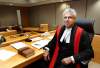
Justice Minister Andrew Swan says he’s open to an aboriginal court, but First Nations themselves must kick-start it.
He said many of the elements of an aboriginal court are already in place, including restorative-justice programs, aboriginal court workers who help guide offenders through the system and small-scale versions of aboriginal courts on reserves such as Waywayseecappo and Peguis.
“We’re already doing those things,” said Swan. “Would I like to see those things expand? Yes.”
Critics, including judges, have said Manitoba is falling behind on its Supreme Court-mandated responsibility to ensure fewer aboriginal offenders end up in jail. Manitoba has the second-highest rate of aboriginal incarceration of any province, even though the Supreme Court has insisted aboriginal offenders have the benefit of a sentence that recognizes the legacy of colonialism and offers rehabilitation, counselling or some kind of restorative justice instead of jail time.
Other jurisdictions, including Vancouver, London and Toronto, have specialized aboriginal courts. Last Friday, Northern Grand Chief David Harper met with Chief Provincial Court Judge Ken Champagne and several other justice officials to begin discussions about bringing such a large-scale aboriginal court to Manitoba.
In Waywayseecappo, an offender, especially one who pleads guilty, can be sent to a committee of elders who bring the offender and the victim together to work out an appropriate punishment and restitution.
“It’s not soft on crime,” said Swan of restorative justice. “It’s, frankly, much tougher for an offender to have to look the victim in the eye with the community on side than just have their head down and be berated by a provincial court judge.”
Swan said he would be pleased if more bands set up similar programs, and two more northern bands may be about to do so. But many other bands lack the capacity to sustain such a court.
maryagnes.welch@freepress.mb.ca
Advertisement Advertise With Us