

Liberal brand didn’t woo electorate
Voters chose Grits for simple reason

Advertisement
Read this article for free:
or
Already have an account? Log in here »
To continue reading, please subscribe:
Monthly Digital Subscription
$1 per week for 24 weeks*
- Enjoy unlimited reading on winnipegfreepress.com
- Read the E-Edition, our digital replica newspaper
- Access News Break, our award-winning app
- Play interactive puzzles
*Billed as $4.00 plus GST every four weeks. After 24 weeks, price increases to the regular rate of $19.95 plus GST every four weeks. Offer available to new and qualified returning subscribers only. Cancel any time.
Monthly Digital Subscription
$4.99/week*
- Enjoy unlimited reading on winnipegfreepress.com
- Read the E-Edition, our digital replica newspaper
- Access News Break, our award-winning app
- Play interactive puzzles
*Billed as $19.95 plus GST every four weeks. Cancel any time.
To continue reading, please subscribe:
Add Free Press access to your Brandon Sun subscription for only an additional
$1 for the first 4 weeks*
*Your next subscription payment will increase by $1.00 and you will be charged $16.99 plus GST for four weeks. After four weeks, your payment will increase to $23.99 plus GST every four weeks.
Read unlimited articles for free today:
or
Already have an account? Log in here »
Hey there, time traveller!
This article was published 02/12/2015 (3785 days ago), so information in it may no longer be current.
In the wake of Monday’s stunning majority victory by the Liberals in the Newfoundland and Labrador provincial election, it would be easy to conclude the Grit wave that crashed across the country in October’s federal vote is still sending aftershocks across the country.
Now, Liberal parties govern in all provinces east of Manitoba. To many, that is proof enough the political sensibilities of the country have shifted from the stark conservatism offered by former prime minister Stephen Harper to current Prime Minister Justin Trudeau’s sunnier ways.
But that’s not what has happened. And elections such as this one this week demonstrate clearly there is no single ideology or policy mindset sweeping the nation.
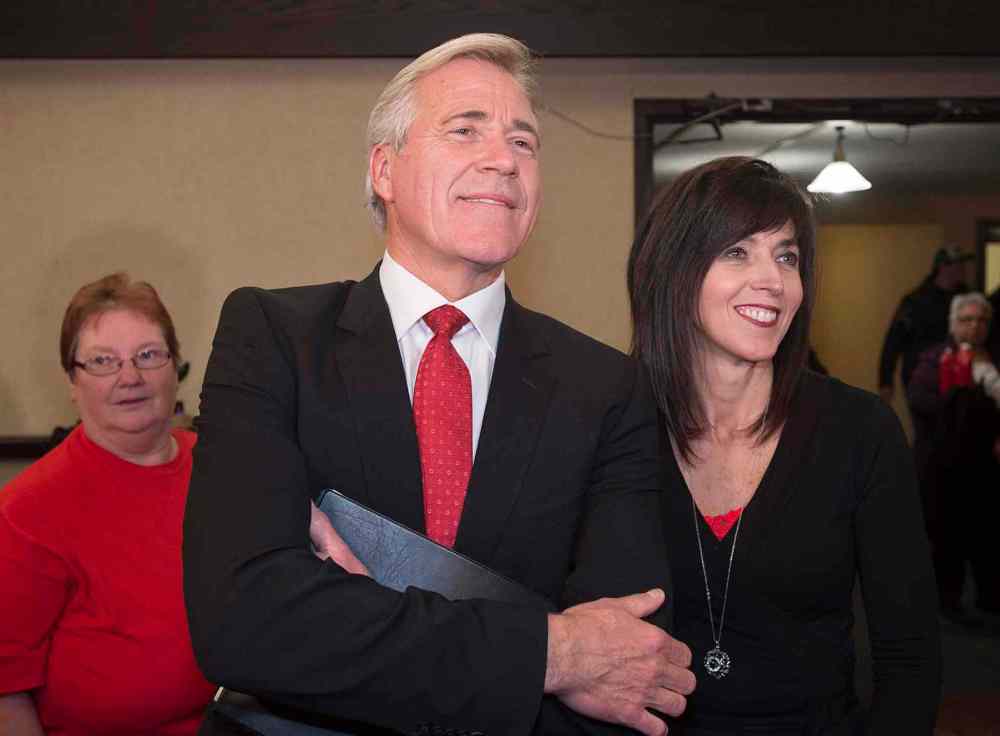
First, some background. The Newfoundland and Labrador election was a battle between the incumbent Progressive Conservatives and Premier Paul Davis, who took over the post just 14 months ago, and the opposition Liberals, led by Dwight Ball. The NDP was a non-factor.
Davis’s government had been wracked by scandal and weakened by deficits, the result of a global plunge in oil prices that eviscerated the province’s treasury.
In fiscal terms, this has been a stunning reversal of fortune for the province. Seven years ago, it was flush with gas revenue and posting gaudy surpluses. In 2007-08, the province had a $1.4-billion surplus; the following year, $2.3 billion. Taxes came down, government spending went up.
And then, it came crashing down. Starting in 2012, petroleum revenue declined at an alarming rate and the deficits mounted. Newfoundland and Labrador is in the fourth year of what is expected to be an eight-year stretch of deficit financing. Although no government can be blamed for the global economic woes that have come to bear in the province, the PCs wore out their welcome with voters.
What did Ball do to win over those voters?
He certainly did his best to ride on Trudeau’s coattails, with a campaign focused on the themes of hope and change, along with promises to work closely and co-operatively with the new Liberal government in Ottawa. However, when you compare the two parties, the provincial Liberals have little in common with their federal cousins except the colour of their logos.
Trudeau shunned austerity, introduced targeted tax hikes and admitted he would run modest, short-term deficits to protect and enhance core federal services and programs. Ball, on the other hand, promised across-the-board spending cuts, the cancellation of a PC plan to raise the harmonized sales tax by two points, and the sale of Crown land and buildings.
The only area of policy where the federal and provincial Liberal parties intersect is in the timetable for balancing their respective budgets; both have promised an end to deficit financing within their first four-year term.
It is not unusual for prognosticators to find important trends and macro forces in one provincial election they believe can predict the result of other, future elections. Look no further than NDP Premier Rachel Notley’s remarkable victory in the Alberta election earlier this year, used by many to predict a similar breakthrough for the NDP in the fall federal election. Of course, the Alberta vote did not, in the end, have much influence on the federal election.
Still, the Newfoundland and Labrador election does offer us an important insight into future elections, such as the one in Manitoba next April.
The most important message for politicians in a province such as ours is that voters, it seems, are willing to bet on opposition parties with a shaky grasp of mathematics.
In the federal election, the severe fiscal position of the Conservative incumbents (austerity, smaller government, balanced budgets and lower taxes) was vulnerable to Trudeau’s promise to run small deficits to sustain core government services. Voters hungry for change ignored the NDP and latched on to Trudeau’s pledge of balanced government, rather than balanced budgets, and gave him a majority.
In Newfoundland and Labrador, the opposite was true. Premier-designate Ball summoned a tenuous fiscal plan, promising to cancel tax hikes and cut government spending without harming front-line services. Most economists and commentators repeatedly pointed out Ball’s fiscal plans were mostly vapour, but that did not dissuade voters.
In this election, the desire for change gave voters a high tolerance for Ball’s fiscal vagaries. That should come as a chilling reminder of just how precarious the situation is for the NDP government in Manitoba.

Here, the long-serving NDP is hoping its “balanced” plan, which rejects austerity to balance the budget for its own sake, can triumph over what it calls the “risky” and impractical pledges from the opposition Progressive Conservatives, who have adopted a narrative similar to Ball’s: no tax hikes and balanced budgets that will be achieved by modestly cutting spending.
The relevant point of intersection for the federal and Newfoundland and Labrador Liberal campaigns is that both were able to offer something few long-serving incumbent governments can combat: the promise of change.
It wasn’t the Liberal brand or their fiscal policy that allowed Ball’s Liberals to triumph on the Rock. It was the fact voters had reached a point where anything is better than the something they have known for a very long time.
Fiscal positions change, economies surge and fall back and social and political sensibilities evolve. But the Newfoundland and Labrador election reminds us there is only one bona fide electoral trump card: the desire for change.
dan.lett@freepress.mb.ca
Dan Lett is a columnist for the Free Press, providing opinion and commentary on politics in Winnipeg and beyond. Born and raised in Toronto, Dan joined the Free Press in 1986. Read more about Dan.
Dan’s columns are built on facts and reactions, but offer his personal views through arguments and analysis. The Free Press’ editing team reviews Dan’s columns before they are posted online or published in print — part of the our tradition, since 1872, of producing reliable independent journalism. Read more about Free Press’s history and mandate, and learn how our newsroom operates.
Our newsroom depends on a growing audience of readers to power our journalism. If you are not a paid reader, please consider becoming a subscriber.
Our newsroom depends on its audience of readers to power our journalism. Thank you for your support.
Dan Lett is a columnist for the Free Press, providing opinion and commentary on politics in Winnipeg and beyond. Born and raised in Toronto, Dan joined the Free Press in 1986. Read more about Dan.
Dan’s columns are built on facts and reactions, but offer his personal views through arguments and analysis. The Free Press’ editing team reviews Dan’s columns before they are posted online or published in print — part of the our tradition, since 1872, of producing reliable independent journalism. Read more about Free Press’s history and mandate, and learn how our newsroom operates.
Our newsroom depends on a growing audience of readers to power our journalism. If you are not a paid reader, please consider becoming a subscriber.
Our newsroom depends on its audience of readers to power our journalism. Thank you for your support.
Related Articles
Change, hope on the Rock
Advertisement Advertise With Us
Advertisement Advertise With Us
History
Updated on Wednesday, December 2, 2015 7:26 AM CST: Replaces photo, adds byline