

Whiteshell reactor must be sealed below bedrock: expert
Advertisement
Read this article for free:
or
Already have an account? Log in here »
To continue reading, please subscribe:

Digital Subscription
One year of digital access for only $205*
- Enjoy unlimited reading on winnipegfreepress.com
- Read the E-Edition, our digital replica newspaper
- Access News Break, our award-winning app
- Play interactive puzzles
*First annual payment billed as $205.00 + GST for one year. This annual subscription will automatically renew at $233.00 + GST every 52 weeks (10% off the regular annual price of $259.35). Offer available to new and qualified returning subscribers only. Cancel any time.
To continue reading, please subscribe:
Add Free Press access to your Brandon Sun subscription for only an additional
$1 for the first 4 weeks*
- Enjoy unlimited reading on winnipegfreepress.com
- Read the E-Edition, our digital replica newspaper
- Access News Break, our award-winning app
- Play interactive puzzles
*Your next Brandon Sun subscription payment will increase by $1.00 and you will be charged $17.95 plus GST for four weeks. After four weeks, your payment will increase to $24.95 plus GST every four weeks.
Read unlimited articles for free today:
or
Already have an account? Log in here »
Hey there, time traveller!
This article was published 14/12/2016 (3558 days ago), so information in it may no longer be current.
A MAJOR difference in the American versus Canadian approach to disposal of radioactive material looms during the debate to decommission the Whiteshell Laboratories nuclear research station near Pinawa.
Canadian Nuclear Laboratories (CNL), wants to entomb the Whiteshell Reactor #1 (WR-1) in concrete. While the reactor would be sealed, it would still rest above bedrock.
Peter Baumgartner, a retired nuclear scientist, said encasing nuclear material above bedrock has been the American response to disposing of nuclear waste. Canada has spent at least half a billion dollars researching storage of radioactive material, particularly into bedrock, he said.
Baumgartner is one of six retired nuclear scientists and engineers who still live in Pinawa and who worked in radioactive waste disposal. Much of the research was from an underground research laboratory 420 metres deep into granitic rock near Lee River, between Lac du Bonnet and Point du Bois. The facility, complete with headframe, was capped off only a few years ago.
Baumgartner believes WR-1 should be sealed 50 to 100 metres below bedrock, like a mine shaft. “The only way you could safely dispose radioactive material is to inter it within high-quality granitic rock of the Canadian Shield, and we spent over 25 years conducting the research,” he said, speaking for the retired scientists.
The problem is the long life of radioactive material.
The reactor contains radionuclides such as Cobalt 60. Cobalt 60 is a metal made radioactive by proximity to the nuclear reactor. Cobalt 60 has a half-life of five years. Radionuclides with short half-lives are the most radioactive. But they also decay more quickly. The Cobalt 60 has already been reduced to about 1/1000th its strength since WR-1 was shut down in 1988, Baumgartner said.
On the other hand, Nickel 59, contained in the stainless-steel housing the nuclear reactor, has a half life of 76,000 years.
“So it will take 10 half lives, or 760,000 years, for it to go down 1/1000th what it is now,” he said.
One can’t predict the future. As an example, Baumgartner said, continental glaciers could advance from the north in perhaps 10,000 to 20,000 years. Glacier advances have been occurring about every 100,000 years, and the Earth is believed to be near the end of an interglacial period when glaciers recede.
“Glaciers will come along one day and probably bulldoze this reactor out of the ground because it’s sitting in soils, and it will distribute it around, just like glacial erratics (boulders transported by glaciers from the Canadian Shield, for example) you find around Winnipeg when digging up a new subdivision.”
In the past, that has been an ethical concern of the Canadian government, Baumgartner said. While the radioactivity will be diluted, it’s still harmful depending on the exposure.
Brian Wilcox, CNL director of project delivery, said glaciers may advance in 10,000 years, but it isn’t until they retreat again that they will drop picked-up materials. So the time scenario is more like 60,000 years.
However, CNL will include glaciation in its “disruptive scenario analysis,” he said, along with other speculative events such as an airplane crash, and flooding from a bursting of the Seven Sisters hydroelectric dam.
Manitoba is perhaps the safest location in the world from earthquakes, he added.
Baumgartner maintained more analysis is needed on groundwater movement. Baumgartner is not concerned about near-term safety but centuries or millennia into the future. Wilcox maintained CNL’s groundwater analysis is thorough after a consulting company drilled another 24 bore holes recently.
The decommissioning of WR-1 has been contracted from the federal government to CNL, which is controlled by a consortium called Canadian National Energy Alliance.
The alliance is run by CH2M (out of Englewood, Colo.), Fluor (Irving, Tex.), Atkins (England), Rolls-Royce (Manchester, England), and SNC-Lavalin Inc. (Montreal, with an office in Winnipeg). All are leading engineering and technology companies.
It’s called a government-owned, contractor-operated project, the first of its kind in Canada. They have existed in the U.S. and U.K. for some time. The consortium won a bidding process and took over in September 2015.
bill.redekop@freepress.mb.ca
Related Articles
Cheap nuclear 'cleanup' dangerous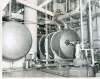
Advertisement Advertise With Us
Advertisement Advertise With Us