

Catholic split on Indigenous peoples a deep divide

Advertisement
Read this article for free:
or
Already have an account? Log in here »
To continue reading, please subscribe:
Digital Subscription
One year of digital access for only $1.44 a week*
- Enjoy unlimited reading on winnipegfreepress.com
- Read the E-Edition, our digital replica newspaper
- Access News Break, our award-winning app
- Play interactive puzzles
*Billed as $5.77 plus GST every four weeks. After 52 weeks, price increases to the regular rate of $19.95 plus GST every four weeks. Offer available to new and qualified returning subscribers only. Cancel any time.
To continue reading, please subscribe:
Add Free Press access to your Brandon Sun subscription for only an additional
$1 for the first 4 weeks*
- Enjoy unlimited reading on winnipegfreepress.com
- Read the E-Edition, our digital replica newspaper
- Access News Break, our award-winning app
- Play interactive puzzles
*Your next Brandon Sun subscription payment will increase by $1.00 and you will be charged $17.95 plus GST for four weeks. After four weeks, your payment will increase to $24.95 plus GST every four weeks.
Read unlimited articles for free today:
or
Already have an account? Log in here »
Hey there, time traveller!
This article was published 01/02/2019 (2824 days ago), so information in it may no longer be current.
International headlines were made in Washington, D.C., last month, when Nathan Phillips, an Omaha elder and U.S. war veteran, attempted to defuse a conflict between students from Covington Catholic High School and members of the Hebrew Israelites.
Attending the Indigenous Peoples March, a demonstration at the National Mall intended to bring awareness to global injustices against Indigenous nations, Phillips tried to calm things down by singing a traditional song and walking between the two groups.
Phillips was then surrounded by the Covington group and confronted by a Grade 11 student wearing a red “Make America Great Again” hat.
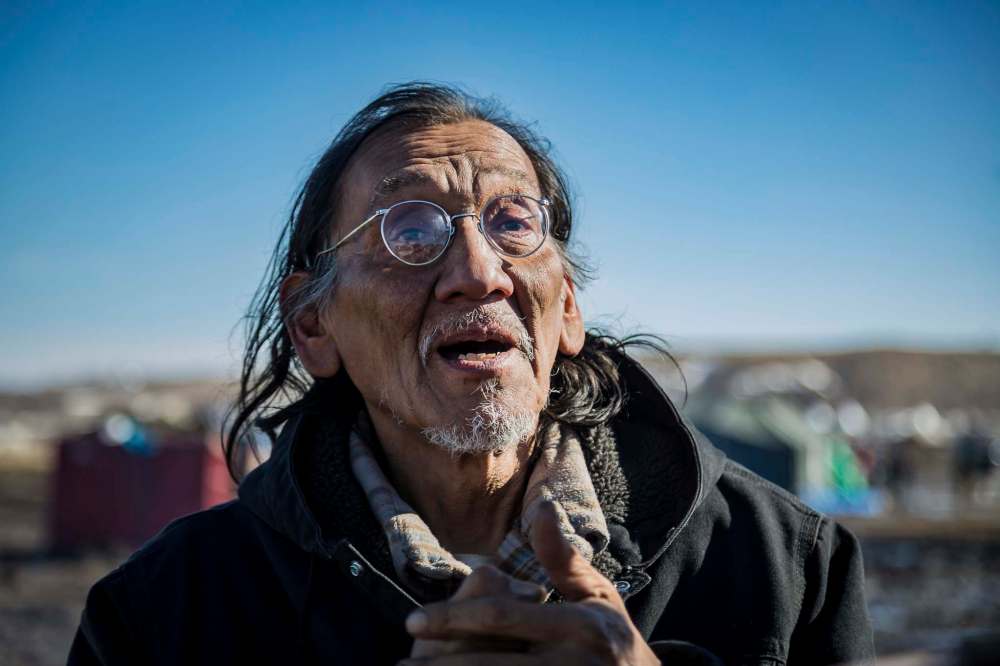
Nick Sandmann stood in his path. Some said the teen was smirking, satisfied; Sandmann said he was trying to “defuse” the situation.
Regardless, Sandmann’s fellow students openly demeaned and mocked Phillips, performing “tomahawk chops,” while chanting slogans like “Build the Wall” and “Trump 2020.”
Phillips said it felt like “hate unbridled.”
While the Covington students had been previously provoked by the Hebrew Israelites (Black Americans who believe they are descendants of the ancient Israelites), the scene of Catholic youth openly and proudly degrading an Indigenous elder became a worldwide phenomenon.
The question of where were their teachers, chaperones, and parents was often asked by talk show hosts.
That’s simple: nearby, not stopping them. In other words, allowing it to happen.
Much has been written about this encounter and I won’t rehash it further. Few though have noted one important story laid bare: the relationship between the Catholic Church and Indigenous peoples.
It is highlighted in the contradictory response from Catholic leaders and the allegiance the church has chosen with Donald Trump, the U.S. president known for openly mocking Indigenous peoples and genocides such as Wounded Knee.
In the waking moments of the Washington encounter, Rev. Roger Joseph Foys, bishop of the Roman Catholic Diocese of Covington (which oversees the students), issued a joint statement with other bishops of Kentucky.
“We condemn the actions of the Covington Catholic High School students towards Nathan Phillips specifically, and Native Americans in general, Jan. 18, after the March for Life, in Washington, D.C. We extend our deepest apologies to Mr. Phillips. This behavior is opposed to the church’s teachings on the dignity and respect of the human person.”
A few days later, Foys retracted his condemnation and said the church was “bullied and pressured” into making a “premature statement.” He announced an investigation into the incident, and stated: “It is my hope and expectation that the results will exonerate our students so that they can move forward with their lives.”
So much for the open mocking of Indigenous peoples being “opposed to the church’s teachings.”
Upon speaking with local Catholics, I am told the Catholic Church in Canada is different, and it has done a lot to rectify relationships with Indigenous peoples.
I’m told about the Canadian Catholic Indigenous Council, a body formed by the Canadian Conference of Catholic Bishops to “serve as an important link between Indigenous and non-Indigenous Catholics.”
I’m told about the participation of the Catholic Church with the Truth and Reconciliation Commission of Canada. I’m told missionaries, priests, and nuns are sorry for the aggressive, violent attempts to convert as many Indigenous communities as possible, particularly in the residential school system (in Canada, the Catholic Church operated more than two-thirds of them).
I’m told about the many apologies Catholic bodies have made to Indigenous peoples for residential schools.
All of this falls apart though, when it comes to one person: the Pope. The Pope refuses to apologize for residential schools or, frankly, anything else Catholics have done in relation to Indigenous peoples.

Catholics participated in decimating Indigenous communities and, therefore, every single legacy of violence and poverty and displacement today.
In a letter to Parliament last April, the Canadian bishops wrote the Catholic Church is “decentralized” and a papal apology isn’t appropriate, rather left for local leadership to pursue engagement and reconciliation.
“To suggest that the Catholic community has not accepted responsibility for its involvement in residential schools is simply inaccurate. The Catholic Church has apologized in the way it is structured,” the letter said.
What makes this argument holey, of course, is the Pope apologizes to groups of people all the time.
It’s almost like Canadian Catholics are standing by while Catholics nearby mock, promote hate, and chant slogans against Indigenous peoples. In other words, allow it to happen.
Why are Catholics so split on Indigenous peoples?
One part of the church supports those who openly commit violent acts against Indigenous peoples and the other seems to want reconciliation. It’s enough to make one conclude that before any Catholic leader says to an Indigenous person, “My religion is for you,” it’s fair for that person to say, “Why does your church hate me so much?”
The Catholic Church has little to stand on when it comes to Indigenous peoples, because atrocities and violent acts are still occurring under its umbrella.

Catholics can say their dioceses are different, their cultures are different, and whatever else. But are they?
According to the Canadian bishops: “Approximately 25 per cent of all Indigenous peoples in Canada identify themselves as Catholic.” That’s around 400,000 Indigenous Roman Catholics in Canada.
For the good or the bad, Catholicism matters to Indigenous peoples.
Maybe, one day, Indigenous peoples will matter to all Catholics.
niigaan.sinclair@freepress.mb.ca
Niigaan Sinclair is Anishinaabe from Peguis First Nation and a professor in the Department of Indigenous Studies at the University of Manitoba. He’s been a columnist for the Free Press since 2018. Read more about Niigaan.
Every piece of writing Niigaan produces is reviewed by an editing team before it is posted online or published in print — part of the Free Press‘s tradition, since 1872, of producing reliable independent journalism. Read more about Free Press’s history and mandate, and learn how our newsroom operates.
Our newsroom depends on a growing audience of readers to power our journalism. If you are not a paid reader, please consider becoming a subscriber.
Our newsroom depends on its audience of readers to power our journalism. Thank you for your support.
Niigaan Sinclair is Anishinaabe from Peguis First Nation and a professor in the Department of Indigenous Studies at the University of Manitoba. He’s been a columnist for the Free Press since 2018. Read more about Niigaan.
Every piece of writing Niigaan produces is reviewed by an editing team before it is posted online or published in print — part of the Free Press‘s tradition, since 1872, of producing reliable independent journalism. Read more about Free Press’s history and mandate, and learn how our newsroom operates.
Our newsroom depends on a growing audience of readers to power our journalism. If you are not a paid reader, please consider becoming a subscriber.
Our newsroom depends on its audience of readers to power our journalism. Thank you for your support.
Advertisement Advertise With Us
Advertisement Advertise With Us
History
Updated on Saturday, February 2, 2019 12:04 AM CST: Fixes typo
Updated on Tuesday, February 5, 2019 10:27 AM CST: Amends figure on Catholic-operated residential schools