

First Nations lockdowns for everyone’s benefit

Advertisement
Read this article for free:
or
Already have an account? Log in here »
To continue reading, please subscribe:
Monthly Digital Subscription
$1 per week for 24 weeks*
- Enjoy unlimited reading on winnipegfreepress.com
- Read the E-Edition, our digital replica newspaper
- Access News Break, our award-winning app
- Play interactive puzzles
*Billed as $4.00 plus GST every four weeks. After 24 weeks, price increases to the regular rate of $19.95 plus GST every four weeks. Offer available to new and qualified returning subscribers only. Cancel any time.
Monthly Digital Subscription
$4.99/week*
- Enjoy unlimited reading on winnipegfreepress.com
- Read the E-Edition, our digital replica newspaper
- Access News Break, our award-winning app
- Play interactive puzzles
*Billed as $19.95 plus GST every four weeks. Cancel any time.
To continue reading, please subscribe:
Add Free Press access to your Brandon Sun subscription for only an additional
$1 for the first 4 weeks*
- Enjoy unlimited reading on winnipegfreepress.com
- Read the E-Edition, our digital replica newspaper
- Access News Break, our award-winning app
- Play interactive puzzles
*Your next Brandon Sun subscription payment will increase by $1.00 and you will be charged $17.95 plus GST for four weeks. After four weeks, your payment will increase to $24.95 plus GST every four weeks.
Read unlimited articles for free today:
or
Already have an account? Log in here »
Hey there, time traveller!
This article was published 30/10/2020 (2021 days ago), so information in it may no longer be current.
Winnipeg is in “code red;” the rest of the province is “code orange.”
Remember when Manitoba was posting the same number of new daily cases as New Brunswick (roughly zero at the end of July)? On Friday, the East Coast province registered one new case (and it was due to international travel).
Manitoba is nearly 500 times worse — and it’s in large part to the government’s poorly thought-out reopening strategy.
The province eased restrictions too much, too fast, while giving the public mixed messages and later refusing to reinstall restrictions until it was too late.
One blatant example: casinos only closed last week after the province reported three consecutive days of record-breaking, triple-digit daily case counts. That’s far too late and everyone knew it — except for those who make the decisions.
The only way to stop the spread of the novel coronavirus is swift, decisive action, and provincial leaders (looking at you, Premier Brian Pallister) dropped the ball.
They have taken Manitoba from best to last in the fight against COVID-19.
Regardless of how many times Pallister tells Manitobans to grow up (as he did this week), and shame them into wearing face masks and staying home, no one would have been out had restrictions stayed strong.
Now, Manitoba faces full hospitals, over-stressed and overworked health-care workers, and everyone — especially teachers, front-line workers, and poor people — is more at risk than ever.
That said, a ray of hope has come from its First Nations communities.
Despite a provincial government slow to change direction, for weeks, First Nations — often with only a handful of cases — have self-imposed lockdown restrictions to keep COVID-19 at bay.
On Sept. 15, Sagkeeng imposed strict restrictions after only one case was found. This involved checkpoints to roads in and out of the First Nation, quarantine, and community-wide restrictions on movement.
On Oct. 4, Little Grand Rapids imposed a lockdown after 19 cases.
The week before, after seven cases were found in one family on Nisichawayasihk (Nelson House) Cree Nation, code red-like restrictions were imposed in the community and the outbreak was controlled.
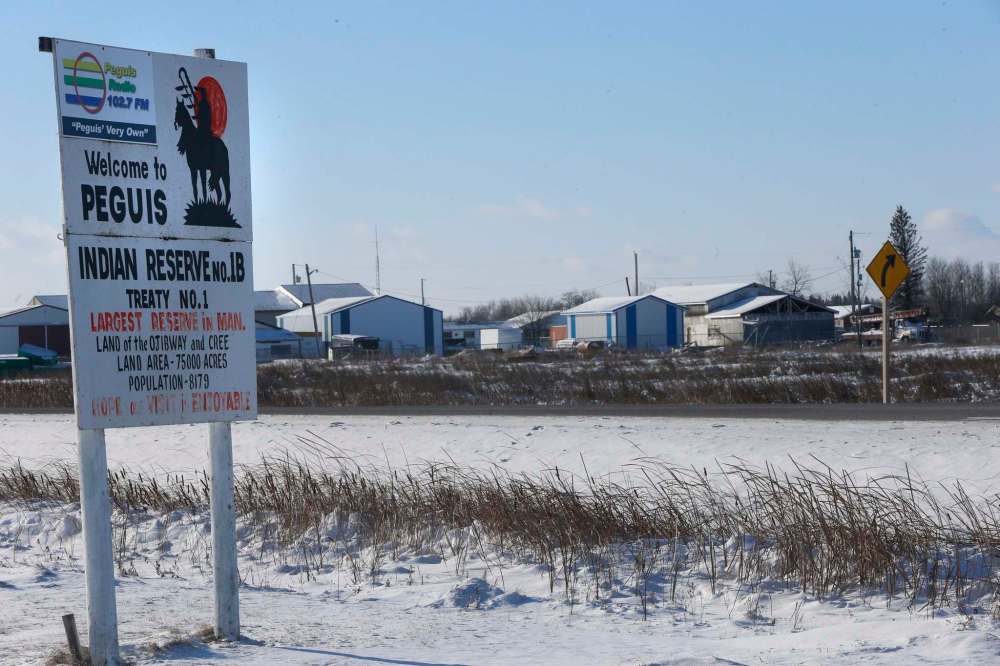
This week, states of emergency and code red restrictions were announced by First Nations leaders in Pimicikamak (Cross Lake) and Peguis after small outbreaks. Before province-wide restrictions were announced Friday, Fisher River, Kinonjeoshtegon, Opaskwayak, Bunibonibee, Oxford House, Manto Sipi, and God’s Lake were all preparing to do so anyway.
So, just as First Nations across Manitoba did earlier in the pandemic (imposing tougher local restrictions than what was provincially mandated) Indigenous communities are taking strong, decisive steps to stop the sickness locally and, therefore, the rest of the province.
It’s easier, of course, to impose restrictions on communities without much of an economy and few roads (one of the only times the Indian Act has helped First Nations), but it’s harder when you consider the lack of infrastructure, clean water, and proper housing.

It’s also worth noting there was no first wave on most First Nations. With the exception of a few communities mostly in Alberta, Ontario, and Quebec, for most, the first wave has only started. Remember this when First Nations enter a second wave of the sickness six or seven months from now (after it passes through major urban centres).
Through these choices, First Nations have been reducing the spread, protecting everyone as a result, and without the need for governments to tell them what to do.
Despite the ineptitude shown by the Manitoba premier and his government, First Nations have taken control of their own futures, and helped assure ours as a result.
There’s a lot we can learn there and, when we get through this, a lot of thanks that should come with it.
niigaan.sinclair@freepress.mb.ca
Niigaan Sinclair is Anishinaabe and is a columnist at the Winnipeg Free Press.
Our newsroom depends on a growing audience of readers to power our journalism. If you are not a paid reader, please consider becoming a subscriber.
Our newsroom depends on its audience of readers to power our journalism. Thank you for your support.
Niigaan Sinclair is Anishinaabe and is a columnist at the Winnipeg Free Press.
Our newsroom depends on a growing audience of readers to power our journalism. If you are not a paid reader, please consider becoming a subscriber.
Our newsroom depends on its audience of readers to power our journalism. Thank you for your support.
Advertisement Advertise With Us
Advertisement Advertise With Us