

Brandon University gets unique new buzz code

Advertisement
Read this article for free:
or
Already have an account? Log in here »
To continue reading, please subscribe:

Digital Subscription
One year of digital access for only $205*
- Enjoy unlimited reading on winnipegfreepress.com
- Read the E-Edition, our digital replica newspaper
- Access News Break, our award-winning app
- Play interactive puzzles
*First annual payment billed as $205.00 + GST for one year. This annual subscription will automatically renew at $233.00 + GST every 52 weeks (10% off the regular annual price of $259.35). Offer available to new and qualified returning subscribers only. Cancel any time.
To continue reading, please subscribe:
Add Free Press access to your Brandon Sun subscription for only an additional
$1 for the first 4 weeks*
- Enjoy unlimited reading on winnipegfreepress.com
- Read the E-Edition, our digital replica newspaper
- Access News Break, our award-winning app
- Play interactive puzzles
*Your next Brandon Sun subscription payment will increase by $1.00 and you will be charged $17.95 plus GST for four weeks. After four weeks, your payment will increase to $24.95 plus GST every four weeks.
Read unlimited articles for free today:
or
Already have an account? Log in here »
Hey there, time traveller!
This article was published 23/04/2022 (1617 days ago), so information in it may no longer be current.
Brandon is buzzing over 80,000 new residents.
The university is hosting a pilot project in which two honeybee hives will be set up on its grounds this spring.
The hives will provide educational opportunities and pollinate Brandon’s urban flora, and promote healthy beekeeping, project lead Deanna Smid said.
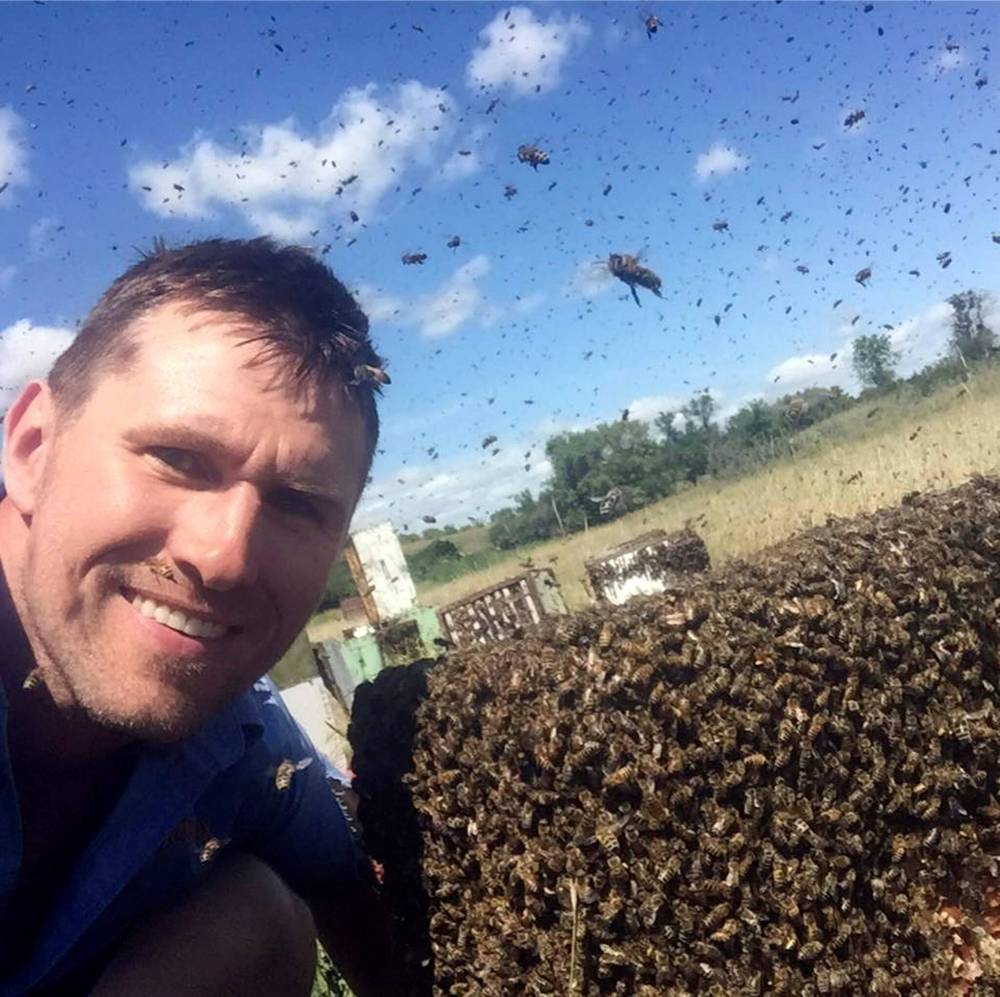
“I hope that this could be the start of something that will help beekeepers and also help the natural world,” Smid said. “We are certainly going in with a lot of optimism and maybe some idealism as well.”
Smid, an associate professor at Brandon University, championed the project with a handful of her colleagues. While she has no experience beekeeping, she hopes to learn the tricks of the trade, she said.
Beekeeper Michael Clark will be there to help. Clark’s family has been operating a bee farm near Brandon for more than a century.
Clark, 42, was born and raised in the business.
It is difficult to estimate how many bees the urban apiaries will support, but Clark estimates when the colonies peak in July, each hive could host from 40,000 to 80,000 bees.
Together, they have the potential to produce around 90 kg of honey by summer’s end. That’s enough to fill roughly 180 500-ml jars, most of which the university will donate to food banks.
The initiative, which staff have dubbed “Bee U,” comes at a time when Manitoba’s bee industry is facing a potential threat. Bee farmers across the country are suffering unprecedented losses this season and Manitoba is among the hardest hit, Clark said.
“Depression has definitely set in, I will say that… you could see that the sky is falling, and you don’t know if you will survive,” he said.
Many apiaries, including Clark’s, have lost up to 70 per cent of their hives.
The province’s abundance of monocrop agriculture, coupled with a late killing frost last season, likely contributed, he said.
Clark knows many keepers who are leaving the business. The situation is so dire, he and his peers have petitioned the Manitoba Beekeepers’ Association to host an emergency meeting next week.
They are desperate for a financial intervention, he said.
“That’s why I’m also looking forward to the university, because I think it will take my mind to build something, instead of seeing what I am seeing here,” he said.

The university will be the first location in Brandon to host urban bee colonies. It plans to install the hives atop Harvest Hall.
The one-storey building, which has a flat roof, will be low enough for the bees to forage for food while protecting the hives from vandalism.
The bees will remain there until August when staff move them to another location over winter.
If successful, BU may expand the project.

Brandon bylaws don’t allow for urban beekeeping, but Smid submitted a variance that was approved by the city April 19.
“The planning commission’s sentiment was that it made sense to do something to help with bee populations,” senior planner Andrew Mok said Friday.
The variance will allow BU to host the hives for at least five years.
It is too early to say whether the city will amend the bylaw or open up beekeeping to others, but data from the university and public consultations could influence future policies, Mok said.
fpcity@freepress.mb.ca
Tyler Searle is a multimedia producer who writes for the Free Press’s city desk. A graduate of Red River College Polytechnic’s creative communications program, he wrote for the Stonewall Teulon Tribune, Selkirk Record and Express Weekly News before joining the paper in 2022. Read more about Tyler.
Every piece of reporting Tyler produces is reviewed by an editing team before it is posted online or published in print — part of the Free Press‘s tradition, since 1872, of producing reliable independent journalism. Read more about Free Press’s history and mandate, and learn how our newsroom operates.
Our newsroom depends on a growing audience of readers to power our journalism. If you are not a paid reader, please consider becoming a subscriber.
Our newsroom depends on its audience of readers to power our journalism. Thank you for your support.
Tyler Searle is a multimedia producer who writes for the Free Press’s city desk. A graduate of Red River College Polytechnic’s creative communications program, he wrote for the Stonewall Teulon Tribune, Selkirk Record and Express Weekly News before joining the paper in 2022. Read more about Tyler.
Every piece of reporting Tyler produces is reviewed by an editing team before it is posted online or published in print — part of the Free Press‘s tradition, since 1872, of producing reliable independent journalism. Read more about Free Press’s history and mandate, and learn how our newsroom operates.
Our newsroom depends on a growing audience of readers to power our journalism. If you are not a paid reader, please consider becoming a subscriber.
Our newsroom depends on its audience of readers to power our journalism. Thank you for your support.
Advertisement Advertise With Us
Advertisement Advertise With Us