Winter solstice, community solace Sense of belonging central to Indigenous-run homeless warming centre’s operations; N’Dinawemak offers abundance of light on year’s darkest day
Read this article for free:
or
Already have an account? Log in here »
To continue reading, please subscribe:

Digital Subscription
One year of digital access for only $205*
- Enjoy unlimited reading on winnipegfreepress.com
- Read the E-Edition, our digital replica newspaper
- Access News Break, our award-winning app
- Play interactive puzzles
*First annual payment billed as $205.00 + GST for one year. This annual subscription will automatically renew at $233.00 + GST every 52 weeks (10% off the regular annual price of $259.35). Offer available to new and qualified returning subscribers only. Cancel any time.
To continue reading, please subscribe:
Add Free Press access to your Brandon Sun subscription for only an additional
$1 for the first 4 weeks*
- Enjoy unlimited reading on winnipegfreepress.com
- Read the E-Edition, our digital replica newspaper
- Access News Break, our award-winning app
- Play interactive puzzles
*Your next Brandon Sun subscription payment will increase by $1.00 and you will be charged $17.95 plus GST for four weeks. After four weeks, your payment will increase to $24.95 plus GST every four weeks.
Read unlimited articles for free today:
or
Already have an account? Log in here »
Hey there, time traveller!
This article was published 22/12/2023 (968 days ago), so information in it may no longer be current.
For Indigenous peoples, wintertime is about community.
This is why the winter solstice on Dec. 21 — when the sun is lowest in the sky and the days are the shortest — is such a central time of feasting, gathering and visiting.
For my people, the Anishinaabe, winter is when we lived in large, multi-family lodges — called wiigiwaaman — where we would share resources and food, work and cook together and perform ceremonies and gatherings envisioning our collective future.
Our lodges were the places we did everything; go to school, deliver government and heal the sick. They were places where we built a vast community of kin rather than separating ourselves into individuals, groups or, even, families.
As an example: the idea of preparing a meal just for those you share blood with would be nonsensical and, frankly, counterproductive. If community members selfishly looked out only for themselves, the lodge would become a competitive, destructive place.
“Holidays” for Indigenous peoples, therefore, looked very different than they do now.
Well, not everywhere.
“We are packed every night in this place,” Frank Parkes, the executive director of N’Dinawemak – Our Relatives Place, tells me during a tour. “Everyone is welcome here.”
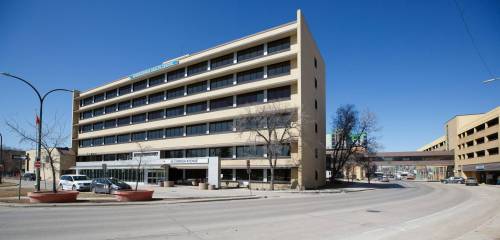
N’Dinawemak is Winnipeg’s Indigenous-run warming centre, run out the former Levi’s Leathers guitar-strap factory at 190 Disraeli Freeway. It celebrated its two-year anniversary last month.
RUTH BONNEVILLE / WINNIPEG FREE PRESS Frank Parkes, the executive director of N’Dinawemak – Our Relatives Place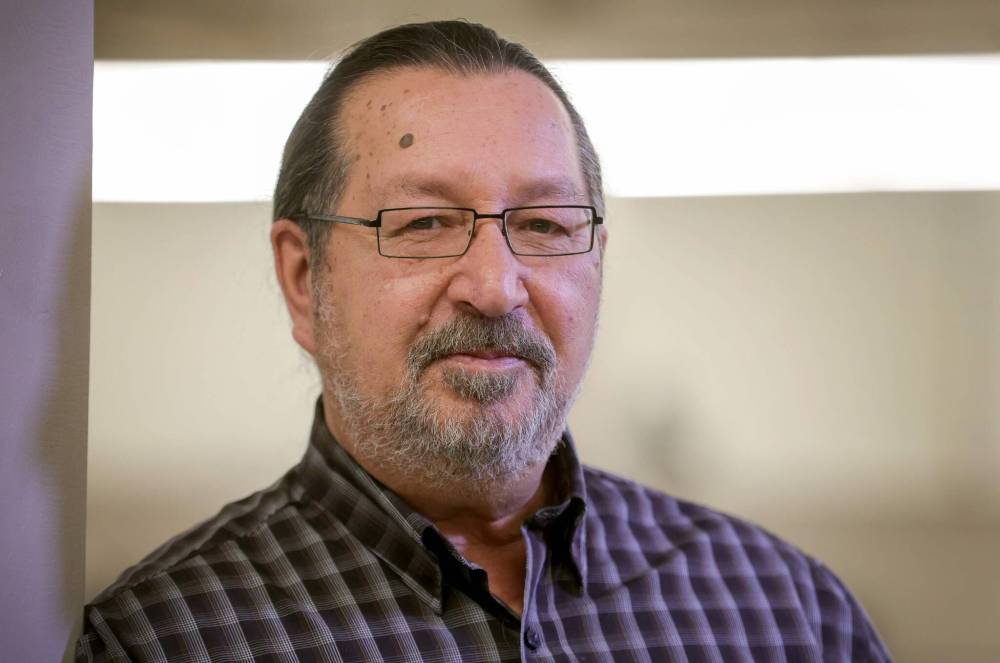
There are 150 beds for men and women experiencing homelessness here, along with a huge common area, warm meals, a clothing and donation distribution centre and access to resources and employment opportunities via four Indigenous-run non-profit organizations.
“We have to put mats down just to get everyone in,” Parkes says, walking by the 100 or so cots that are occupied early in the afternoon.
Parkes, hired last September, is from Peguis First Nation and is a former employment adviser at Red River Polytechnic and member of the board of directors of the Bear Clan Patrol. He tells me that what sets N’Dinawemak apart is its principle of community-building.
“The cure to homelessness isn’t keeping people apart,” he says, “or even giving a ‘home.’ Homelessness is addressed by building on the needs of our relatives — with the most important one being the need for belonging, to be part of a family. That’s what draws people here.”
”Homelessness is addressed by building on the needs of our relatives — with the most important one being the need for belonging, to be part of a family. That’s what draws people here.”–Frank Parkes
Just as Parkes is about to continue, loud laughter is heard from the common room, where four male elders sit together. One holds a cup of coffee. Two others are playing cards. The fourth is sorting stuff from an old, torn backpack.
“That’s the sound I hear the most here,” Parkes says, smiling. “That’s how I know this place is working.”
It doesn’t take long to find someone I’m related to. It is, after all, the name of the place.
Lawrence Abraham is an elder in his 70s from Sagkeeng First Nation.
“I used to visit your daughter’s grandfather Lawrence,” he tells me, “and her mother when she was a little girl. I remember them well.”
Abraham is a former logger who inherited his family’s business on the east side of Lake Winnipeg at 16 but lost it when the timber industry bottomed out.
RUTH BONNEVILLE / WINNIPEG FREE PRESS Lawrence Abraham, an elder from Sagkeeng First Nation.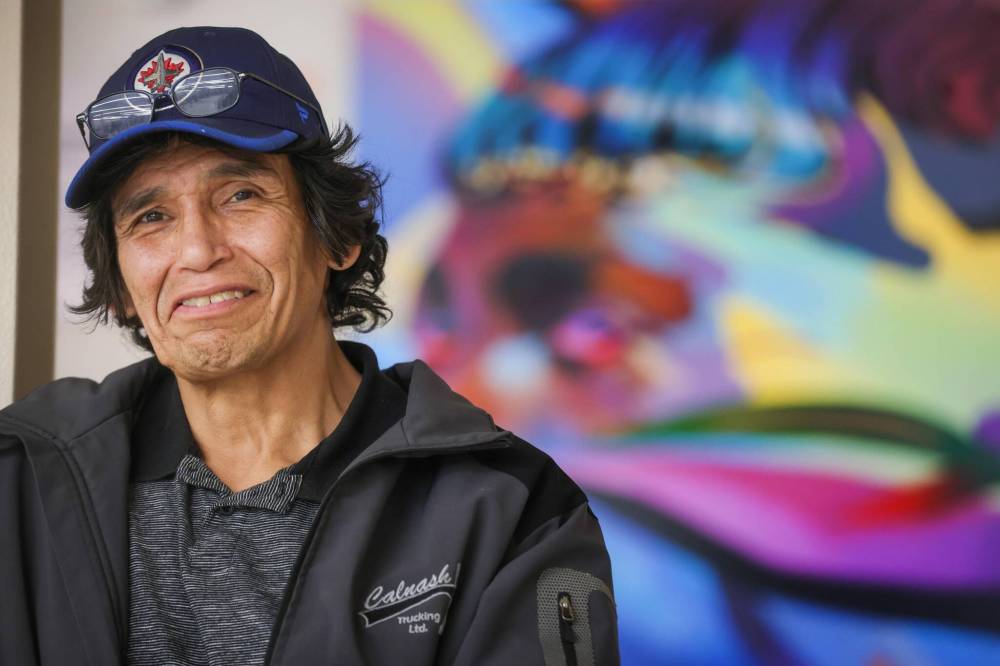
After raising a family, he experienced divorce and personal struggles, resulting in his homelessness. He now works part time doing construction and lives at N’Dinawemak.
“This place reminds me of my grandmother’s home,” Abraham explains to me, “we used to have to stay up all night making four turkeys to feed everyone.”
Abraham is also an artist whose work was featured for years in Portage Place. He now decorates clothing with traditional Anishinaabe designs, showing me the eagle he drew on the back of his friend’s melton jacket.
He also volunteers, “making sure everyone is OK.”
“It’s the native way to make sure everyone feels welcome here,” he says. “I’m just trying to do my part.”
“It’s the native way to make sure everyone feels welcome here.”–Lawrence Abraham
Abraham tells me he’d like to find more work in drywall-taping, but it’s almost impossible to find decent, warm, non-leaking footwear for outside work.
“All I want for Christmas is warm feet,” he says with a laugh.
According to End Homelessness Winnipeg, there are about 1,250 people living on the streets in the city. About 70 per cent of them are Indigenous.
At N’Dinawemak, the centre partially funded by the provincial and federal governments and operated by the Assembly of Manitoba Chiefs, Sabe Peacewalkers, the Downtown Safety Partnership and Community Helpers Unite, that number is closer to 90 per cent.
For residents here, there is no living room with a tree and presents, no waking up in a bedroom with a big bed and TV and no vacation days or holiday cards hung on a string.
But, on this winter solstice day, there is Ojibway and Cree spoken all over the place, Indigenous art on the walls beside a tree and decorations, and volunteers everywhere to talk to.
Everyone, it seems, knows each other’s names. There is an excited lineup forming for macaroni and cheese. People watch an episode of Seinfeld on the TV in the corner.
“My goal is for everyone to get a gift on Christmas Day,” Parkes tells me. “But today I’m making phone calls to make sure that we all have enough for the feast on Saturday.”
All is not happy this month, though. The holidays is also a very hard time for those in crisis, Parkes says. Over the past few weeks four people were found overdosed and had to be resuscitated in the bathrooms at N’Dinawemak.
“Every single person who comes here has trauma,” Parkes tells me. “Our goal is to try and listen and learn to find out what each person needs and try make their day easier.”
I ask him what he and his staff need.
“We need Winnipeggers to see their relations,” he says. “And to stand up for them.”
Kyla Ouskun volunteers for an interview, choosing to share her words economically.
“I’m very shy,” the 26-year-old says, “but I want to be here.”
RUTH BONNEVILLE / WINNIPEG FREE PRESS Kyla Ouskun volunteers during coffee hour and helps cleaning and in the kitchen.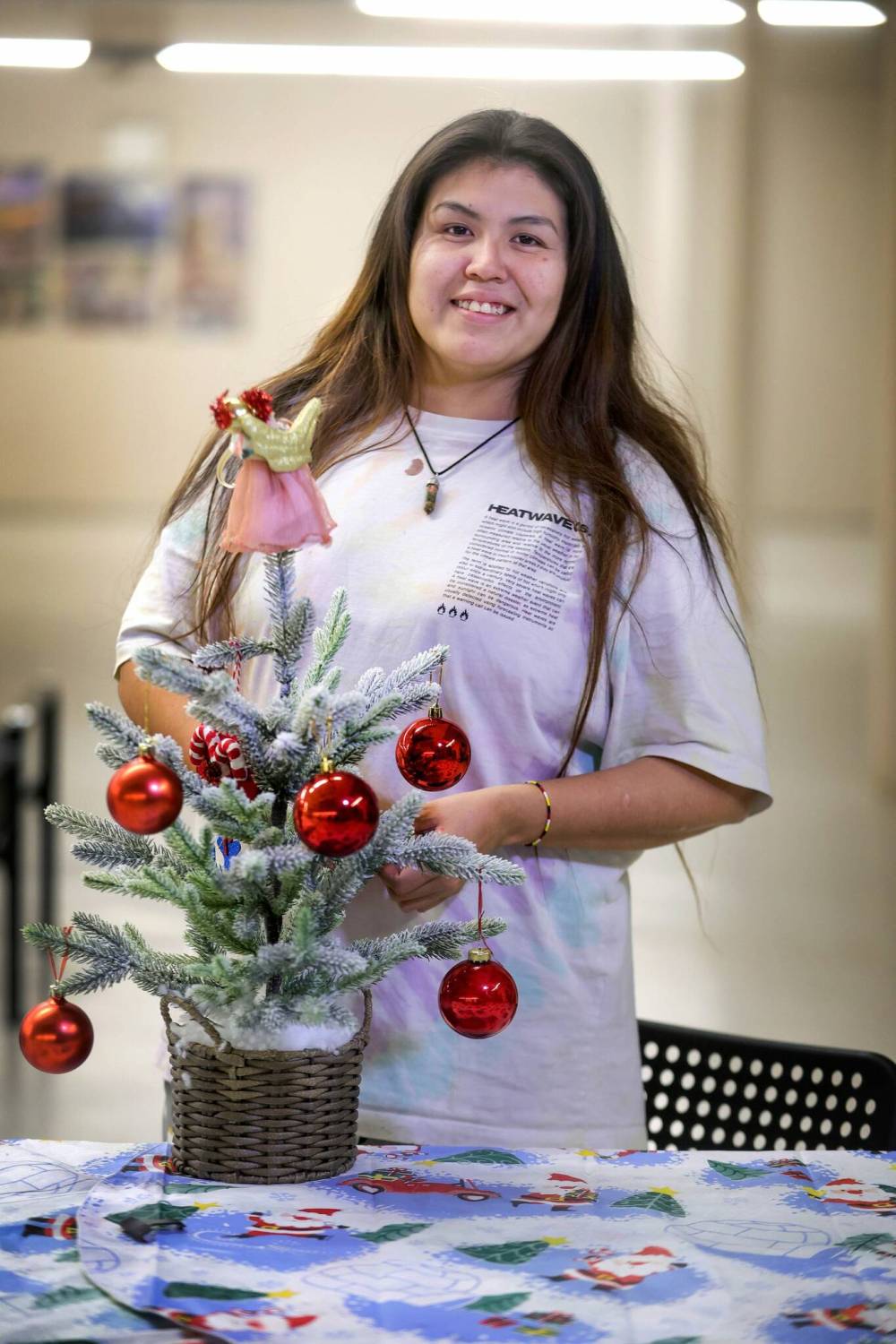
Ouskun is recently homeless after growing up in Gilbert Park (what Indigenous peoples in the city refer to as “Jigtown”)in the Keewatin-Burrows area. She has no ID or possessions and is slowly re-assembling her life while living at N’Dinawemak.
She volunteers during coffee hour and helps cleaning and in the kitchen.
“I love baking,” Ouskun tells me, smiling. “The cookies and cakes my uncle taught me to make are the best.”
Ouskun stays on the women-only second floor. The female staff there make her feel safe.
“Even when we argue I know they still care about me,” she says.
Ouskun can’t stay for long, though. There’s a feast at 4 p.m. down the street at another organization, and she has promised to help.
Everyone knows Jason at N’Dinawemak.
Jason Kennedy is a 48-year-old French Métis man who not only lives at the warming centre, but does everything here from laundry to groundskeeping to odd jobs.
“I especially love painting,” he tells me, “I find it calms me.”
RUTH BONNEVILLE / WINNIPEG FREE PRESS Jason Kennedy, who lives at the warming centre, folds laundry.
Kennedy has struggled with addictions most of his life. He has found peace and purpose at N’Dinawemak and is trying to get enough furniture to get a place after being evicted, falling behind on bills and finding apartments unaffordable.
“I’ve got an application in for one of the units at Thunderbird House,” he says. “They have a cot and some things that can help me get started.”
Kennedy tells me this has been one of the hardest years of his life, where he has watched longtime friends he’s lived with on the streets lose their lives to addiction.
“This year has put things in perspective,” he says, “I’ve lost a lot of people.”
He tells me he has been trying to get a hold of his mom on the phone all day. He calls her regularly, just to check in.
“I miss her,” he says, with tears in his eyes. “I want to have my own place. I hope next year is better.”
N’Dinawemak is expanding. Recently, after a spate of break-ins, the Bear Clan Patrol moved into the building. They plan to start running patrols out of the warming centre in the new year, offering volunteer spots to residents if they wish to join.
“This place is not a destination but a transition place,” Parkes tells me. “but even if people stay for a long time we will stay with them until we help them get to that next place.”
He then tells me a resident who lived at the centre since it opened two years ago moved into an apartment last month.
“He was here the other day,” Parkes says. “He’s now helping others.”
I leave behind some donations of underwear, socks, jackets and other clothing (you can too, just call ahead).
What I take with me though is one of the most traditional holidays I’ve ever experienced. Time like in the lodge, how it should be.
niigaan.sinclair@freepress.mb.ca

Niigaan Sinclair is Anishinaabe from Peguis First Nation and a professor in the Department of Indigenous Studies at the University of Manitoba. He’s been a columnist for the Free Press since 2018. Read more about Niigaan.
Every piece of writing Niigaan produces is reviewed by an editing team before it is posted online or published in print — part of the Free Press‘s tradition, since 1872, of producing reliable independent journalism. Read more about Free Press’s history and mandate, and learn how our newsroom operates.
Our newsroom depends on a growing audience of readers to power our journalism. If you are not a paid reader, please consider becoming a subscriber.
Our newsroom depends on its audience of readers to power our journalism. Thank you for your support.