

Province’s poverty reduction strategy doesn’t go far enough, critics say

Advertisement
Read this article for free:
or
Already have an account? Log in here »
To continue reading, please subscribe:

Digital Subscription
One year of digital access for only $205*
- Enjoy unlimited reading on winnipegfreepress.com
- Read the E-Edition, our digital replica newspaper
- Access News Break, our award-winning app
- Play interactive puzzles
*First annual payment billed as $205.00 + GST for one year. This annual subscription will automatically renew at $233.00 + GST every 52 weeks (10% off the regular annual price of $259.35). Offer available to new and qualified returning subscribers only. Cancel any time.
To continue reading, please subscribe:
Add Free Press access to your Brandon Sun subscription for only an additional
$1 for the first 4 weeks*
- Enjoy unlimited reading on winnipegfreepress.com
- Read the E-Edition, our digital replica newspaper
- Access News Break, our award-winning app
- Play interactive puzzles
*Your next Brandon Sun subscription payment will increase by $1.00 and you will be charged $17.95 plus GST for four weeks. After four weeks, your payment will increase to $24.95 plus GST every four weeks.
Read unlimited articles for free today:
or
Already have an account? Log in here »
Hey there, time traveller!
This article was published 13/01/2026 (250 days ago), so information in it may no longer be current.
It was a simple request: “Can I get therapy?”
Salena Starling asked her social worker the question. She’d been on the verge of homelessness before the age of four, her mother was an addict and she’d spent her youth in the child welfare system.
The now-21-year-old said she never heard back about her therapy query.
MIKE DEAL / FREE PRESS
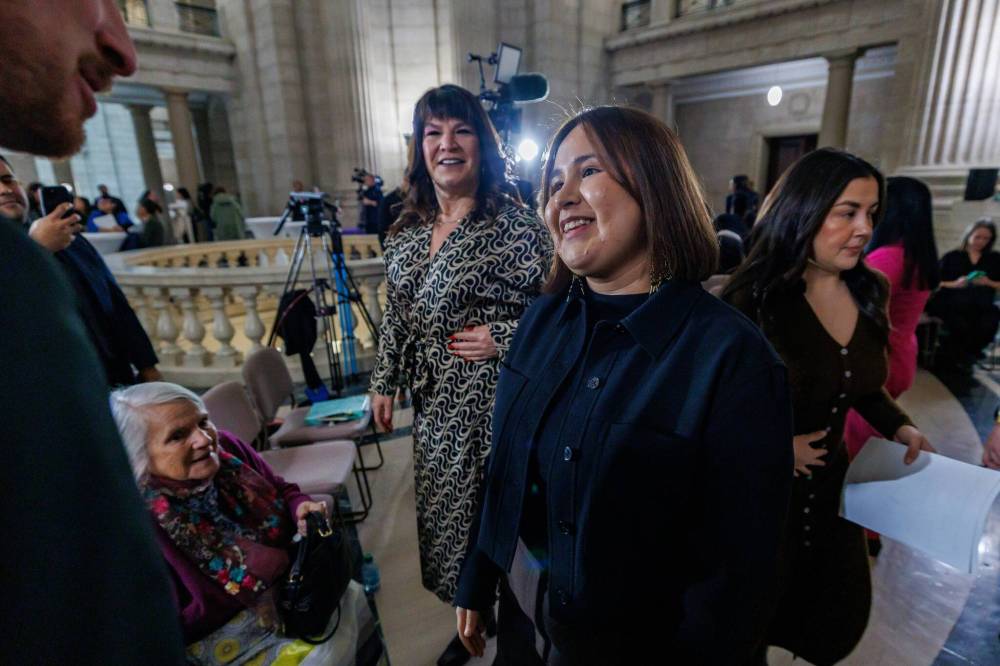
‘I’ve never felt so seen in a strategy,’ says Salena Starling, president and CEO of Community of Big Hearts.
She’s since aged out of foster care — feeling “a little bit overwhelmed” — and says she’s lacked supports, such as learning how to manage money.
Starling, who is president and CEO of the social enterprise Community of Big Hearts, shared her story Tuesday as the provincial government released its new poverty reduction strategy.
The plan targets three demographics to provide supports and resources — youth leaving the child welfare system, seniors, and children under five.
“I’ve never felt so seen in a strategy,” Starling said.
Critics, however, said the 36-page report lacks substance, doesn’t include firm numbers in its poverty reduction goals and doesn’t include a list of initiatives.
“We do need targets and timelines,” said Kate Kehler, executive director of the Social Planning Council. “They’re the only things we can measure against.”
At least 150,000 Manitobans fell below the poverty line in 2022.
The strategy is void of a specific programs list because “what works today may not work tomorrow,” said Housing Minister Bernadette Smith.
“By setting actions annually, we can better align resources with current priorities.”
Government will measure its progress through eight indicators, including Canada’s market basket measure and rates of employment, child mortality and high school graduation, among other things.
It will publish progress through annual poverty reduction reports. Provincial budgets will include steps to further the strategy’s goals, the new document stated.
Three thousand Manitobans — including Indigenous organizations and people with lived experiences — were part of consultations, said Families Minister Nahanni Fontaine.
Consultations began two years ago. The final document is steeped in Indigenous teachings, Fontaine and Smith said.
MIKE DEAL / FREE PRESS
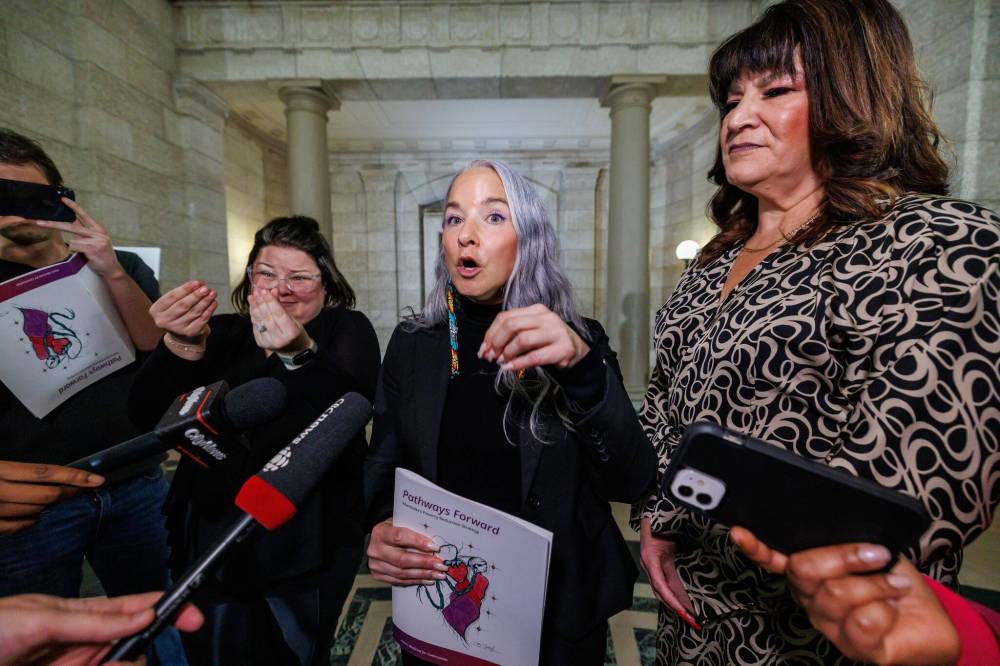
The strategy targets people during important life transitions, Families Minister Nahanni Fontaine said, adding the province has launched initiatives to help other demographics facing poverty.
Goals include supporting early childhood education, providing transitional supports to youth aging out of care, and cementing safe housing for seniors, among other things.
“We are disappointed that there’s not more substantial action in this report,” said Molly McCracken, chair of Make Poverty History Manitoba. “Given the rising income inequality and increases in poverty we’re seeing here in Manitoba, the strategy does not go far enough.”
Targeting three groups overlooks a swath of struggling Manitobans, McCracken said.
“We’re really worried that this myopic focus on balancing the budget by the end of this term is meaning that budget is being balanced on low-income people — that (government is) not investing in this, and they’re kicking it down the road,” said McCracken, who’s also the director of the Canadian Centre for Policy Alternatives’s Manitoba chapter.
The strategy targets people during important life transitions, Fontaine said, adding the province has launched initiatives to help other demographics facing poverty.

Jodie Byram, the Progressive Conservatives’ families critic, said the strategy has “no plan and no substance,” citing the rising cost of groceries. Nationally, grocery prices rose 4.7 per cent year-over-year in November.
A “glaring hole” in the strategy is the lack of commitment to raising Manitoba’s minimum wage to a living wage, said Kevin Rebeck, president of the Manitoba Federation of Labour.
The new document doesn’t promise a change to employment and income assistance from its current universal model. Shifting from blanket EIA to a range dependent on a person’s situation is needed, said Marion Willis, founder of St. Boniface Street Links.
The NDP government highlighted several poverty-focused initiatives that have previously been launched in the new strategy, including a school nutrition program and free birth control.
gabrielle.piche@winnipegfreepress.com
Gabrielle Piché reports on business for the Free Press. She interned at the Free Press and worked for its sister outlet, Canstar Community News, before entering the business beat in 2021. Read more about Gabrielle.
Every piece of reporting Gabrielle produces is reviewed by an editing team before it is posted online or published in print — part of the Free Press‘s tradition, since 1872, of producing reliable independent journalism. Read more about Free Press’s history and mandate, and learn how our newsroom operates.
Our newsroom depends on a growing audience of readers to power our journalism. If you are not a paid reader, please consider becoming a subscriber.
Our newsroom depends on its audience of readers to power our journalism. Thank you for your support.
Gabrielle Piché reports on business for the Free Press. She interned at the Free Press and worked for its sister outlet, Canstar Community News, before entering the business beat in 2021. Read more about Gabrielle.
Every piece of reporting Gabrielle produces is reviewed by an editing team before it is posted online or published in print — part of the Free Press‘s tradition, since 1872, of producing reliable independent journalism. Read more about Free Press’s history and mandate, and learn how our newsroom operates.
Our newsroom depends on a growing audience of readers to power our journalism. If you are not a paid reader, please consider becoming a subscriber.
Our newsroom depends on its audience of readers to power our journalism. Thank you for your support.
Related Articles
PR loss as NDP’s friends criticize poverty reduction strategy
Advertisement Advertise With Us
Advertisement Advertise With Us