

Comparing the fatal shootings of Eishia Hudson and Renée Good

Advertisement
Read this article for free:
or
Already have an account? Log in here »
To continue reading, please subscribe:
Digital Subscription
One year of digital access for only $1.44 a week*
- Enjoy unlimited reading on winnipegfreepress.com
- Read the E-Edition, our digital replica newspaper
- Access News Break, our award-winning app
- Play interactive puzzles
*Billed as $5.77 plus GST every four weeks. After 52 weeks, price increases to the regular rate of $19.95 plus GST every four weeks. Offer available to new and qualified returning subscribers only. Cancel any time.
To continue reading, please subscribe:
Add Free Press access to your Brandon Sun subscription for only an additional
$1 for the first 4 weeks*
- Enjoy unlimited reading on winnipegfreepress.com
- Read the E-Edition, our digital replica newspaper
- Access News Break, our award-winning app
- Play interactive puzzles
*Your next Brandon Sun subscription payment will increase by $1.00 and you will be charged $17.95 plus GST for four weeks. After four weeks, your payment will increase to $24.95 plus GST every four weeks.
Read unlimited articles for free today:
or
Already have an account? Log in here »
Hey there, time traveller!
This article was published 06/02/2026 (261 days ago), so information in it may no longer be current.
It’s very hard not to see very specific similarities.
In Minneapolis on Jan. 7, Immigration and Customs Enforcement officer Jonathon Ross shot and killed Renée Good, a 37-year-old mother of three, after claiming she was using her vehicle as a weapon to hurt ICE officers.
Multiple cellphone videos taken by witnesses showed that Good was likely trying to drive away from officers, not towards them. Regardless, Good was shot four times, with one shot to the head being fatal.

JOHN WOODS / FREE PRESS FILES
Two Winnipeg police officers were involved in the deadly encounter with 16-year-old Eishia Hudson on April 8, 2020.
Video evidence did not stop ICE officials and members of the Trump administration from perpetuating the story that they had acted in self-defence.
“If you impede law enforcement operations, ignore law commands, and use a deadly weapon to kill or cause bodily harm to a federal law enforcement office there are dangerous, and in this case deadly, consequences,” Homeland Security spokesperson Tricia McLaughlin announced. “This was entirely preventable.”
Not according to the video.
Meanwhile, in Winnipeg, another shooting in which law enforcement officers claimed self-defence had eerie similarities.
This week, at the inquest into the death of Eishia Hudson, the two Winnipeg police officers who were involved in the deadly encounter with the 16-year-old from Berens River First Nation on April 8, 2020, explained their version of the events publicly for the first time.
Hudson was driving a stolen vehicle with four friends after they allegedly robbed the Liquor Mart in Sage Creek.
After a high-speed chase with police and crashing into a parked truck, Const. Serge Sylvestre described that he approached the driver’s side door where Hudson was seated to make the arrest.
“While I’m pulling on the door handle, the vehicle starts moving backwards,” Sylvestre explained, with his gun drawn. “If I were to stay there, I felt like I was going to be either dragged or hit.”
Sylvestre’s partner, Const. Kyle Pradniuk, told the inquest he used deadly force on Hudson because he feared for his fellow officer’s life.
“As soon as it started moving backwards, that’s when I took a shot,” Pradniuk told the inquest.
The police officer took a second shot when he saw that Hudson’s hand was still on the wheel and perceived the vehicle as “lurching” forward.
“After my first shot, if she just continued going backward, I would not have fired again,” Pradniuk testified. “I was reacting to her actions. I do not know what her intent was at the time.”
One of those shots killed Hudson, with the bullet lodging in her spine.
Like the shooting of Good in Minneapolis, though, there is video evidence that makes the story problematic.
Lawyer Danielle Morrison, counsel for Hudson’s family, asked Sylvestre and Pradniuk about cellphone video evidence taken by a witness that suggests the stolen vehicle driven by Hudson only appears to be backing away from the officers.
“Would you agree that it’s possible your perception of the Jeep’s movement is different than what the video shows?” Morrison asked Pradniuk.
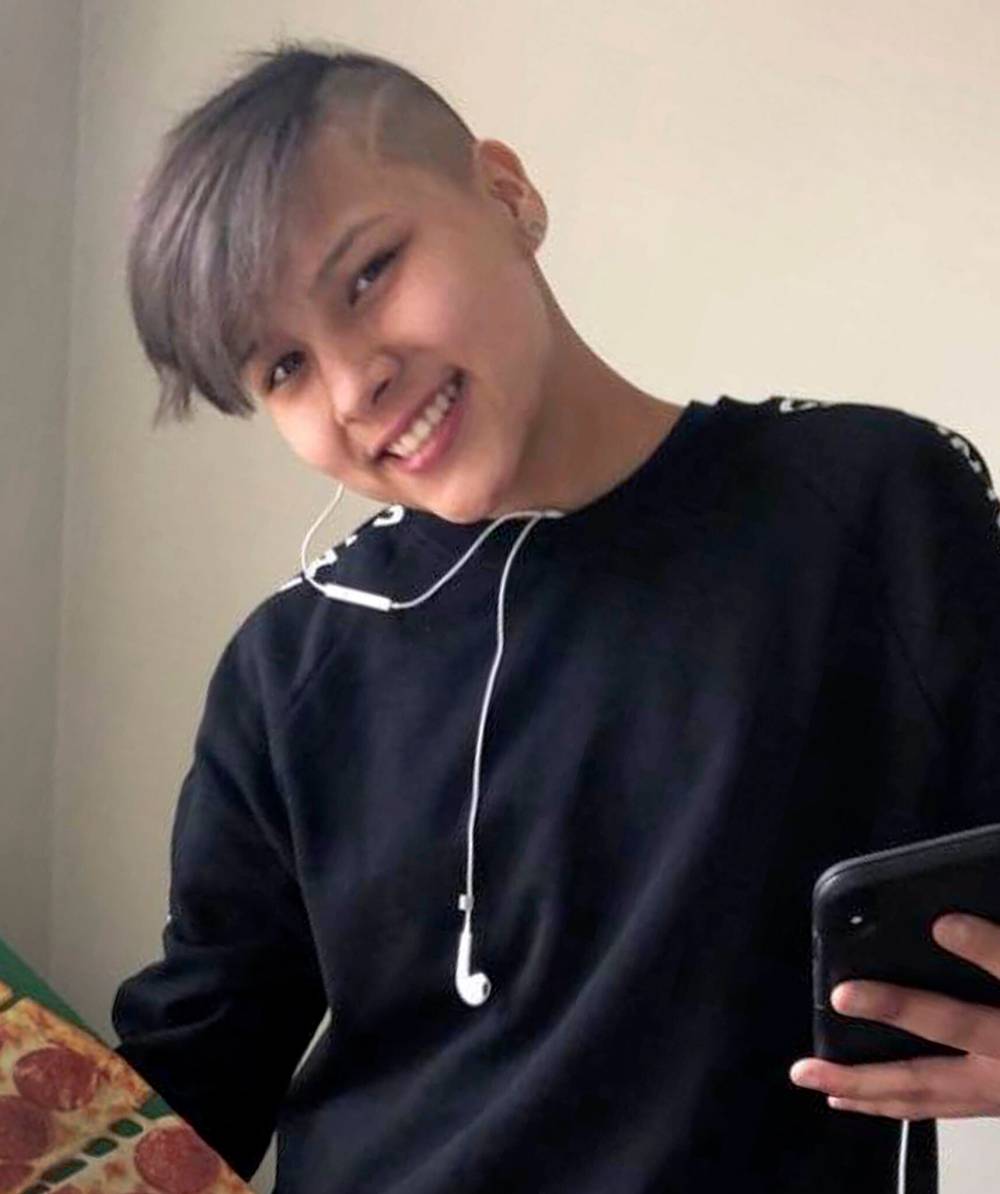
SUPPLIED
Eishia Hudson.
“I would say anything is possible,” Pradniuk responded. “I can only say what I remember or what I recall of that experience.”
The inquest has uncovered that Winnipeg police felt there was public pressure owing to the increase in thefts from Liquor Marts and had received incorrect information suggesting the youth in the car were violent.
Pradniuk has said he believed Hudson was a male.
These events may or may not have played a role in the fatal shooting but none of this really matters according to police officers testifying at the inquest.
One of the officers who participated in the chase, Sgt. Jeff Vincent, said it best: “Public safety trumps all.”
He might have said instead that the shooting of Hudson “was entirely preventable.”
The inquest is not tasked to assign guilt, but uncover any systemic reasons or failures that led to the shooting of a young Indigenous woman by Winnipeg police.
In fact, police were exonerated in an January 2021 investigation by the Independent Investigation Unit of Manitoba.

The problem is that now, years later and with some video evidence, the public is learning the shooting was not a simple case at all.
Let’s be clear, being a police officer is not easy. Decisions in split seconds are almost always impossible to assign any clarity to. This is why training, experience and knowledge matter.
At the same time, it’s difficult not to see that politics, gender, and race had something to do with the fatal shooting of a First Nations teenager.
Regardless of the circumstances that led her to encounter with police officers that day, her life may have been in danger no matter what she did.
niigaan.sinclair@freepress.mb.ca
Niigaan Sinclair is Anishinaabe from Peguis First Nation and a professor in the Department of Indigenous Studies at the University of Manitoba. He’s been a columnist for the Free Press since 2018. Read more about Niigaan.
Every piece of writing Niigaan produces is reviewed by an editing team before it is posted online or published in print — part of the Free Press‘s tradition, since 1872, of producing reliable independent journalism. Read more about Free Press’s history and mandate, and learn how our newsroom operates.
Our newsroom depends on a growing audience of readers to power our journalism. If you are not a paid reader, please consider becoming a subscriber.
Our newsroom depends on its audience of readers to power our journalism. Thank you for your support.
Niigaan Sinclair is Anishinaabe from Peguis First Nation and a professor in the Department of Indigenous Studies at the University of Manitoba. He’s been a columnist for the Free Press since 2018. Read more about Niigaan.
Every piece of writing Niigaan produces is reviewed by an editing team before it is posted online or published in print — part of the Free Press‘s tradition, since 1872, of producing reliable independent journalism. Read more about Free Press’s history and mandate, and learn how our newsroom operates.
Our newsroom depends on a growing audience of readers to power our journalism. If you are not a paid reader, please consider becoming a subscriber.
Our newsroom depends on its audience of readers to power our journalism. Thank you for your support.
Related Articles
Youths describe final moments that led to fatal police shooting in Winnipeg


Advertisement Advertise With Us
Advertisement Advertise With Us