

Spying on Indigenous peoples fuels mistrust, threatens Canada’s economy and society

Advertisement
Read this article for free:
or
Already have an account? Log in here »
To continue reading, please subscribe:

Digital Subscription
One year of digital access for only $205*
- Enjoy unlimited reading on winnipegfreepress.com
- Read the E-Edition, our digital replica newspaper
- Access News Break, our award-winning app
- Play interactive puzzles
*First annual payment billed as $205.00 + GST for one year. This annual subscription will automatically renew at $233.00 + GST every 52 weeks (10% off the regular annual price of $259.35). Offer available to new and qualified returning subscribers only. Cancel any time.
To continue reading, please subscribe:
Add Free Press access to your Brandon Sun subscription for only an additional
$1 for the first 4 weeks*
- Enjoy unlimited reading on winnipegfreepress.com
- Read the E-Edition, our digital replica newspaper
- Access News Break, our award-winning app
- Play interactive puzzles
*Your next Brandon Sun subscription payment will increase by $1.00 and you will be charged $17.95 plus GST for four weeks. After four weeks, your payment will increase to $24.95 plus GST every four weeks.
Read unlimited articles for free today:
or
Already have an account? Log in here »
Hey there, time traveller!
This article was published 27/03/2026 (184 days ago), so information in it may no longer be current.
The British Columbia Civil Liberties Association published thousands of pages in 2019 that it had fought for years to be released by the Canadian Security Intelligence Service.
The heavily redacted documents, the association said, show Canada’s spy agency spent years illegally conducting surveillance and documenting peaceful Indigenous protesters and community environmental organizations that opposed the Enbridge Northern Gateway pipeline project. They include the Dogwood Initiative, ForestEthics (now Stand.earth), Sierra Club BC, Leadnow.ca, and the #IdleNoMore movement.
This discovery followed a report by two researchers in 2016, who found that from 2014 to 2015, the RCMP operated project SITKA, which involved a list of more than 300 political activists in the country — most of whom were Indigenous — with 89 marked as “threats” to national security.
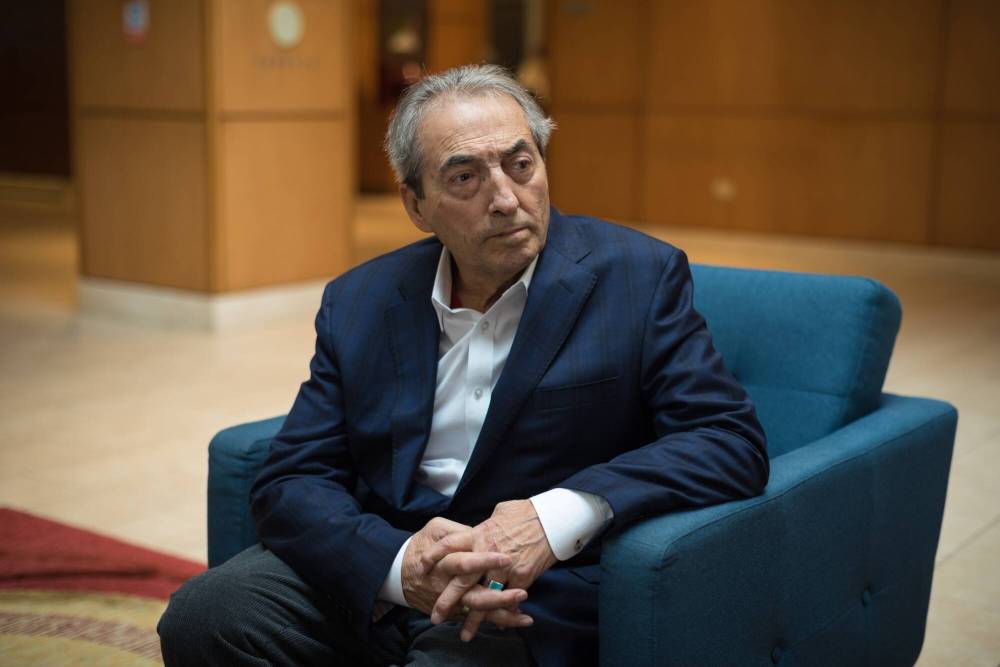
Leaders like former AFN chief Phil Fontaine were followed, watched, and documented.(Tijana Martin / The Canadian Press files)
If this wasn’t enough, access to information requests by activists found that from 2009 to 2011, Gitxsan professor and child advocate Cindy Blackstock was monitored by officials at Indigenous and Northern Affairs Canada and the justice department – an act that Canada’s privacy commissioner later called a violation of her privacy rights.
I could keep going.
Research by reporters and academics have uncovered that Canadian federal justice officials conducted surveillance and documented Indigenous peoples during the 2010 Olympics, Canada’s 150th birthday celebrations in Ottawa in 2017, and during a jingle dress healing dance and taco fundraiser and raffle held in 2013 in solidarity with anti-fracking activists who were defending their land from oil drilling in Elsipogtog, N.B.
As one can see, federal spying on Indigenous activists, professors, and leaders isn’t an anomaly.
And it’s not new.
This week, investigative reporters at the CBC published a report about how the RCMP monitored Indigenous individuals and organizations – even running a program intended to disrupt and undermine their work – from 1968 to 1982.
Containing nearly 6,000 pages of redacted documents from the then-called RCMP Security Service “racial intelligence section,” the dossier is staggering. It offers a blow-by-blow account of officers watching over 30 Indigenous organizations such asthe forerunners to the Assembly of First Nations, the Federation of Sovereign Indigenous Nations, Métis National Council and Inuit Tapiriit Kanatami.
Led by the CBC Indigenous unit, reporters found that Mounties called the initiative the “Native extremism program” and contained “Intelligence dossiers stuffed with documents. Wiretaps. Paid informants. Covert operatives with code numbers like ‘A-828.’ A Red Power dissident photo album. Surreptitious surveillance at homes, offices, airports and bars.”
In Manitoba, leaders like former AFN chiefs Phil Fontaine and Ovide Mercredi were followed, watched, and documented.
So were Manitoba Indian Brotherhood president David Courchene, Manitoba Métis Federation president Rev. Adam Cuthand, Winnipeg city councillor George Munroe, and even Cree education advocate and teacher Verna Kirkness.
You have to know Verna, as I do, to know how absurd it is to call such as nice, kind, and gentle woman an “extremist.”
But yet, it happened.
Thanks to diligent reporters and researchers, the public now knows about it.
Two days after the release of the CBC report, Public Safety Minister Gary Anandasangaree said he was “deeply disturbed” by the findings.
RCMP Commissioner Michael Duheme said he felt “sincere regret” about the surveillance.
Despite these nice (but ultimately empty) words, the surveillance of Indigenous leaders and organizations took place for decades more. And, it’s probably not far-fetched to say this is likely still happening.
Over the next few months, there will not be unilateral acceptance to Prime Minister Mark Carney’s plans to ramp up development for resource projects “in the national interest.”
There will likely be protests by Indigenous activists, leaders, and grandmothers. There will be a march – or 10.
There will be political organizing both in favour and against whatever project impacts Indigenous peoples the most.
Trust is essential to stop conflicts from escalating.
Simply put, for law and order to be respected and followed, federal officials must act to the highest standard. If they do not, those outside any court, government or legal system will never accept any decision that’s made inside those same systems.
This means that illegally spying on Indigenous peoples is not just wrong, but it threatens Canada’s economy, society and future.
Make no bones about it; there is very little trust between Indigenous peoples and most governments in this country.

As I tell the people I train or speak to in policing: when you show up in uniform in Indigenous communities, no one thinks you’re there to help them.
Imagine how this same scenario works for those who don’t show up in uniform or worse — are a paid Indigenous informant.
Over the past 60 years, Canada has spied, documented, and tried to undermine and harm Indigenous peoples who are peacefully and legally expressing their opinion while creating organizations that help communities and build this country.
That’s the definition of insecurity.
niigaan.sinclair@freepress.mb.ca
Niigaan Sinclair is Anishinaabe from Peguis First Nation and a professor in the Department of Indigenous Studies at the University of Manitoba. He’s been a columnist for the Free Press since 2018. Read more about Niigaan.
Every piece of writing Niigaan produces is reviewed by an editing team before it is posted online or published in print — part of the Free Press‘s tradition, since 1872, of producing reliable independent journalism. Read more about Free Press’s history and mandate, and learn how our newsroom operates.
Our newsroom depends on a growing audience of readers to power our journalism. If you are not a paid reader, please consider becoming a subscriber.
Our newsroom depends on its audience of readers to power our journalism. Thank you for your support.
Niigaan Sinclair is Anishinaabe from Peguis First Nation and a professor in the Department of Indigenous Studies at the University of Manitoba. He’s been a columnist for the Free Press since 2018. Read more about Niigaan.
Every piece of writing Niigaan produces is reviewed by an editing team before it is posted online or published in print — part of the Free Press‘s tradition, since 1872, of producing reliable independent journalism. Read more about Free Press’s history and mandate, and learn how our newsroom operates.
Our newsroom depends on a growing audience of readers to power our journalism. If you are not a paid reader, please consider becoming a subscriber.
Our newsroom depends on its audience of readers to power our journalism. Thank you for your support.
Advertisement Advertise With Us
Advertisement Advertise With Us
History
Updated on Saturday, March 28, 2026 8:24 AM CDT: Byline added