

Trial project lauded in the fight against pollution
Chemical helps reduce pollution at North End sewage treatment plant

Advertisement
Read this article for free:
or
Already have an account? Log in here »
To continue reading, please subscribe:

Digital Subscription
One year of digital access for only $205*
- Enjoy unlimited reading on winnipegfreepress.com
- Read the E-Edition, our digital replica newspaper
- Access News Break, our award-winning app
- Play interactive puzzles
*First annual payment billed as $205.00 + GST for one year. This annual subscription will automatically renew at $233.00 + GST every 52 weeks (10% off the regular annual price of $259.35). Offer available to new and qualified returning subscribers only. Cancel any time.
To continue reading, please subscribe:
Add Free Press access to your Brandon Sun subscription for only an additional
$1 for the first 4 weeks*
- Enjoy unlimited reading on winnipegfreepress.com
- Read the E-Edition, our digital replica newspaper
- Access News Break, our award-winning app
- Play interactive puzzles
*Your next Brandon Sun subscription payment will increase by $1.00 and you will be charged $17.95 plus GST for four weeks. After four weeks, your payment will increase to $24.95 plus GST every four weeks.
Read unlimited articles for free today:
or
Already have an account? Log in here »
A city project aimed at reducing water pollution is being deemed a success, despite some challenges in adding it to an aging sewage treatment plant.
The city used strategically placed doses of ferric chloride to reduce the amount of phosphorous, a key algae-promoting nutrient, in effluent leaving the North End sewage treatment plant between June 2024 and September 2025.
The chemical additives increased the removal of phosphorous through the plant’s treatment process. It went from 61 per cent of the nutrient being removed pre-trial, to reach 74 per cent in 2024 and 67 per cent in 2025.
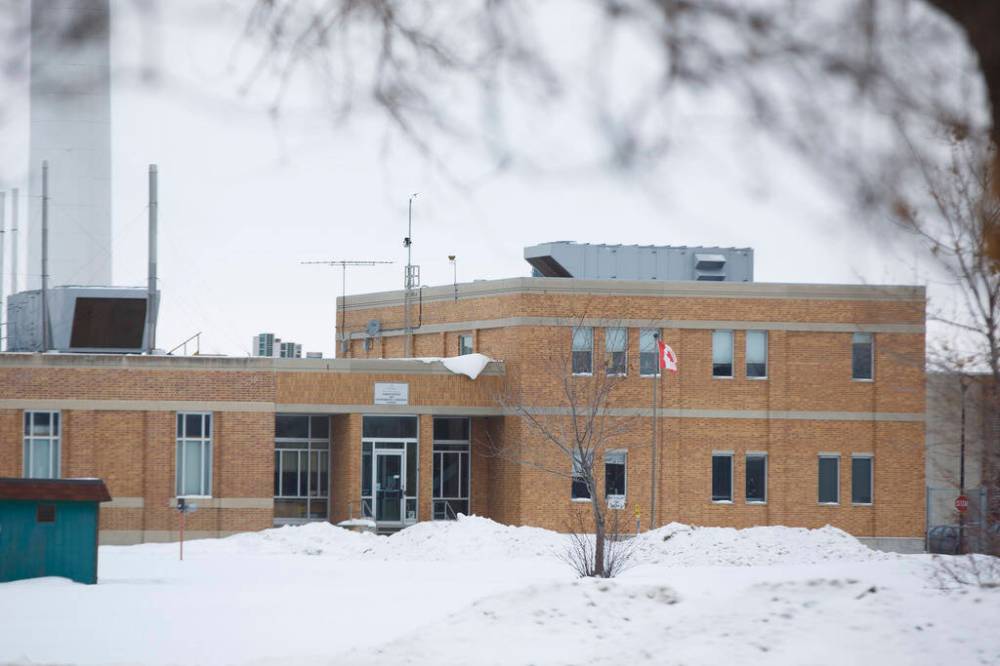
Mike Deal / Free Press files
The city used strategically placed doses of ferric chloride to reduce the amount of phosphorous, a key algae-promoting nutrient, in effluent leaving the North End Sewage Treatment Plant, between June 2024 and September 2025.
“It’s a success, because we’re removing more phosphorous than we were before … Any improvement in phosphorous removal will help Lake Winnipeg,” said Michelle Paetkau, a senior planning engineer for Winnipeg water and waste.
The total phosphorous concentration in the plant’s effluent averaged about 3.1 milligrams per litre during the trial period, exceeding a 1 mg/L provincial target.
Paetkau noted a consultant predicted the city could meet a 2.5 mg/L to 3 mg/L concentration with the treatment.
An environmental scientist who advocated for the chemical treatment said it has proven effective even though the city used only a fraction of the dose recommended by a consultant.
“It was (still) successful at reducing phosphorous. So, it lays out a path for us towards phosphorous compliance (with provincial pollution targets) at the North End treatment plant,” said Alexis Kanu, executive director of the Lake Winnipeg Foundation.
The city is currently adding ferric chloride at two locations in the treatment process, using about 10 per cent of the amount recommended by a consultant at one point and 45 per cent at another, Paetkau confirmed.
The Lake Winnipeg Foundation wants the city to switch to the full recommended amounts of ferric chloride as soon as possible.
Kanu said reducing water pollution is critical, especially after the province granted the city a two-year extension to its deadline to complete a $3.1-billion upgrade of the North End sewage treatment plant, postponing that target to 2032 from 2030. The mega project’s third and final phase will use biological processes to reduce phosphorous and other algae-promoting nutrients flowing out of the plant.
“That’s another two years of excess phosphorous loading, another two years of excess pollution to the lake,” said Kanu. “We need our city decision-makers, our provincial decision-makers to push for that (chemical treatment) system to be used it its full potential.”
More recent measurements show effluent from the plant actually briefly met the 1 mg/L concentration limit for three days in March, Kanu noted.
However, Paetkau said the city won’t be able to consistently achieve that provincial pollution target with chemical treatments until it completes new biosolids facilities, the second phase of the North End sewage treatment plant upgrade.
“The chemical produces more solids and we don’t have capacity in our (existing) solids treatment system to handle (that),” she said.
The lower pollution target briefly met in March was also linked to dilution from high spring water flows, said Paetkau.
The city report also highlights some challenges in adding the chemical treatment system to an aging treatment plant.
At one point, the ferric chloride caused build-up on ultraviolet bulbs used for disinfection, which led effluent to exceed E. coli limits.
Paetkau said a new UV system has since been added that is much easier to clean, reducing that risk.
In another incident, the chemical caused corrosion and leaks in older steel pipes. Those pipes have since been replaced.
Coun. Brian Mayes, a former chairman of the city’s water and waste committee, said the $19-million trial program was worth it.
“It’s helping (reduce) phosphorous at a relatively low cost,” said Mayes (St. Vital).
However, the councillor noted that step was always designed as an initial strategy to reduce pollution, prior to the completion of the major sewage treatment plant upgrade.
Coun. Jeff Browaty, chairman of finance, said the city is working “aggressively” to reduce pollution that flows from the sewage plant into local waterways, including Lake Winnipeg.

“This council is making some big decisions and big investments for the future of the North End plant, which handles 70 per cent of the city’s total sewage load,” said Browaty (North Kildonan).
The city has committed $500 million for the $1.57-billion final phase of the project, which the province has promised to match. The city is seeking another $500 million from the federal government.
In an email, a provincial spokesperson said any increase in ferric chloride dosing “must be made gradually and balanced due to the potential impacts on the overall treatment process” and the broader treatment plant upgrade is needed to reliably meet pollution reduction goals.
joyanne.pursaga@freepress.mb.ca
X: @joyanne_pursaga
Joyanne is city hall reporter for the Winnipeg Free Press. A reporter since 2004, she began covering politics exclusively in 2012, writing on city hall and the Manitoba Legislature for the Winnipeg Sun before joining the Free Press in early 2020. Read more about Joyanne.
Every piece of reporting Joyanne produces is reviewed by an editing team before it is posted online or published in print — part of the Free Press‘s tradition, since 1872, of producing reliable independent journalism. Read more about Free Press’s history and mandate, and learn how our newsroom operates.
Our newsroom depends on a growing audience of readers to power our journalism. If you are not a paid reader, please consider becoming a subscriber.
Our newsroom depends on its audience of readers to power our journalism. Thank you for your support.
Joyanne is city hall reporter for the Winnipeg Free Press. A reporter since 2004, she began covering politics exclusively in 2012, writing on city hall and the Manitoba Legislature for the Winnipeg Sun before joining the Free Press in early 2020. Read more about Joyanne.
Every piece of reporting Joyanne produces is reviewed by an editing team before it is posted online or published in print — part of the Free Press‘s tradition, since 1872, of producing reliable independent journalism. Read more about Free Press’s history and mandate, and learn how our newsroom operates.
Our newsroom depends on a growing audience of readers to power our journalism. If you are not a paid reader, please consider becoming a subscriber.
Our newsroom depends on its audience of readers to power our journalism. Thank you for your support.
Related Articles
$17-M plan would cut pollution from sewage plant
Advertisement Advertise With Us
Advertisement Advertise With Us
History
Updated on Monday, August 17, 2026 6:45 PM CDT: Adds photo