

Antisemitic acts rise nationally, but drop in Manitoba

Advertisement
Read this article for free:
or
Already have an account? Log in here »
To continue reading, please subscribe:
Digital Subscription
One year of digital access for only $1.44 a week*
- Enjoy unlimited reading on winnipegfreepress.com
- Read the E-Edition, our digital replica newspaper
- Access News Break, our award-winning app
- Play interactive puzzles
*Billed as $5.77 plus GST every four weeks. After 52 weeks, price increases to the regular rate of $19.95 plus GST every four weeks. Offer available to new and qualified returning subscribers only. Cancel any time.
To continue reading, please subscribe:
Add Free Press access to your Brandon Sun subscription for only an additional
$1 for the first 4 weeks*
- Enjoy unlimited reading on winnipegfreepress.com
- Read the E-Edition, our digital replica newspaper
- Access News Break, our award-winning app
- Play interactive puzzles
*Your next Brandon Sun subscription payment will increase by $1.00 and you will be charged $17.95 plus GST for four weeks. After four weeks, your payment will increase to $24.95 plus GST every four weeks.
Read unlimited articles for free today:
or
Already have an account? Log in here »
Hey there, time traveller!
This article was published 27/04/2020 (2372 days ago), so information in it may no longer be current.
While Manitoba saw a decrease in antisemitic incidents last year, a B’nai Brith Canada report suggests harassment, vandalism and violence targeted at Jewish communities is increasing across the country.
In its Annual Audit of Antisemitic Incidents 2019 released Monday, the organization counted 2,207 incidents nationally last year, an 8.1 per cent increase compared to 2018.
“This is the fourth consecutive year where there has been a record-breaking number of incidents recorded,” said Ran Ukashi, the national director of B’nai Brith Canada’s League for Human Rights. “It’s the second year in a row where the numbers have actually exceeded 2,000.”
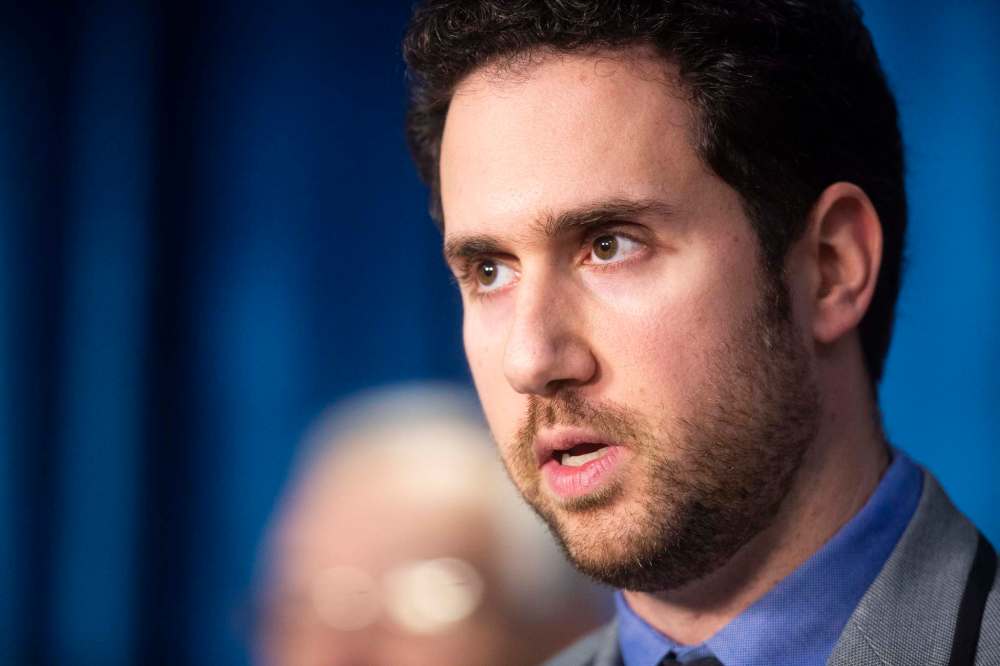
The uptick can be attributed in part to better reporting by the public, but also to the rise of social media platforms that allow users to share antisemitic ideologies and harass others anonymously, Ukashi said. The audit saw an 11 per cent increase in online harassment, much of it advocating genocide and Holocaust denial.
“We see that what happens online often has real-world consequences, so there has to be more done to make sure that this is combated,” Ukashi said.
B’nai Brith also recorded an increase of incidents during the 2019 federal election, such as campaign sign vandalism and candidates sharing antisemitic sentiments online.
There were 104 cases reported in the prairies last year (83 in Manitoba, 21 in Saskatchewan), which represents a 20.6 per cent drop from 2018 when the region had the largest increase in antisemitic incidents in the country. Ukashi says the data is still worrisome because it’s nearly double the 54 incidents reported among the two provinces in 2017.
“What concerns us is that it might be indicative of a changing attitude in the prairies,” he said.
Manitoba examples of antisemitism listed in the report include: a woman who was threatened with violence for being Israeli and Jewish; two male youths who gave a Nazi salute outside of a Winnipeg Jewish school in full view of students; a football field in Oakbank that was vandalized with swastikas; and a vehicle in River Heights that was spray painted with antisemitic graffiti.
“It is always disturbing to know that someone’s going out of their way to vandalize personal property and to give you a message,” Ukashi said.

Graffiti was also found in a Winnipeg school that urged the killing of Jews. B’nai Brith saw 238 incidents of online and in-person antisemitic harassment at primary and secondary schools and Ukashi says the response from educational institutes has been “hit-and-miss.”
While most Manitoba incidents took place in Winnipeg, there was a case of antisemitic vandalism on school buildings in Brandon.
“Which is somewhere you wouldn’t typically see it,” Ukashi said. “The phenomenon of antisemitism can exist even in the absence of a (large) Jewish community.”
eva.wasney@freepress.mb.ca
Twitter: @evawasney
Eva Wasney covers environmental issues in Manitoba for The Narwhal in partnership with the Winnipeg Free Press. Read more about Eva.
Every piece of reporting Eva produces is reviewed by an editing team before it is posted online or published in print — part of the Free Press‘s tradition, since 1872, of producing reliable independent journalism. Read more about Free Press’s history and mandate, and learn how our newsroom operates.
Our newsroom depends on a growing audience of readers to power our journalism. If you are not a paid reader, please consider becoming a subscriber.
Our newsroom depends on its audience of readers to power our journalism. Thank you for your support.
Eva Wasney covers environmental issues in Manitoba for The Narwhal in partnership with the Winnipeg Free Press. Read more about Eva.
Every piece of reporting Eva produces is reviewed by an editing team before it is posted online or published in print — part of the Free Press‘s tradition, since 1872, of producing reliable independent journalism. Read more about Free Press’s history and mandate, and learn how our newsroom operates.
Our newsroom depends on a growing audience of readers to power our journalism. If you are not a paid reader, please consider becoming a subscriber.
Our newsroom depends on its audience of readers to power our journalism. Thank you for your support.
Advertisement Advertise With Us
Advertisement Advertise With Us