

Bet on Manitoba First Nations
Gaming industry can help lift Indigenous communities out of poverty

Advertisement
Read this article for free:
or
Already have an account? Log in here »
To continue reading, please subscribe:
Monthly Digital Subscription
$1 per week for 24 weeks*
- Enjoy unlimited reading on winnipegfreepress.com
- Read the E-Edition, our digital replica newspaper
- Access News Break, our award-winning app
- Play interactive puzzles
*Billed as $4.00 plus GST every four weeks. After 24 weeks, price increases to the regular rate of $19.95 plus GST every four weeks. Offer available to new and qualified returning subscribers only. Cancel any time.
Monthly Digital Subscription
$4.99/week*
- Enjoy unlimited reading on winnipegfreepress.com
- Read the E-Edition, our digital replica newspaper
- Access News Break, our award-winning app
- Play interactive puzzles
*Billed as $19.95 plus GST every four weeks. Cancel any time.
To continue reading, please subscribe:
Add Free Press access to your Brandon Sun subscription for only an additional
$1 for the first 4 weeks*
*Your next subscription payment will increase by $1.00 and you will be charged $16.99 plus GST for four weeks. After four weeks, your payment will increase to $23.99 plus GST every four weeks.
Read unlimited articles for free today:
or
Already have an account? Log in here »
Hey there, time traveller!
This article was published 03/12/2018 (2698 days ago), so information in it may no longer be current.
In 2005, after a series of “raids” of First Nations-run facilities, the province of Manitoba and the Assembly of Manitoba Chiefs struck an agreement that First Nations would receive five casinos, at sites outside Winnipeg — which the province claimed was saturated with gaming.
In return, First Nations would receive of share of gaming profits, co-operate with provincial jurisdiction, and co-develop gaming strategies to help First Nations communities find a way out of poverty.
It was a hastily negotiated agreement, but generally seen as a win-win.
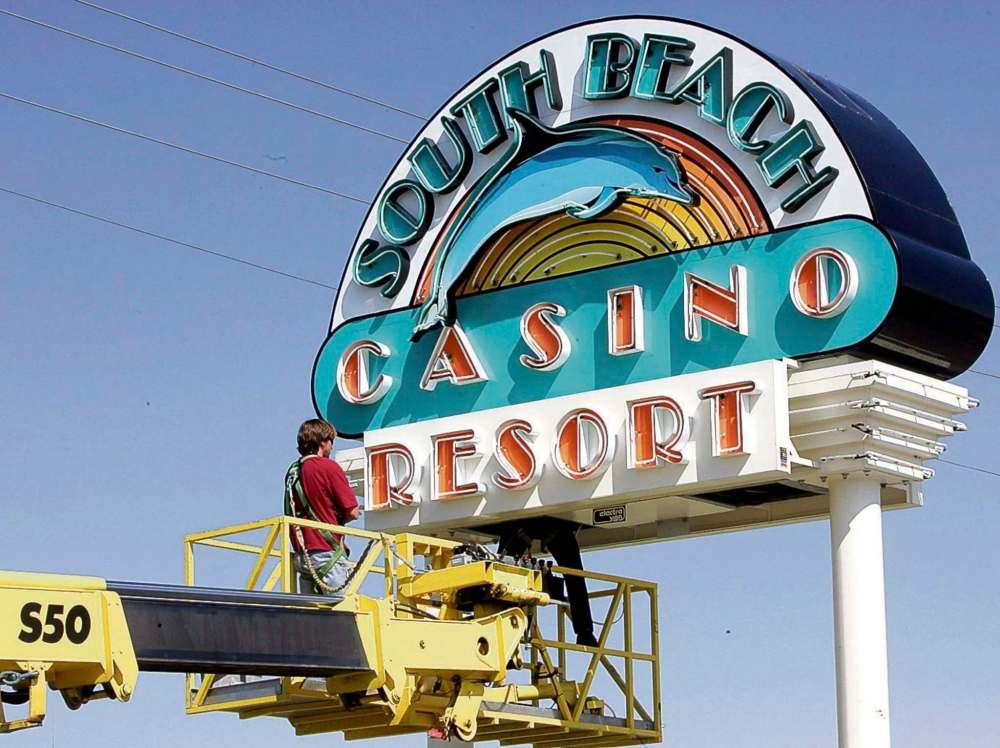
The agreement produced three First Nations-run casinos in Brokenhead Ojibway Nation (South Beach), Opaskwayak Cree Nation (Aseneskak) and Carberry (Sand Hills).
The problem is little profit has come in these small markets and only South Beach produces substantial income consistently. First Nations have spent millions in lost investments while being refused access to urban markets such as Brandon or Thompson.
Now, South Beach is in need of renovations, Aseneskak wants to move locations, and Sand Hills is financially struggling.
Meanwhile, gaming in Manitoba is thriving with more than $500 million in annual revenue, primarily made in the Winnipeg market. In the provincial capital, VLT use continues to increase, the two provincially-run casinos have extended their hours, and tens of millions of dollars is spent renovating and expanding gaming facilities.
The province also partnered with Winnipeg Jets owner True North Sports and Entertainment Ltd. in 2013 to open a downtown gaming room.
Apparently, the market is only saturated if First Nations want a casino.
In 2017, the Assembly of Manitoba Chiefs filed a $1-billion lawsuit against the province for breaching its commitments and denying First Nations access to Winnipeg. The province responded in June, saying the 2005 agreement is not a “binding contract” but a “letter of understanding… and expression of policy, current at the time it was made.”
In other words, NDP government promises mean nothing in a Conservative government.
In last month’s throne speech, the province announced “further expansion of gaming will be paused pending a review of our gaming strategy.”
This is how the house always wins: the house sets the rules, stacks the deck, and then takes everything. First Nations might be wondering what’s the point of playing this game called Canada.
However, the game is not over. A significant amount of AMC’s lawsuit is the argument gaming is a treaty and Aboriginal right, guaranteed under Canada’s constitution. The province responded by saying there is no such court ruling — so the sides may be headed to the Supreme Court.
Regardless, a big fight is brewing between the province and First Nations over gaming. We are back, it appears, to 2005.
And this brings us to the former Kapyong barracks.
Over the next few years, First Nations will gain control of some of the most valued land in Winnipeg. A casino is an alluring choice.
In many ways, casinos are the only choice. First Nations communities live in dire, brutal, poverty and conditions produced by the Indian Act. All that’s left is to find the most amount of money, as quick as possible, to deal with the suicides, lack of opportunity, mouldy houses and tainted water.
First Nations know, like everyone else, casinos are not a magic wand.
Manitoba’s health care, education, and social services thrive (ironically) on gambling, but casinos and gaming produce more challenges than solutions. They produce addiction, divide families and communities, and not much more than a few homes, an arena, and some youth programs.
At least casinos give communities a roll of the dice. When you have crushing poverty, there’s no dice at all.
So here’s a solution: change the game.
Make gaming profits about targeting First Nations poverty. Pass legislation that deals with Indigenous health, education, and housing issues the province eventually deals with anyways. Ensure subsequent governments have to maintain this promise legally, and change the cycle of governmental lies to First Nations that produce such messes.
Manitoba is not giving up on gaming, but stop thinking like it’s 2005.
Try internet gaming. There’s a billion-dollar online market out there other communities in other countries are taking advantage of — Manitoba could become a world leader. Who said a casino couldn’t be online?
(This would also fulfill the promise Manitoba made to First Nations in 2005.)
The province’s next steps in creating a “gaming strategy” are crucial. Will Manitoba spend millions fighting First Nations in court battles it is likely to lose or will it come up with a realistic, tangible and effective solution?

Peguis First Nation already owns Assiniboia Downs, one of the most important gaming spaces in Winnipeg. First Nations-run casinos badly need Manitoba’s tourism industry to succeed.
Kapyong is a jackpot waiting to happen, with incredible potential for commercial and residential possibilities that could address issues in the province while making it a world player at the same time.
That’s a win-win.
Bet on First Nations in Manitoba as part of the solution. It is a wager worth trying.
niigaan.sinclair@freepress.mb.ca
Niigaan Sinclair is Anishinaabe and is a columnist at the Winnipeg Free Press.
Our newsroom depends on a growing audience of readers to power our journalism. If you are not a paid reader, please consider becoming a subscriber.
Our newsroom depends on its audience of readers to power our journalism. Thank you for your support.
Niigaan Sinclair is Anishinaabe and is a columnist at the Winnipeg Free Press.
Our newsroom depends on a growing audience of readers to power our journalism. If you are not a paid reader, please consider becoming a subscriber.
Our newsroom depends on its audience of readers to power our journalism. Thank you for your support.
Advertisement Advertise With Us
Advertisement Advertise With Us
History
Updated on Tuesday, December 4, 2018 7:33 AM CST: Corrects typos