Church role in meth crisis should be acceptance, says minister

Advertisement
Read this article for free:
or
Already have an account? Log in here »
To continue reading, please subscribe:

Digital Subscription
One year of digital access for only $205*
- Enjoy unlimited reading on winnipegfreepress.com
- Read the E-Edition, our digital replica newspaper
- Access News Break, our award-winning app
- Play interactive puzzles
*First annual payment billed as $205.00 + GST for one year. This annual subscription will automatically renew at $233.00 + GST every 52 weeks (10% off the regular annual price of $259.35). Offer available to new and qualified returning subscribers only. Cancel any time.
To continue reading, please subscribe:
Add Free Press access to your Brandon Sun subscription for only an additional
$1 for the first 4 weeks*
- Enjoy unlimited reading on winnipegfreepress.com
- Read the E-Edition, our digital replica newspaper
- Access News Break, our award-winning app
- Play interactive puzzles
*Your next Brandon Sun subscription payment will increase by $1.00 and you will be charged $17.95 plus GST for four weeks. After four weeks, your payment will increase to $24.95 plus GST every four weeks.
Read unlimited articles for free today:
or
Already have an account? Log in here »
Hey there, time traveller!
This article was published 09/03/2020 (2347 days ago), so information in it may no longer be current.
When Christians think about the meth problem, they shouldn’t only think about how they can change addicts, but what the terrible situation can do to “change them.”
That’s the message Bob Ekblad will bring to Winnipeg on Tuesday, with a presentation titled, “Meth Crisis and the Church: How Should We Respond?”
Ekblad, a Presbyterian minister from Burlington, Wash., will share lessons he has learned from years of reaching out to people struggling with addiction.
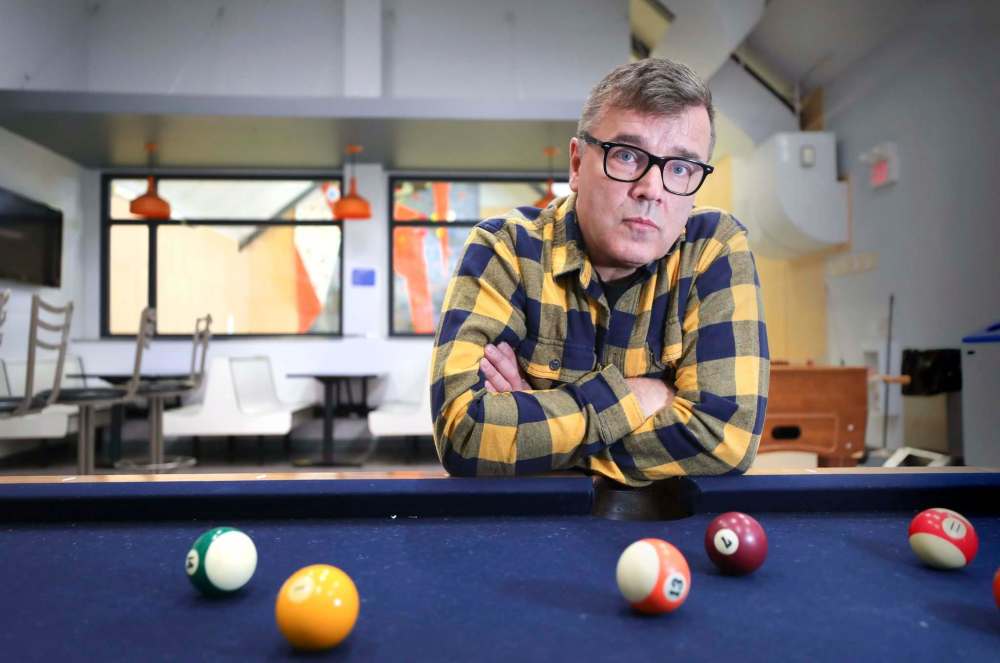
Christians are often tempted to judge people who are addicted, when the goal should be to “provide acceptance and welcome,” he said.
People struggling with addictions “are drawn to those who don’t judge, don’t look down on them, who are willing to try to understand them,” Ekblad said, adding many addicts turn to drugs because of loneliness, isolation or because they are carrying lots of pain.
Drugs are a way to self-medicate and deal with those problems, he said.
If churches want to help people caught in addiction, they should try to be the kinds of places people want to turn to when they want to change, so people who are struggling with addictions need to see the church as a place they will be accepted before they wanted to change, Ekbald said.
Ekblad’s church, Tierra Nueva (or New Earth), which he co-pastors with his wife, Gracie, has many ex-addicts among its members. It also welcomes people to attend services even if they are high.
“We’ve only had one incident in 25 years,” he said, noting people in the church of about 60 are assigned to be on the lookout for disruptive behaviour.
Ekblad, the author of Reading the Bible with the Damned, is being brought to Winnipeg by Inner City Youth Alive, a church-based organization that provides a safe and nurturing environment for children and youth in the North End.
Executive director Kent Dueck said Ekblad’s message is important for local Christians because “we are seeing families torn apart” by meth. This includes people he knows, such as one “fantastic dad” who is lost to meth addiction.
Although meth appeared in the North End years ago, its use has greatly increased recently, Dueck said.
“We are regularly seeing kids fall into it,”he said.
Like Ekblad, Dueck believes churches should avoid judging people who are dealing with addictions.
“That is so useless. We need to be compassionate, not judgmental. These are good people caught in a bad cycle. They are not horrible people,” Dueck said.

The meth problem isn’t limited to one part of Winnipeg, he said.
“Our intent is not to get them to send people down to the North End to hand out food and brochures,” Dueck said of other churches. “We are inviting them to engage with people in the North End relationally.”
This would include volunteering with organizations such as his, supporting its work financially, and “praying for our community.”
Ekblad’s presentation is at 7 p.m., Tuesday, at Canadian Mennonite University’s great hall (500 Shaftesbury Blvd.). Admission is free, but registration is required at www.icya.ca.
faith@freepress.mb.ca
The Free Press is committed to covering faith in Manitoba through our Religion in the News project. This reporting continues because readers like you step forward to fund it.
Donate now to support our reporting on religion.
Your donation is eligible for a charitable tax receipt.
BECOME A FAITH JOURNALISM SUPPORTER
Our newsroom depends on a growing audience of readers to power our journalism. If you are not a paid reader, please consider becoming a subscriber.
Our newsroom depends on its audience of readers to power our journalism. Thank you for your support.
The Free Press is committed to covering faith in Manitoba through our Religion in the News project. This reporting continues because readers like you step forward to fund it.
Donate now to support our reporting on religion.
Your donation is eligible for a charitable tax receipt.
BECOME A FAITH JOURNALISM SUPPORTER
Our newsroom depends on a growing audience of readers to power our journalism. If you are not a paid reader, please consider becoming a subscriber.
Our newsroom depends on its audience of readers to power our journalism. Thank you for your support.
Advertisement Advertise With Us
Advertisement Advertise With Us
The Free Press acknowledges the financial support it receives from members of the city’s faith community, which makes our coverage of religion possible.