

City employee diversity falls short of city itself

Advertisement
Read this article for free:
or
Already have an account? Log in here »
To continue reading, please subscribe:
Monthly Digital Subscription
$1 per week for 24 weeks*
- Enjoy unlimited reading on winnipegfreepress.com
- Read the E-Edition, our digital replica newspaper
- Access News Break, our award-winning app
- Play interactive puzzles
*Billed as $4.00 plus GST every four weeks. After 24 weeks, price increases to the regular rate of $19.95 plus GST every four weeks. Offer available to new and qualified returning subscribers only. Cancel any time.
Monthly Digital Subscription
$4.99/week*
- Enjoy unlimited reading on winnipegfreepress.com
- Read the E-Edition, our digital replica newspaper
- Access News Break, our award-winning app
- Play interactive puzzles
*Billed as $19.95 plus GST every four weeks. Cancel any time.
To continue reading, please subscribe:
Add Free Press access to your Brandon Sun subscription for only an additional
$1 for the first 4 weeks*
*Your next subscription payment will increase by $1.00 and you will be charged $16.99 plus GST for four weeks. After four weeks, your payment will increase to $23.99 plus GST every four weeks.
Read unlimited articles for free today:
or
Already have an account? Log in here »
Hey there, time traveller!
This article was published 19/03/2021 (1842 days ago), so information in it may no longer be current.
DIVERSITY among City of Winnipeg staff still lags behind that of the community itself.
Winnipeg’s 2020 workforce diversity report measures four groups within city staff, including women, Indigenous peoples, people of colour, and people with disabilities.
Each group’s representation slightly increased from 2019, except for women, while the staff complement remained less diverse than the general population for all four groups.
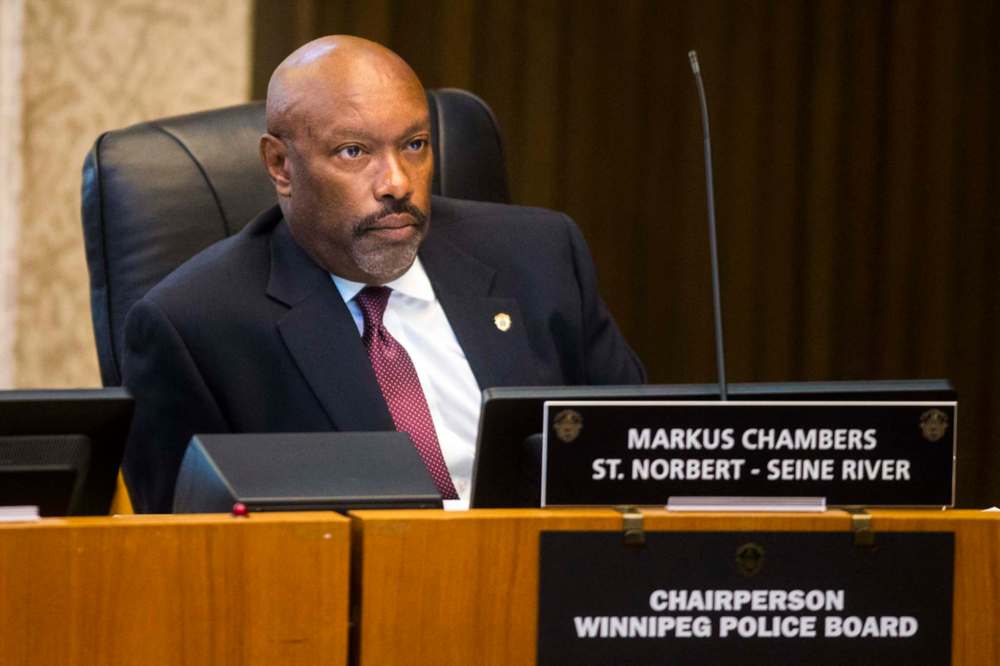
Coun. Markus Chambers (St. Norbert-Seine River), who has lobbied for more inclusive hiring practices, said eliminating that gap is key to providing the best possible services.
“It’s important that… those that are delivering services be reflective of the community that they’re serving. There’s a lot of lived experience that can be passed on,” Chambers said Thursday.
“Our city has become much more diverse over the last 10 to 15 years, through immigration, and we ought to be reflective of that in terms of our city staff.”
As of Dec. 31, 2020, the city had 10,244 employees.
The report found 29.4 per cent were women (down from 30 per cent in 2019), 10.7 per cent were Indigenous (up from 10.2 per cent), 16.2 per cent were people of colour (up from 15.9 per cent), and three per cent were persons with disabilities (up from 2.9 per cent).
Women account for 51 per cent of Winnipeg’s census population, while Indigenous people account for 12.2 per cent, people of colour 25.7 per cent, and persons with disabilities 34.3 per cent.
The report notes staff in all four “equity groups” have median salaries that fall below that of the all-employee level. The median 2020 salary for all city employees was $61,346, compared to $55,858 for women, $57,131 for Indigenous Peoples, $55,858 for people of colour, and $51,269 for persons with disabilities.
The city found the same groups are over-represented as part-time or casual employees, and under-represented in “managerial roles.”
Zilla Jones, a Winnipeg lawyer whose work includes human rights cases, said she’s concerned with the persistent gap between city staff diversity and that of the overall population.
Jones said it’s a good step for the city to explore the issue, but far more work is needed to eliminate barriers. She said the city should try multiple strategies to pinpoint any obstacles, such as by altering its hiring practices to attract a broader array of applicants and considering new accommodations to support workers with disabilities.
She urged the city to ensure equity is considered in efforts to retain and promote staff, not just initial hiring decisions.
“It’s not just increasing the number of people of colour or women or people with disabilities or Indigenous people, it’s also (about) where they’re working and what their opportunities are and (if they are) getting the opportunity to advance and get promotions,” said Jones.
She said the city should also explore each department individually, since conditions vary widely between office workers and emergency crews.

“You still need to examine those particular cultures and those particular hiring practices for those groups separately.”
Chambers said he recently began discussions with civic unions over concerns seniority rules could pose an obstacle to diversity, through a preference to promote existing employees that could limit possible candidates.
“We’re not seeing people from racialized communities in leadership positions, especially if your work pool to begin with is very homogenized,” he said.
joyanne.pursaga@freepress.mb.ca
Twitter: @joyanne_pursaga
Joyanne is city hall reporter for the Winnipeg Free Press. A reporter since 2004, she began covering politics exclusively in 2012, writing on city hall and the Manitoba Legislature for the Winnipeg Sun before joining the Free Press in early 2020. Read more about Joyanne.
Every piece of reporting Joyanne produces is reviewed by an editing team before it is posted online or published in print — part of the Free Press‘s tradition, since 1872, of producing reliable independent journalism. Read more about Free Press’s history and mandate, and learn how our newsroom operates.
Our newsroom depends on a growing audience of readers to power our journalism. If you are not a paid reader, please consider becoming a subscriber.
Our newsroom depends on its audience of readers to power our journalism. Thank you for your support.
Joyanne is city hall reporter for the Winnipeg Free Press. A reporter since 2004, she began covering politics exclusively in 2012, writing on city hall and the Manitoba Legislature for the Winnipeg Sun before joining the Free Press in early 2020. Read more about Joyanne.
Every piece of reporting Joyanne produces is reviewed by an editing team before it is posted online or published in print — part of the Free Press‘s tradition, since 1872, of producing reliable independent journalism. Read more about Free Press’s history and mandate, and learn how our newsroom operates.
Our newsroom depends on a growing audience of readers to power our journalism. If you are not a paid reader, please consider becoming a subscriber.
Our newsroom depends on its audience of readers to power our journalism. Thank you for your support.
Advertisement Advertise With Us
Advertisement Advertise With Us