

City Indigenous groups’ $620-M plan includes hospital

Advertisement
Read this article for free:
or
Already have an account? Log in here »
To continue reading, please subscribe:

Digital Subscription
One year of digital access for only $205*
- Enjoy unlimited reading on winnipegfreepress.com
- Read the E-Edition, our digital replica newspaper
- Access News Break, our award-winning app
- Play interactive puzzles
*First annual payment billed as $205.00 + GST for one year. This annual subscription will automatically renew at $233.00 + GST every 52 weeks (10% off the regular annual price of $259.35). Offer available to new and qualified returning subscribers only. Cancel any time.
To continue reading, please subscribe:
Add Free Press access to your Brandon Sun subscription for only an additional
$1 for the first 4 weeks*
- Enjoy unlimited reading on winnipegfreepress.com
- Read the E-Edition, our digital replica newspaper
- Access News Break, our award-winning app
- Play interactive puzzles
*Your next Brandon Sun subscription payment will increase by $1.00 and you will be charged $17.95 plus GST for four weeks. After four weeks, your payment will increase to $24.95 plus GST every four weeks.
Read unlimited articles for free today:
or
Already have an account? Log in here »
Hey there, time traveller!
This article was published 29/06/2022 (1552 days ago), so information in it may no longer be current.
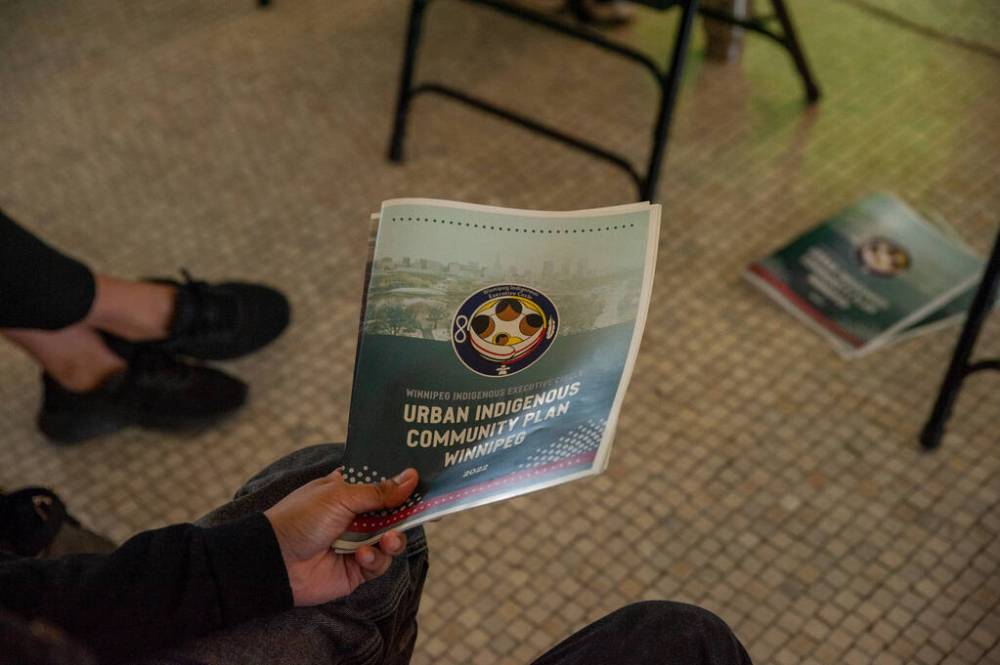
Thirty-two Indigenous-led organizations have collaborated on a guiding document that outlines how Winnipeg should grow and support the Indigenous population over the next decade.
The Urban Indigenous Community Plan provides a framework to improve health, housing, education, employment and family life outcomes for Indigenous Winnipeggers. It includes a 10-year investment plan that identifies funding priorities and estimates the cost of initiatives.
The idea is to present politicians, community members and potential investors with concrete examples of how and where they can contribute, said Kendell Joiner, executive director of the Native Clan Organization.
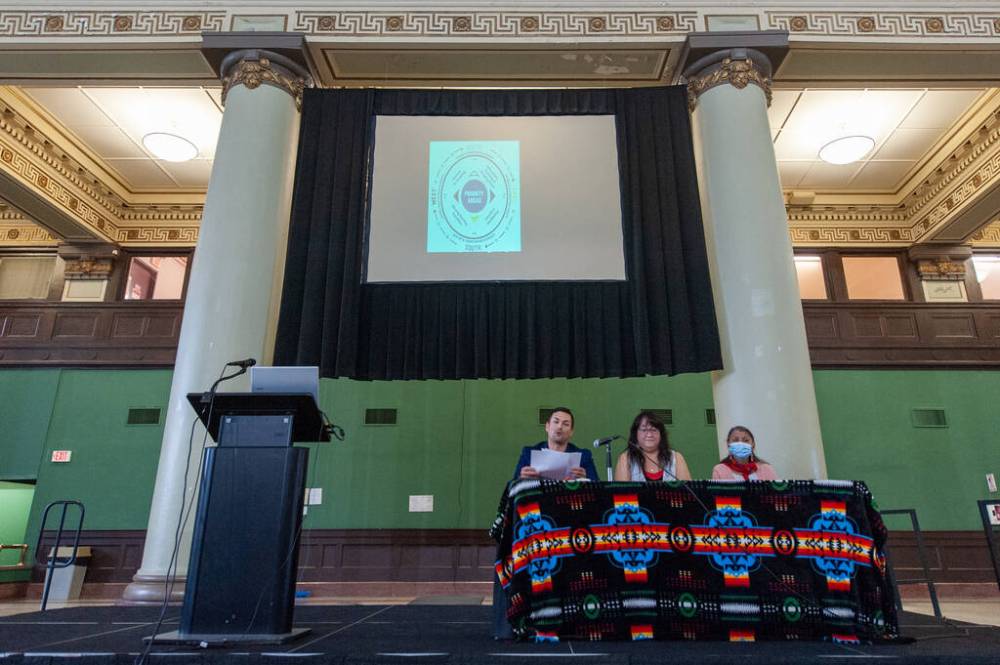
“The plan is very all-encompassing, and it comes from a place of love because it’s helping human beings… it’s a community plan, and the landscape of Winnipeg will be absolutely changed-and-a-half by these investments and infrastructure upgrades,” Joiner said.
The Winnipeg Indigenous Executive Circle, which represents dozens of organizations with Indigenous interests, unveiled the plan Wednesday at the Neeginan Centre on Higgins Avenue. Leaders from organizations who developed the framework attended.
The group is calling for $620M in investments over the next decade.
The most significant funding opportunity asks investors to create an Indigenous hospital, with an estimated price tag of $65 million. Other priorities include expanding low-barrier housing projects at $20 million per year over three years and $50 million in infrastructure upgrades to the Neeginan Centre and the Friendship Centre at 45 Robinson St.
Establishing the financial priorities and cost estimates involved consultations with experts and organizations. The numbers account for construction costs and staff salaries, Joiner said.
The plan comes as the electoral race heats up in Winnipeg. Many candidates vying for mayor are campaigning on challenges addressed within, including Indigenous health care and housing.
Joiner is aware of the timeliness.

“I would like to hope that candidates are paying attention to the plan,” he said. “If you’re going to be leading a city with the largest Indigenous population in Canada… and you have Indigenous non-profits putting a plan out, it might be a good thing to pay attention to it.”
Hours after the announcement, mayoral hopeful Scott Gillingham promised to add 270 affordable housing units in Winnipeg.
Gillingham’s initiative involves securing funds from the federal rapid housing program. The Indigenous Circle’s investment plan suggests a similar approach.
“What would be really great to see is stable funding for Indigenous non-profits at every level of government,” Joiner said. “Here are the answers for how we can get our jobs done and support our people… approach us and ask us how you can support.”
tyler.searle@freepress.mb.ca
Tyler Searle is a multimedia producer who writes for the Free Press’s city desk. A graduate of Red River College Polytechnic’s creative communications program, he wrote for the Stonewall Teulon Tribune, Selkirk Record and Express Weekly News before joining the paper in 2022. Read more about Tyler.
Every piece of reporting Tyler produces is reviewed by an editing team before it is posted online or published in print — part of the Free Press‘s tradition, since 1872, of producing reliable independent journalism. Read more about Free Press’s history and mandate, and learn how our newsroom operates.
Our newsroom depends on a growing audience of readers to power our journalism. If you are not a paid reader, please consider becoming a subscriber.
Our newsroom depends on its audience of readers to power our journalism. Thank you for your support.
Tyler Searle is a multimedia producer who writes for the Free Press’s city desk. A graduate of Red River College Polytechnic’s creative communications program, he wrote for the Stonewall Teulon Tribune, Selkirk Record and Express Weekly News before joining the paper in 2022. Read more about Tyler.
Every piece of reporting Tyler produces is reviewed by an editing team before it is posted online or published in print — part of the Free Press‘s tradition, since 1872, of producing reliable independent journalism. Read more about Free Press’s history and mandate, and learn how our newsroom operates.
Our newsroom depends on a growing audience of readers to power our journalism. If you are not a paid reader, please consider becoming a subscriber.
Our newsroom depends on its audience of readers to power our journalism. Thank you for your support.
Advertisement Advertise With Us
Advertisement Advertise With Us
History
Updated on Wednesday, June 29, 2022 4:27 PM CDT: Fixes typo.