

City not best-suited to run safe drug site: report

Advertisement
Read this article for free:
or
Already have an account? Log in here »
To continue reading, please subscribe:

Digital Subscription
One year of digital access for only $205*
- Enjoy unlimited reading on winnipegfreepress.com
- Read the E-Edition, our digital replica newspaper
- Access News Break, our award-winning app
- Play interactive puzzles
*First annual payment billed as $205.00 + GST for one year. This annual subscription will automatically renew at $233.00 + GST every 52 weeks (10% off the regular annual price of $259.35). Offer available to new and qualified returning subscribers only. Cancel any time.
To continue reading, please subscribe:
Add Free Press access to your Brandon Sun subscription for only an additional
$1 for the first 4 weeks*
- Enjoy unlimited reading on winnipegfreepress.com
- Read the E-Edition, our digital replica newspaper
- Access News Break, our award-winning app
- Play interactive puzzles
*Your next Brandon Sun subscription payment will increase by $1.00 and you will be charged $17.95 plus GST for four weeks. After four weeks, your payment will increase to $24.95 plus GST every four weeks.
Read unlimited articles for free today:
or
Already have an account? Log in here »
Hey there, time traveller!
This article was published 01/06/2021 (1940 days ago), so information in it may no longer be current.
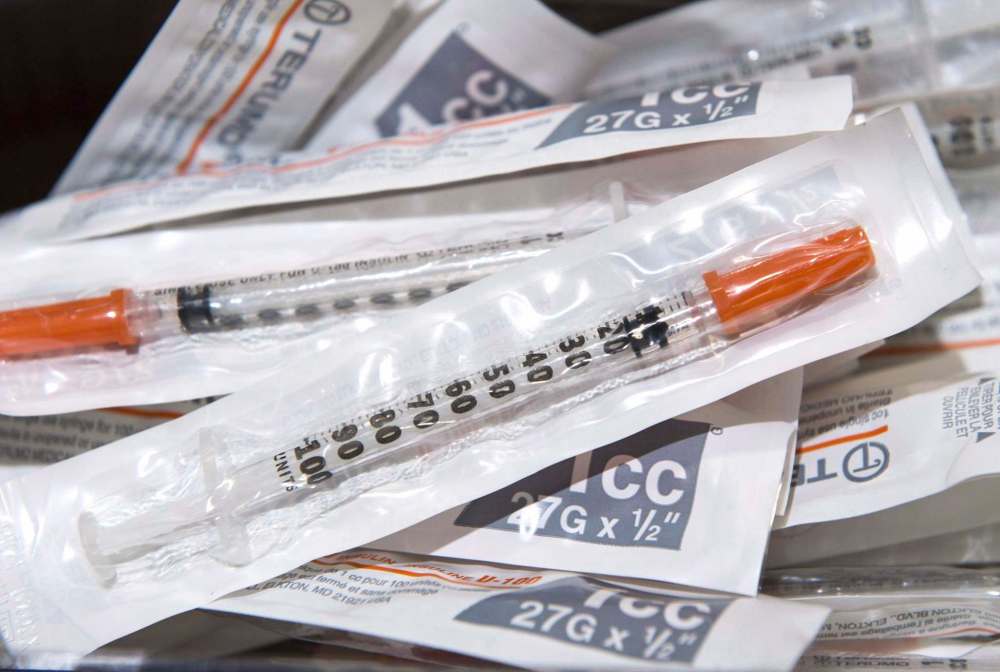
A safe drug consumption site could prevent overdose deaths in Winnipeg, but the city isn’t the best organization to provide one and the province isn’t likely to help fund it.
That’s the gist of a long-awaited report by city staff that explores options to add one or more safe (or supervised) drug consumption facilities.
A city councillor said she remains committed to getting one in Winnipeg, even though she agrees the city itself shouldn’t deliver the service.
“I will not stop until I see them done… I ran (my election campaign) on supervised consumption sites, plural. I’ve been ready to sign off,” said Coun. Sherri Rollins, chairwoman of council’s protection and community services committee.
Rollins criticized the Manitoba government, which does have jurisdiction over health and addictions treatment, for rejecting calls to add or fund such sites, which are in Ontario, British Columbia, Alberta, Saskatchewan and Quebec.
Rollins has argued trained staff at the sites will save lives and could also connect drug users with treatment when they are ready to seek it.
The city report notes organizations that address substance use can apply to the federal government directly to set up such sites, groups it argues have more expertise to do so than the city.
Rollins said such applications would require support from the surrounding neighbourhood, which she would endorse for her ward (Fort Rouge-East Fort Garry).
Winnipeg is experiencing an opioid overdose epidemic, the city report said. That triggered 398 opioid-related calls to the Winnipeg Fire Paramedic Service in 2019, which jumped to 1,126 in 2020.
“To date, 2021 calls are on track to surpass the 2020 numbers,” the report warns.
Damon Johnston, president of the Aboriginal Council of Winnipeg, said he’s aware of work to create at least one Indigenous-led application for a safe drug consumption site in Winnipeg, though the size, location and other details are being worked out.
Johnston said a culturally sensitive approach would be key to the project. The majority of Winnipeggers who are homeless are Indigenous, he said, noting those who lack shelter are also at higher risk of addiction.
“There are (thousands of)… homeless persons on the streets of Winnipeg right now and 70 per cent of those are Indigenous… Just supporting that group, you’d need some significant capacity,” he said.
The city report notes federal grants could help fund a facility, though the Manitoba government has not endorsed the sites or offered to pay for them.
On Tuesday, Premier Brian Pallister said his government is investing in addictions treatment but indicated it will focus on other measures.
“We are actually really, really up to the task of tackling this. There’s been such a focus, it seems, in some quarters, on making the drugs available in an environment with a safe injection site that we’re forgetting about all the other possible things that we could be doing … We’ll continue to invest in those initiatives,” he said.
In a statement, a provincial spokesperson said Manitoba has spent $50.8 million on more than 30 projects to address mental health and addictions since October 2019, including an expansion to Rapid Access to Addictions Medicine clinics in Winnipeg.
Rollins said there remains an urgent need to prevent harm from addictions, which the city can begin tackling by having WFPS share drug data with social service agencies. That information could quickly alert drug users to dangerous new substances as they emerge in the city, she said.

“Then we can get information into the hands of people who are consuming drugs that there is a dangerous drug that has got toxic levels and they need to either reduce their harms, either take less of it or not take it at all,” said Rollins. “It’s a critical piece that we need to share… in order to save lives.”
Joyanne.pursaga@freepress.mb.ca
Twitter: @joyanne_pursaga
Joyanne is city hall reporter for the Winnipeg Free Press. A reporter since 2004, she began covering politics exclusively in 2012, writing on city hall and the Manitoba Legislature for the Winnipeg Sun before joining the Free Press in early 2020. Read more about Joyanne.
Every piece of reporting Joyanne produces is reviewed by an editing team before it is posted online or published in print — part of the Free Press‘s tradition, since 1872, of producing reliable independent journalism. Read more about Free Press’s history and mandate, and learn how our newsroom operates.
Our newsroom depends on a growing audience of readers to power our journalism. If you are not a paid reader, please consider becoming a subscriber.
Our newsroom depends on its audience of readers to power our journalism. Thank you for your support.
Joyanne is city hall reporter for the Winnipeg Free Press. A reporter since 2004, she began covering politics exclusively in 2012, writing on city hall and the Manitoba Legislature for the Winnipeg Sun before joining the Free Press in early 2020. Read more about Joyanne.
Every piece of reporting Joyanne produces is reviewed by an editing team before it is posted online or published in print — part of the Free Press‘s tradition, since 1872, of producing reliable independent journalism. Read more about Free Press’s history and mandate, and learn how our newsroom operates.
Our newsroom depends on a growing audience of readers to power our journalism. If you are not a paid reader, please consider becoming a subscriber.
Our newsroom depends on its audience of readers to power our journalism. Thank you for your support.
Advertisement Advertise With Us
Advertisement Advertise With Us