

First Nations open to twinning Trans-Canada

Advertisement
Read this article for free:
or
Already have an account? Log in here »
To continue reading, please subscribe:

Digital Subscription
One year of digital access for only $205*
- Enjoy unlimited reading on winnipegfreepress.com
- Read the E-Edition, our digital replica newspaper
- Access News Break, our award-winning app
- Play interactive puzzles
*First annual payment billed as $205.00 + GST for one year. This annual subscription will automatically renew at $233.00 + GST every 52 weeks (10% off the regular annual price of $259.35). Offer available to new and qualified returning subscribers only. Cancel any time.
To continue reading, please subscribe:
Add Free Press access to your Brandon Sun subscription for only an additional
$1 for the first 4 weeks*
- Enjoy unlimited reading on winnipegfreepress.com
- Read the E-Edition, our digital replica newspaper
- Access News Break, our award-winning app
- Play interactive puzzles
*Your next Brandon Sun subscription payment will increase by $1.00 and you will be charged $17.95 plus GST for four weeks. After four weeks, your payment will increase to $24.95 plus GST every four weeks.
Read unlimited articles for free today:
or
Already have an account? Log in here »
Hey there, time traveller!
This article was published 07/04/2021 (2008 days ago), so information in it may no longer be current.
FOUR First Nations near the Manitoba-Ontario border say they are prepared to give “conditional consent” for the first phase of the twinning of the Trans-Canada Highway between Kenora and the border.
“We can get so much done when we agree to work together,” Niisaachewan Chief Lorraine Cobiness said at a news conference Tuesday.
She was joined by the leaders of Wauzhushk Onigum, Shoal Lake 40 and Washagamis Bay First Nations, which call themselves the Niiwin Wendaanimok (Four Winds Group).
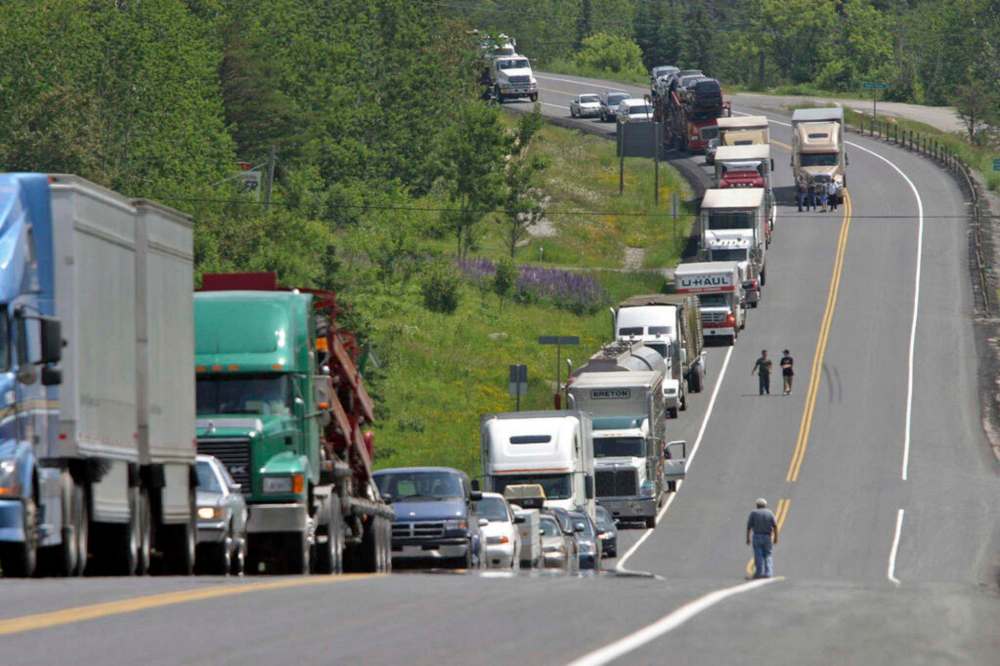
Following months of discussions with provincial transportation officials, the group has agreed to allow Ontario to enter its territory under its guidance to start the first phase of the project; in return, the provincial government is expected to work collaboratively with the Anshinaabeg and ensure the communities benefit from the project.
That would amount to $77 million in direct and indirect economic activity for the four bands, and a safer drive for travellers.
“I think we all have had… not the greatest experience on that highway at most times,” Cobiness said.
“There is a definite desire to make sure that the highway is safe for everybody to travel on.”
The partnership will also help advance reconciliation, said Wauzhushk Onigum Chief Chris Skead.
“The past relationship has been genocidal for the Anishinaabeg. More recently it hasn’t worked for anyone. But now these discussions have been guided by Manito Aki Inaakonigaawin, the sacred law of the Earth,” Skead wrote.

“We have been guided by the principles of Weweni (Take our time), Bebeka (doing it right), Biiziindun (listen), and Kegotachken (do not be afraid).”
The chief of Shoal Lake 40 said the journey thus far has included a harmonized process for understanding environmental impacts and mitigation measures. The creation of an Anishinaabe Guardians Program and opportunities that will establish the foundation of the nations’ economies are also part of the project, said Chief Vernon Redsky.
The first phase of the twinning, which will involve connecting Highway 1 from the Manitoba-Ontario border to Highway 673, is expected to start this fall. The next two phases, which the nations have yet to consent to, would involve the section from Highway 673 to Kenora. There will be a sacred ceremony at the end of the month, if the Ontario government agrees to the partnership’s conditions.
— with files from Dylan Robertson
maggie.macintosh@freepress.mb.ca
Maggie Macintosh
Education reporter
Maggie Macintosh reports on education for the Free Press. Originally from Hamilton, Ont., she first reported for the Free Press in 2017. Read more about Maggie.
Funding for the Free Press education reporter comes from the Government of Canada through the Local Journalism Initiative.
Every piece of reporting Maggie produces is reviewed by an editing team before it is posted online or published in print — part of the Free Press‘s tradition, since 1872, of producing reliable independent journalism. Read more about Free Press’s history and mandate, and learn how our newsroom operates.
Our newsroom depends on a growing audience of readers to power our journalism. If you are not a paid reader, please consider becoming a subscriber.
Our newsroom depends on its audience of readers to power our journalism. Thank you for your support.
Maggie Macintosh
Education reporter
Maggie Macintosh reports on education for the Free Press. Originally from Hamilton, Ont., she first reported for the Free Press in 2017. Read more about Maggie.
Funding for the Free Press education reporter comes from the Government of Canada through the Local Journalism Initiative.
Every piece of reporting Maggie produces is reviewed by an editing team before it is posted online or published in print — part of the Free Press‘s tradition, since 1872, of producing reliable independent journalism. Read more about Free Press’s history and mandate, and learn how our newsroom operates.
Our newsroom depends on a growing audience of readers to power our journalism. If you are not a paid reader, please consider becoming a subscriber.
Our newsroom depends on its audience of readers to power our journalism. Thank you for your support.
Advertisement Advertise With Us
Advertisement Advertise With Us