Healing circles shine light on mental health in Asian community

Advertisement
Read this article for free:
or
Already have an account? Log in here »
To continue reading, please subscribe:

Digital Subscription
One year of digital access for only $205*
- Enjoy unlimited reading on winnipegfreepress.com
- Read the E-Edition, our digital replica newspaper
- Access News Break, our award-winning app
- Play interactive puzzles
*First annual payment billed as $205.00 + GST for one year. This annual subscription will automatically renew at $233.00 + GST every 52 weeks (10% off the regular annual price of $259.35). Offer available to new and qualified returning subscribers only. Cancel any time.
To continue reading, please subscribe:
Add Free Press access to your Brandon Sun subscription for only an additional
$1 for the first 4 weeks*
- Enjoy unlimited reading on winnipegfreepress.com
- Read the E-Edition, our digital replica newspaper
- Access News Break, our award-winning app
- Play interactive puzzles
*Your next Brandon Sun subscription payment will increase by $1.00 and you will be charged $17.95 plus GST for four weeks. After four weeks, your payment will increase to $24.95 plus GST every four weeks.
Read unlimited articles for free today:
or
Already have an account? Log in here »
Hey there, time traveller!
This article was published 16/05/2022 (1592 days ago), so information in it may no longer be current.
Never complain, never explain.
This saying haunts the psyche of many Asian youth who society and culture have conditioned to keep quiet about their mental health, experts say.
“Mental health is something that affects everybody, but within Asian communities, it’s a very stigmatized topic,” says Dana Lance, a youth programs co-ordinator with the Mood Disorders Association of Manitoba. “It’s looked at as a taboo. It’s looked at as ‘don’t talk about it because there is something wrong with you.’”
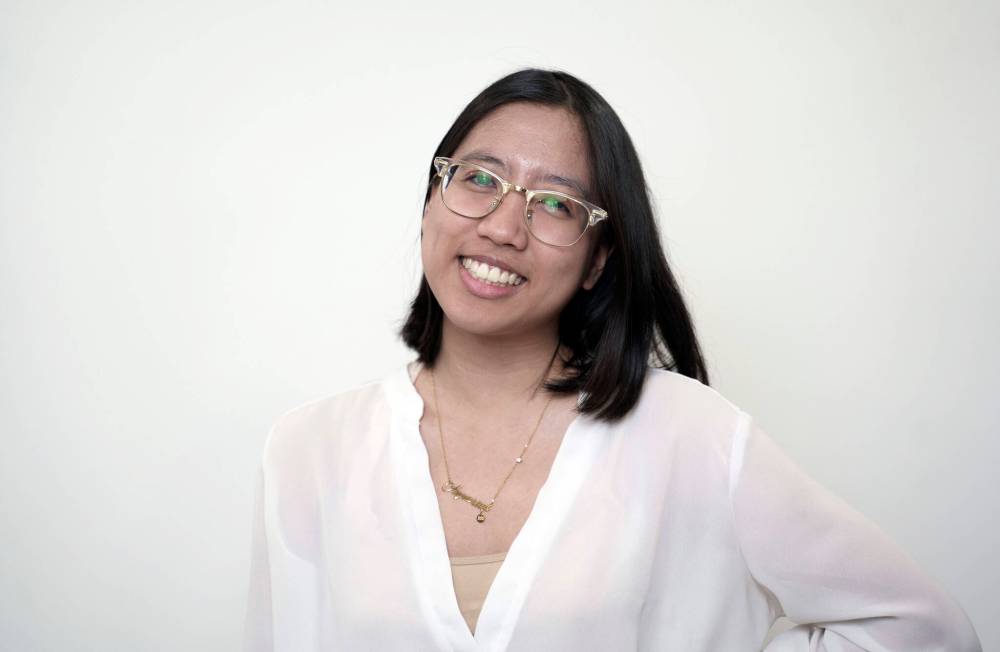
Immigration, language barriers, family relationships, and cultural norms intersect with mental health, often making it difficult for Asian people to navigate — or even address — their thoughts and feelings, she says.
Lance, who is Filipino and Japanese, intimately understands these challenges. She develops mental health programming for youth and hopes her work might combat the stigma.
This month, the Mood Disorders Association is championing a healing circle initiative that facilitates conversations with people who identify as Asian. Lance leads the discussions and describes the peer group as a safe place for people to speak about culture, identity and mental health.
May marks the 20th anniversary of Asian Heritage Month, so it is a fitting time to host the sessions, she says.
It is crucial for Asian people to understand mental health and mental illness are universal, Lance added.
According to the federal government, one-third of people living in Canada will deal with mental illness in their lives.
“It’s the similar experiences that other people can gravitate toward which gives them the opportunity to validate their experiences and emotions, but also gives them support and maybe some advice… it’s very powerful,” Lance says.
In May 2021, Lance introduced the concept of an Asian healing circle in response to a shooting spree in Atlanta that left eight people dead, including six women of Asian descent.
Witnessing people in her community unite after the tragedy filled Lance with hope. She now feels a responsibility to continue to facilitate conversations, she says.
“Not feeling like you have a voice can be a huge contributing factor to mental health,” says Liz Choi, Winnipeg Chamber of Commerce chairwoman. “Normalizing these topics goes a long way in removing fear and providing more equal pathways into participation.”
Asian youth are leading a change in how their communities discuss mental health, but there is still a long way to go. Improving access to care and educating the broader public is an important next step, Choi says.
She points to her childhood as an example of the challenges racialized people may face.
When Choi came to Canada as a teenager, language barriers and the pressure to succeed as a first-generation Canadian made the transition difficult. It’s an experience she believes is shared by many people with Asian heritage, she says.
Data from Statistics Canada shows almost half of the country’s immigrant population (48.1 per cent in 2016) was born in Asia.
Helping immigrants understand the distinction between mental health and mental illness is crucial, says Dr. Muni Mysore, a psychiatrist and former president of the Asian Heritage Society.
Mental health is a general term which accounts for a person’s overall thoughts and emotions. Mental illness describes more severe conditions like schizophrenia, bipolar disorder and depression, she explains.
Lumping the two together reinforces the stigma discussing mental health is an admission of illness and may prevent people from dealing with their thoughts in healthy ways, Mysore says.
Unprocessed feelings sometimes manifest as maladaptive behaviours such as rebelliousness, alcoholism and gambling, while unaddressed mental illness can result in worsened symptoms and hospitalization, she says.
In 2016, the Centre for Addictions and Mental Health examined a link between ethnicity and mental illness severity.
The study, which involved 133,000 patients, determined Chinese and South Asian patients in Ontario experience more severe mental illness at the time of hospital admission than other patients.
“While Asian people tend to have strong family support, they may also be more likely to experience stigma. Families may try to cope and keep the illness within the family until there is no choice but to go to hospital. Reducing stigma and augmenting culturally sensitive mental health services could help reach people sooner,” principal investigator Dr. Maria Chiu wrote at the time of the report.

The Mood Disorders’ Asian healing circles are available online every Sunday throughout May. People interested in attending can find a meeting link on the association’s website.
The sessions are free and last roughly an hour (2-3 p.m.). Any person who identifies as Asian is invited to attend.
The association is also hosting a live panel discussion May 25 at the Japanese Cultural Association of Manitoba.
The talk, titled “Challenging Mental Health Related Stigma — Asian Youth Perspectives,” begins at 6 p.m. and ends at 8 p.m. with a question and answer session.
fpcity@freepress.mb.ca
Tyler Searle is a multimedia producer who writes for the Free Press’s city desk. A graduate of Red River College Polytechnic’s creative communications program, he wrote for the Stonewall Teulon Tribune, Selkirk Record and Express Weekly News before joining the paper in 2022. Read more about Tyler.
Every piece of reporting Tyler produces is reviewed by an editing team before it is posted online or published in print — part of the Free Press‘s tradition, since 1872, of producing reliable independent journalism. Read more about Free Press’s history and mandate, and learn how our newsroom operates.
Our newsroom depends on a growing audience of readers to power our journalism. If you are not a paid reader, please consider becoming a subscriber.
Our newsroom depends on its audience of readers to power our journalism. Thank you for your support.
Tyler Searle is a multimedia producer who writes for the Free Press’s city desk. A graduate of Red River College Polytechnic’s creative communications program, he wrote for the Stonewall Teulon Tribune, Selkirk Record and Express Weekly News before joining the paper in 2022. Read more about Tyler.
Every piece of reporting Tyler produces is reviewed by an editing team before it is posted online or published in print — part of the Free Press‘s tradition, since 1872, of producing reliable independent journalism. Read more about Free Press’s history and mandate, and learn how our newsroom operates.
Our newsroom depends on a growing audience of readers to power our journalism. If you are not a paid reader, please consider becoming a subscriber.
Our newsroom depends on its audience of readers to power our journalism. Thank you for your support.
Advertisement Advertise With Us
Advertisement Advertise With Us