

High school studies enhanced through ‘reconcili-action’
Lessons expand knowledge of Indigenous history

Advertisement
Read this article for free:
or
Already have an account? Log in here »
To continue reading, please subscribe:
Digital Subscription
One year of digital access for only $1.44 a week*
- Enjoy unlimited reading on winnipegfreepress.com
- Read the E-Edition, our digital replica newspaper
- Access News Break, our award-winning app
- Play interactive puzzles
*Billed as $5.77 plus GST every four weeks. After 52 weeks, price increases to the regular rate of $19.95 plus GST every four weeks. Offer available to new and qualified returning subscribers only. Cancel any time.
To continue reading, please subscribe:
Add Free Press access to your Brandon Sun subscription for only an additional
$1 for the first 4 weeks*
- Enjoy unlimited reading on winnipegfreepress.com
- Read the E-Edition, our digital replica newspaper
- Access News Break, our award-winning app
- Play interactive puzzles
*Your next Brandon Sun subscription payment will increase by $1.00 and you will be charged $17.95 plus GST for four weeks. After four weeks, your payment will increase to $24.95 plus GST every four weeks.
Read unlimited articles for free today:
or
Already have an account? Log in here »
Hey there, time traveller!
This article was published 01/10/2021 (1847 days ago), so information in it may no longer be current.
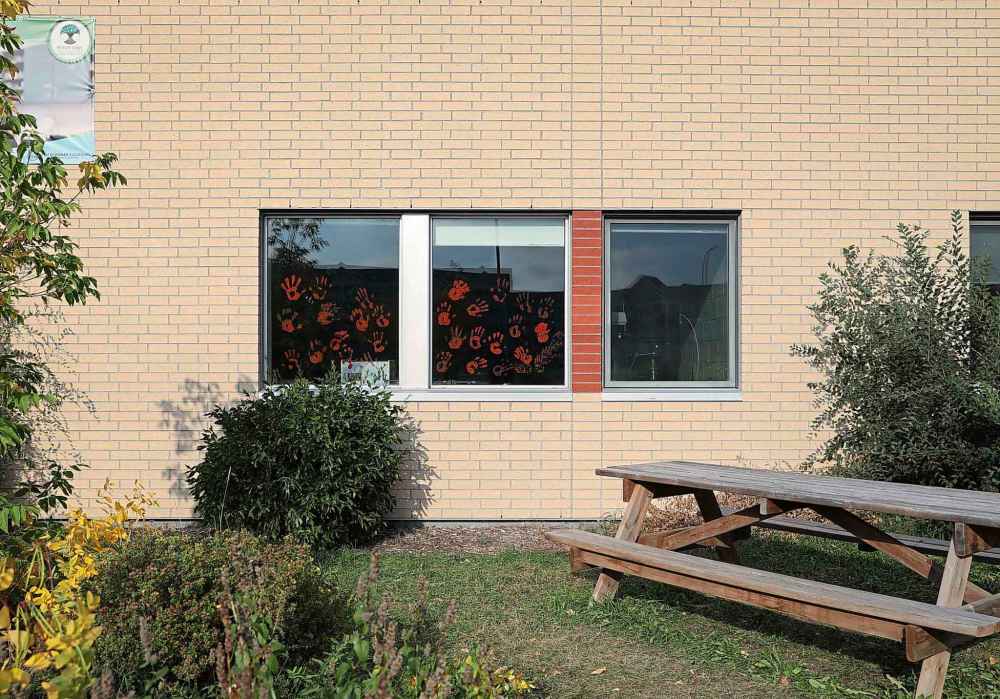
Every student who enrols in West Kildonan Collegiate is required to complete a “reconcili-action” course to obtain their high school diploma.
Kristin Erickson, one of the curriculum developers, however, is in no rush to see every school in Manitoba follow suit.
In fact, the teacher of Cree, Métis, Swedish and Scottish descent says a course such as the one she co-created is unnecessary — if educators are doing their jobs properly.

“Talking about Indigenous history shouldn’t be quote unquote, ‘Indigenous history.’ It should be Canadian history, and it should be easily integrated throughout lessons,” said Erickson, who teaches social studies, history and reconciliation in Winnipeg.
“There needs to be an invisible line. (Indigenous education) should just always be there.”
Among the 94 calls to action released by the Truth and Reconciliation Commission in 2015 was a request for governments to create and make mandatory age-appropriate curriculum on residential schools, treaties, and Indigenous peoples’ historical and contemporary contributions to Canada. The TRC also called on governments to fund post-secondary institutions to offer teacher candidates training on integrating both Indigenous knowledge and teaching methods.
At the time, chief commissioner Murray Sinclair said: “Education got us into this mess and education will get us out of it.”
Not long after the commission wrapped up, a group of Indigenous teachers in the Seven Oaks School Division, Erickson included, acted on those calls. They met to brainstorm ways to better teach young Canadians about the history of the land they live on, the people who inhabited it long before their families settled here, and what it means to reconcile.
The result is a curriculum entitled “Reconciliation: Building Relationships through Reconcili-action,” which was first piloted in 2018-19.
The following year, West Kildonan made the malleable curriculum — which includes cultural activities, Indigenous literature, and related assignments that explore four key themes: self-reflection and identity; treaty relations; environmental stewardship; and “reconcili-action” — a mandatory component of Grade 9 English language arts.
In the years since the TRC, Erickson said she has noticed her students are showing more knowledge about Indigenous peoples, beyond understanding of the seven sacred teachings.
“Kids are coming in with a little bit more knowledge about Indigenous people, in general, and the real Canadian history — not the one-sided, biased history,” she said, adding 2021 headlines about how communities have used technology to locate hundreds of unmarked graves of Indigenous children have made students realize the legacy of residential schools is ongoing.

Some of the educator’s go-to teaching resources include Borders by Thomas King, John McLeod’s The Shivering Tree, and Indian Horse by Richard Wagamese. Incorporating Indigenous authors and stories into any course, she said, is an easy way to Indigenize it.
Where Erickson sees room for improvement across the schooling system is in ensuring students are not taught that Indigenous people are a monolith; she said teachers could do a better job emphasizing the wide-ranging diversity that exists, when it comes to language and tradition.
There are upwards of 630 First Nations, in which more than 50 languages are spoken, in Canada.
maggie.macintosh@freepress.mb.ca
Twitter: @macintoshmaggie
Maggie Macintosh
Education reporter
Maggie Macintosh reports on education for the Free Press. Originally from Hamilton, Ont., she first reported for the Free Press in 2017. Read more about Maggie.
Funding for the Free Press education reporter comes from the Government of Canada through the Local Journalism Initiative.
Every piece of reporting Maggie produces is reviewed by an editing team before it is posted online or published in print — part of the Free Press‘s tradition, since 1872, of producing reliable independent journalism. Read more about Free Press’s history and mandate, and learn how our newsroom operates.
Our newsroom depends on a growing audience of readers to power our journalism. If you are not a paid reader, please consider becoming a subscriber.
Our newsroom depends on its audience of readers to power our journalism. Thank you for your support.
Advertisement Advertise With Us
Advertisement Advertise With Us
History
Updated on Friday, October 1, 2021 11:21 AM CDT: Adds photos