

Impact from food inflation hits hard
Advertisement
Read this article for free:
or
Already have an account? Log in here »
To continue reading, please subscribe:
Digital Subscription
One year of digital access for only $1.44 a week*
- Enjoy unlimited reading on winnipegfreepress.com
- Read the E-Edition, our digital replica newspaper
- Access News Break, our award-winning app
- Play interactive puzzles
*Billed as $5.77 plus GST every four weeks. After 52 weeks, price increases to the regular rate of $19.95 plus GST every four weeks. Offer available to new and qualified returning subscribers only. Cancel any time.
To continue reading, please subscribe:
Add Free Press access to your Brandon Sun subscription for only an additional
$1 for the first 4 weeks*
- Enjoy unlimited reading on winnipegfreepress.com
- Read the E-Edition, our digital replica newspaper
- Access News Break, our award-winning app
- Play interactive puzzles
*Your next Brandon Sun subscription payment will increase by $1.00 and you will be charged $17.95 plus GST for four weeks. After four weeks, your payment will increase to $24.95 plus GST every four weeks.
Read unlimited articles for free today:
or
Already have an account? Log in here »
Hey there, time traveller!
This article was published 23/05/2022 (1617 days ago), so information in it may no longer be current.
Linda Neuls is having a harder time paying for groceries now than she did when she had four kids under her roof.
Rising inflation is sending thousands of Canadians to food banks for the first time.
“I never, ever thought I would be here,” said Neuls, 70, who lives with terminal cancer and started receiving food hampers a year ago.
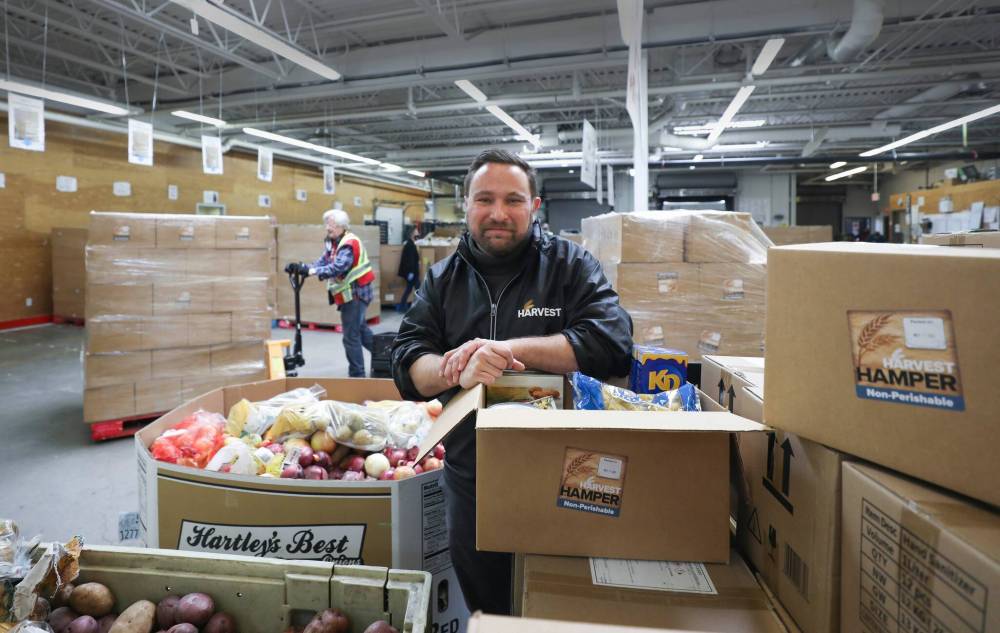
Neuls spoke with the Free Press in an attempt to break the stigma associated with accessing food banks, as Harvest Manitoba reports a 42 per cent jump in clientele.
The agency’s CEO, Vince Barletta, said nearly 14,000 households in the province received hampers in March, compared to about 10,000 last year.
“It’s absolutely astonishing,” he said.
“As these inflation numbers have started to get really eye-popping, it’s sending more and more Canadians than ever before to their local food bank.”
Cost of grocery staples skyrockets, with no end in sight
Posted:
Yes, your food got more expensive — again — last month.
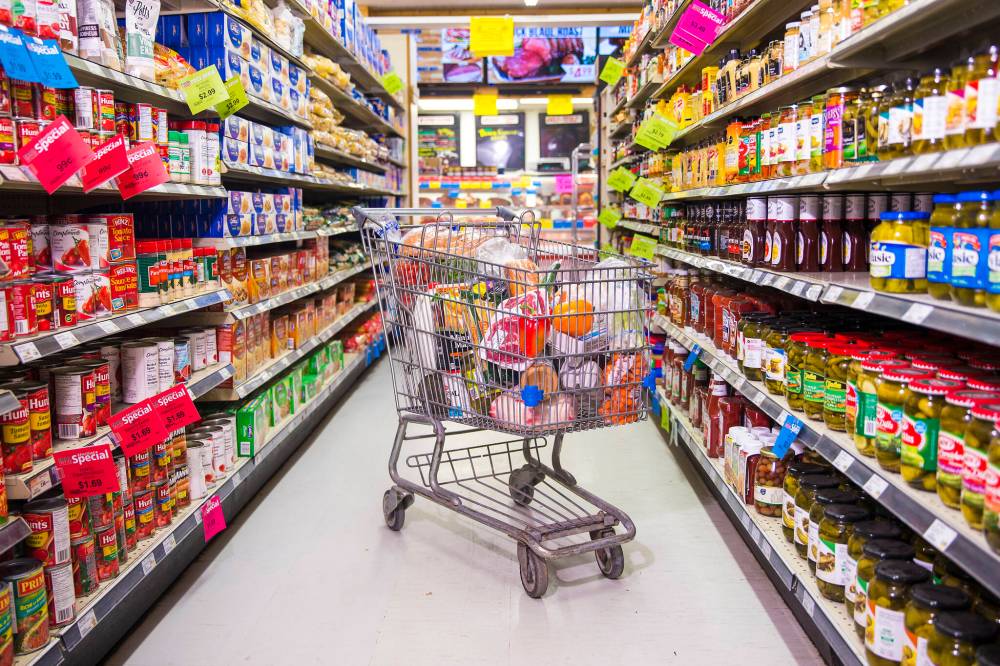
The cost of store-purchased food in Manitoba has risen 9.5 per cent in April 2022 compared to the year prior. Nationally, the rise is at 9.7 per cent, according to Statistics Canada.
In Manitoba, meat is up 11.3 per cent, while vegetables are up 9.6 per cent, slightly above national rates.
Eggs and dairy have also risen in Manitoba, but at comparatively lower rates than the national average.
The overall inflation rate, including non-food expenses like rent, transportation and medicine, hit 7.5 per cent in Manitoba last month, compared with 6.8 per cent for the country overall.
Barletta said people cut back on food since it’s one of the few expenses they have flexibility over.
“People are eating less healthy food; they’re getting less access to fresh food,” he said.
“You can imagine what this does over time to people’s general health, the health of their children and the health of communities.”
Neuls knows that firsthand.
In recent months, she’s opted for chicken wieners instead of actual birds, and she can’t afford oranges that cost $1.73 each.
“I know how to rub two pennies together to try and make it, but now it’s getting ridiculous.” – Linda Neuls
“I know how to rub two pennies together to try and make it, but now it’s getting ridiculous,” said Neuls, who often has a cup of tea or popcorn for dinner.
The alternative is skipping medication or defaulting on her rent.
Neuls raised four children on her own, using her salary from teaching domestic skills to teenage mothers and immigrants at Villa Rosa.
When times were tough, she would give her kids Kool-Aid instead of milk.
“I thought it was a stigma, that if I go to Harvest, people would think I can’t look after my kids,” she said. “I always felt that other people needed it more than myself.”
When her kids moved out, Neuls assumed she was financially stable. A brush with cancer in 2011 put her briefly on Employment Insurance. She went back to work, but had flareups three years later. The doctor told her that a spreading cancer was inoperable, leaving her with a year to live.
Her $150 monthly grocery budget used to be plenty. She made casseroles and buns to freeze, as the news warned of rising prices.
“You look at those ways you can get your bang for your buck out of your pension, but it’s not working anymore.” – Linda Neuls
Now, $200 barely covers her list of needs, never mind the occasional treat.
“You look at those ways you can get your bang for your buck out of your pension, but it’s not working anymore,” she said.
Neuls worries that home-care aides who help clean up her apartment use too much soap. She feels pangs of stress each time they take a piece of paper towel.
“I hear them ripping them off, and it’s sad but it’s like, ‘Oh my God, be careful, please girls’ because I have to buy them,” she said. “Where does that come from? It’s that orange you that you might want to have, or that head of lettuce.”
She’s part of a phone group for homebound seniors that often exchanges tips, like buying applesauce instead of apples.
The group also has a birthday gift exchange.
“I was struggling, really a lot. I was at a point where I didn’t know if I wanted to be here or not.” – Linda Neuls
“It was getting to the point where I couldn’t do that any more. I think that’s when people found out I was struggling, more than I was letting on,” Neuls said between tears.
“I was struggling, really a lot. I was at a point where I didn’t know if I wanted to be here or not.”
The group co-ordinator urged her to call Harvest.
“I got a wonderful girl who made me feel like I was worthwhile and it was maybe three or four days later I had my hamper at my door,” she recalled.
She marvelled at a healthy looking potato, fresh vegetables and milk.
“It was like Christmas — like I was worthwhile; people did care about me. And I wasn’t a horrible person.”
She can now have oatmeal for breakfast, or milk in her coffee, while affording the occasional treat for her dog.
Barletta said many people are seeking food hampers for the first time — and some are returning for help years after getting on their feet years.
“It was like Christmas– like I was worthwhile; people did care about me. And I wasn’t a horrible person.” – Linda Neuls
He’s seen a recent rise in requests from rural Manitoba, including remote Indigenous communities where food must be flown or shipped in, regardless of rising gas prices.
He said food banks don’t solve the problems that drive food insecurity. “What drives people to food banks is not having enough income,” said Barletta.
He wouldn’t point to any specific policy, noting that some have argued for more generous government benefits and stipends for shipping food north, while others say more jobs or training can help shore up incomes.
But what’s clear to him is that Manitobans are feeling a squeeze — and so are food banks, which are paying more to buy food and drive it places.
Barletta hopes Manitobans pitch in, by donating when they can, helping in food bank warehouses or organizing food drives.
Neuls said that help can restore people’s dignity.
“It’s better when you know people care; it’s huge,” she said. “It’s OK to ask for help.”
dylan.robertson@freepress.mb.ca

Related Articles
More turn to UK food banks as food and fuel bills soar


Advertisement Advertise With Us
Advertisement Advertise With Us