Inflation could put more Canadians at risk of going hungry, say experts

Advertisement

Advertise with us

TORONTO - Experts and advocates anticipate that more Canadians could be at risk of going hungry as inflation continues to outpace many consumers' grocery budgets.

Read this article for free:


or

Already have an account? Log in here »

To continue reading, please subscribe:

Subscribe and receive a limited-edition Free Press branded hat or tote.

Digital Subscription

One year of digital access for only $205*

  • Enjoy unlimited reading on winnipegfreepress.com
  • Read the E-Edition, our digital replica newspaper
  • Access News Break, our award-winning app
  • Play interactive puzzles

*First annual payment billed as $205.00 + GST for one year. This annual subscription will automatically renew at $233.00 + GST every 52 weeks (10% off the regular annual price of $259.35). Offer available to new and qualified returning subscribers only. Cancel any time.

To continue reading, please subscribe:

Add Free Press access to your Brandon Sun subscription for only an additional

$1 for the first 4 weeks*

  • Enjoy unlimited reading on winnipegfreepress.com
  • Read the E-Edition, our digital replica newspaper
  • Access News Break, our award-winning app
  • Play interactive puzzles
Start now

*Your next Brandon Sun subscription payment will increase by $1.00 and you will be charged $17.95 plus GST for four weeks. After four weeks, your payment will increase to $24.95 plus GST every four weeks.

Hey there, time traveller!
This article was published 19/05/2022 (1593 days ago), so information in it may no longer be current.

TORONTO – Experts and advocates anticipate that more Canadians could be at risk of going hungry as inflation continues to outpace many consumers’ grocery budgets.

Valerie Tarasuk, a professor of nutritional sciences at University of Toronto, said steepening inflation rates are likely to increase the prevalence and severity of food insecurity in Canada. That could mean financial concerns will prompt people to reduce meal sizes, skip meals or even go a day or more without eating.

Overall food costs rose 8.8 per cent compared with a year ago, while Canadians paid 9.7 per cent more for food at stores in April, the largest increase since September 1981, Statistics Canada reported Wednesday.
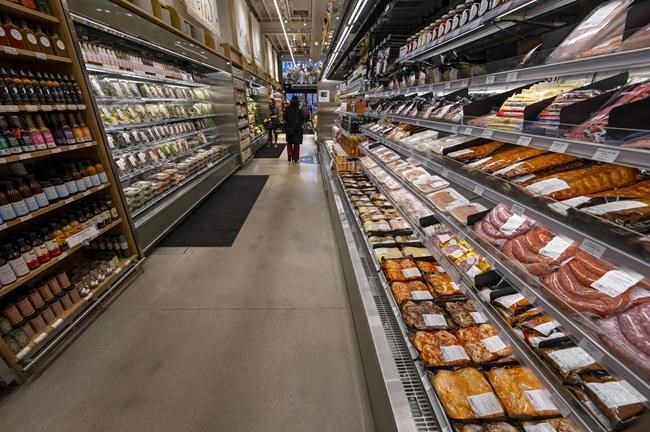
Groceries are shown at a store in Toronto on Wednesday February 2, 2022. Experts and advocates anticipate that more Canadians could be at risk of going hungry as inflation continues to outpace many consumers' grocery budgets. THE CANADIAN PRESS/Frank Gunn

Compared with a year ago, the cost of fresh fruit was up 10 per cent, fresh vegetables gained 8.2 per cent and meat rose 10.1 per cent. The cost of bread rose 12.2 per cent, while pasta gained 19.6 per cent and rice increased 7.4 per cent.

While all consumers are prone feel the pinch at the checkout aisle, these numbers pose particular concern for low-income people who are less able to absorb the price hikes, forcing some to make compromises at a detriment to their dietary needs, Tarasuk said.

“As prices of basic commodities rise, it’s very worrisome to think that we have such a large swath of the Canadian population sitting in circumstances are insufficient to come up with the costs.”

The 2020 Canadian Income Survey found that 11.2 per cent of Canadians lived in households that had experienced moderate and severe food insecurity, and 4.6 per cent more had experienced marginal food insecurity.

Concerns over being able to consistently put food on the table is a pervasive and persistent problem in Canada, said Tarasuk, and as income levels lag farther behind inflation, the situation looks to get worse with far-reaching impacts.

Food insecurity is a “toxic condition” that has been linked to physical and mental health problems, Tarasuk said. As mounting costs threaten to draw more people into food security and compound the stress on those who are already struggling, inaction on this issue could have consequences for the health-care system and life expectancy, she said.

Tarasuk said only a fraction of food-insecure people turn to charity. But a couple of food banks reported that soaring food prices have accelerated the surge in demand for their services during the COVID-19 crisis.

“This is a crisis on a crisis,” said Neil Hetherington, CEO of Daily Bread Food Bank. “These (inflation) numbers are meals that people will be going without.”

The Toronto-based food charity saw 160,000 client visits in March, up from 123,000 in March 2021, said Hetherington.

He projected that number will increase to 225,000 visits per month by this time next year, but said he hopes that’s an overestimate.

“I’m an incredibly optimistic guy, but I am very concerned about the next couple of years,” said Hetherington.

In the first three months of 2022, the Calgary Food Bank logged a 29 per cent year-over-year increase in demand for its food hampers, said communications co-ordinator Betty Jo Kaiser.

Last month, the organization distributed food support to nearly 9,500 people, 75 per cent of whom were first-time clients, said Kaiser.

“We do not expect a slowdown in demand,” she said. “We brace ourselves for continued and rising need.”

This report by The Canadian Press was first published May 19, 2022.

Report Error Submit a Tip

More Stories

Wab Kinew as ‘communicator in chief’

Paul G. Thomas 6 minute read Preview

Wab Kinew as ‘communicator in chief’

Paul G. Thomas 6 minute read 2:00 AM CDT

Premier Wab Kinew and his party have been riding high in the polls longer than normal for a government one year or less away from its first re-election contest. One reason is his ubiquitous, dominating communications presence as NDP leader and premier.

The argument here is that Kinew has supplemented his prerogatives as premier and party leader (such as appointing cabinet ministers and approving party nominations) with the skilful use of communications to advance his policy agenda, boost his personal popularity and maintain the competitive advantage of his party over the opposition Progressive Conservatives.

Communications has always been a significant part of politics and policy making. However, in the contemporary political and media environments, communications considerations have moved from the background to the foreground of decision-making by political parties, including when they are performing in the role of government. Campaigning and governing now overlap in what has been described as a permanent election campaign.

Political parties use communications strategies for several purposes: to establish an image of the leader which makes a positive emotional connection with voters; to promote a coherent message and to keep party members on message; and to gain favourable media coverage for its policies and other actions on almost a daily basis.

Read
2:00 AM CDT

Bison kicker Turner named captain, shows she belongs

Joshua Frey-Sam 7 minute read Preview

Bison kicker Turner named captain, shows she belongs

Joshua Frey-Sam 7 minute read Saturday, Sep. 26, 2026

Even on nights like this, Maya Turner can appreciate how far she’s come.

Though it feels like yesterday that the Manitoba Bisons kicker arrived on the scene with an unheralded right leg and a point to prove, these days the fifth-year student-athlete is lining up to split the uprights with a veteran boot and the added responsibility of being a team captain.

Getting to this point wasn’t easy, though.

It’s now four years ago that Turner ditched her NCAA Division 1 soccer career at Loyola University in Chicago to kick a different ball on the gridiron and signed with the Bisons, who were one of more than one hundred programs across North America that she sent tape to in hopes of realizing a new dream.

Read
Saturday, Sep. 26, 2026

What’s open, what’s closed, what’s up in Winnipeg on National Day of Truth and Reconciliation Sept. 30, 2026

Free Press staff 4 minute read Preview

What’s open, what’s closed, what’s up in Winnipeg on National Day of Truth and Reconciliation Sept. 30, 2026

Free Press staff 4 minute read Yesterday at 10:38 AM CDT

The National Day of Truth and Reconciliation, or Orange Shirt Day, as it's known in Manitoba, happens Sept. 30 with many commemorative community events scheduled.

Read
Yesterday at 10:38 AM CDT

Restaurants ‘under pressure’

Gabrielle Piché 5 minute read Preview

Restaurants ‘under pressure’

Gabrielle Piché 5 minute read Friday, Sep. 25, 2026

Happy hour outings are on Jackie Piggott’s calendar — but even those are fewer.

She and her husband might visit a restaurant once a month. It’s a change over the past year: earlier, they may go twice, thrice or weekly.

“It’s something that we’ve talked about, my husband and myself, just because the pricing is so expensive,” Piggott said, stopping during a grocery run in St. Vital. “It’s also better for our health.”

She’s in the majority: a new Restaurants Canada report found 80 per cent of Canadians are eating out less frequently because of higher living costs, up from 75 per cent in 2025.

Read
Friday, Sep. 25, 2026

Province invests $3.8M in culinary arts training facility for francophone high school students

Kelly-Anne Riess 3 minute read Preview

Province invests $3.8M in culinary arts training facility for francophone high school students

Kelly-Anne Riess 3 minute read Yesterday at 12:10 PM CDT

A new dedicated culinary arts training facility will give francophone high school students a place to learn the trade in French.

The Manitoba government announced this week that it is providing $3.8 million toward the purchase of a property at 170 Marion St. and beginning design work for its renovation.

The facility will be the first dedicated vocational education site operated by Division scolaire franco-manitobaine, and the first fully French-language culinary arts program for Grade 11 and 12 students, preparing them for work in the restaurant and service sector.

“French-language education is a fundamental part of Manitoba’s identity and strength,” Education Minister Tracy Schmidt said in a news release. “It is an exciting step that will help strengthen both the francophone community and our skilled workforce.”

Read
Yesterday at 12:10 PM CDT

Unhappy Dynacare staff refuse OT shifts; doors could be closed at clinics with Saturday hours

Carol Sanders 3 minute read Preview

Unhappy Dynacare staff refuse OT shifts; doors could be closed at clinics with Saturday hours

Carol Sanders 3 minute read Friday, Sep. 25, 2026

Some Winnipeg Dynacare sites normally open on Saturday were closed last week, and may continue to be because staff are refusing to pick up overtime shifts after they were forced back to work amid a labour dispute with the company.

Read
Friday, Sep. 25, 2026