

Housing disparity remains stark
Data shows differences between Indigenous and non-Indigneous living situations improving, but slowly

Advertisement
Read this article for free:
or
Already have an account? Log in here »
To continue reading, please subscribe:
Monthly Digital Subscription
$1 per week for 24 weeks*
- Enjoy unlimited reading on winnipegfreepress.com
- Read the E-Edition, our digital replica newspaper
- Access News Break, our award-winning app
- Play interactive puzzles
*Billed as $4.00 plus GST every four weeks. After 24 weeks, price increases to the regular rate of $19.95 plus GST every four weeks. Offer available to new and qualified returning subscribers only. Cancel any time.
Monthly Digital Subscription
$4.99/week*
- Enjoy unlimited reading on winnipegfreepress.com
- Read the E-Edition, our digital replica newspaper
- Access News Break, our award-winning app
- Play interactive puzzles
*Billed as $19.95 plus GST every four weeks. Cancel any time.
To continue reading, please subscribe:
Add Free Press access to your Brandon Sun subscription for only an additional
$1 for the first 4 weeks*
*Your next subscription payment will increase by $1.00 and you will be charged $16.99 plus GST for four weeks. After four weeks, your payment will increase to $23.99 plus GST every four weeks.
Read unlimited articles for free today:
or
Already have an account? Log in here »
Hey there, time traveller!
This article was published 10/12/2019 (2326 days ago), so information in it may no longer be current.
Housing disparities between Indigenous and non-Indigenous residents in cities across the country appear to have slightly improved over the last decade, with the two becoming more integrated — but advocates in Winnipeg warn a stark contrast still exists.
On Tuesday, Statistics Canada published a 2006-16 analysis of data on housing, income and the geographic concentration of Indigenous people compared to their non-Indigenous counterparts in 49 urban areas.
The data shows about half of Indigenous urban dwellers live in rental units, versus 29 per cent of the non-Indigenous population.
“We found that many of the housing and income indicators for Indigenous people fall below those of the non-Indigenous population in cities,” said Thomas Anderson, an analyst with Statistics Canada who authored the report. “On the other end, over a 10-year-period, we saw improvement.”
Indigenous residents are more likely to live in units in need of major repairs and in low-income households, according to the data. Although, within the Indigenous population, those percentages have decreased slightly between 2006 and 2016 — to 24 from 28, and 11 from 13, respectively.
As well, just under a quarter of urban Indigenous residents lived in low-income households in 2016, down from 28 per cent in 2006.
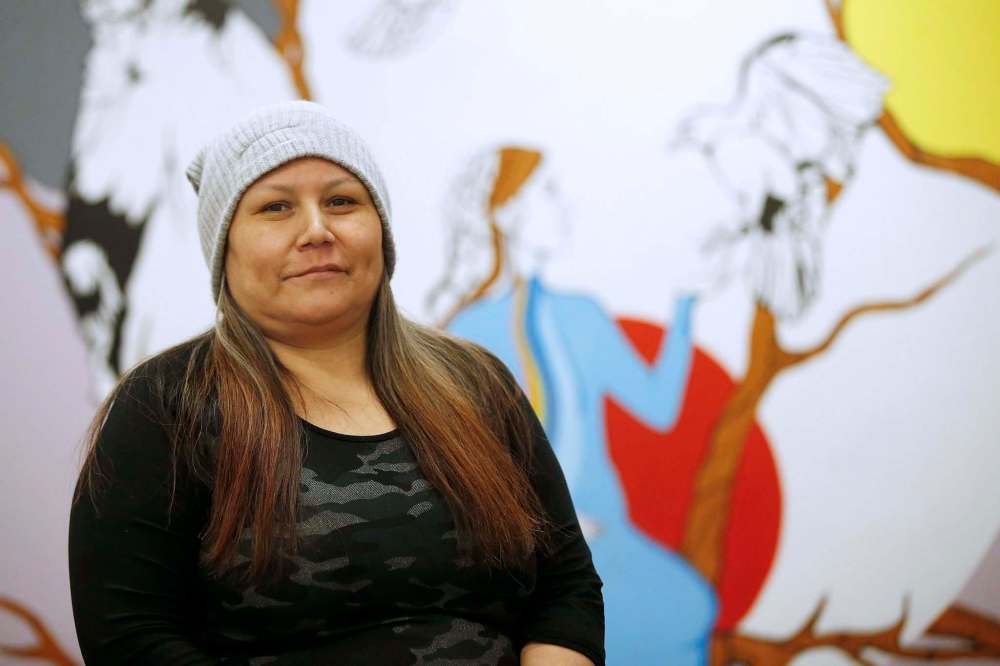
Gloria Knott — housing options, mentorship and economic security case co-ordinator at the West Central Women’s Resource Centre — knows firsthand the barriers Indigenous people face when it comes to accessing stable and affordable housing. She lived on the street for over a year before finding a job at the centre, where the Oji-Cree advocate now helps others navigate the housing system.
“We just need to be given the right to housing and not be discriminated against,” said Knott, a member of Wasagamack First Nation.
Aside from the challenges of overcoming intergenerational trauma and addiction, Knott noted Indigenous people in Winnipeg also often deal with systemic racism when renting or buying. She said she often hears from clients who are concerned they won’t be able to secure a rental simply because they are Indigenous.
About 12 per cent — or almost 100,000 people — identify as Indigenous in Winnipeg, which is home to the largest urban Indigenous population in the country.
While the non-Indigenous and Indigenous populations have typically lived in different areas in cities, the Statistics Canada data indicates over the last 20 years, Indigenous populations are becoming more evenly distributed across all neighbourhoods.
The report noted there’s no clear answer as to why this is the case, but rapid growth of the Indigenous population could be a factor. Or, it could be a result of more people identifying as Indigenous in recent years.
Winnipeg was on the lower end of the scale in terms of integration, scoring 0.25 on the “dissimilarity index.” That number can be thought of as the percentage of people from one of the two groups that would need to move for the two to be equally distributed across the city.
“Two population groups may live apart from one another for a variety of reasons. It could have to do with income, it could have to do with some measure of social exclusion or it could just have to do with choice,” Anderson said.
Knott noted the West End, where she works, is home to many Indigenous people. In the provincial constituency of Notre Dame, just under a quarter of residents identify as Indigenous.
Meanwhile, in Point Douglas, Indigenous people make up 38 per cent of the area’s population.

Affordable housing in the North End has historically attracted Indigenous tenants moving to the city from northern communities, said Dawn Sands, executive director at North End Community Renewal Corporation.
Sands noted the good work friendship centres have done to support Indigenous tenants in the area.
“Supporting Indigenous populations to own, manage and maintain their own housing is also super key,” she said, adding Indigenous organizations having full control over their housing stock would be one way to get rid of the barriers Indigenous tenants and prospective homeowners face.
maggie.macintosh@freepress.mb.ca
Twitter: @macintoshmaggie
Maggie Macintosh
Education reporter
Maggie Macintosh reports on education for the Free Press. Originally from Hamilton, Ont., she first reported for the Free Press in 2017. Read more about Maggie.
Funding for the Free Press education reporter comes from the Government of Canada through the Local Journalism Initiative.
Every piece of reporting Maggie produces is reviewed by an editing team before it is posted online or published in print — part of the Free Press‘s tradition, since 1872, of producing reliable independent journalism. Read more about Free Press’s history and mandate, and learn how our newsroom operates.
Our newsroom depends on a growing audience of readers to power our journalism. If you are not a paid reader, please consider becoming a subscriber.
Our newsroom depends on its audience of readers to power our journalism. Thank you for your support.
Maggie Macintosh
Education reporter
Maggie Macintosh reports on education for the Free Press. Originally from Hamilton, Ont., she first reported for the Free Press in 2017. Read more about Maggie.
Funding for the Free Press education reporter comes from the Government of Canada through the Local Journalism Initiative.
Every piece of reporting Maggie produces is reviewed by an editing team before it is posted online or published in print — part of the Free Press‘s tradition, since 1872, of producing reliable independent journalism. Read more about Free Press’s history and mandate, and learn how our newsroom operates.
Our newsroom depends on a growing audience of readers to power our journalism. If you are not a paid reader, please consider becoming a subscriber.
Our newsroom depends on its audience of readers to power our journalism. Thank you for your support.
Advertisement Advertise With Us
Advertisement Advertise With Us
History
Updated on Tuesday, December 10, 2019 9:31 PM CST: Updates headline