

Faceoff ‘for the fun of it’
Indigenous youth ball hockey tourney returns with teams from across province

Advertisement
Read this article for free:
or
Already have an account? Log in here »
To continue reading, please subscribe:

Digital Subscription
One year of digital access for only $205*
- Enjoy unlimited reading on winnipegfreepress.com
- Read the E-Edition, our digital replica newspaper
- Access News Break, our award-winning app
- Play interactive puzzles
*First annual payment billed as $205.00 + GST for one year. This annual subscription will automatically renew at $233.00 + GST every 52 weeks (10% off the regular annual price of $259.35). Offer available to new and qualified returning subscribers only. Cancel any time.
To continue reading, please subscribe:
Add Free Press access to your Brandon Sun subscription for only an additional
$1 for the first 4 weeks*
- Enjoy unlimited reading on winnipegfreepress.com
- Read the E-Edition, our digital replica newspaper
- Access News Break, our award-winning app
- Play interactive puzzles
*Your next Brandon Sun subscription payment will increase by $1.00 and you will be charged $17.95 plus GST for four weeks. After four weeks, your payment will increase to $24.95 plus GST every four weeks.
Read unlimited articles for free today:
or
Already have an account? Log in here »
Hey there, time traveller!
This article was published 03/07/2022 (1562 days ago), so information in it may no longer be current.
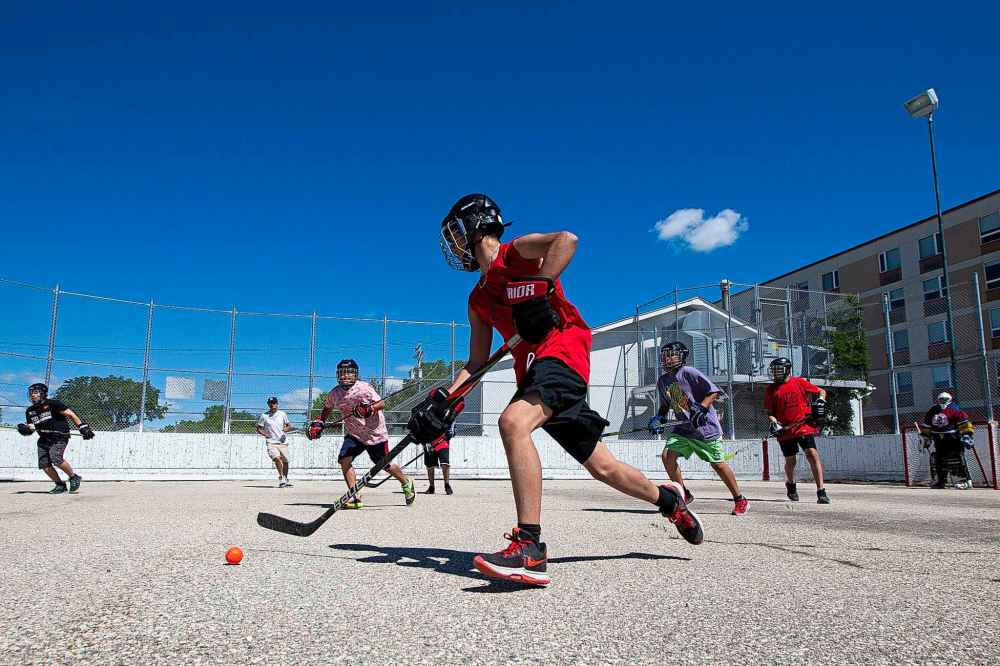
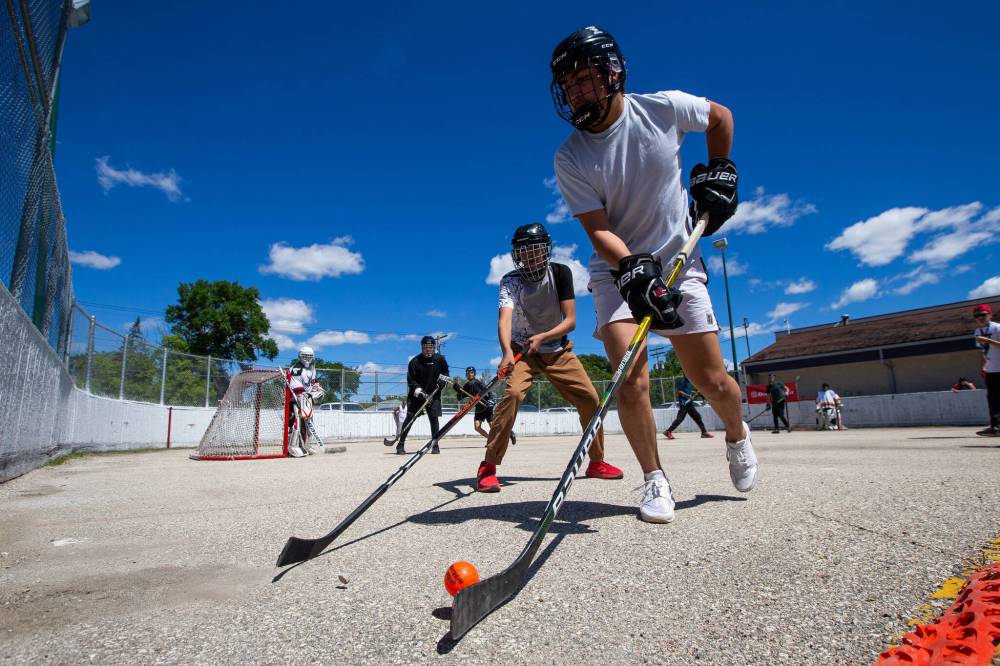
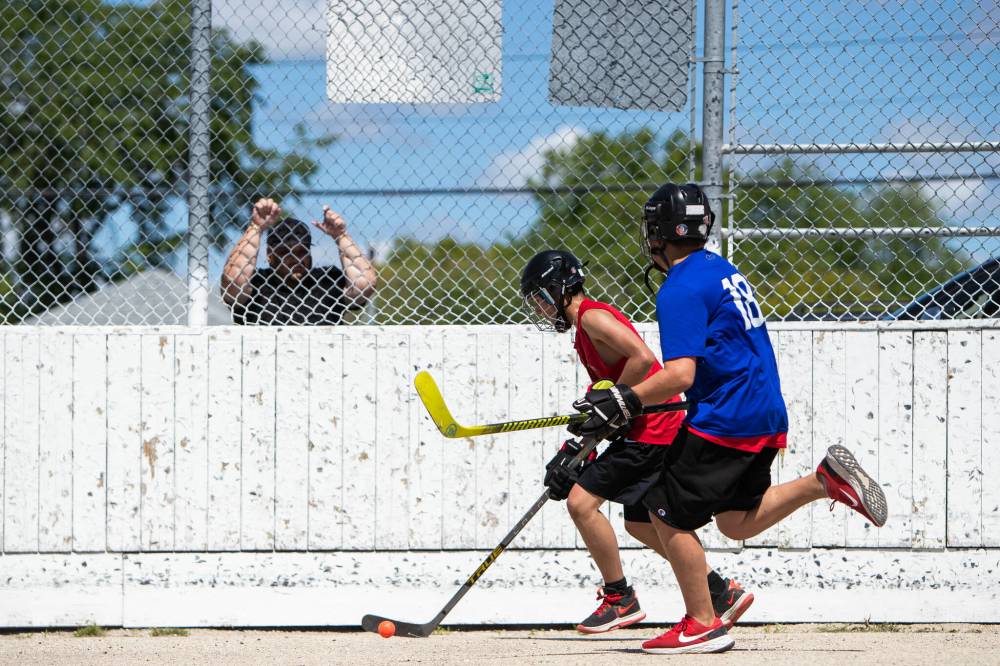
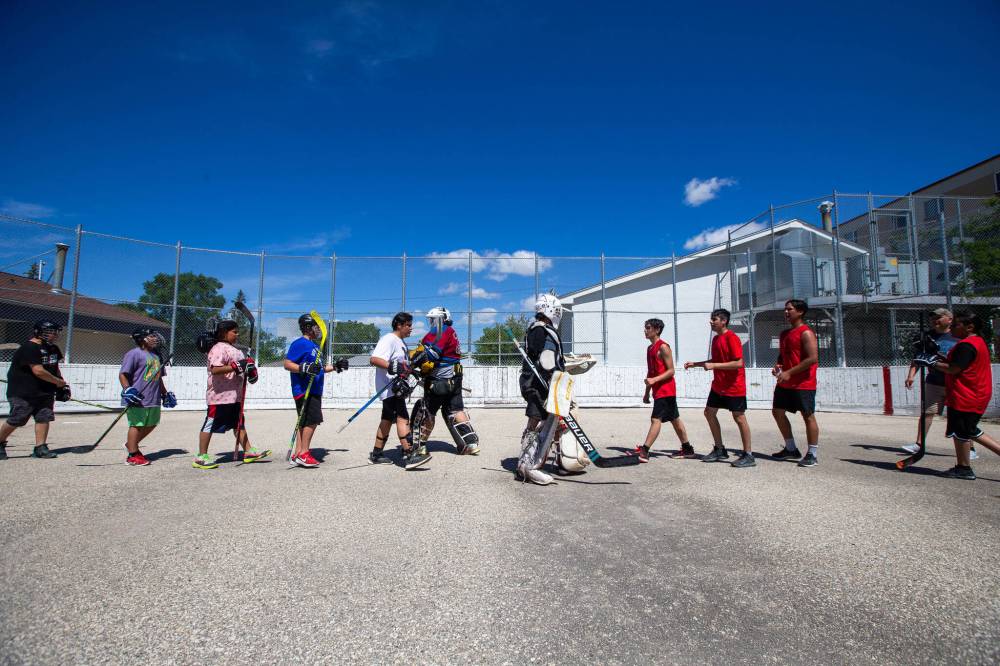
The snap of hockey sticks striking asphalt, grunts of exertion, and cries of triumph echoed off the walls of Walter Jennings Sports Facility Saturday morning, a surefire sign that the third annual Indigenous Youth Ball Hockey Tournament was underway.
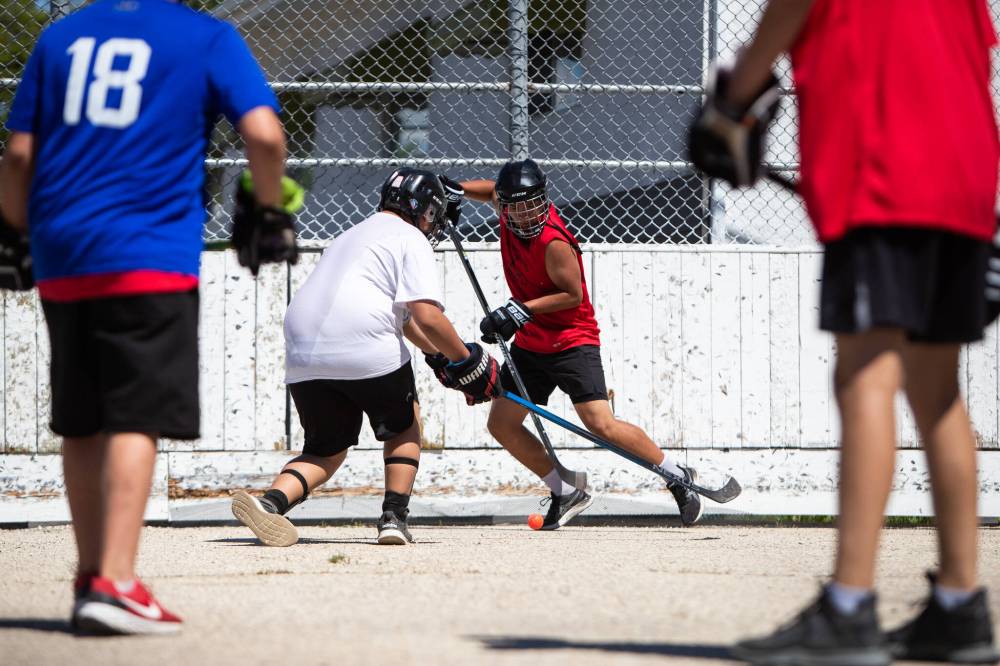
During a showdown against Sagkeeng First Nation’s Team 262, 15-year-old Marcus Dumas — starting goalie for the Pukatawagan Puksters — did everything he could to defend his net, dipping, diving and dropping on a series of rapid-fire shots from the larger and well-practised opponents.
Despite Dumas’s valiant effort, a slapshot from half-court slips through his pads and trickles into the back of the net.

The Puksters let out a collective sigh, but before their shoulders have a chance to droop, the ball is back in play, and Tarren Colomb, also 15, is on it.
He zips past a 262 defender and puts a nifty wrister straight through the five-hole. The opposing goalie is still checking for the leak in his pads as the Puksters applaud Colomb’s handiwork.
There are less than 15 seconds between the back-to-back goals, and it’s a big moment for the Pukatawagan team. It’s their first and only marker of the first half.
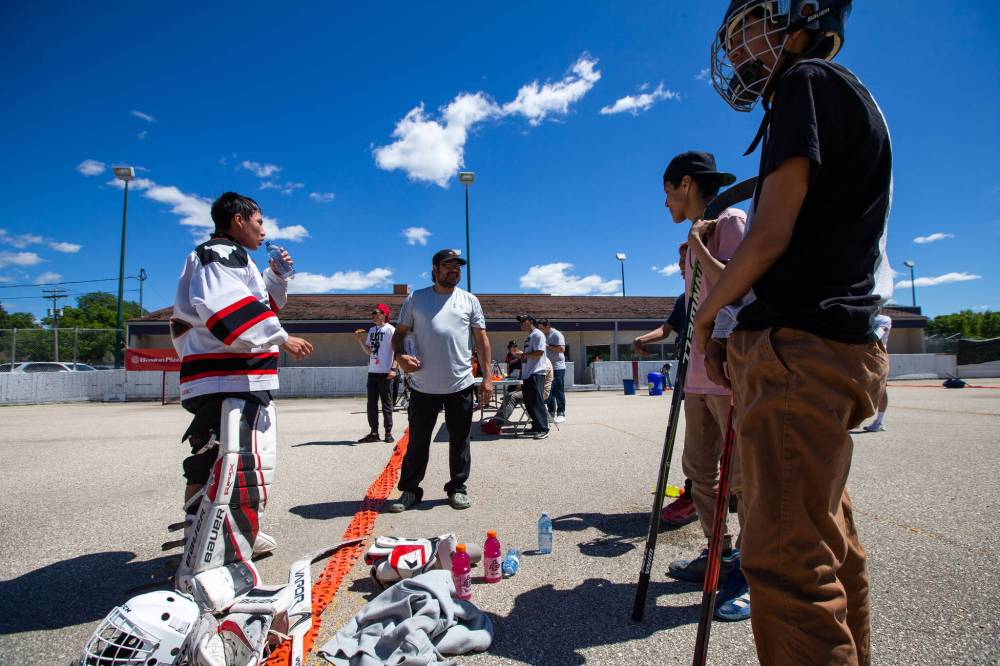
By half-time, the score is 9-1 for Team 262, but nobody seems to mind. The boys on both teams are all smiles as they shake off their gear, wipe sweat from their brows and gather to confer with their coaches.
“They’re here for the fun of it. They are growing and learning,” Corrine Castel says from the sidelines, smiling along with them. “They don’t get out much, even with their own families… they are just happy and excited.”
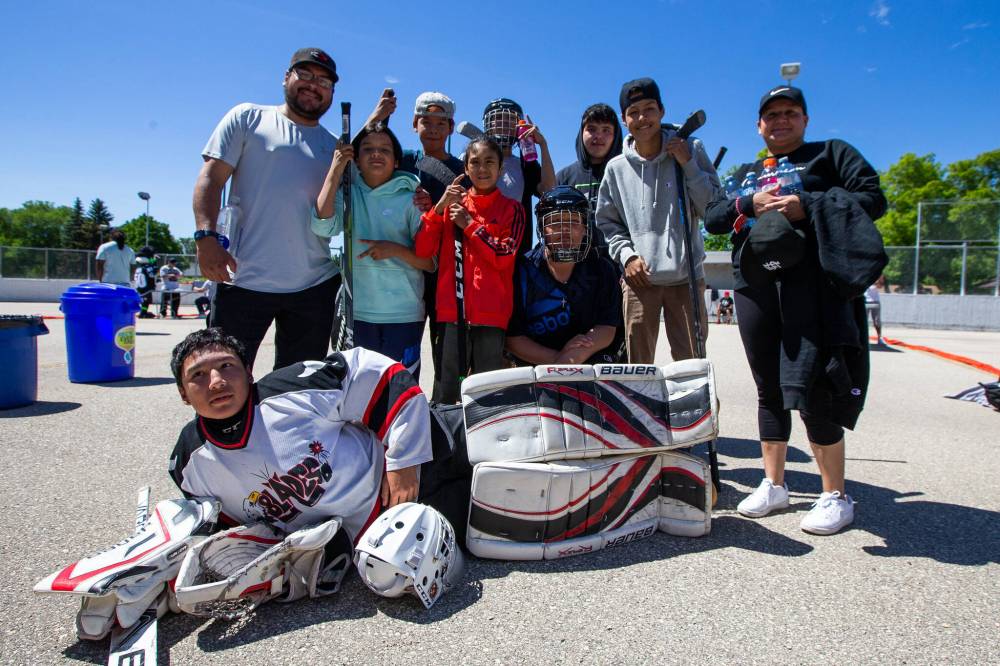
Corrine and her husband, Scott Castel, brought all eight Puksters down to participate in the tournament. It was a 14-hour trip that included an eight-hour train ride.
The boys are among roughly 150 Indigenous youth between the ages of eight and 17 who travelled to Winnipeg from 20 Manitoban First Nations communities to participate in the tournament.
For many, playing here is an opportunity to escape isolation and experience the excitement of life outside their home communities, says Scott, who recruited all eight boys to play for the Puksters only a few weeks before the tournament.
He and Corrine have been bringing youth from their community south to play in sporting tournaments for at least five years. They do it because they know how significant the experience is for kids, Corrine says.
Win, lose or draw, the youth who play in this tournament return home with fond memories, agrees event organizer Matt Nobess.

“This is the highlight of their summer,” he says.
Nobess is the founder of Indigenous Vitality, a non-profit organization that specializes in organizing sports camps for Indigenous youth. He travels throughout the province, teaching kids how to swing a bat, perfect their pitch, or refine a slapshot. He started the Indigenous Youth Ball Hockey Tournament in 2018, continued it in 2019, and planned to make it an annual event before COVID-19 got in the way.
After a two-year hiatus, he is ecstatic about bringing it back this year, he says.

“(Having) Indigenous youth from First Nations come up to me and shake my hand and thank me for putting on this tournament — you can’t buy that feeling of gratitude and respect. You can’t put a price tag on it. It’s just like, that’s why we do it. For young kids to have an event like this where they can feel safe, they can feel proud, and just enjoy competing.”
The tournament typically takes place over two days during the first week of July. This year, it kicked off Saturday morning and will end today after a playoff series involving all of the teams.
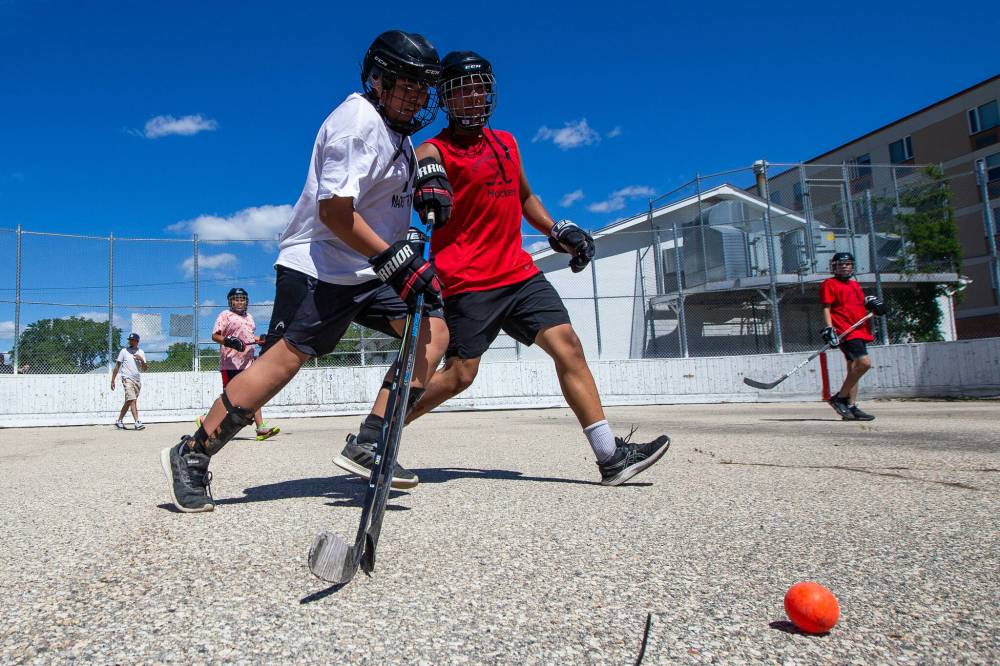
Volunteers from the Bruce Oake Recovery Centre signed up to help referee and keep score for the games. Indigenous Vitality rewards players with clothing, gift cards and swag for participating.
When it’s all said and done, the tournament’s champs get the opportunity to chug Gatorade from the playoff trophy, which resembles a smaller version of the Stanley Cup, Nobess says.
tyler.searle@freepress.mb.com
Tyler Searle is a multimedia producer who writes for the Free Press’s city desk. A graduate of Red River College Polytechnic’s creative communications program, he wrote for the Stonewall Teulon Tribune, Selkirk Record and Express Weekly News before joining the paper in 2022. Read more about Tyler.
Every piece of reporting Tyler produces is reviewed by an editing team before it is posted online or published in print — part of the Free Press‘s tradition, since 1872, of producing reliable independent journalism. Read more about Free Press’s history and mandate, and learn how our newsroom operates.
Our newsroom depends on a growing audience of readers to power our journalism. If you are not a paid reader, please consider becoming a subscriber.
Our newsroom depends on its audience of readers to power our journalism. Thank you for your support.
Tyler Searle is a multimedia producer who writes for the Free Press’s city desk. A graduate of Red River College Polytechnic’s creative communications program, he wrote for the Stonewall Teulon Tribune, Selkirk Record and Express Weekly News before joining the paper in 2022. Read more about Tyler.
Every piece of reporting Tyler produces is reviewed by an editing team before it is posted online or published in print — part of the Free Press‘s tradition, since 1872, of producing reliable independent journalism. Read more about Free Press’s history and mandate, and learn how our newsroom operates.
Our newsroom depends on a growing audience of readers to power our journalism. If you are not a paid reader, please consider becoming a subscriber.
Our newsroom depends on its audience of readers to power our journalism. Thank you for your support.
Advertisement Advertise With Us
Advertisement Advertise With Us