

Model ‘patients’
High-end mannequins perfect training tool

Advertisement
Read this article for free:
or
Already have an account? Log in here »
To continue reading, please subscribe:
Monthly Digital Subscription
$1 per week for 24 weeks*
- Enjoy unlimited reading on winnipegfreepress.com
- Read the E-Edition, our digital replica newspaper
- Access News Break, our award-winning app
- Play interactive puzzles
*Billed as $4.00 plus GST every four weeks. After 24 weeks, price increases to the regular rate of $19.95 plus GST every four weeks. Offer available to new and qualified returning subscribers only. Cancel any time.
Monthly Digital Subscription
$4.99/week*
- Enjoy unlimited reading on winnipegfreepress.com
- Read the E-Edition, our digital replica newspaper
- Access News Break, our award-winning app
- Play interactive puzzles
*Billed as $19.95 plus GST every four weeks. Cancel any time.
To continue reading, please subscribe:
Add Free Press access to your Brandon Sun subscription for only an additional
$1 for the first 4 weeks*
*Your next subscription payment will increase by $1.00 and you will be charged $16.99 plus GST for four weeks. After four weeks, your payment will increase to $23.99 plus GST every four weeks.
Read unlimited articles for free today:
or
Already have an account? Log in here »
Hey there, time traveller!
This article was published 27/05/2021 (1791 days ago), so information in it may no longer be current.
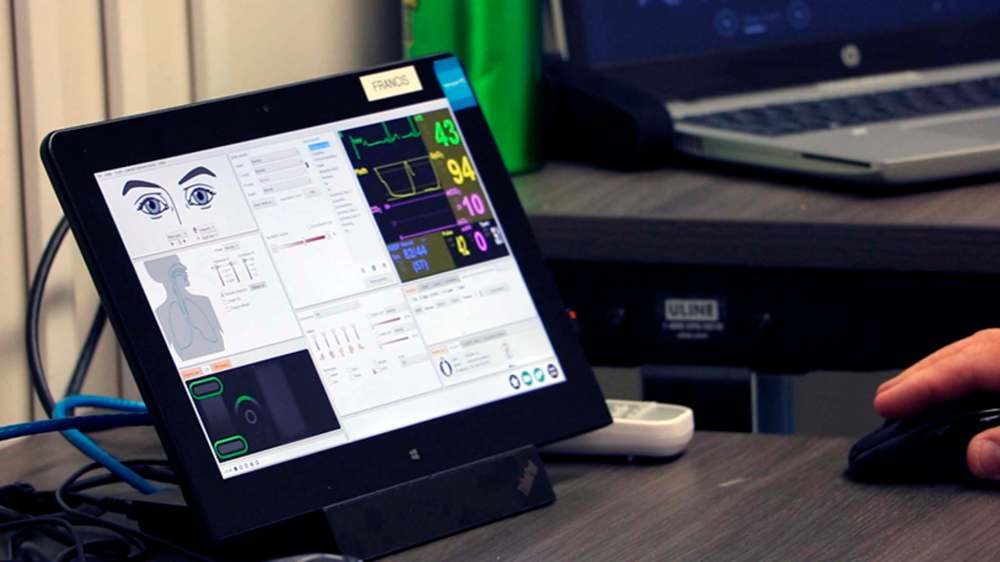
FRANCIS can blink, talk and even bleed, but he’s a training tool, not a human.
The high-tech mannequin is one of several the Winnipeg Fire Paramedic Service is using to let emergency crews practise life-saving treatments repeatedly with no risk to real patients.
“(Paramedics) literally come into what looks like somebody’s home and interact with this life-like patient that either talks or chokes or bleeds… and then they can assess the patient,” said Todd Reid, director of paramedic education and training for the WFPS. “The beauty of it is they can use trial and error, they can make mistakes and… in the end, no patients are harmed. It’s a good learning environment for everybody.”
Projections onto training room walls can make such scenes more realistic. Rescuers may also see blood spurt forward, notice a “patient’s” face turn blue, or cope with people acting as bystanders. This makes practice sessions reflect real-world conditions as much as possible, said Reid.
“The mannequin might talk or moan or yell in pain… I think traditionally (with more basic, immobile mannequins) telling somebody that (a patient is) bleeding or there’s blood spurting when that’s not really happening, it doesn’t really portray the real emotions they’re going to have with that or the real urgency of that,” he said.
The city acquired its current collection of mannequins for simulation training as of 2020, which includes three adults, one youth and a pregnant woman who can “deliver” a mannequin baby.
Each of them is operated remotely by computers and has its own vital signs.

Reid said the technology allows paramedics to try out treatments for less common conditions many times in a short period, such as helping a woman cope with a high-risk child birth or tending to a critically ill or wounded child.
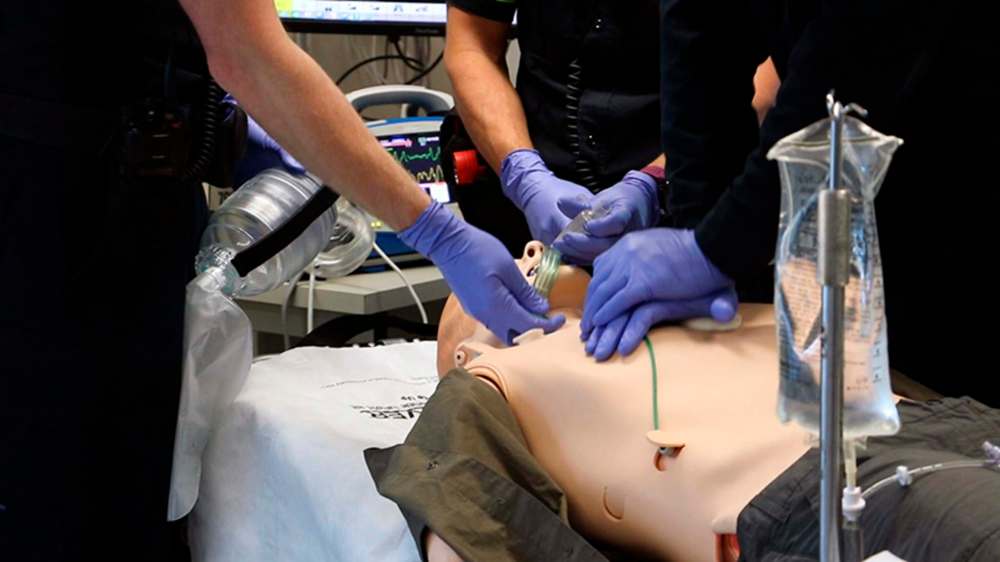
“There are a lot of calls we do that I would say are high-risk, but they’re low volume. They don’t happen very often. A paramedic may only see that type of call a couple of times a year or even a couple of times in their career. So, it’s very hard to be practised and experienced with those types of calls, just by seeing real patients… All of those (practices) parlay into less medical error and safer patient contacts,” said Reid.
The city says the “high-fidelity” mannequins range in price from $35,000 to $100,000 each and were bought over a few years.
joyanne.pursaga@freepress.mb.ca
Twitter: @joyanne_pursaga
Joyanne is city hall reporter for the Winnipeg Free Press. A reporter since 2004, she began covering politics exclusively in 2012, writing on city hall and the Manitoba Legislature for the Winnipeg Sun before joining the Free Press in early 2020. Read more about Joyanne.
Every piece of reporting Joyanne produces is reviewed by an editing team before it is posted online or published in print — part of the Free Press‘s tradition, since 1872, of producing reliable independent journalism. Read more about Free Press’s history and mandate, and learn how our newsroom operates.
Our newsroom depends on a growing audience of readers to power our journalism. If you are not a paid reader, please consider becoming a subscriber.
Our newsroom depends on its audience of readers to power our journalism. Thank you for your support.
Joyanne is city hall reporter for the Winnipeg Free Press. A reporter since 2004, she began covering politics exclusively in 2012, writing on city hall and the Manitoba Legislature for the Winnipeg Sun before joining the Free Press in early 2020. Read more about Joyanne.
Every piece of reporting Joyanne produces is reviewed by an editing team before it is posted online or published in print — part of the Free Press‘s tradition, since 1872, of producing reliable independent journalism. Read more about Free Press’s history and mandate, and learn how our newsroom operates.
Our newsroom depends on a growing audience of readers to power our journalism. If you are not a paid reader, please consider becoming a subscriber.
Our newsroom depends on its audience of readers to power our journalism. Thank you for your support.
Advertisement Advertise With Us
Advertisement Advertise With Us