Museum honours Indigenous soldiers

Advertisement
Read this article for free:
or
Already have an account? Log in here »
To continue reading, please subscribe:

Digital Subscription
One year of digital access for only $205*
- Enjoy unlimited reading on winnipegfreepress.com
- Read the E-Edition, our digital replica newspaper
- Access News Break, our award-winning app
- Play interactive puzzles
*First annual payment billed as $205.00 + GST for one year. This annual subscription will automatically renew at $233.00 + GST every 52 weeks (10% off the regular annual price of $259.35). Offer available to new and qualified returning subscribers only. Cancel any time.
To continue reading, please subscribe:
Add Free Press access to your Brandon Sun subscription for only an additional
$1 for the first 4 weeks*
- Enjoy unlimited reading on winnipegfreepress.com
- Read the E-Edition, our digital replica newspaper
- Access News Break, our award-winning app
- Play interactive puzzles
*Your next Brandon Sun subscription payment will increase by $1.00 and you will be charged $17.95 plus GST for four weeks. After four weeks, your payment will increase to $24.95 plus GST every four weeks.
Read unlimited articles for free today:
or
Already have an account? Log in here »
Hey there, time traveller!
This article was published 06/11/2021 (1774 days ago), so information in it may no longer be current.
The Royal Winnipeg Rifles is creating a display to honour the Indigenous personnel in its ranks who served and fell during the regiment’s long storied history.
They Answered the Call is featured inside the Royal Winnipeg Rifles Museum and Archives located inside Minto Armouries, detailing the names, stories and photos of some of battalion’s fallen Indigenous soldiers.
Curator Ian Stewart said the museum already has the names listed on its wall of The Fallen, but organizers wanted to provide more detail as part of its contribution towards truth and reconciliation.
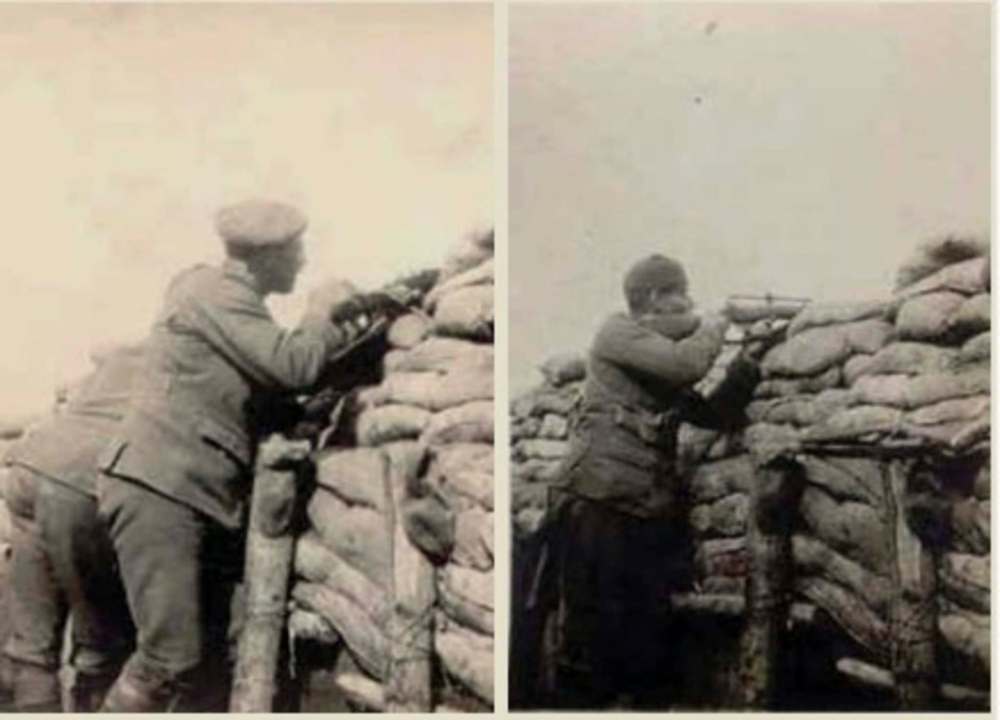
“Modern historians say there were about 15,000 (Indigenous soldiers) who served with the Canadian Forces during the First and Second World Wars,” said Stewart, author of Seeing It Through: Manitoba’s Soldiers 1914-1919 and Voices of War: Royal Winnipeg Rifles, 1944-45.
The battalion, known as the Little Black Devils, was created in 1883. It lost its first Indigenous member, Richard Hardisty, at the Battle of Batoche on May 12, 1885. Another 10 Indigenous members were killed during the First World War, followed by 30 who fought and died in the Second World War.
Stewart said Hardisty was Métis and had enlisted a few years earlier when the battalion was created and served in the Sudan.
He said during the Second World War six Indigenous members were killed on June 6, 1944 — D-Day — and six more were captured and murdered by the 12th Panzer SS on June 8. In total, 56 Rifles were killed that day.
Stewart said another Indigenous member died June 7; nearly half of the battalion’s Indigenous soldiers killed during the war died in the first two days of the landing at Normandy, France.

After the war, unlike other Canadian veterans who received funding for education or housing, Stewart said the Indigenous veterans “came back and went back to their old way of life.”
“The expectation had been there would be integration into the larger Canadian society, but that didn’t happen,” he said.
“One guy, his name was St. Germain, he said in the army they call me saint, but now they just call me Indian.”
The museum is open by appointment only. More information is available at rwrmuseum.com.
kevin.rollason@freepress.mb.ca
Kevin Rollason
Reporter
Kevin Rollason was a general assignment reporter at the Free Press.
Our newsroom depends on a growing audience of readers to power our journalism. If you are not a paid reader, please consider becoming a subscriber.
Our newsroom depends on its audience of readers to power our journalism. Thank you for your support.
Kevin Rollason
Reporter
Kevin Rollason was a general assignment reporter at the Free Press.
Our newsroom depends on a growing audience of readers to power our journalism. If you are not a paid reader, please consider becoming a subscriber.
Our newsroom depends on its audience of readers to power our journalism. Thank you for your support.
Advertisement Advertise With Us
Advertisement Advertise With Us
History
Updated on Saturday, November 6, 2021 8:46 PM CDT: Corrects spelling in photo credit.