

Coronavirus Q+A: We answer your questions on custody, testing, house-cleaning and more

Advertisement
Read this article for free:
or
Already have an account? Log in here »
To continue reading, please subscribe:
Monthly Digital Subscription
$1 per week for 24 weeks*
- Enjoy unlimited reading on winnipegfreepress.com
- Read the E-Edition, our digital replica newspaper
- Access News Break, our award-winning app
- Play interactive puzzles
*Billed as $4.00 plus GST every four weeks. After 24 weeks, price increases to the regular rate of $19.95 plus GST every four weeks. Offer available to new and qualified returning subscribers only. Cancel any time.
Monthly Digital Subscription
$4.99/week*
- Enjoy unlimited reading on winnipegfreepress.com
- Read the E-Edition, our digital replica newspaper
- Access News Break, our award-winning app
- Play interactive puzzles
*Billed as $19.95 plus GST every four weeks. Cancel any time.
To continue reading, please subscribe:
Add Free Press access to your Brandon Sun subscription for only an additional
$1 for the first 4 weeks*
*Your next subscription payment will increase by $1.00 and you will be charged $16.99 plus GST for four weeks. After four weeks, your payment will increase to $23.99 plus GST every four weeks.
Read unlimited articles for free today:
or
Already have an account? Log in here »
Hey there, time traveller!
This article was published 20/04/2020 (2152 days ago), so information in it may no longer be current.
Editor’s Note: Longtime readers of the Free Press might remember a regular feature called Answers, where, in a time before Google, we answered readers’ questions. Since even Google does not have all the answers regarding the COVID-19 pandemic, Kevin Rollason will attempt to answer your coronavirus queries. Send your questions to coronavirusquestions@freepress.mb.ca.
QUESTION: I divorced my spouse a few years ago and we have shared custody of our children — do we need to change our schedule so that only one of us has custody during the pandemic?
ANSWER: Provincial health officials say social distancing doesn’t have to come between a parent and their child — unless there is a clear risk. They say families should continue to follow court orders and parenting arrangements that had been agreed upon in those pre-COVID-19 times.
And, in this time of changing needs due to school and daycare closures, different job requirements, self-isolation, and social distancing, parents who are separated or divorced should use good judgment and be ready to be creative and flexible when setting up arrangements for their children.
Finally, they say parents have to be honest with each other about any suspected or confirmed exposure to the virus and tell the other parent if their child is showing any symptoms.
But, they say if the parent without the child suddenly has to self-isolate because they’ve been in contact with a case or travelled out of province, the child can stay with the other parent until the self-isolation period is over.
Q: Why are only Manitobans who have travelled and are showing symptoms being tested?
A: Public-health officials say they diagnose COVID-19 through laboratory tests and observing symptoms — and the tests are most effective with someone showing symptoms.
People are also now being tested:
- if they have respiratory symptoms, but have also travelled outside of the province in the last two weeks;
- they’ve had close contact with a confirmed case;
- are health-care workers or who live with a health-care worker or first responder and have symptoms;
- are patients being admitted to hospital with respiratory symptoms;
- are lab workers who have worked with COVID-19 tests;
- all workers or volunteers at essential services who have symptoms;
- people who live or work in the North, a remote community or a place where lots of people are living, including correctional facilities, shelters and long-term care or residential facilities.
Q: Why is COVID-19 worse than H1N1?
A: Officials say there are several reasons, but the chief one is that COVID-19 is a new — or novel — virus and, when it first broke out late last year, there was no one on the planet with existing immunity to it.
That means this virus, which causes a higher proportion of deaths and hospitalizations in a larger proportion of people than the flu, has the potential to infect a large percentage of the population and overwhelm the health-care system.
COVID-19 is also more contagious than the flu and, while scientists around the world are working on it, there currently is no vaccine for it.
Q: My son is coming home from college in the Maritimes and his flight includes transfers in Montreal. Should he self-isolate when he gets home? And is there anything he should be doing different when he gets to our house?
A: Public-health officials say people coming to Manitoba, whether from across the country or elsewhere in the world, have been told since March 23 they must self-isolate for 14 days after arriving.
In real terms, it means when your son gets off a plane at the airport, he will have to immediately drive directly home in a private vehicle and begin isolating — not stopping for food or anything else.
People in these circumstances have to rely on family and friends or online options for food and other supplies. For more information on self-isolation you can look at manitoba.ca/covid19/resources/.
And, in case you’re wondering, these rules do not apply for truckers bringing goods into the province and health-care workers who work here, but live just outside the province.
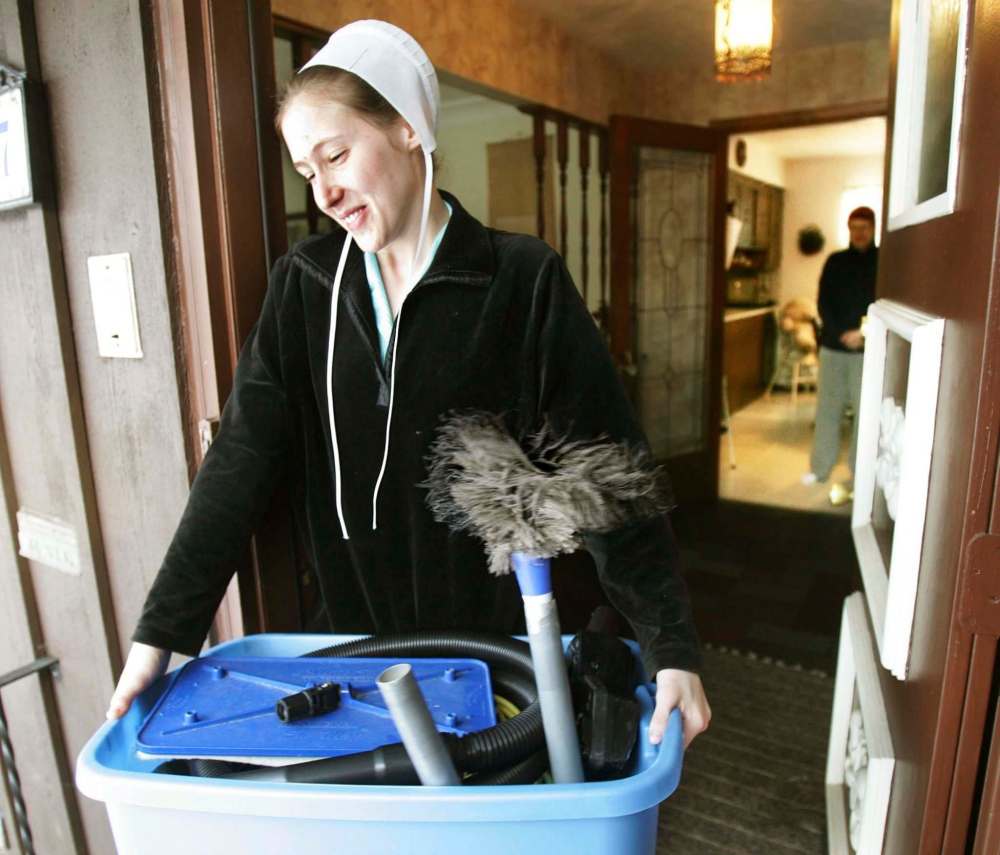
Q: I clean homes for a living and the people who live there are at work during the day. Are there special precautions I should be taking when I arrive and begin cleaning? And is there something more I should be doing while cleaning?
A: Officials say the first thing you should do when you get to a home is wash your hands and then put on disposable gloves while cleaning and disinfecting surfaces and objects.
If the owners aren’t home, that’s great; COVID-19 is most commonly spread through close contact with an infected person who is coughing or sneezing. But you can also get it if you touch something already contaminated with the virus and then touch your mouth, eyes or nose.
The most important things to clean and disinfect are door knobs and handles, railings, light switches, and any other surfaces touched frequently. To kill germs, you need a solution of one part bleach and nine parts water, an alcohol solution with at least 70 per cent alcohol in it or EPA-registered household disinfectants.
And when you’re ready to leave, wash your hands again with soap and water for at least 15 seconds.

Q: Should I wear a non-medical mask to protect myself?
A: Health experts have looked at new scientific evidence and are now saying wearing a non-medical mask is an additional way to protect other people from the droplets spread when you cough or sneeze.
They also say there is no evidence that wearing a non-medical mask will protect you.
That’s why they’re advising people to stay home — unless it is absolutely necessary to go out — continue physical-distancing measures, wash hands frequently and disinfect surfaces that are often touched.
kevin.rollason@freepress.mb.ca
Kevin Rollason is a general assignment reporter at the Free Press. He graduated from Western University with a Masters of Journalism in 1985 and worked at the Winnipeg Sun until 1988, when he joined the Free Press. He has served as the Free Press’s city hall and law courts reporter and has won several awards, including a National Newspaper Award. Read more about Kevin.
Every piece of reporting Kevin produces is reviewed by an editing team before it is posted online or published in print — part of the Free Press‘s tradition, since 1872, of producing reliable independent journalism. Read more about Free Press’s history and mandate, and learn how our newsroom operates.
Our newsroom depends on a growing audience of readers to power our journalism. If you are not a paid reader, please consider becoming a subscriber.
Our newsroom depends on its audience of readers to power our journalism. Thank you for your support.
Kevin Rollason is a general assignment reporter at the Free Press. He graduated from Western University with a Masters of Journalism in 1985 and worked at the Winnipeg Sun until 1988, when he joined the Free Press. He has served as the Free Press’s city hall and law courts reporter and has won several awards, including a National Newspaper Award. Read more about Kevin.
Every piece of reporting Kevin produces is reviewed by an editing team before it is posted online or published in print — part of the Free Press‘s tradition, since 1872, of producing reliable independent journalism. Read more about Free Press’s history and mandate, and learn how our newsroom operates.
Our newsroom depends on a growing audience of readers to power our journalism. If you are not a paid reader, please consider becoming a subscriber.
Our newsroom depends on its audience of readers to power our journalism. Thank you for your support.
Advertisement Advertise With Us
Advertisement Advertise With Us