

Province scraps ‘caveats’ to Winnipeg mega projects

Advertisement
Read this article for free:
or
Already have an account? Log in here »
To continue reading, please subscribe:

Digital Subscription
One year of digital access for only $205*
- Enjoy unlimited reading on winnipegfreepress.com
- Read the E-Edition, our digital replica newspaper
- Access News Break, our award-winning app
- Play interactive puzzles
*First annual payment billed as $205.00 + GST for one year. This annual subscription will automatically renew at $233.00 + GST every 52 weeks (10% off the regular annual price of $259.35). Offer available to new and qualified returning subscribers only. Cancel any time.
To continue reading, please subscribe:
Add Free Press access to your Brandon Sun subscription for only an additional
$1 for the first 4 weeks*
- Enjoy unlimited reading on winnipegfreepress.com
- Read the E-Edition, our digital replica newspaper
- Access News Break, our award-winning app
- Play interactive puzzles
*Your next Brandon Sun subscription payment will increase by $1.00 and you will be charged $17.95 plus GST for four weeks. After four weeks, your payment will increase to $24.95 plus GST every four weeks.
Read unlimited articles for free today:
or
Already have an account? Log in here »
Hey there, time traveller!
This article was published 10/05/2022 (1587 days ago), so information in it may no longer be current.
Fears that provincial conditions would delay upgrades to the north end sewage treatment plant and the Winnipeg Transit Master Plan have been alleviated.
In late April, Mayor Brian Bowman said the mega projects were delayed because the Manitoba government had placed conditions on its funding. The province denied that claim.
On Tuesday, the mayor said the province had removed the “caveats” to its support and had allowed related funding applications to move forward for federal review.
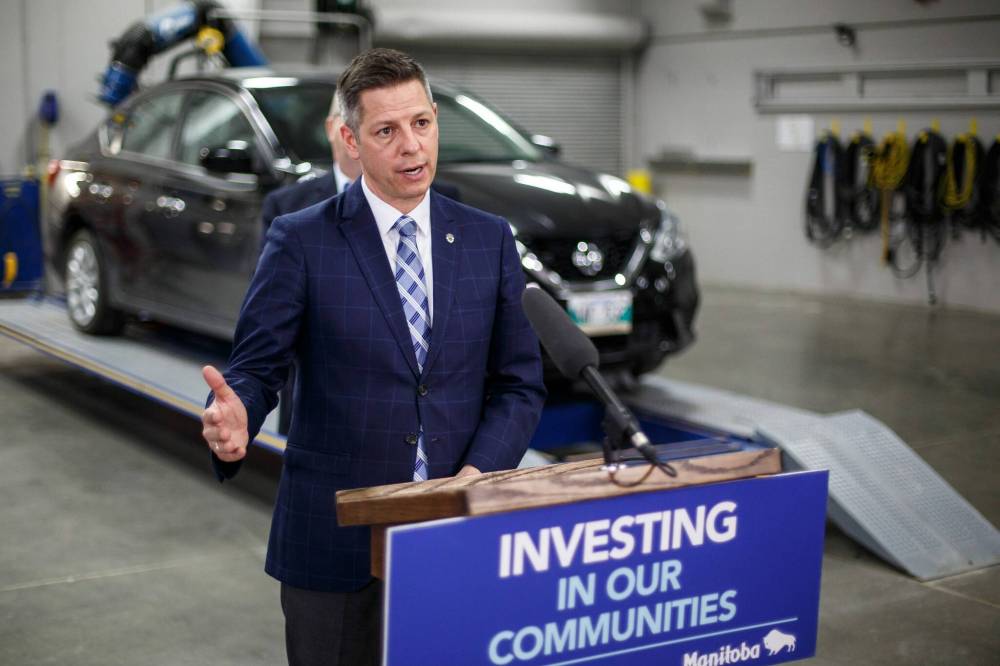
“This is a very positive development and this will deliver over a billion dollars of needed infrastructure to support a growing city, modernizing public transit and ensuring we have the capacity for the north end sewage plant to continue to grow,” said Bowman.
Back in April, the mayor accused the province of requiring the city to further explore private operations for the sewage plant, which council had already rejected. He said that delayed a funding proposal that would have the city, province and feds spend a combined $552 million to fund the second phase of the overall $1.85-billion upgrade.
The mayor also accused the province of adding conditions to its support for a separate tri-government funding request, in which the three levels of government would spend a combined $538 million on the first steps of the Winnipeg Transit Master Plan. He said that condition was linked to a disagreement over the number of zero-emission buses in the plan.
On Tuesday, Bowman said city staff had received reassurance on Monday that the province will support the plan proceeding as quickly as possible. Each funding agreement still requires federal approval.
The mayor credited Premier Heather Stefanson for being available to meet regularly on these and other projects, which he believes helped clear the roadblocks.
At an unrelated news conference on Monday, Stefanson said she is “very committed” to advancing both projects and would place “no conditions” on the province’s support.
“I do not want to be the person that is standing in the way of getting these projects done. I’ve made that clear. I think there’s been some other challenges with miscommunication,” she said.
Coun. Jeff Browaty, council’s finance chairperson, noted Phase 2 of the sewage upgrade is needed to increase capacity quite soon. Unless that upgrade to sewage sludge treatment is completed first, the city could be forced to limit development within about five to nine years, water and waste officials have warned.
“If we don’t continue with the upgrades expeditiously, we might see a hard cap to the amount of growth we can have in our city… that would certainly be detrimental to Winnipeg and to the province as a whole,” said Browaty.
Once the entire north end sewage upgrade is completed, the average flow of wastewater it can handle each day will nearly double, city officials confirmed Tuesday. To reach that level, the third phase of the project must also be completed, which would greatly reduce algae-promoting nutrients in effluent that leaves the plant. The city has yet to apply for funding to cover the final phase.
The capacity increase would alleviate development concerns and enhance normal weather operations.
But water and waste staff told media that major storms could still trigger spills of diluted and/or partially treated sewage after the upgrade is completed.
Between April 21 and 25, 1.6 billion litres of partially treated sewage was dumped into the river during a torrential rainstorm, when flows exceeded the north end plant’s capacity.
In a separate spill from the south end plant, 60 million litres of diluted sewage flowed into the river between April 23 and 25, after flows exceeded its capacity. In March, a construction-related spill poured 78 million litres of untreated wastewater into the Assiniboine River.
Tim Shanks, Winnipeg’s new water and waste director, said sewage capacity can’t easily alleviate the risk of storms causing sewage spills, since treatment requires complicated processes that can’t be suddenly increased or scaled back.
However, he noted the city is working on a $2.3-billion plan to reduce combined sewer overflows, which is expected to help diminish weather-related spills.

“We’re taking a system that (was) built and designed for a different time (where it’s) built to put stuff in the river… That’s not acceptable now. We do capture a lot of it and we’re moving forward on (capturing more),” said Shanks.
Combined sewer overflows occur in older sewers that collect both precipitation and wastewater in a single pipe. Heavy rain or snow events can cause the passages to overflow into rivers.
Shanks said the combined sewer overflow reduction plan will separate older sewers and may add some holding tanks to help control how much sewage requires treatment at one time.
Joyanne.pursaga@freepress.mb.ca
Twitter: @joyanne_pursaga
Joyanne is city hall reporter for the Winnipeg Free Press. A reporter since 2004, she began covering politics exclusively in 2012, writing on city hall and the Manitoba Legislature for the Winnipeg Sun before joining the Free Press in early 2020. Read more about Joyanne.
Every piece of reporting Joyanne produces is reviewed by an editing team before it is posted online or published in print — part of the Free Press‘s tradition, since 1872, of producing reliable independent journalism. Read more about Free Press’s history and mandate, and learn how our newsroom operates.
Our newsroom depends on a growing audience of readers to power our journalism. If you are not a paid reader, please consider becoming a subscriber.
Our newsroom depends on its audience of readers to power our journalism. Thank you for your support.
Joyanne is city hall reporter for the Winnipeg Free Press. A reporter since 2004, she began covering politics exclusively in 2012, writing on city hall and the Manitoba Legislature for the Winnipeg Sun before joining the Free Press in early 2020. Read more about Joyanne.
Every piece of reporting Joyanne produces is reviewed by an editing team before it is posted online or published in print — part of the Free Press‘s tradition, since 1872, of producing reliable independent journalism. Read more about Free Press’s history and mandate, and learn how our newsroom operates.
Our newsroom depends on a growing audience of readers to power our journalism. If you are not a paid reader, please consider becoming a subscriber.
Our newsroom depends on its audience of readers to power our journalism. Thank you for your support.
Advertisement Advertise With Us
Advertisement Advertise With Us