

Replica First World War planes in city this weekend
Replica First World War planes in city this weekend

Advertisement
Read this article for free:
or
Already have an account? Log in here »
To continue reading, please subscribe:
Monthly Digital Subscription
$1 per week for 24 weeks*
- Enjoy unlimited reading on winnipegfreepress.com
- Read the E-Edition, our digital replica newspaper
- Access News Break, our award-winning app
- Play interactive puzzles
*Billed as $4.00 plus GST every four weeks. After 24 weeks, price increases to the regular rate of $19.95 plus GST every four weeks. Offer available to new and qualified returning subscribers only. Cancel any time.
Monthly Digital Subscription
$4.99/week*
- Enjoy unlimited reading on winnipegfreepress.com
- Read the E-Edition, our digital replica newspaper
- Access News Break, our award-winning app
- Play interactive puzzles
*Billed as $19.95 plus GST every four weeks. Cancel any time.
To continue reading, please subscribe:
Add Free Press access to your Brandon Sun subscription for only an additional
$1 for the first 4 weeks*
*Your next subscription payment will increase by $1.00 and you will be charged $16.99 plus GST for four weeks. After four weeks, your payment will increase to $23.99 plus GST every four weeks.
Read unlimited articles for free today:
or
Already have an account? Log in here »
Hey there, time traveller!
This article was published 04/08/2017 (3182 days ago), so information in it may no longer be current.
A century ago, Canadians were at the controls of planes battling German pilots in the skies above Vimy Ridge.
This weekend, Winnipeggers will be able to get a glimpse of what the planes were like, both on the ground and by looking at the sky.
Starting today and running through Sunday, visitors to the Royal Aviation Museum of Western Canada will be able to see a replica Nieuport 11.
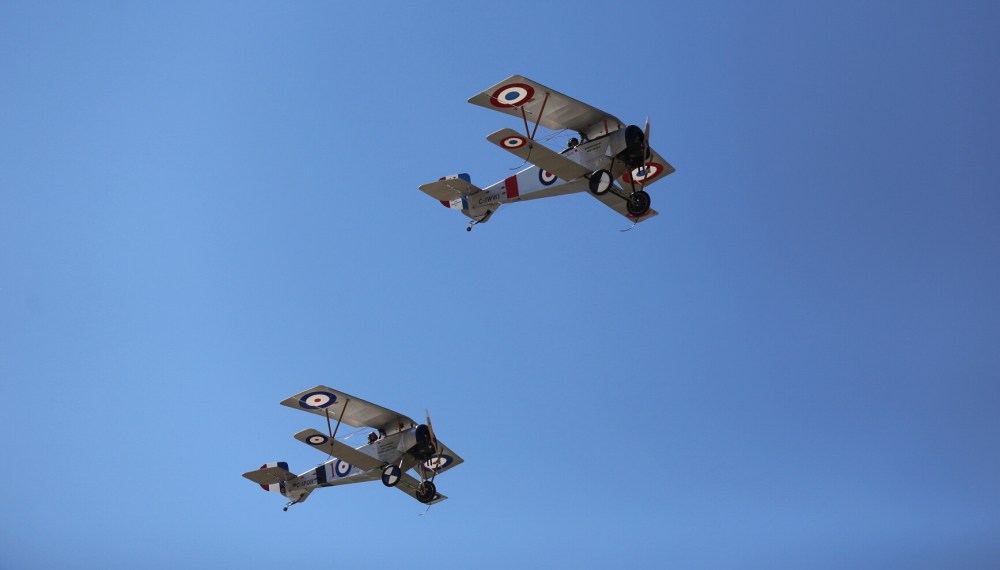
And if people look at the sky — weather permitting — they’ll see other replicas flying above the city from Lyncrest Airport to the Richardson International Airport today, Saturday and Sunday at around 11:30 a.m.
They’re the same planes that flew past the Vimy Ridge Memorial during a ceremony in April, marking 100 years since the battle in which all four Canadian divisions fought together for the first time and successfully took the ridge from German forces.
Brig.-Gen. A.E. Ross said after the war: “In those few minutes, I witnessed the birth of a nation.”
Dale Erhart, a retired Air Canada pilot and a former pilot with the Canadian Armed Forces, who is here this weekend with the Vimy Flight — Birth of a Nation national tour, was piloting the lead plane in the Vimy flypast.
“It was a huge emotional impact,” Erhart said.
“It was something we could not prepare for. Knowing this was where Billy Bishop flew. Using the cemeteries as landmarks for navigation. It was a great impact.
“I had to focus on leading the formation and making it there on target.”
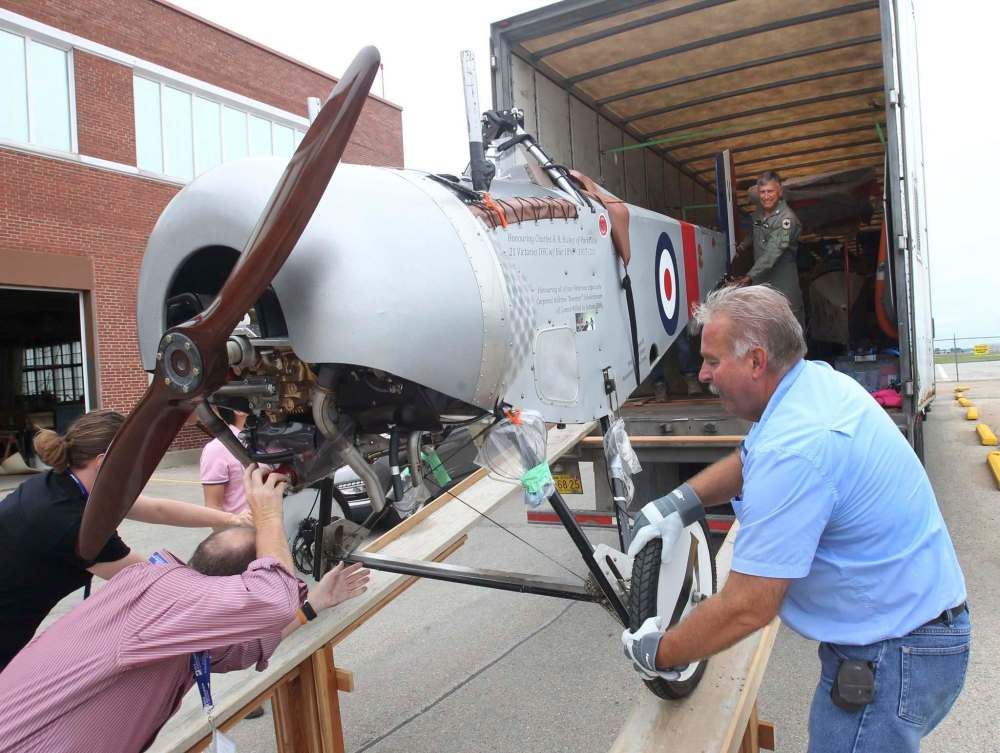
People more used to seeing today’s large jets — or even small single-engine private planes — will be surprised at how diminutive the planes were in the First World War. They’re so small that, with the wings taken off, four of the planes are being transported across the country in a semi-trailer.
The Nieuport 11 was less than six metres long and weighed 480 kilograms when fully loaded. Its maximum speed was 156 kilometres per hour and the highest it could fly was 4,600 metres. Even though the Nieuport 11 has two wings, it isn’t a biplane, but a sesquiplane because its lower wing is much smaller than the top one.
Erhart said the engines in the replica planes are different than in the ones flown during the First World War.
“They fly just like the real thing, but the engines are more reliable,” he said.
“They used castor oil for the engines. The oil would spray out at the pilots and be absorbed through the skin. It is a laxative, so you can imagine what happened during the flights.”

Helen Halliday, the museum’s president and CEO, said it will be a special weekend for people who go to the museum. She said the Vimy tour pilots will be there to talk about the plane and the experience of flying over the battlefield and monument.
“More than anything, it is about the skies,” Halliday said.
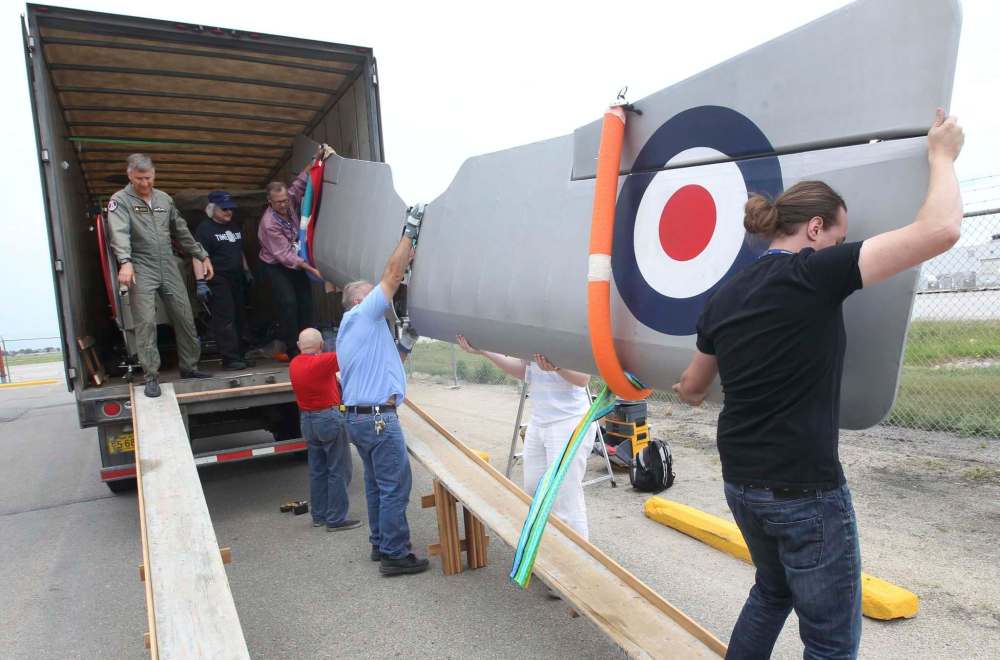
“They’ll see the plane. This is really considered Canada’s first fighter plane. When you see it here, it is almost hard to believe. And when it is in the air, it sounds like a lawnmower.
“This is what the museum is about — it shows the advancement of aviation.”
kevin.rollason@freepress.mb.ca
Kevin Rollason is a general assignment reporter at the Free Press. He graduated from Western University with a Masters of Journalism in 1985 and worked at the Winnipeg Sun until 1988, when he joined the Free Press. He has served as the Free Press’s city hall and law courts reporter and has won several awards, including a National Newspaper Award. Read more about Kevin.
Every piece of reporting Kevin produces is reviewed by an editing team before it is posted online or published in print — part of the Free Press‘s tradition, since 1872, of producing reliable independent journalism. Read more about Free Press’s history and mandate, and learn how our newsroom operates.
Our newsroom depends on a growing audience of readers to power our journalism. If you are not a paid reader, please consider becoming a subscriber.
Our newsroom depends on its audience of readers to power our journalism. Thank you for your support.
Kevin Rollason is a general assignment reporter at the Free Press. He graduated from Western University with a Masters of Journalism in 1985 and worked at the Winnipeg Sun until 1988, when he joined the Free Press. He has served as the Free Press’s city hall and law courts reporter and has won several awards, including a National Newspaper Award. Read more about Kevin.
Every piece of reporting Kevin produces is reviewed by an editing team before it is posted online or published in print — part of the Free Press‘s tradition, since 1872, of producing reliable independent journalism. Read more about Free Press’s history and mandate, and learn how our newsroom operates.
Our newsroom depends on a growing audience of readers to power our journalism. If you are not a paid reader, please consider becoming a subscriber.
Our newsroom depends on its audience of readers to power our journalism. Thank you for your support.
Advertisement Advertise With Us
Advertisement Advertise With Us
History
Updated on Friday, August 4, 2017 7:37 AM CDT: Adds photos
Updated on Saturday, August 5, 2017 12:41 PM CDT: adds photo