

School reconciliation experiences shared at education conference

Advertisement
Read this article for free:
or
Already have an account? Log in here »
To continue reading, please subscribe:
Digital Subscription
One year of digital access for only $1.44 a week*
- Enjoy unlimited reading on winnipegfreepress.com
- Read the E-Edition, our digital replica newspaper
- Access News Break, our award-winning app
- Play interactive puzzles
*Billed as $5.77 plus GST every four weeks. After 52 weeks, price increases to the regular rate of $19.95 plus GST every four weeks. Offer available to new and qualified returning subscribers only. Cancel any time.
To continue reading, please subscribe:
Add Free Press access to your Brandon Sun subscription for only an additional
$1 for the first 4 weeks*
- Enjoy unlimited reading on winnipegfreepress.com
- Read the E-Edition, our digital replica newspaper
- Access News Break, our award-winning app
- Play interactive puzzles
*Your next Brandon Sun subscription payment will increase by $1.00 and you will be charged $17.95 plus GST for four weeks. After four weeks, your payment will increase to $24.95 plus GST every four weeks.
Read unlimited articles for free today:
or
Already have an account? Log in here »
Hey there, time traveller!
This article was published 21/05/2022 (1613 days ago), so information in it may no longer be current.
Increasing Indigenous representation among teachers and prioritizing relationship-building between school staff and students were touted as critical steps in advancing reconciliation at a national education conference in Winnipeg.
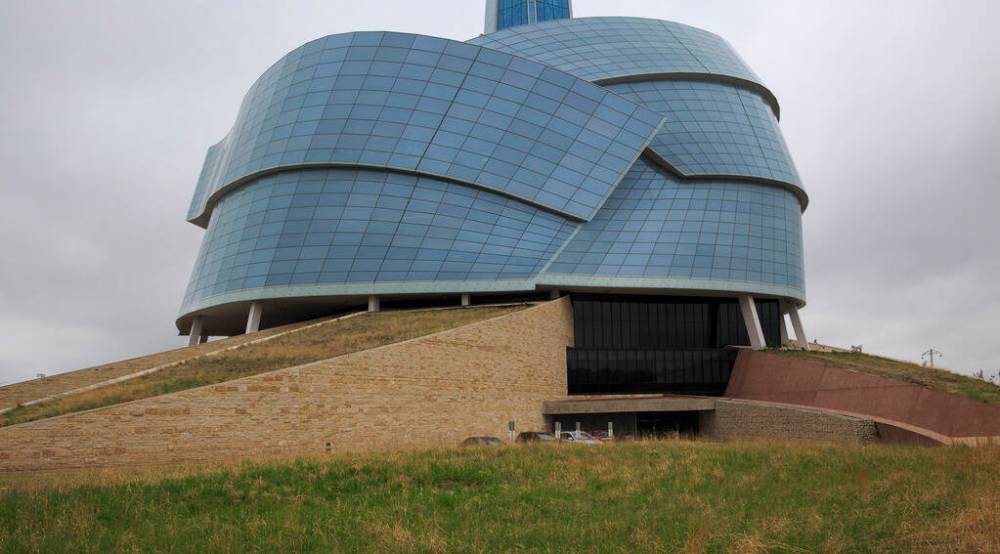
Superintendents from across the country — who, combined, represent more than one million K-12 students — capped off a two-day C21 Canada CEO Academy event with a panel discussion at the Canadian Museum for Human Rights on Thursday.
Roughly two dozen school board leaders listened to local educators and prominent Winnipeggers share perspectives on implementing the Truth and Reconciliation Commission’s calls to action.
“Teachers who take the time out of their day to get to know the person, to get to know the students, are the real ones who are making steps to reconciliation,” said panellist Jody Lynn Ross, a student in the Winnipeg School Division’s Indigenous teacher development program, Build From Within.
Ross was overcome with emotion as she described the effect that attending Children of the Earth High School had on her identity. The 21-year-old from Lake St. Martin First Nation said she moved around to various schools before attending the Grade 9-12 building that specializes in cultural programming.
“That was the first school that I’d seen actual Indigenous representation. In that school, I got to be who I am as an Anishinaabe woman,” she said, adding her teachers raised her when her parents could not because she had left her community to study.
Ross, the sole student speaker, was joined by panellists including Rob Riel, WSD’s director of Indigenous education, high school principal Jill Mathez, Mayor Brian Bowman, and Isha Khan, president of the museum.
Riel spoke about the importance of teachers getting to know the personal stories of students and colleagues, as well as making systemic change.
WSD recently undertook an extensive review of its Indigenous education policy, a process that involved seeking input from students, teachers, grandparents, community members and custodians, among others, he said.
“Was it easy? No. It took two and a half years to do, but we had input from everybody and in relationship-building, you have to bring everybody to the table,” Riel added.
Drawing on her experience at Dakota Collegiate in the Louis Riel School Division, Mathez told the audience it is up to school leaders to be intentional about taking every opportunity to advance reconciliation.

That could look like honouring a student’s choice not to stand still during O Canada or introducing an Indigenous language program at the request of learners, she said, noting 43 of her students are enrolled in Ojibwa classes next year because Dakota responded to student interest.
LRSD and WSD partnered to host the education conference for members of a national professional network of school superintendents who are “committed to setting Canadian standards for 21st century learning.”
Winnipeg superintendents Christian Michalik and Pauline Clarke said the purpose of the event, the first of its kind since the COVID-19 pandemic began, is to share ideas among each other and reflect on division practices.
maggie.macintosh@freepress.mb.ca
Twitter: @macintoshmaggie
Maggie Macintosh
Education reporter
Maggie Macintosh reports on education for the Free Press. Originally from Hamilton, Ont., she first reported for the Free Press in 2017. Read more about Maggie.
Funding for the Free Press education reporter comes from the Government of Canada through the Local Journalism Initiative.
Every piece of reporting Maggie produces is reviewed by an editing team before it is posted online or published in print — part of the Free Press‘s tradition, since 1872, of producing reliable independent journalism. Read more about Free Press’s history and mandate, and learn how our newsroom operates.
Our newsroom depends on a growing audience of readers to power our journalism. If you are not a paid reader, please consider becoming a subscriber.
Our newsroom depends on its audience of readers to power our journalism. Thank you for your support.
Maggie Macintosh
Education reporter
Maggie Macintosh reports on education for the Free Press. Originally from Hamilton, Ont., she first reported for the Free Press in 2017. Read more about Maggie.
Funding for the Free Press education reporter comes from the Government of Canada through the Local Journalism Initiative.
Every piece of reporting Maggie produces is reviewed by an editing team before it is posted online or published in print — part of the Free Press‘s tradition, since 1872, of producing reliable independent journalism. Read more about Free Press’s history and mandate, and learn how our newsroom operates.
Our newsroom depends on a growing audience of readers to power our journalism. If you are not a paid reader, please consider becoming a subscriber.
Our newsroom depends on its audience of readers to power our journalism. Thank you for your support.
Advertisement Advertise With Us
Advertisement Advertise With Us