

Season’s complications
Far from being 'the most wonderful time of the year' for many in the Indigenous community, Winnipeggers have an opportunity to reach out, show holiday spirit... of reconciliation

Advertisement
Read this article for free:
or
Already have an account? Log in here »
To continue reading, please subscribe:
Monthly Digital Subscription
$1 per week for 24 weeks*
- Enjoy unlimited reading on winnipegfreepress.com
- Read the E-Edition, our digital replica newspaper
- Access News Break, our award-winning app
- Play interactive puzzles
*Billed as $4.00 plus GST every four weeks. After 24 weeks, price increases to the regular rate of $19.95 plus GST every four weeks. Offer available to new and qualified returning subscribers only. Cancel any time.
Monthly Digital Subscription
$4.99/week*
- Enjoy unlimited reading on winnipegfreepress.com
- Read the E-Edition, our digital replica newspaper
- Access News Break, our award-winning app
- Play interactive puzzles
*Billed as $19.95 plus GST every four weeks. Cancel any time.
To continue reading, please subscribe:
Add Free Press access to your Brandon Sun subscription for only an additional
$1 for the first 4 weeks*
*Your next subscription payment will increase by $1.00 and you will be charged $16.99 plus GST for four weeks. After four weeks, your payment will increase to $23.99 plus GST every four weeks.
Read unlimited articles for free today:
or
Already have an account? Log in here »
Hey there, time traveller!
This article was published 18/12/2019 (2319 days ago), so information in it may no longer be current.
Christmas is a complicated time for Indigenous Peoples.
It’s a day that combines the church and capitalism and is centred around a story of an old white man who enters your home while you’re sleeping — a virtual trifecta of triggers.
It’s also a time when some remarkable things happen.
“I love Christmas,” Métis singer Don Amero tells a packed Burton Cummings Theatre on Dec. 6 during Amero Little Christmas, his annual holiday variety show.
Amero Little Christmas has come a long way, just like the singer’s Juno-nominated career. A decade earlier, it included a few friends in a coffee shop. Now, Amero has partners, such as True North Sports and Entertainment, staging the event for 1,000 Winnipeggers.
Christmas may be complicated for Amero, but he certainly doesn’t show it. He proudly speaks about his Christian faith and his family, pointing out his mother, Jeannie, sitting in the front row. He admits that Christmas was a tough time growing up, but he always had music, something he now wants to bring to others.
The concert consists of original songs, stories and Christmas carols, alongside performances from local a cappella favourites Those Guys, Canadian pop star Olivia Lunny and award-winning country band Doc Walker.
It’s fun, classical Christmas fare, billed as “somewhere between a Michael Bublé Christmas Special and Tom Jackson’s Huron Carole.”
The concert is well-delivered, but it’s hard not to notice the demographics of the audience. Most attendees are non-Indigenous, older Winnipeggers. Sprinkled throughout are members of Winnipeg’s Indigenous middle class, including chiefs, business owners and organizational leaders. In the core of Winnipeg’s downtown, a sort of reconciliation between segments of Indigenous and non-Indigenous Manitoba is occurring.
I said “sort of.”
At the end, my daughter and I walk out into the cold. A Cree woman calls to us. She has no gloves or jacket and appears to be having a hard night. She asks us, respectfully, for money.
I give her my gloves and a spring jacket and hat I keep in my trunk for emergencies. I have no cash, but my daughter hands her the five bucks I told her to keep after buying popcorn.
We find out she is from Lake Manitoba First Nation and she is a grandmother. We offer her a ride to wherever she is going, but she says no and turns towards Portage Avenue.
“God bless you,” she tells us, leaving.
● ● ●

Winnipeg is in the midst of a crisis this holiday.
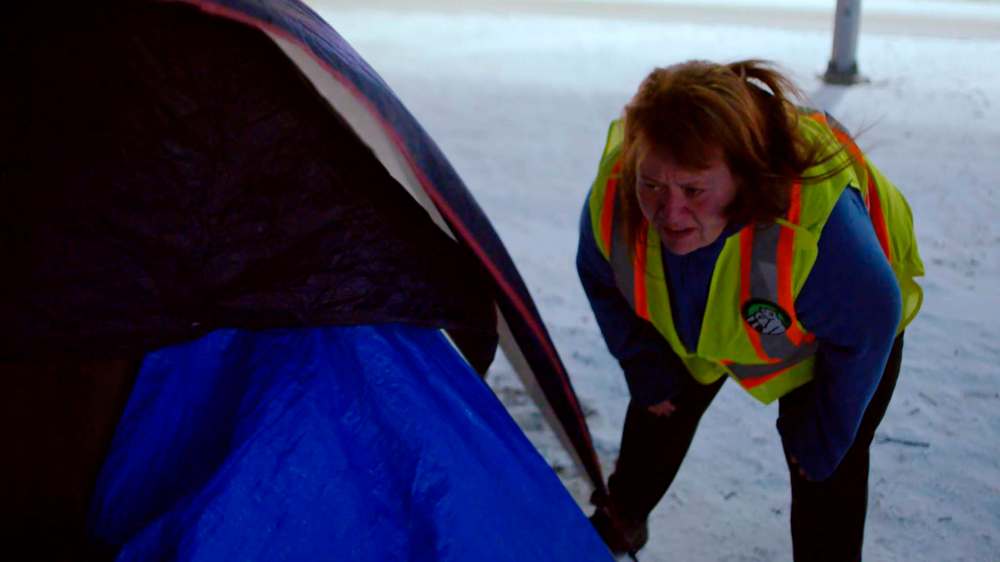
“This is the first year we’ve ever seen our relatives sleeping outside in tents,” Mama Bear Clan captain Diane Desormeaux Wright says. “It’s an emergency, and we have to do everything. I don’t usually come out on a Tuesday.”
The motto of the Mama Bear Clan is “Women Leading. Supported by Men,” and — like the Bear Clan — they are a volunteer-run organization dedicated to protecting and patrolling Winnipeg neighbourhoods. Leaders call citizens they work with their “relatives.”
Based in Point Douglas and the North End, the Mama Bear Clan has more than 500 rotating volunteers and is led by a dozen captains who walk three or four times a week. They deal with overwhelming needs and are always looking for more volunteers.
Tonight, Desormeaux Wright directs a group of men that includes me, her husband James and Justin Brown (from the Bear Clan), with two of his nephews.
Our assignment is to distribute sandwiches, gloves, sanitary products and toques to what’s called Tent City — a two-block area near Disraeli Freeway. Here, dozens of people are sleeping in tents in life-threatening temperatures, and hundreds more are “homeless,” staying at shelters nearby.
Tent City is not a place for the homeless, however, because these tents are homes. Recognizing this, Mama Bear Clan leaders do not enter them without being invited.
Desormeaux Wright calls out the names of the occupants inside. She knows almost everyone’s name here. If she gets no response, she asks those in other tents if they have seen their neighbours.
We are invited into one tent and I see a couple covered by sleeping bags, but they have no mitts or hats. We hand them sandwiches made by children at Point Douglas’s Gonzaga Middle School and find out that “Smiley,” who lives next door, got a space in a warm shelter a few days ago.
“That’s the best story I’ll hear tonight,” Desormeaux Wright tells me. “Hopefully he’s OK.”
The waiting list for sponsored, semi-permanent rooms is lengthy. Some are two years long. The alternative is to come up with nearly $1,000 a month to pay for one — requiring nearly $40 a day (which I’m told takes nearly eight hours of panhandling).
Most in Tent City suffer from trauma, mental-health issues or addictions, or have been banned from shelters due to complications from their illnesses. All have nowhere else to go.
We travel to shelters next. We find people in front not dressed for the hours they have to wait outside to be fed or get a bed. One woman tells us her kids are in foster care in Portage la Prairie. A man in a wheelchair asks for two sandwiches because he couldn’t make it to dinner.
Here, government decisions cut the deepest. The closing of emergency rooms, the strain on police budgets and the restructuring of Neighbourhoods Alive! — this year, Premier Brian Pallister’s government replaced the urban-based support program with a more rural-friendly model — have all increased danger by reducing the number of safe spaces.
Missions aren’t safe alternatives, especially when people are expected to listen to a sermon to get food or a chair.
The Millennium Library — a place the homeless frequent to warm up, email family members or contact services to help them — is less hospitable since installing metal detectors earlier this year.
Downtown commuters drive by this scene on their way to and from work every day.
“Winnipeg refuses to look at their relatives,” Desormeaux Wright tells me. “But they’re right in front of them.”
We run out of gloves in 20 minutes. Sandwiches are gone five minutes later. Still, more of our relatives show up until they are turned away; there is nothing left to give.
“Sometimes all we can give is a hug,” Desormeaux Wright says.
Did I mention every single person we meet is Indigenous?
All of the Mama Bear Clan volunteers are Indigenous, too.
The only non-Indigenous people I see tonight are two missionaries who work nearby and two police officers sitting inside a squad car watching us.
Meanwhile, the holidays arrive.
● ● ●
“We don’t have a Christmas celebration here,” Tara Zajac tells me. “Our community is ceremonial. We have a winter solstice ceremony and feast on Dec. 19.”
Zajac is director of the North Point Douglas Women’s Centre, which provides services, clothing and a safe place for women in Winnipeg’s North End and Point Douglas neighbourhoods. She is Ukrainian, not Indigenous.
The winter solstice ceremony has always been our holiday time. It’s a time of gift-giving, a time where certain stories are offered and certain foods are shared.
For Indigenous families here, who traditionally lived together during winter months, the solstice is the time we reaffirmed our commitments to one another.
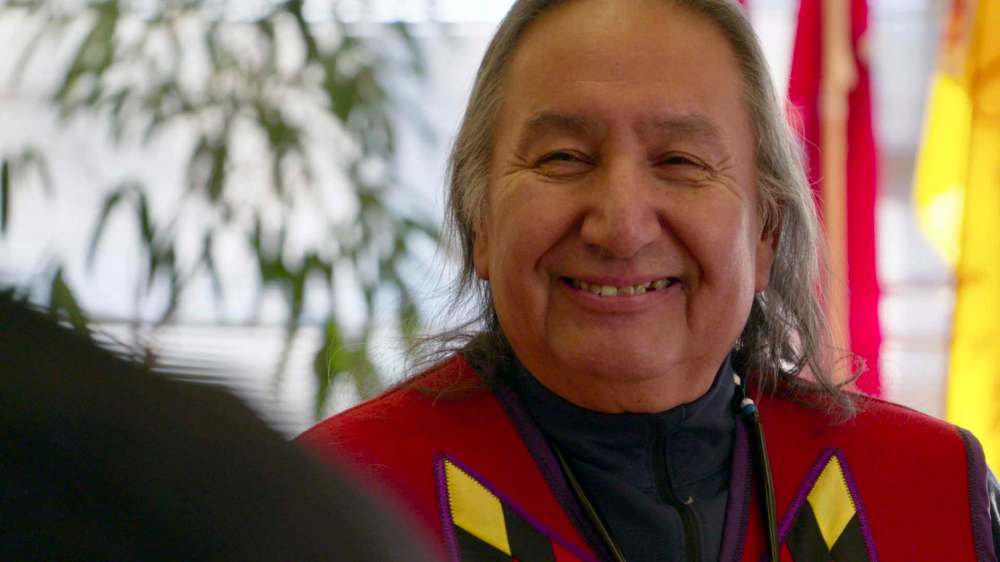
“We still have this tradition,” elder Carl Stone from Brokenhead First Nation explains. “In fact, my family is doing this next week at Urban Shaman Art Gallery.”
Stone is an Indigenous student counsellor at the University of Manitoba. His colleague, Christine Cyr, oversees the Indigenous Student Centre.
“Indigenous peoples follow many ways, so we try to offer all ways here,” she says. Next week she is holding a Christmas-themed party alongside a traditional feast, where a pipe ceremony will be held.
“If we’re lucky we might have deer meat,” Stone adds.
Back at the North Point Douglas Women’s Centre, Zajac tells me Christmas is a pretty stressful time in the neighbourhood, when Christmas buying meets paying the bills.
I meet Stephanie, who has seven children. “I’m more worried about having diapers,” she explains, “then buying toys.”
The centre provides Stephanie with resources to keep her family going. It also gives her respite and relationships. In the two hours I spend there, I hear nothing but laughter.
“This is an incredible place,” a volunteer named Dellia tells me.” Dellia is Métis and has lived in Winnipeg for 30 years. She also tells me she can’t read, so finding a job is impossible.
“Even taking a bus is hard,” she says, “but I manage.”
In 2017, funding for the North Point Douglas Women’s Centre was cut completely by the provincial government. Now, the centre lives off funding from the United Way and small, independent donations. Staffing is hard to maintain and stress is high. Most programs are volunteer-based.
Poverty is rising alongside addictions and violence here. Zajac tells me that staff now deal with issues emergency rooms and mental-health facilities dealt with in the past. If they don’t, many turn into events involving police and emergency services.
“Then, there’s this time of year,” Zajac tells me. “The needs increase. It’s hard, but everyone here is dedicated to one another. I’m lucky to be a part of this community.”
“You can’t fight poverty if you don’t fight loneliness,” says Kyle Mason, former founder and director of the now-closed North End Family Centre.
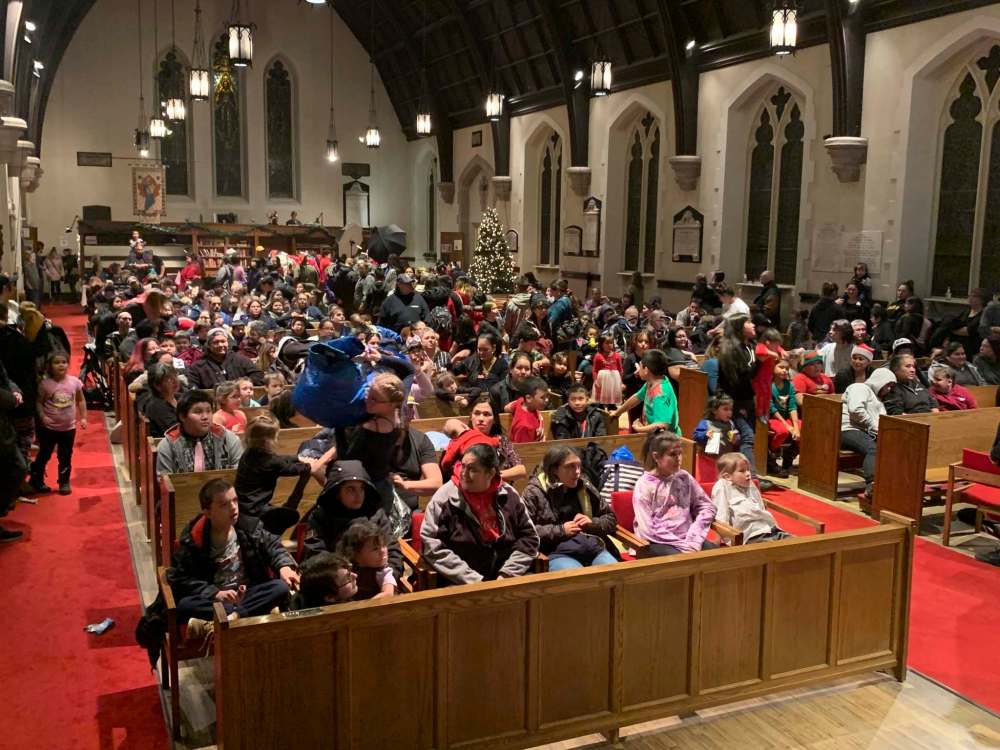
As he’s been doing for a decade, Mason spearheaded an effort with other Winnipeggers to host the North End Christmas Party, an event featuring photos with Santa, music by the North End’s Janzen Boys and a meal at St. John’s Cathedral.
The highlight of the night, though, is the toy giveaway.
“This year we served 600 meals and gave away over 450 toys,” Mason tells me. “Any kids who came got to enter a room and take any toy they wanted.”
Mason is Ojibway/Métis and a former pastor who grew up in Winnipeg. He says the party is his effort to help parents connect with their children.
“As someone who grew up in poverty, I know that Christmas is one of the most difficult times for kids,” Mason says, “so this is not about materialism, but about building families.”
For North End kids like Kevin Chief, a former MLA and cabinet minister and a former vice-president of the Business Council of Manitoba, events such as these are what the holidays should be about.
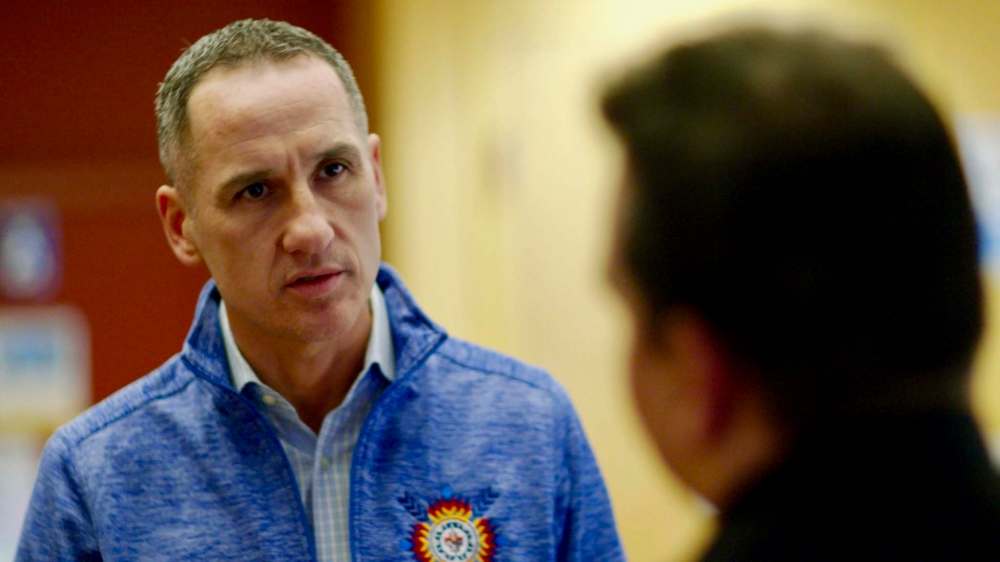
“We were poor while I was growing up and Strathcona School used to put on a big Christmas event. I went with my dad and we ate and I got a gift and it was free,” Chief tells me, tears coming to his eyes.
“Those days were hard, ‘cause my dad drank a lot but at that event we laughed together, ate and made some of my best memories.”
This time of year, he says, has to be about more than one day.
“When we make Christmas or the holidays about community first then we make it about hope. We make it about family.”
Families are complicated, Chief tells me, but it’s this complicatedness that makes them grow. “Family is easy during the good times, but it’s the hard times that make people stick together.”
The gift, it seems, is in relationships — something Indigenous peoples have been giving to newcomers for hundreds of years.
And still do now.
● ● ●
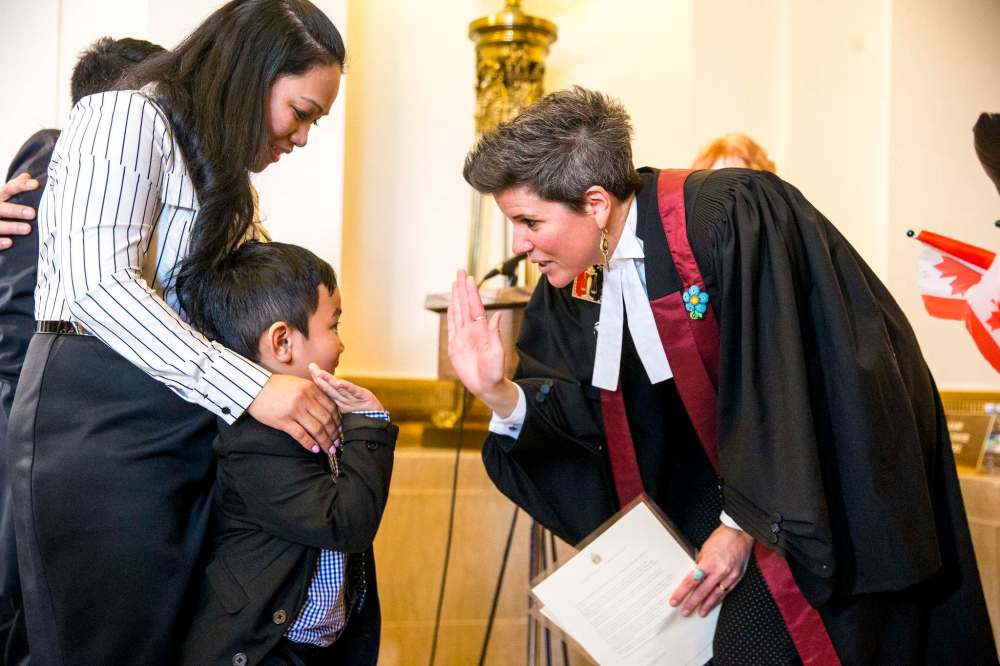
On Dec. 10, and for the 237th time, Métis citizenship Judge Suzanne Carrière continued this tradition.
“I’m honoured to welcome you all in the final step of becoming Canadian,” she tells 50 new immigrants from 15 countries, “but this is the first step of a new journey.”
The citizenship ceremony, held downtown at the Royal Winnipeg Ballet, is unlike any I’ve witnessed before.
It’s almost exclusively Indigenous-run. Alongside Carrière, opening remarks are offered by residential school survivor and author Theodore Fontaine. Then, a drum song is offered and O Canada is sung in Cree.
It’s all part of new “customary” and locally based citizenship ceremonies offered by Immigration and Citizenship Canada.
I’m invited to give a talk on roles and responsibilities under Treaty One immediately after the oath-taking.
I realize as I begin that the first words these new Canadians hear are what it means to be Treaty People.
It’s a complicated time and this is a complicated place, I tell my new relatives, but we are family now. So, we have to work. We have to see one another. We have to give each other our gifts.
We have to be remarkable.
niigaan.sinclair@freepress.mb.ca
Niigaan Sinclair is Anishinaabe and is a columnist at the Winnipeg Free Press.
Our newsroom depends on a growing audience of readers to power our journalism. If you are not a paid reader, please consider becoming a subscriber.
Our newsroom depends on its audience of readers to power our journalism. Thank you for your support.
Niigaan Sinclair is Anishinaabe and is a columnist at the Winnipeg Free Press.
Our newsroom depends on a growing audience of readers to power our journalism. If you are not a paid reader, please consider becoming a subscriber.
Our newsroom depends on its audience of readers to power our journalism. Thank you for your support.
Advertisement Advertise With Us
Advertisement Advertise With Us
History
Updated on Wednesday, December 18, 2019 8:46 AM CST: adds photos
Updated on Wednesday, December 18, 2019 1:13 PM CST: Corrects copy to note Kevin Chief is a former vice-president of the Business Council of Manitoba.
Updated on Wednesday, December 18, 2019 1:36 PM CST: Removes reference to lack of lockers at Millennium Library.