

Shimoda was a social pillar of Winnipeg’s Japanese community
Lucy Shimoda, 90, displaced by War Measures Act, made Winnipeg her true home

Advertisement
Read this article for free:
or
Already have an account? Log in here »
To continue reading, please subscribe:

Digital Subscription
One year of digital access for only $205*
- Enjoy unlimited reading on winnipegfreepress.com
- Read the E-Edition, our digital replica newspaper
- Access News Break, our award-winning app
- Play interactive puzzles
*First annual payment billed as $205.00 + GST for one year. This annual subscription will automatically renew at $233.00 + GST every 52 weeks (10% off the regular annual price of $259.35). Offer available to new and qualified returning subscribers only. Cancel any time.
To continue reading, please subscribe:
Add Free Press access to your Brandon Sun subscription for only an additional
$1 for the first 4 weeks*
- Enjoy unlimited reading on winnipegfreepress.com
- Read the E-Edition, our digital replica newspaper
- Access News Break, our award-winning app
- Play interactive puzzles
*Your next Brandon Sun subscription payment will increase by $1.00 and you will be charged $17.95 plus GST for four weeks. After four weeks, your payment will increase to $24.95 plus GST every four weeks.
Read unlimited articles for free today:
or
Already have an account? Log in here »
Hey there, time traveller!
This article was published 18/04/2020 (2332 days ago), so information in it may no longer be current.
Perhaps, in another reality, Lucy Shizuko Shimoda would have continued her happy childhood, growing up and living her life in Vancouver.
Unfortunately, the Second World War broke out. A few years into the conflict, after Japanese forces attacked Pearl Harbor and Hong Kong, Canadians of Japanese ancestry were forcibly removed from their West Coast homes, farms, schools and businesses, to be relocated in Western Canada.
Shimoda, who died Nov. 17 at age 90 in Winnipeg, was one of 22,000 who were displaced under the authority of the War Measures Act.
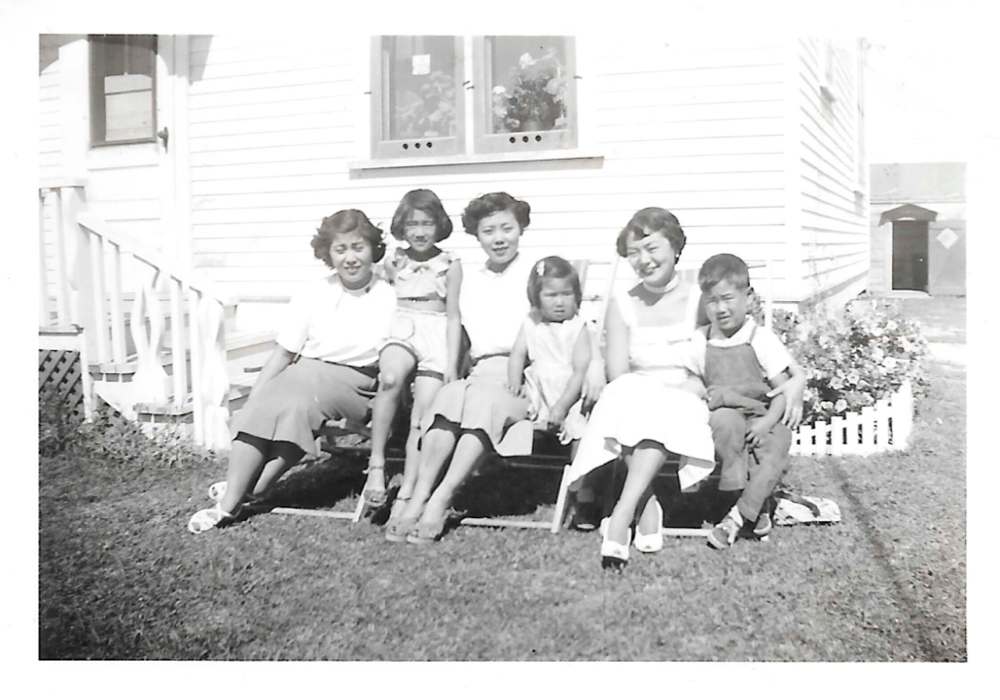
“She had a long, interesting life,” niece Pamela Okano said recently. “But she, like many Japanese people, would be still in Vancouver if not for the evacuation.
“For most, there was no family here. There was no reason to come here.”
Shimoda was the fourth-oldest child in the family and her name — Shizuko — represented both that fact and a personality trait. “It means ‘quiet child,’ but it is also a play on the word four,” Okano said.
Life, for Shimoda, was idyllic before the war. The family lived on Powell Street in what was called Little Tokyo, Japantown or Paueru-gai. Even though her family was Buddhist, she went daily to a Catholic school, where she was taught by nuns. After school let out for the day, she went to the Japanese Language School.
“That’s where she learned how to dance,” Okano said.
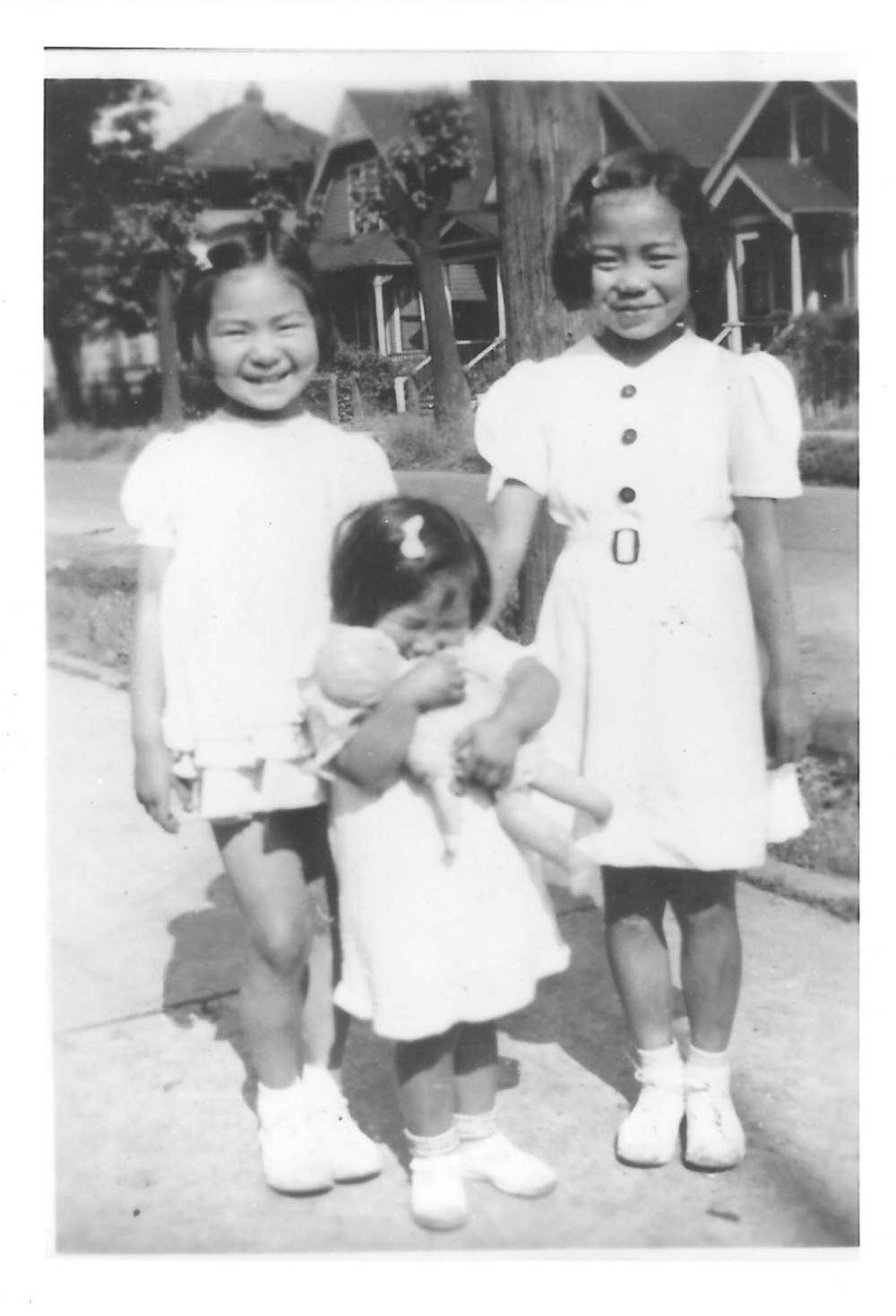
During the war, Shimoda went with her parents, Heikichi and Hatsune Sakamoto, and four of her sisters, to the internment camp at Greenwood, B.C. Eldest sister Kanaye (Connie) had already moved with her husband and infant daughter to Manitoba to work as farm labourers.
At the end of the war, upset about the family’s treatment, Shimoda’s father wanted to go back to Japan, where he was born.
“Aunt Connie went to Greenwood and convinced them to move to Manitoba, and he agreed to it. And, to get the ball rolling, he sent (Shimoda) by train. By herself,” Okano said.
At the time, Shimoda was only 15.
“It was a pivotal moment in her life,” Okano said. “She was terrified. She had never been to anywhere other than Vancouver and Greenwood.
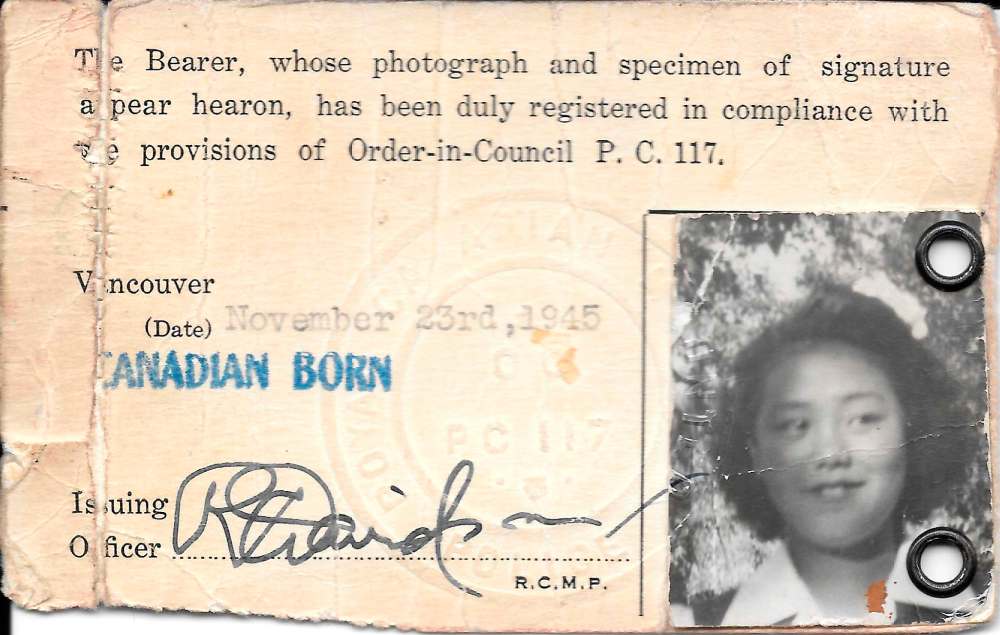
“She never talked about the racism — I’m sure there was some, but this was her moment when she had to grow up.”
The Sakamoto family lived and worked in the Parkdale Road area, between Winnipeg and Lockport, until moving to North Kildonan when restrictions on Japanese Canadians eased in the years after the war. That’s also where Shimoda met George, through a matchmaker.
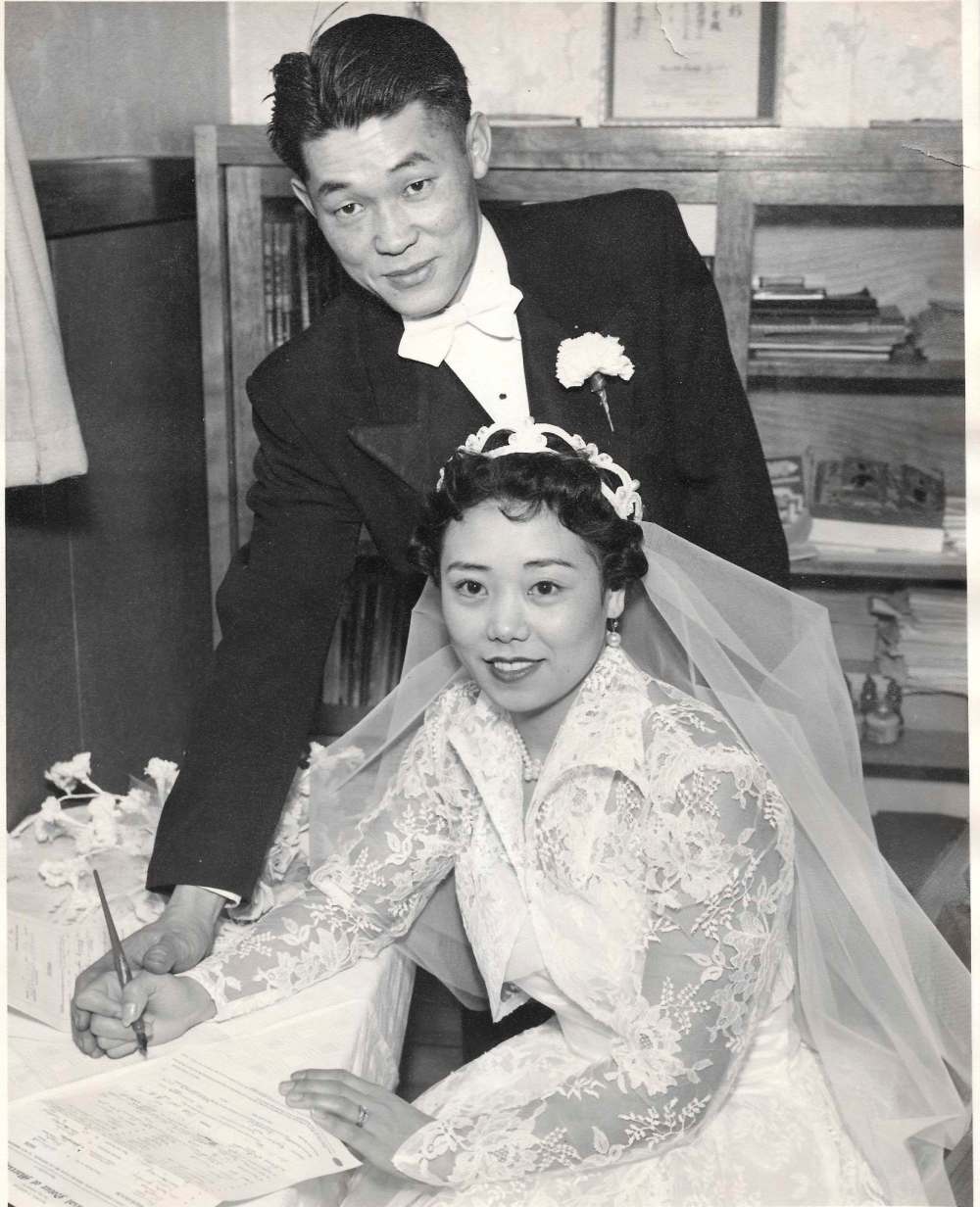
By 1954, they were married. They were together for 45 years, until George died in 1999.
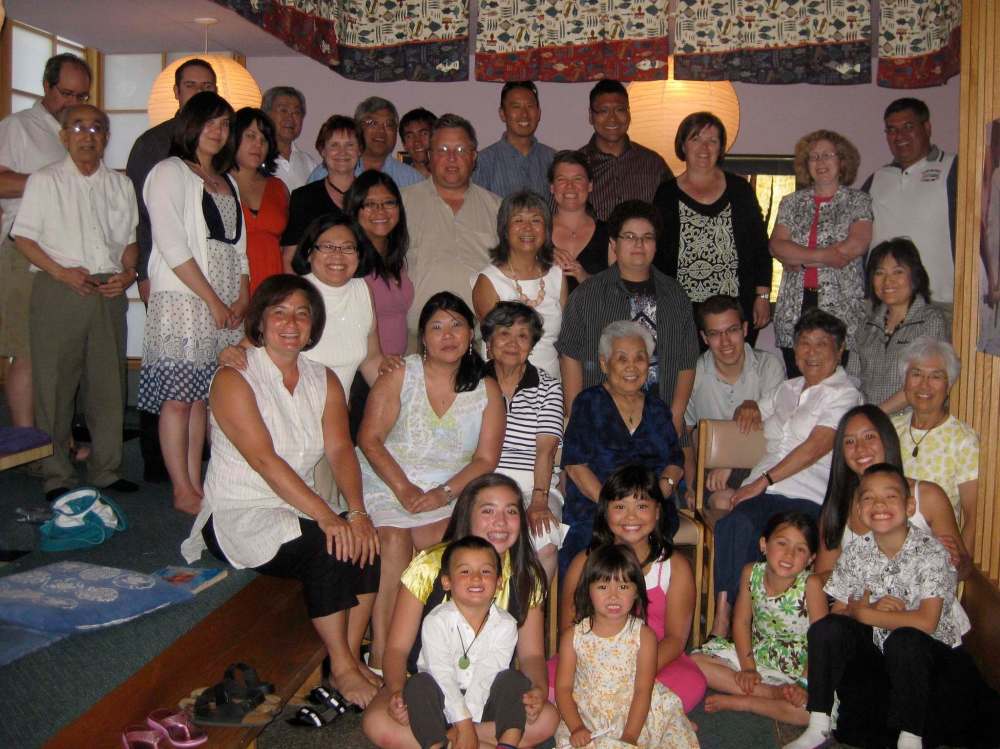
The couple’s home on Bannerman Avenue became a social magnet for gatherings of family, friends and neighbours.
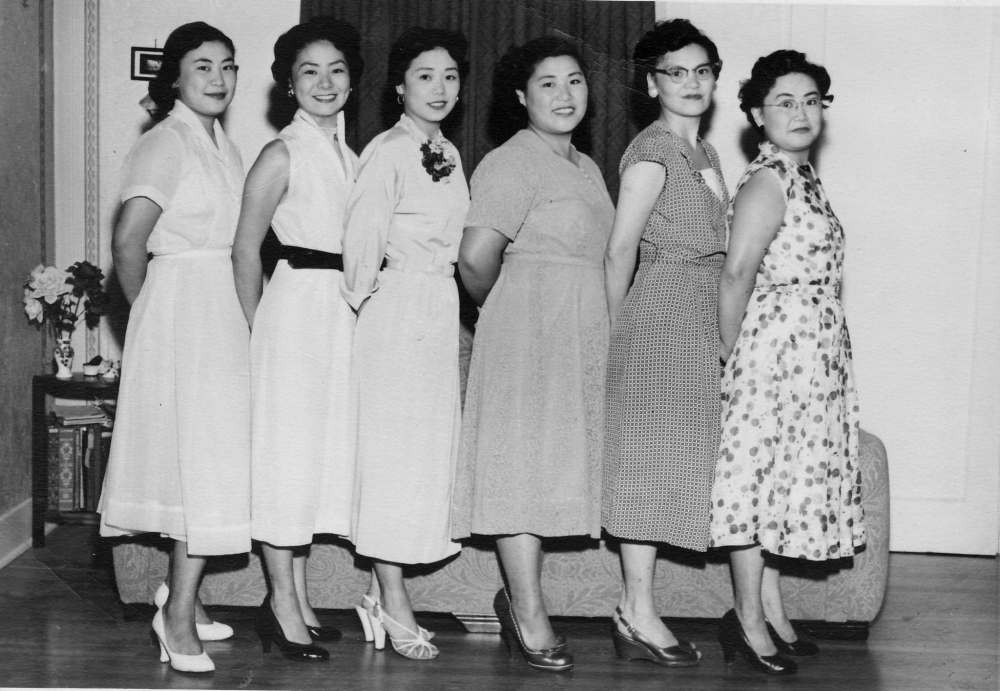
“On Friday night, everyone in the family would go there and the sisters would get their hair done in the basement and the husbands would sit at the table and talk and play (cards),” Okano said. “She was the hairdresser for the family. You need your hair done, you went to Aunt Lucy.”
Shimoda worked for decades at Mario Labelle Hairstyling on Portage Avenue. When the location was swallowed up in the massive expropriation to make way for Portage Place in the 1980s, she and some fellow stylists bought the business and moved it to Fort Street. She continued working there until she retired in the mid-1990s.
“One of her proudest times was when an extended member of the (Japanese) royal family came to Winnipeg, and my aunt and her business partner did her hair and her ladies in waiting. That was quite a big honour for my aunt,” Okano said.
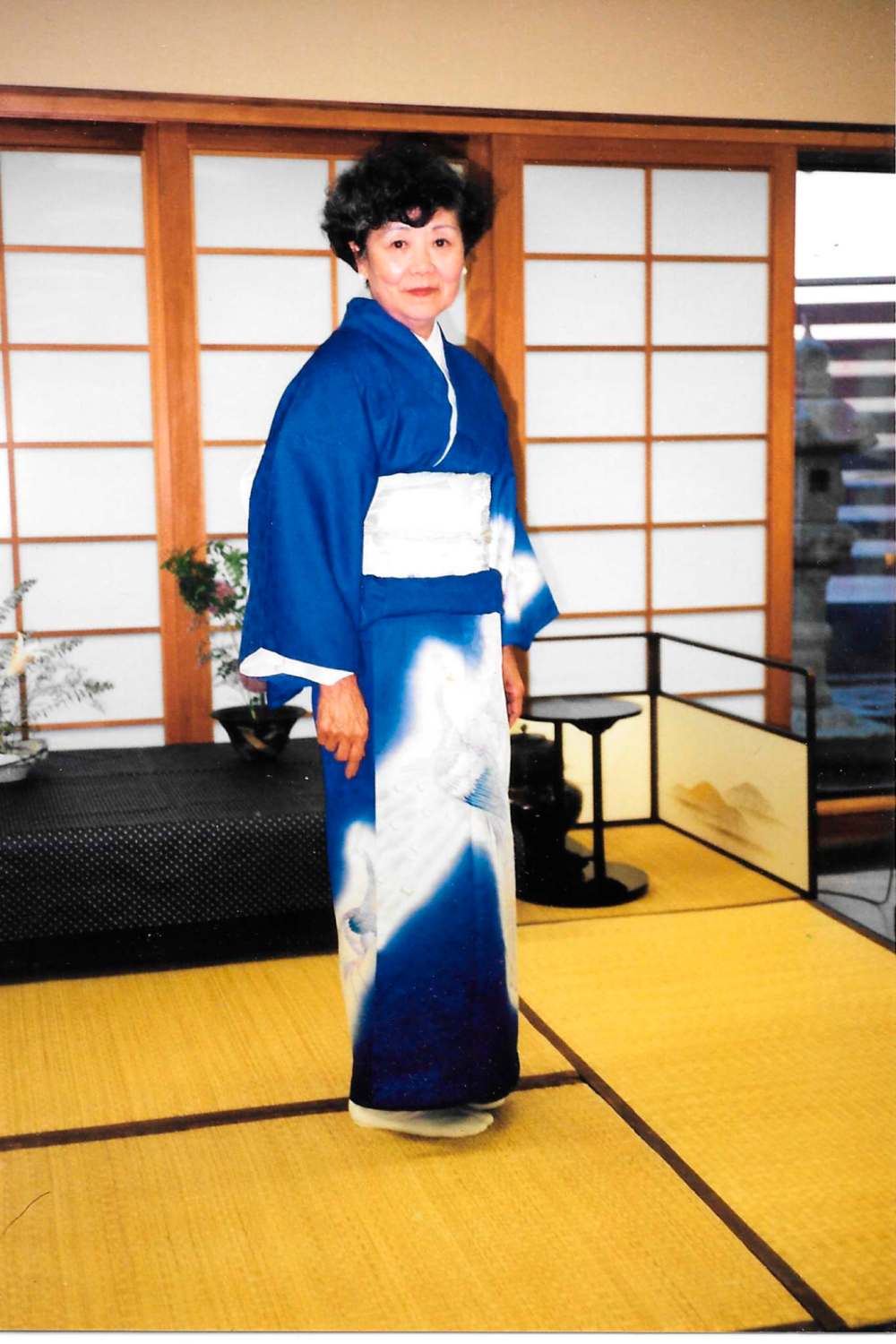
The couple did not have children, but Shimoda helped nurture numerous youth through her years at the Manitoba Japanese Canadian Cultural Centre. Conscripted by her sister, Connie, she volunteered for years at the centre where, along with making sushi for special events, she was well-known for demonstrating Japanese dance for centre visitors.
“There are wonderful memories for me at the centre — going to the centre for me was great because all of my family was there,” Okano said. “And, with all those sisters, you heard them before you saw them. It was wild when the six of them were together… she was such a social lady.”
Lucy Yamashita, former president of the cultural centre, knew Shimoda “for decades.”
“She was very outgoing and friendly… she helped in several different areas at the centre. She would always make sushi for our fundraising events, our Donburi lunches, and she always volunteered with our public schools program. She would be at the origami tables, as well as teaching folk dance,” Yamashita said.
“She also taught some of our young people to learn Japanese dance and they performed at Folklorama.”
Art Miki, whose family also came to Manitoba after being displaced and who fought for years to successfully get a formal apology and compensation from the federal government, said the Sakamoto sisters were a force.
“She came from a family of all sisters,” Miki said. “They were all beautiful, lovely, and they were all active in the centre… Lucy was friendly with my mother and would go out shopping with her. She was a very nice person.”
Miki said long before the local Japanese community had a cultural centre, they would rent space at various halls for events.
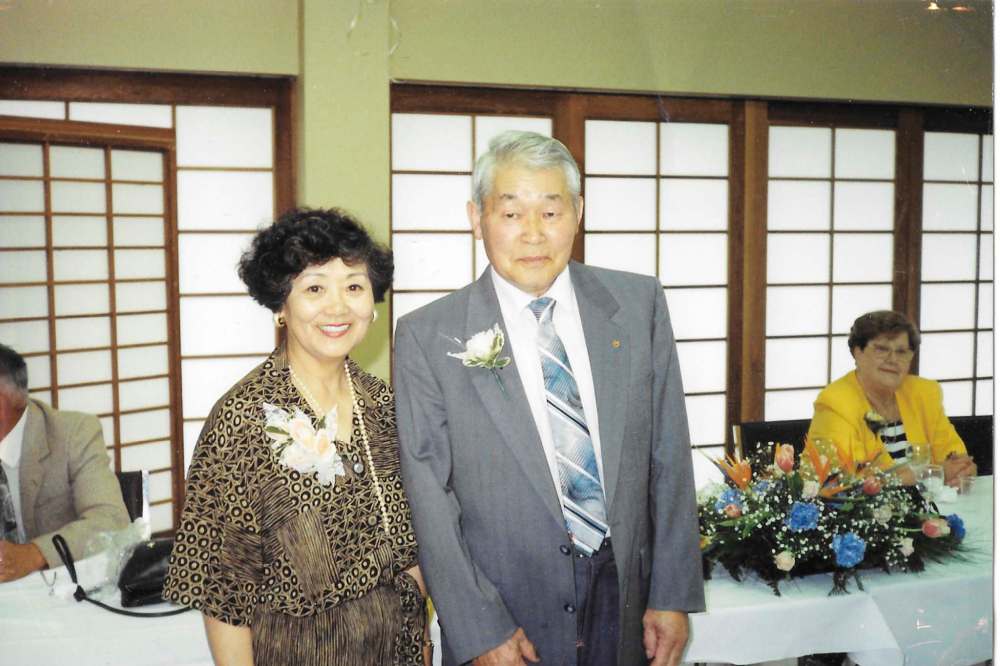
“That’s how the community all stayed together,” he said. “(Shimoda) would always take part. It was through that group of people… that we have a centre like we have today. It is to their credit.”

Shimoda was also a longtime member of the Manitoba Buddhist Temple and Japanese Cultural Association of Manitoba. In retirement, she discovered golf and played often.
In recent years, Shimoda battled dementia. She moved to the Middlechurch Personal Care Home in 2014, the same place her beloved sister Connie had been living before she died that same year.
“She was very close to her sisters,” Okano said. “And she was the last surviving sister.
“It really is the end of an era.”
kevin.rollason@freepress.mb.ca
Kevin Rollason
Reporter
Kevin Rollason was a general assignment reporter at the Free Press.
Our newsroom depends on a growing audience of readers to power our journalism. If you are not a paid reader, please consider becoming a subscriber.
Our newsroom depends on its audience of readers to power our journalism. Thank you for your support.
Kevin Rollason
Reporter
Kevin Rollason was a general assignment reporter at the Free Press.
Our newsroom depends on a growing audience of readers to power our journalism. If you are not a paid reader, please consider becoming a subscriber.
Our newsroom depends on its audience of readers to power our journalism. Thank you for your support.
Advertisement Advertise With Us
Advertisement Advertise With Us