

Students face gaps in summer-job aid

Advertisement
Read this article for free:
or
Already have an account? Log in here »
To continue reading, please subscribe:
Monthly Digital Subscription
$1 per week for 24 weeks*
- Enjoy unlimited reading on winnipegfreepress.com
- Read the E-Edition, our digital replica newspaper
- Access News Break, our award-winning app
- Play interactive puzzles
*Billed as $4.00 plus GST every four weeks. After 24 weeks, price increases to the regular rate of $19.95 plus GST every four weeks. Offer available to new and qualified returning subscribers only. Cancel any time.
Monthly Digital Subscription
$4.99/week*
- Enjoy unlimited reading on winnipegfreepress.com
- Read the E-Edition, our digital replica newspaper
- Access News Break, our award-winning app
- Play interactive puzzles
*Billed as $19.95 plus GST every four weeks. Cancel any time.
To continue reading, please subscribe:
Add Free Press access to your Brandon Sun subscription for only an additional
$1 for the first 4 weeks*
*Your next subscription payment will increase by $1.00 and you will be charged $16.99 plus GST for four weeks. After four weeks, your payment will increase to $23.99 plus GST every four weeks.
Read unlimited articles for free today:
or
Already have an account? Log in here »
Hey there, time traveller!
This article was published 09/04/2020 (2190 days ago), so information in it may no longer be current.
Part-time work, job interviews and long-awaited internships have all disappeared for post-secondary students who were in the process of updating resumes for the summer break when a pandemic was declared.
This week, Prime Minister Justin Trudeau announced a plan tailored to students to alleviate financial strain — an expansion of the annual Canada Summer Jobs Program expected to create as many as 70,000 jobs, with the government offering wage subsidies up to 100 per cent.
That’s in addition to Ottawa’s emergency benefit plan, which provides Canadians who have lost work due to COVID-19 with $2,000 per month for up to 16 weeks.
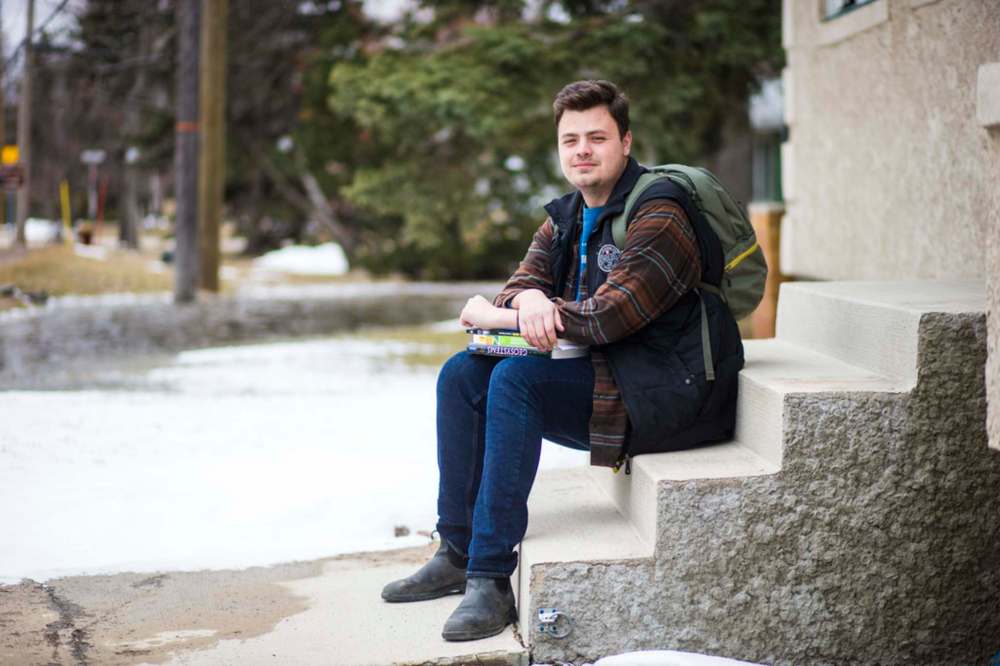
But students say gaps in financial aid persist, and in turn, their savings for tuition and living expenses are being drained rapidly.
“This will be the first time in a long time that I can’t work — and not because it’s my own choice. A lot of places aren’t hiring or offering jobs,” said Mahlet Cuff, a third-year women and gender studies student at the University of Winnipeg.
Cuff, the vice-president of external affairs at the University of Winnipeg Students’ Association, is the force behind a campaign to encourage her classmates to contact their local MP to demand income security for students.
Her term in student politics is up at the end of the month. With limited summer work opportunities to follow, she worries she’ll have to take a semester off to try to find some kind of work and save up for school.
She said she’s heard from many students in similar situations, with concerns ranging from parents worried about juggling courses and childcare costs without an income to international students fearing job loss will affect their visas.
Micah Doerksen, a fourth-year student at U of W studying education, typically works two part-time jobs throughout the school year — an office job and server position. His restaurant hours were completely slashed when his employer was forced to close last month. He now makes a total of $900 per month from his minimum-wage data entry gig.
“I haven’t lost my income, but my income has been more than halved. I really hope they support part-time people in my situation,” he said.
Also this week, Trudeau hinted at expanding emergency fund eligibility.
In the meantime, Doerksen said he’s in an odd position where his prospective summer job interviews have been cancelled so he is somewhat hopeful his office work contract won’t be renewed next month due to COVID-19 so he can apply for government support.

“A lot of education students, we either do day camps or we do those types of learning programs or we do vocational things; it’s really hard because I don’t know what to do this summer,” he said.
Doerksen added he’s been thinking often about a paper he wrote in a Canadian history class this year that was about work camps enacted during the Great Depression. He submitted it during what feels like a very long time ago, when he never could have imagined the entire workforce would soon be facing massive disruptions that have put hundreds of thousands of people out of work — students included.
maggie.macintosh@freepress.mb.ca
Twitter: @macintoshmaggie
Maggie Macintosh
Education reporter
Maggie Macintosh reports on education for the Free Press. Originally from Hamilton, Ont., she first reported for the Free Press in 2017. Read more about Maggie.
Funding for the Free Press education reporter comes from the Government of Canada through the Local Journalism Initiative.
Every piece of reporting Maggie produces is reviewed by an editing team before it is posted online or published in print — part of the Free Press‘s tradition, since 1872, of producing reliable independent journalism. Read more about Free Press’s history and mandate, and learn how our newsroom operates.
Our newsroom depends on a growing audience of readers to power our journalism. If you are not a paid reader, please consider becoming a subscriber.
Our newsroom depends on its audience of readers to power our journalism. Thank you for your support.
Maggie Macintosh
Education reporter
Maggie Macintosh reports on education for the Free Press. Originally from Hamilton, Ont., she first reported for the Free Press in 2017. Read more about Maggie.
Funding for the Free Press education reporter comes from the Government of Canada through the Local Journalism Initiative.
Every piece of reporting Maggie produces is reviewed by an editing team before it is posted online or published in print — part of the Free Press‘s tradition, since 1872, of producing reliable independent journalism. Read more about Free Press’s history and mandate, and learn how our newsroom operates.
Our newsroom depends on a growing audience of readers to power our journalism. If you are not a paid reader, please consider becoming a subscriber.
Our newsroom depends on its audience of readers to power our journalism. Thank you for your support.
Advertisement Advertise With Us
Advertisement Advertise With Us
History
Updated on Friday, April 10, 2020 11:08 AM CDT: Corrects to 16 weeks of payment.