

Territorial acknowledgements are vital
When said correctly, they teach people to see what they have been taught not to see

Advertisement
Read this article for free:
or
Already have an account? Log in here »
To continue reading, please subscribe:
Monthly Digital Subscription
$1 per week for 24 weeks*
- Enjoy unlimited reading on winnipegfreepress.com
- Read the E-Edition, our digital replica newspaper
- Access News Break, our award-winning app
- Play interactive puzzles
*Billed as $4.00 plus GST every four weeks. After 24 weeks, price increases to the regular rate of $19.95 plus GST every four weeks. Offer available to new and qualified returning subscribers only. Cancel any time.
Monthly Digital Subscription
$4.99/week*
- Enjoy unlimited reading on winnipegfreepress.com
- Read the E-Edition, our digital replica newspaper
- Access News Break, our award-winning app
- Play interactive puzzles
*Billed as $19.95 plus GST every four weeks. Cancel any time.
To continue reading, please subscribe:
Add Free Press access to your Brandon Sun subscription for only an additional
$1 for the first 4 weeks*
*Your next subscription payment will increase by $1.00 and you will be charged $16.99 plus GST for four weeks. After four weeks, your payment will increase to $23.99 plus GST every four weeks.
Read unlimited articles for free today:
or
Already have an account? Log in here »
Hey there, time traveller!
This article was published 17/10/2021 (1648 days ago), so information in it may no longer be current.
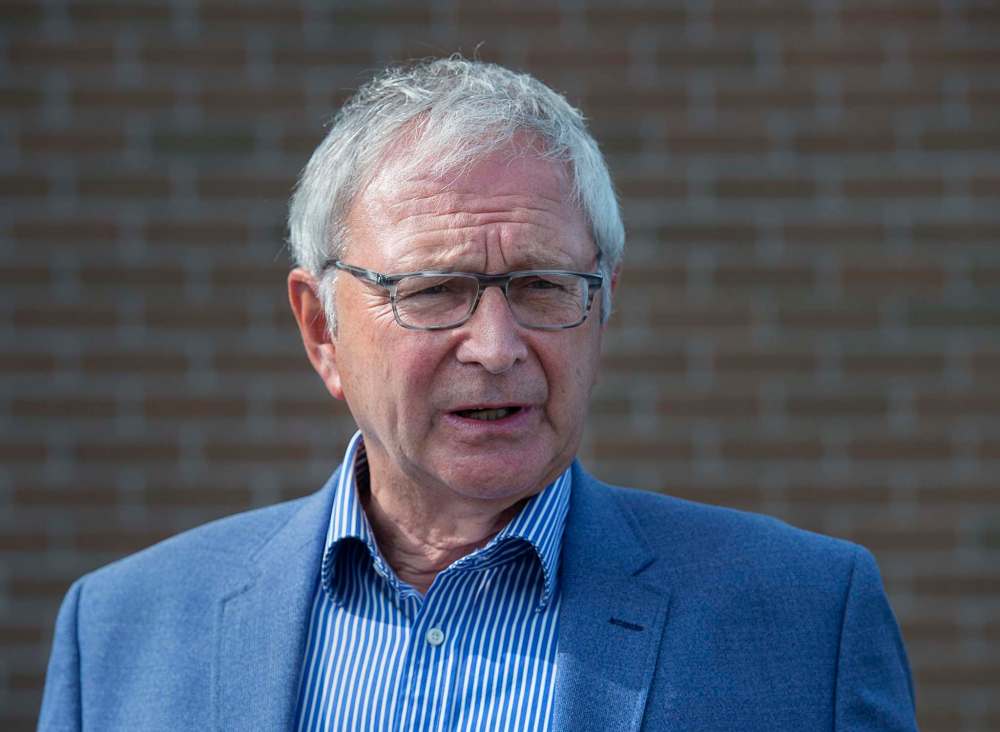
Last Thursday, the government of New Brunswick issued a memo to provincial employees that they “may not make or issue territorial or title acknowledgements.”
“As you may be aware,” said the directive issued by New Brunswick Attorney General Ted Flemming, “the Government of New Brunswick (GNB) is currently involved in a number of legal actions which have been initiated by certain First Nations against the province, including a claim to ownership and title to over 60% of the Province.”
As Flemming directs, employees can, if they have to, use a basic statement that removes the terms “unceded” or “unsurrendered.”
This comes one year after six Wolastoqey nations filed a land title claim against the province, stating that their communities “did not surrender rights or land or resources” during the Peace and Friendship treaties signed between 1725 and 1779, resulting in non-Indigenous peoples settling in what is now Maine, New Hampshire, New Brunswick and Nova Scotia.
The majority of New Brunswick, the lawsuit basically entails, is on stolen land.
It’s true though; the only legal doctrine the Canadian government has to reside on these lands is the 1763 Royal Proclamation, where King George III simply declared everything his.
So, it’s not like First Nations leaders there have any choice.
The draconian Indian Act disables virtually any economic development on reserves and, as recent disputes over lobster fishing in the province illustrate, the Canadian federal government has been consistently limiting treaty rights or ignoring them altogether (and forcing near-endless but victorious trips to the Supreme Court).
Like any community, First Nations need to control their own affairs, a land base to create an economy, and their rights fully recognized.
They’re doing what anyone would do when a crime has been committed: seek peaceful, just, and reasonable legal recourse.
New Brunswickers should be happy they’re not trying something else.
Instead, anti-Indigenous sentiment has been growing in the province, particularly since the 2020 provincial election, which saw Blaine Higgs and his Progressive Conservative party form a majority government.
Fishermen and business leaders — many of whom vote Conservative — carry deep resentments against the Canadian government recognizing any Indigenous rights over fishing, shale gas resources, or any land whatsoever.
This has galvanized support for Higgs, who has been increasingly using rhetoric that demeans and marginalizes Indigenous people in the province.
Last Christmas, after chiefs in the province quit a provincial working group tasked with implementing the Truth and Reconciliation calls to action, Higgs pronounced he is not interested in “debating injustices of the past” because “I don’t try to be a historian.”
Then, after two shootings of Indigenous peoples by police and claims by First Nations leaders that racism against Indigenous peoples is “deeply rooted” in provincial departments, Higgs and New Brunswick Aboriginal Affairs minister Arlene Dunn refused to investigate until finally creating a bare-bones commission to study discrimination against all racialized groups.
It’s “really important for us to understand that systemic racism actually doesn’t just apply to Indigenous populations in our province,” Dunn announced.
Last April, Higgs and Dunn suddenly announced that the province would be cancelling long standing tax sharing agreements with First Nations bands, claiming certain communities were making too much money — with Higgs nonsensically calling some bands “super-wealthy.”
Then, the province joined other right-wing premiers in Ontario, Quebec, Saskatchewan, and Alberta in giving tacit recognition to the National Day of Reconciliation, refusing to give a statutory holiday.
It’s not as though New Brunswick hasn’t been a long-standing site of anti-Indigenous sentiment either. This is the area of the world where scalping rewards of Indigenous peoples still exist.
This refusal by New Brunswick to allow provincial employees to use the words “unceded” and “unsurrendered” represents a new development though.
Change.
Territorial acknowledgements work. When said correctly, they teach people to see what they have been taught not to see. They call on people to be better after seeing them. They name the truth, and the incredible truth about truth is that it eventually impacts change.
The fact is no one has ever negotiated for land in New Brunswick. People just came in and, while perhaps promising to share and be nice, ended up stealing it in the end.
Same could be said for most of the lands Canada now resides upon, including right here in Manitoba.
Indigenous peoples have been incredibly kind, encouraging Canadians through education, gestures, and territorial acknowledgements to learn of the injustice this country is built upon.

I would bet that if Indigenous leaders saw a future where their rights were honoured, land and resources were shared and returned, and governments were recognized, there would be less need for lawsuits and more for working groups, actions, and actual reconciliation.
Territorial acknowledgements are meant to be a step in a journey but New Brunswick has been taking less and less until finally on Thursday stopping altogether.
When the talking stops, what’s next?
Lawsuits, conflict, and stuff I don’t want to think about.
niigaan.sinclair@freepress.mb.ca
Niigaan Sinclair is Anishinaabe and is a columnist at the Winnipeg Free Press.
Our newsroom depends on a growing audience of readers to power our journalism. If you are not a paid reader, please consider becoming a subscriber.
Our newsroom depends on its audience of readers to power our journalism. Thank you for your support.
Niigaan Sinclair is Anishinaabe and is a columnist at the Winnipeg Free Press.
Our newsroom depends on a growing audience of readers to power our journalism. If you are not a paid reader, please consider becoming a subscriber.
Our newsroom depends on its audience of readers to power our journalism. Thank you for your support.
Advertisement Advertise With Us
Advertisement Advertise With Us