

Université de Saint-Boniface celebrates bicentennial
Franco-Manitoban population continues to grow

Advertisement
Read this article for free:
or
Already have an account? Log in here »
To continue reading, please subscribe:

Digital Subscription
One year of digital access for only $205*
- Enjoy unlimited reading on winnipegfreepress.com
- Read the E-Edition, our digital replica newspaper
- Access News Break, our award-winning app
- Play interactive puzzles
*First annual payment billed as $205.00 + GST for one year. This annual subscription will automatically renew at $233.00 + GST every 52 weeks (10% off the regular annual price of $259.35). Offer available to new and qualified returning subscribers only. Cancel any time.
To continue reading, please subscribe:
Add Free Press access to your Brandon Sun subscription for only an additional
$1 for the first 4 weeks*
- Enjoy unlimited reading on winnipegfreepress.com
- Read the E-Edition, our digital replica newspaper
- Access News Break, our award-winning app
- Play interactive puzzles
*Your next Brandon Sun subscription payment will increase by $1.00 and you will be charged $17.95 plus GST for four weeks. After four weeks, your payment will increase to $24.95 plus GST every four weeks.
Read unlimited articles for free today:
or
Already have an account? Log in here »
Hey there, time traveller!
This article was published 16/07/2018 (2980 days ago), so information in it may no longer be current.
The Université de Saint-Boniface turns 200 this year — and at the rate French immersion is growing across Manitoba, educators say there will be plenty more birthday parties to come.
“Winnipeg considers itself a francophile city. Not everyone is French, but we’re adopting a positive attitude towards the French language,” said Patrick Noël, an assistant professor of history at Université de Saint-Boniface, Western Canada’s first French-language post-secondary institution.
More and more anglophone students are enrolling in immersion classes across Winnipeg, he said, adding the college often gets calls from immersion schools in desperate need of more French teachers.
In 1818, Rev. Joseph-Norbert Provencher arrived in what is now Winnipeg after voyaging from Quebec. Along with his canoe and Catholicism, the missionary priest brought French lessons to the Red River settlement at The Forks.
The university’s history states the educational mission, the basis for Université de Saint-Boniface, was established when Provencher started teaching in a quaint wooden building that housed a church and a small school in the community.
“Roughly a third of our students are anglophones, francophiles. They’re anglophones, but they love the French language and they want to learn it at the college,” Noël said Monday.
Less than 10 per cent of Winnipeggers are bilingual, according to Statistics Canada.
The biggest obstacle when it comes to increasing that number is the lack of immersion teachers, the federal commissioner of official languages said Monday.
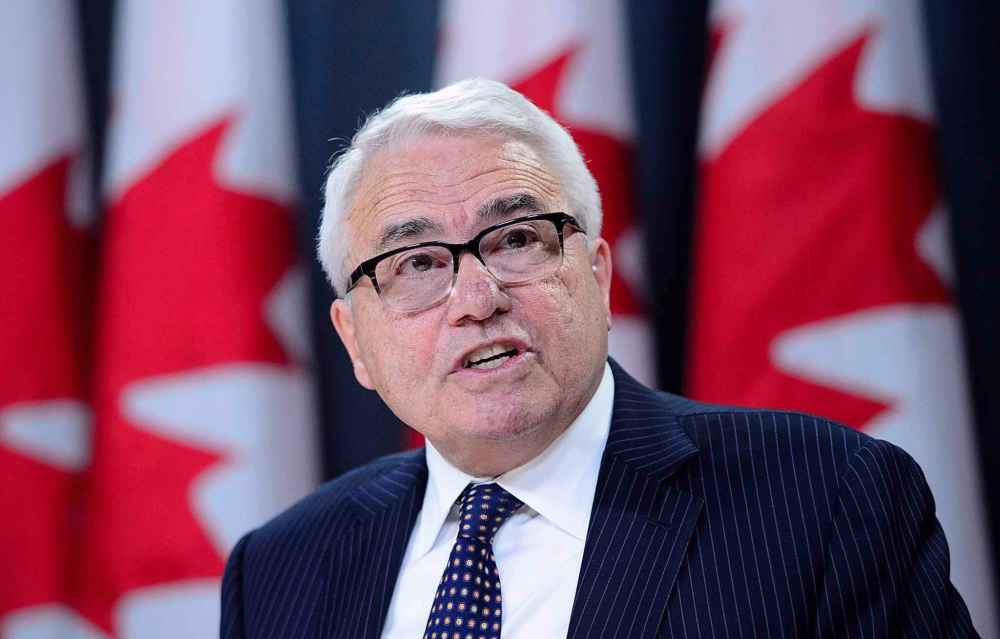
“There is a tremendous appetite for French immersion, not only in Manitoba, but across the country. A significant number of people recognize the importance of French as part of Canadian society,” Raymond Théberge told the Free Press.
“We just don’t have enough teachers. That is one of the biggest issues; without (immersion) teachers, we can’t move forward.”
That’s where, Théberge said, immigration comes in.
A Université de Saint-Boniface graduate, who spent 20 years in various teaching and researching roles at the school, the languages commissioner said attracting international students has been a critical part of both growing the university and the French-speaking population in Manitoba.
Students move from Algeria, Morocco, and Tunisia to study in the city, Noël said, adding he estimates as many as 25 per cent of the students at Université de Saint-Boniface are international.
Théberge said the province’s overarching immigration policies also target French-speaking immigrants, which is helping grow Manitoba’s French-speaking population.
There’s certainly no longer a “homogenous Franco-Manitoba,” said Christian Monnin, president of the Société de la francophonie manitobaine.
“A strong part of those who we represent are francophiles, folks who French is their second language, but also… there’s a tremendous amount of new immigrants — les nouveaux arrivés — that we try to welcome as much as possible.
“La francophonie worldwide is more and more… being reflected in Franco-Manitoban.”
There’s no doubt on the bicentennial of Provencher’s first French lesson in what is now the Manitoba capital, Monnin said the face of Franco-Manitoba looks very different from what it used to be.

He noted the Roman Catholic Church, as many churches, isn’t as “predominant” as it used to be. The community is also making reconciliation with Indigenous and Métis people who were here before them a priority, he added.
But with all the changes, Monnin said Franco-Manitobans still have to remain as vigilant as ever when it comes to standing up for their language.
“What we’ve seen is the schools have stepped up a lot in taking the space the churches may have, like the Franco-Manitoban School Division. Those are the rallying points, those are the community centres, those are where people meet; that’s where the community rallies.”
maggie.macintosh@freepress.mb.ca
Twitter: @macintoshmaggie
Maggie Macintosh
Education reporter
Maggie Macintosh reports on education for the Free Press. Originally from Hamilton, Ont., she first reported for the Free Press in 2017. Read more about Maggie.
Funding for the Free Press education reporter comes from the Government of Canada through the Local Journalism Initiative.
Every piece of reporting Maggie produces is reviewed by an editing team before it is posted online or published in print — part of the Free Press‘s tradition, since 1872, of producing reliable independent journalism. Read more about Free Press’s history and mandate, and learn how our newsroom operates.
Our newsroom depends on a growing audience of readers to power our journalism. If you are not a paid reader, please consider becoming a subscriber.
Our newsroom depends on its audience of readers to power our journalism. Thank you for your support.
Maggie Macintosh
Education reporter
Maggie Macintosh reports on education for the Free Press. Originally from Hamilton, Ont., she first reported for the Free Press in 2017. Read more about Maggie.
Funding for the Free Press education reporter comes from the Government of Canada through the Local Journalism Initiative.
Every piece of reporting Maggie produces is reviewed by an editing team before it is posted online or published in print — part of the Free Press‘s tradition, since 1872, of producing reliable independent journalism. Read more about Free Press’s history and mandate, and learn how our newsroom operates.
Our newsroom depends on a growing audience of readers to power our journalism. If you are not a paid reader, please consider becoming a subscriber.
Our newsroom depends on its audience of readers to power our journalism. Thank you for your support.
Advertisement Advertise With Us
Advertisement Advertise With Us
History
Updated on Monday, July 16, 2018 10:16 PM CDT: Adds photo