

Wage gap ‘outrageous’
Indigenous employees earn far less than colleagues: experts

Advertisement
Read this article for free:
or
Already have an account? Log in here »
To continue reading, please subscribe:
Monthly Digital Subscription
$1 per week for 24 weeks*
- Enjoy unlimited reading on winnipegfreepress.com
- Read the E-Edition, our digital replica newspaper
- Access News Break, our award-winning app
- Play interactive puzzles
*Billed as $4.00 plus GST every four weeks. After 24 weeks, price increases to the regular rate of $19.95 plus GST every four weeks. Offer available to new and qualified returning subscribers only. Cancel any time.
Monthly Digital Subscription
$4.99/week*
- Enjoy unlimited reading on winnipegfreepress.com
- Read the E-Edition, our digital replica newspaper
- Access News Break, our award-winning app
- Play interactive puzzles
*Billed as $19.95 plus GST every four weeks. Cancel any time.
To continue reading, please subscribe:
Add Free Press access to your Brandon Sun subscription for only an additional
$1 for the first 4 weeks*
*Your next subscription payment will increase by $1.00 and you will be charged $16.99 plus GST for four weeks. After four weeks, your payment will increase to $23.99 plus GST every four weeks.
Read unlimited articles for free today:
or
Already have an account? Log in here »
Hey there, time traveller!
This article was published 18/12/2017 (3047 days ago), so information in it may no longer be current.
Encouraging businesses to track the ethnic background of their employees and their hiring methods could help close the wage gap between Indigenous and non-Indigenous workers in Winnipeg, experts say.
While the wage gap between the two groups is smaller than at the provincial and federal levels, 2016 census data show Indigenous women in the city make almost 30 per cent less than non-Indigenous men.
Kate McInturff, a senior researcher at the Canadian Centre for Policy Alternatives, called that “outrageous.”
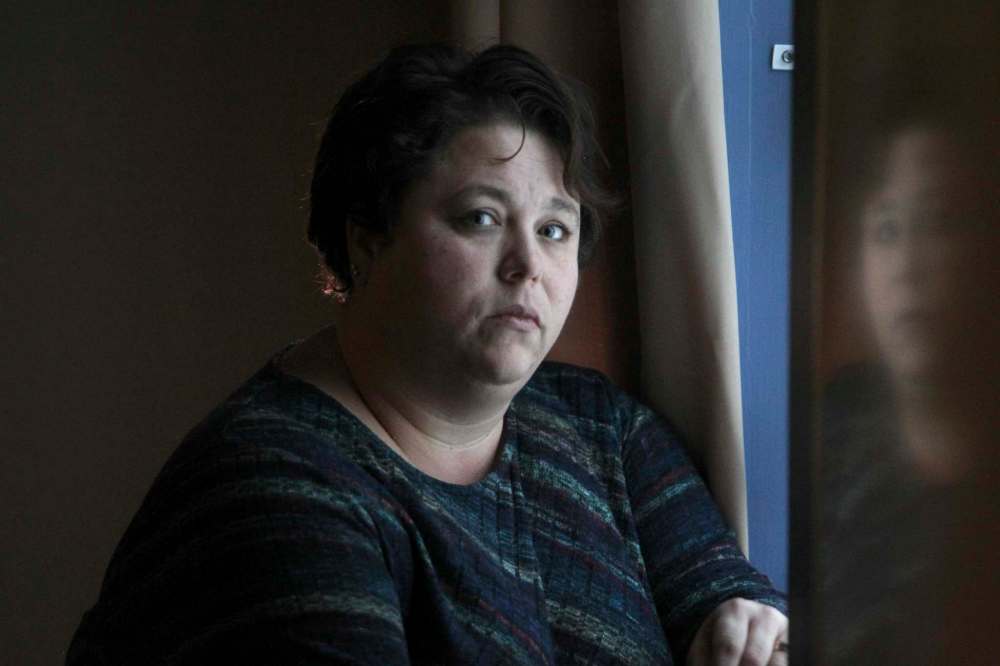
“If you’re an Aboriginal woman, and you’re making 30 per cent less than the guy working next to you, that’s a problem.”
In Winnipeg, which has one of the largest Indigenous populations in Canada, the median employment income for Indigenous people between 25 and 64 is around 10 per cent less than non-Indigenous Winnipeggers. The average salary for an Indigenous worker in the city is $38,962 compared with $43,100 for their non-Indigenous counterpart.
“Around the gender wage gap, we’ve seen a lot of efforts to address women in the workplace and tell women to ‘lean in’ and provide leadership programs and help women enter non-traditional fields, which is fantastic, but I think now is the time to look to employers,” McInturff said.
McInturff critiqued the numbers in a Dec. 13 blog post on the Canadian Women’s Foundation website.
“I called out Winnipeg because I wanted to draw attention to the issue of Indigenous wage gaps in a city that has a significant Indigenous population,” the researcher said.
About one in seven people in Winnipeg identifies as Indigenous, the census data show.
“The reason for the wage gap would be, essentially, systemic racism,” said Carinna Rosales, a co-director at Seed Winnipeg Inc., an agency that helps homeless and low-income Winnipeggers start small businesses.
She said she isn’t surprised by the data because Indigenous people in Winnipeg face many systemic barriers.
Rosales said policy makers fail to understand the barriers different communities face.
“In any workplace, there’ll be opportunity for promotion or advancement, but if there’s any discrimination or any unfair practice, often times it would be against an Indigenous person so they wouldn’t get the promotion,” said Damon Johnston, president of the Aboriginal Council of Winnipeg.
He said there are more than 30 Indigenous program and service agencies, which are charitable not-for-profits that hire the highest number of Indigenous workers in Winnipeg.
“The people working in this sector, including myself, get paid less, even if they’re doing a similar job that exists in government or the private sector,” said Johnston, a member of the Fort William First Nation in Thunder Bay, Ont.
Contributing factors are a high unemployment rate and the fact Indigenous people tend to work in lower-paying jobs because they are undertrained or undereducated, he said.
McInturff said wage gaps tend to close when individuals in the lower-income group become more educated.
“But what I found from the 2011 National Househeld Survey was that actually, for Aboriginal folks, particularly in the private sector, there was still a really large wage gap for folks with a university education,” she said.
She said that’s still the case in 2016.
“When you compare full-time, full-year incomes, you still see gaps for Indigenous folks, for racialized folks, for immigrant folks, and between men and women, so it’s not just a question of differences in level of employment or differences in education levels, it’s discrimination,” she said.
“I don’t think anyone sits in a corner office and thinks, ‘Yes, I’m going to discriminate today,’ but it may be that you’re just not aware that there’s a series of unconscious biases that are causing a cascade of decisions that result in inequality,” McInturff said.
She said it shouldn’t be tough for employers to track who and how they hire, who gets promoted and how they pay workers.
“If you, as an employer, can say, ‘We’ve identified these gaps and we’ve moved to address them,’ I think you’re going to have happier employees, better employee retention and you’re going to be a very attractive workplace,” she said.

Johnston said it comes down to the willingness of employers to make a commitment to address the issue.
He said it’s valuable for a workforce to look like the people in its community because those are their customers.
“These are huge systemic issues, and at some point they come down to a basic thing: the sharing of wealth and how willing we are to share the wealth,” said Johnston.
It’s illegal for employers to discriminate against a person’s nationality, ethnic background, religion, age, sex, gender identity, sexual orientation or disability under Manitoba’s Human Rights Code.
maggie.macintosh@freepress.mb.ca
Maggie Macintosh
Education reporter
Maggie Macintosh reports on education for the Free Press. Originally from Hamilton, Ont., she first reported for the Free Press in 2017. Read more about Maggie.
Funding for the Free Press education reporter comes from the Government of Canada through the Local Journalism Initiative.
Every piece of reporting Maggie produces is reviewed by an editing team before it is posted online or published in print — part of the Free Press‘s tradition, since 1872, of producing reliable independent journalism. Read more about Free Press’s history and mandate, and learn how our newsroom operates.
Our newsroom depends on a growing audience of readers to power our journalism. If you are not a paid reader, please consider becoming a subscriber.
Our newsroom depends on its audience of readers to power our journalism. Thank you for your support.
• The wage gap between non-Indigenous and Indigenous peoples in between the ages of 25 and 64 in Winnipeg is 10 per cent
• That same gap is 16 per cent in Manitoba and 17 per cent in Canada
• Indigenous men make 12 per cent less than non-Indigenous men in Winnipeg
• Indigenous women make 20 per cent less than Indigenous men in Winnipeg
• Indigenous women make 7 per cent less than non-Indigenous women in Winnipeg
• Indigenous women make 33 per cent less than non-Indigenous men in Winnipeg
— source: 2016 census
Maggie Macintosh
Education reporter
Maggie Macintosh reports on education for the Free Press. Originally from Hamilton, Ont., she first reported for the Free Press in 2017. Read more about Maggie.
Funding for the Free Press education reporter comes from the Government of Canada through the Local Journalism Initiative.
Every piece of reporting Maggie produces is reviewed by an editing team before it is posted online or published in print — part of the Free Press‘s tradition, since 1872, of producing reliable independent journalism. Read more about Free Press’s history and mandate, and learn how our newsroom operates.
Our newsroom depends on a growing audience of readers to power our journalism. If you are not a paid reader, please consider becoming a subscriber.
Our newsroom depends on its audience of readers to power our journalism. Thank you for your support.
Advertisement Advertise With Us
Advertisement Advertise With Us
History
Updated on Monday, December 18, 2017 9:54 AM CST: Adds photo