

Wet weather sparks ‘extensive’ mosquito control program

Advertisement
Read this article for free:
or
Already have an account? Log in here »
To continue reading, please subscribe:
Digital Subscription
One year of digital access for only $1.44 a week*
- Enjoy unlimited reading on winnipegfreepress.com
- Read the E-Edition, our digital replica newspaper
- Access News Break, our award-winning app
- Play interactive puzzles
*Billed as $5.77 plus GST every four weeks. After 52 weeks, price increases to the regular rate of $19.95 plus GST every four weeks. Offer available to new and qualified returning subscribers only. Cancel any time.
To continue reading, please subscribe:
Add Free Press access to your Brandon Sun subscription for only an additional
$1 for the first 4 weeks*
- Enjoy unlimited reading on winnipegfreepress.com
- Read the E-Edition, our digital replica newspaper
- Access News Break, our award-winning app
- Play interactive puzzles
*Your next Brandon Sun subscription payment will increase by $1.00 and you will be charged $17.95 plus GST for four weeks. After four weeks, your payment will increase to $24.95 plus GST every four weeks.
Read unlimited articles for free today:
or
Already have an account? Log in here »
Hey there, time traveller!
This article was published 05/05/2022 (1633 days ago), so information in it may no longer be current.
Winnipeggers already exhausted from a lengthy pandemic and an extended winter don’t have to worry about a sudden influx of mosquitoes — just yet.
David Wade, city superintendent of insect control, said the extremely wet weather in April has created a lot of standing water, which will spark an “extensive” larviciding program.
However, he said that doesn’t guarantee a bad local mosquito season.
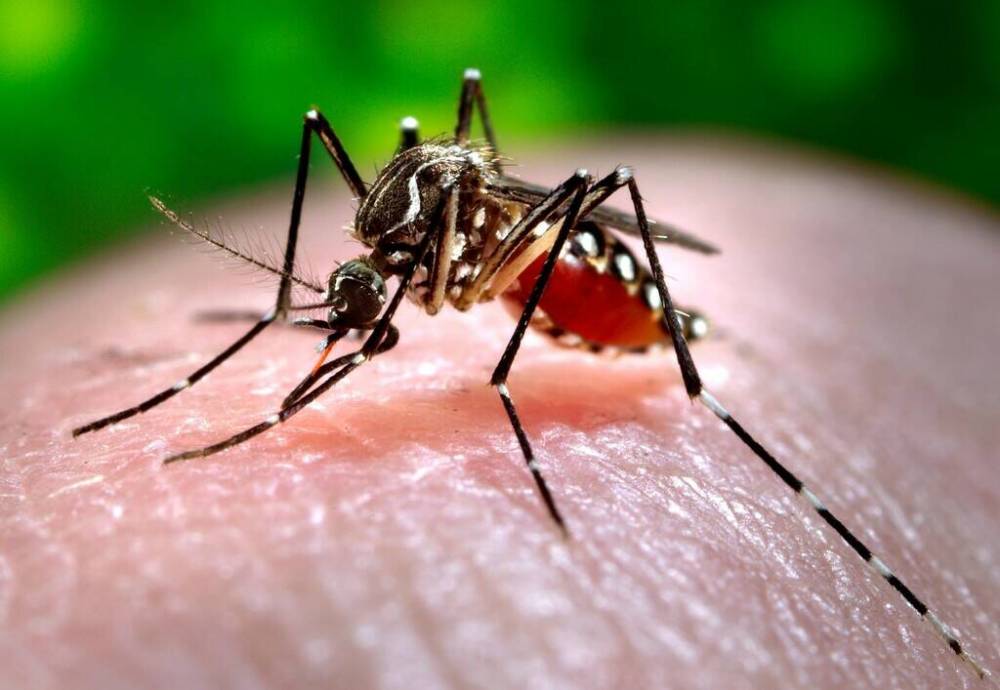
“For this month, things are looking normal, and we’ll have to wait and see what the rainfall patterns are for the rest of the summer to see what kind of season we’re going to have,” said Wade.
“The spring species that are hatching in the water right now are not the nuisance mosquitoes that bother us in July and August. (Those ones) need rainfall events later in the spring and summer to develop.”
He noted excess moisture has saturated soils, so it will take less rain to produce standing water, where mosquitoes breed, at this point.
Wade said unusually cold weather forced the city to delay the start of its larviciding program for about two weeks. Land application began May 1, and helicopter application started Wednesday.
That delay isn’t expected to affect the city’s ability to fight the pests, since the cold conditions also weren’t conducive to increasing the mosquito population.
“We’re just now starting to see some hatching of spring mosquitoes occurring so… we’re on good timing to start treating them,” said Wade.
The city uses biorational (environmentally friendly) products to larvicide and expects to treat more than 70,000 acres of water. The program will carry on into September.
In an average year, larviciding costs the city about $7 million to $8 million, the bulk of its $10-million mosquito control budget.

The city will begin monitoring for adult nuisance mosquitoes Friday. By city policy, fogging with DeltaGard 20EW will only take place as a last resort to control mosquitoes.
In order to fog, city policy and provincial rules dictate the “adulticiding factor analysis” (a form of mosquito risk assessment) must be high, the citywide average trap count must have a minimum of 25 female mosquitoes for two consecutive nights, and one or more quadrants must report at least 100 female adult mosquitoes.
Residents who don’t want their property fogged can apply for a 90-metre buffer zone.
joyanne.pursaga@freepress.mb.ca
Twitter: @joyanne_pursaga
Joyanne is city hall reporter for the Winnipeg Free Press. A reporter since 2004, she began covering politics exclusively in 2012, writing on city hall and the Manitoba Legislature for the Winnipeg Sun before joining the Free Press in early 2020. Read more about Joyanne.
Every piece of reporting Joyanne produces is reviewed by an editing team before it is posted online or published in print — part of the Free Press‘s tradition, since 1872, of producing reliable independent journalism. Read more about Free Press’s history and mandate, and learn how our newsroom operates.
Our newsroom depends on a growing audience of readers to power our journalism. If you are not a paid reader, please consider becoming a subscriber.
Our newsroom depends on its audience of readers to power our journalism. Thank you for your support.
Joyanne is city hall reporter for the Winnipeg Free Press. A reporter since 2004, she began covering politics exclusively in 2012, writing on city hall and the Manitoba Legislature for the Winnipeg Sun before joining the Free Press in early 2020. Read more about Joyanne.
Every piece of reporting Joyanne produces is reviewed by an editing team before it is posted online or published in print — part of the Free Press‘s tradition, since 1872, of producing reliable independent journalism. Read more about Free Press’s history and mandate, and learn how our newsroom operates.
Our newsroom depends on a growing audience of readers to power our journalism. If you are not a paid reader, please consider becoming a subscriber.
Our newsroom depends on its audience of readers to power our journalism. Thank you for your support.
Related Articles
City races to get ahead of potential swarms
Advertisement Advertise With Us
Advertisement Advertise With Us