

WSD shelves subject of late high school start time

Advertisement
Read this article for free:
or
Already have an account? Log in here »
To continue reading, please subscribe:
Monthly Digital Subscription
$1 per week for 24 weeks*
- Enjoy unlimited reading on winnipegfreepress.com
- Read the E-Edition, our digital replica newspaper
- Access News Break, our award-winning app
- Play interactive puzzles
*Billed as $4.00 plus GST every four weeks. After 24 weeks, price increases to the regular rate of $19.95 plus GST every four weeks. Offer available to new and qualified returning subscribers only. Cancel any time.
Monthly Digital Subscription
$4.99/week*
- Enjoy unlimited reading on winnipegfreepress.com
- Read the E-Edition, our digital replica newspaper
- Access News Break, our award-winning app
- Play interactive puzzles
*Billed as $19.95 plus GST every four weeks. Cancel any time.
To continue reading, please subscribe:
Add Free Press access to your Brandon Sun subscription for only an additional
$1 for the first 4 weeks*
*Your next subscription payment will increase by $1.00 and you will be charged $16.99 plus GST for four weeks. After four weeks, your payment will increase to $23.99 plus GST every four weeks.
Read unlimited articles for free today:
or
Already have an account? Log in here »
Hey there, time traveller!
This article was published 10/02/2020 (2231 days ago), so information in it may no longer be current.
The Winnipeg School Division has pressed the snooze button on the subject of later high school start times, after a survey found a slight majority of parents in support of the current 9 a.m. bell.
In the spring, the city’s largest division began gathering perspectives on pushing back start time at its 14 high schools due to scientific studies saying teenagers are biologically wired to stay up later and sleep-in during puberty.
The WSD survey collected 897 responses from community members. Of the respondents, 55 per cent indicated their support for the current start time, while 35 per cent were in favour of a 30- to 60-minute delayed start.
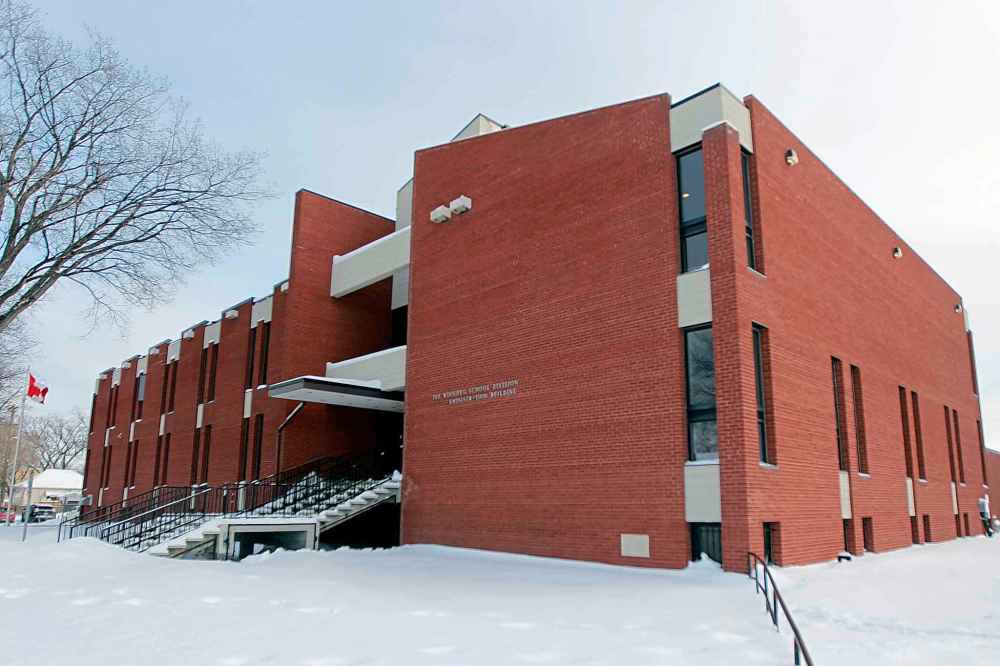
Trustees recently reviewed the findings and concluded no further action will be taken in the near future — in part, because of the low response rate. There are more than 33,000 students in the division; in 2018-19, it numbered 10,869 high school students.
“We just accepted it as information, because we didn’t have enough responses,” said Ward 8 trustee Betty Edel.
Former trustee Cathy Collins first recommended the division consider delaying bells until 9:30 a.m. in 2017, citing growing research on the impact of early start times and their benefit.
At the same time, Collins asked administration to prepare a report on the advantages and disadvantages of implementing a later start.
The advantages the division came up with included evidence schools with later start times have seen academic performance improvements, as well as reduced tardiness and dropout rates.
A 2014 University of Minnesota study of 9,000 teens found 60 per cent of students who started high school at 8:30 a.m. or later slept at least eight hours each school night. Those students also achieved higher grades in math, science, social studies, and English, compared to peers with earlier start times.
Car crashes for teen drivers between 16 and 18 also fell by 70 per cent when a school shifted start times to 8:55 a.m. from 7:35 a.m.
Disadvantages listed in the division document include disruptions to parents’ schedules, challenges with scheduling extracurricular sports and tutoring schedules, and students and families already being “conditioned for early bell.”
The Winnipeg School Division’s community survey results show families were split on whether a later start time could allow teenagers to get more sleep and minimize hectic school mornings or have any impact.
Twenty per cent of respondents raised concerns about reduced time for homework and combined, while 28 per cent reported concerns about a 9:30 a.m. start interfering with either after-school activity or parent work schedules.
The Canadian 24-Hour Movement Guidelines for Children and Youth recommend nine to 11 hours of uninterrupted sleep every night for students aged five to 13. Teenagers are prescribed between eight to 10 hours, with consistent bed and wake-up times — yet, research suggests at least one-third of students aren’t getting enough rest.
Chronic stress, poor mental health, consistent inactivity, screentime and alcohol, caffeine or nicotine consumption before bed can disrupt sleep patterns. So do hormones, which shift circadian rhythms and can delay teenagers’ need to sleep for at least an hour.
Whatever the cause, the implications of not getting enough rest are “insidious,” according to Diana McMillan. An associate professor of nursing at the University of Manitoba, McMillan hears firsthand about the little sleep Winnipeg students are getting when she teaches workshops in local grade schools.
“Not only are they crankier, but they’re also more depressed,” she said, adding lack of sleep can affect everything from cognitive memory to mental health, learning motor skills to weight gain.
A study of start times at 49 Ontario secondary schools published in Sleep Medicine in 2018 found even minor start time delays had a positive impact on “sleep debt” among youth.
A 2016 McGill University study found Canadian students enrolled at schools that started later slept longer and were less likely to report feeling tired in the morning. Researchers concluded students who started at 9:30 a.m. slept an additional 19 minutes longer than those who started at 8:30 a.m.

McMillan said she supports a 9 a.m. bell, but outside the Winnipeg School Division, high schools can start earlier than 8:30 a.m.
“We’re not going to have start times moving to 10 o’clock,” she said, “but I think we need to really look carefully at how early we are having early band practice or early volleyball practice.”
maggie.macintosh@freepress.mb.ca
Twitter: @macintoshmaggie
Funding for the Free Press education reporter comes from the Government of Canada through the Local Journalism Initiative
Maggie Macintosh
Education reporter
Maggie Macintosh reports on education for the Free Press. Originally from Hamilton, Ont., she first reported for the Free Press in 2017. Read more about Maggie.
Funding for the Free Press education reporter comes from the Government of Canada through the Local Journalism Initiative.
Every piece of reporting Maggie produces is reviewed by an editing team before it is posted online or published in print — part of the Free Press‘s tradition, since 1872, of producing reliable independent journalism. Read more about Free Press’s history and mandate, and learn how our newsroom operates.
Our newsroom depends on a growing audience of readers to power our journalism. If you are not a paid reader, please consider becoming a subscriber.
Our newsroom depends on its audience of readers to power our journalism. Thank you for your support.
Maggie Macintosh
Education reporter
Maggie Macintosh reports on education for the Free Press. Originally from Hamilton, Ont., she first reported for the Free Press in 2017. Read more about Maggie.
Funding for the Free Press education reporter comes from the Government of Canada through the Local Journalism Initiative.
Every piece of reporting Maggie produces is reviewed by an editing team before it is posted online or published in print — part of the Free Press‘s tradition, since 1872, of producing reliable independent journalism. Read more about Free Press’s history and mandate, and learn how our newsroom operates.
Our newsroom depends on a growing audience of readers to power our journalism. If you are not a paid reader, please consider becoming a subscriber.
Our newsroom depends on its audience of readers to power our journalism. Thank you for your support.
Advertisement Advertise With Us
Advertisement Advertise With Us