WEATHER ALERT

Bias in media

Please review each article prior to use: grade-level applicability and curricular alignment might not be obvious from the headline alone.
Supreme Court hollows out a landmark law that had protected minority voting rights for 6 decades

Gary Fields And Kim Chandler, The Associated Press 7 minute read Preview

Supreme Court hollows out a landmark law that had protected minority voting rights for 6 decades

Gary Fields And Kim Chandler, The Associated Press 7 minute read Thursday, Apr. 30, 2026

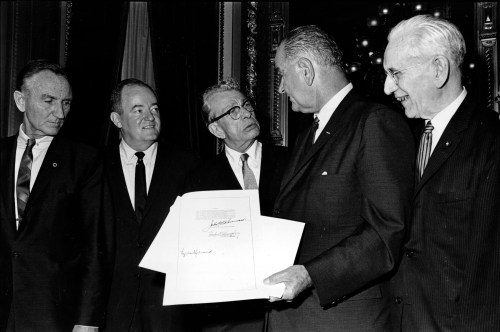
WASHINGTON (AP) — President Lyndon B. Johnson knew the legislation he was about to sign was momentous, one that took courage for certain members of Congress to pass since the vote could cost them their seats.

To honor that, he took the unusual step of leaving the Oval Office and going to Capitol Hill for the signing ceremony. It was Aug. 6, 1965, five months after the “Bloody Sunday” attack on civil rights marchers in Selma, Alabama, gave momentum to the bill that became known as the Voting Rights Act.

In the six decades since, it became one of the most consequential laws in the nation's history, preventing discrimination against minorities at the ballot box and helping to elect thousands of Black and Hispanic representatives at all levels of government.

On Wednesday, the U.S. Supreme Court knocked out a major pillar of the law that had protected against racial discrimination in voting and representation. It was a decision that came more than a decade after the court undermined another key tenet of the law and led to restrictive voting laws in a number of states. Voting and civil rights advocates were left fearful of what lies ahead for minority communities.

Read
Thursday, Apr. 30, 2026

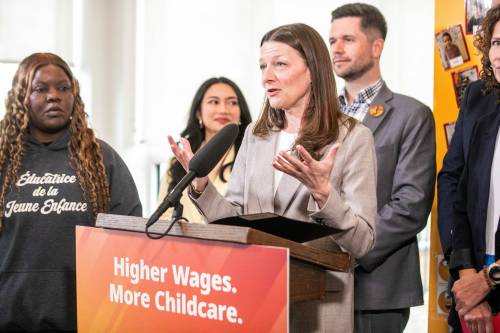
Funding to boost early childhood educators’ pay helps some, not others, longtime workers in field lament

Gabrielle Piché 4 minute read Preview

Funding to boost early childhood educators’ pay helps some, not others, longtime workers in field lament

Gabrielle Piché 4 minute read Monday, Apr. 27, 2026

Although the federal and provincial governments are boosting early childhood educator wages by more than $14 million this year, some who’ve been working in the field a long time are feeling somewhat overlooked.

Read
Monday, Apr. 27, 2026
No Subscription Required

Antisemitism on the rise, becoming normalized, B’nai Brith warns

John Longhurst 3 minute read Preview
No Subscription Required

Antisemitism on the rise, becoming normalized, B’nai Brith warns

John Longhurst 3 minute read Monday, Apr. 27, 2026

Canada is in the throes of a national antisemitism crisis, says B’nai Brith Canada.

The organization’s annual audit of antisemitic incidents reports 6,800 in 2025, 6,248 of which involved online hate.

That is a 9.3 per cent increase over 2024, when the total was 6,219, and it represents the highest total since 1995, said B’nai Brith, the country’s oldest human rights organization dedicated to eradicating racism, antisemitism and hatred.

The biggest spike in antisemitism occurred in 2023, when the number of incidents rose from 2,769 in 2022 to 5,791 following the Oct. 7 Hamas attack on Israel.

Read
Monday, Apr. 27, 2026

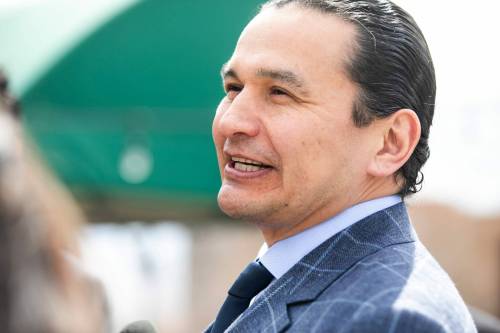
Lots of accolades, little details in Kinew’s proposed social media ban

Dan Lett 5 minute read Preview

Lots of accolades, little details in Kinew’s proposed social media ban

Dan Lett 5 minute read Tuesday, Apr. 28, 2026

Premier Wab Kinew made national news headlines on the weekend when he promised to institute a ban on social media use by youth. Although Ottawa and several other provinces have promised similar efforts, the industrious Manitoba premier beat them to the punch and the accolades.

Read
Tuesday, Apr. 28, 2026

Climate change’s threat to agriculture

Norman Brandson 5 minute read Monday, Apr. 27, 2026

Spring has sprung and young mens’ thoughts turn to … agriculture. Well, at least let’s hope that the young men and women who comprise the government of Manitoba brain trust are turning their thoughts in that direction.

Manitoba Métis president rebukes AFN chief over call for withdrawal of treaty

Alessia Passafiume, The Canadian Press 4 minute read Preview

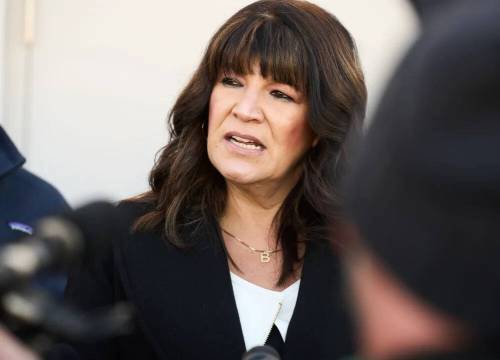
Manitoba Métis president rebukes AFN chief over call for withdrawal of treaty

Alessia Passafiume, The Canadian Press 4 minute read Saturday, Apr. 25, 2026

OTTAWA - The president of the Manitoba Métis Federation is accusing the Assembly of First Nations of misleading people about legislation that would codify the federation's right to self-government.

On Thursday, Assembly of First Nations National Chief Cindy Woodhouse Nepinak took aim at a first-of-its-kind treaty between the federal government and the Manitoba Métis Federation, which came up for debate in the House of Commons on Wednesday.

Woodhouse Nepinak said in a media statement the legislation threatens to create a hierarchy of rights, with First Nations at the bottom.

“This piece of legislation must not proceed until First Nations voices’ are heard and our rights are respected, protected and upheld,” Woodhouse Nepinak wrote, saying Bill C-21 was developed without consultations with First Nations, despite it having implications for First Nations lands in Manitoba "and beyond."

Read
Saturday, Apr. 25, 2026
No Subscription Required

Stirring oratorio pays homage to Indigenous veterans

Conrad Sweatman 5 minute read Preview
No Subscription Required

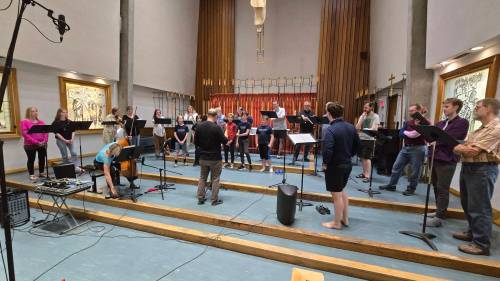
Stirring oratorio pays homage to Indigenous veterans

Conrad Sweatman 5 minute read Friday, Apr. 24, 2026

‘My war wasn’t in Europe. My war was when I came back to Canada and I couldn’t vote until 1962,” says composer Andrew Balfour. He’s paraphrasing a quote by an Indigenous veteran and the inspiration for his oratorio notinikew (i went to war).

Read
Friday, Apr. 24, 2026

Shortage of housing for Indigenous seniors in city raising concerns ahead of northern flood, fire evacuations

Carol Sanders 4 minute read Preview

Shortage of housing for Indigenous seniors in city raising concerns ahead of northern flood, fire evacuations

Carol Sanders 4 minute read Thursday, Apr. 23, 2026

A small group of women elders is expressing concerns about a lack of urban housing for Indigenous seniors, warning the crisis will only worsen as flood and wildfire evacuations uproot more from their communities.

Read
Thursday, Apr. 23, 2026

City failed to read the room before ditching Sals

Tom Brodbeck 5 minute read Preview

City failed to read the room before ditching Sals

Tom Brodbeck 5 minute read Thursday, Apr. 23, 2026

If ever there were a moment to rethink how governments award contracts, this would be it.

Read
Thursday, Apr. 23, 2026
No Subscription Required

Children’s rights in education

Shannon D.M. Moore and Melanie Janzen 5 minute read Thursday, Apr. 23, 2026

On April 17, 1982, the Canadian Charter of Rights and Freedoms came into force, outlining the rights and freedoms that all Canadians are entitled to within our country.

As we consider the Charter as the anniversary passes for another year, we have an opportunity to be reminded that all of the rights outlined in the Charter apply to every Canadian citizen, including children and youth. After all, children are not citizens-in-waiting; they are already holders of rights. Children and youth are a particularly distinct group of citizens whose rights need to be safeguarded. This assertion is especially pertinent with the rise of the “parental rights” movement, which falsely positions the rights of parents over the rights of children. To be clear, the Charter does not give parents special rights over any other rights holder.

In fact, “parental rights” are not explicitly named in the Canadian Charter of Rights and Freedoms. The Charter does name fundamental freedoms (like freedom of conscience, religion and expression) and life, liberty and security of the person. These rights have been interpreted by courts to include a parent’s right to make decisions regarding the care and education of their children.

However, these rights have limits. The rights of parents need to be balanced against children’s rights and their best interests. Parental decision making is also subject to the government’s obligation to protect children and uphold their rights.