WEATHER ALERT

Bias in media

Please review each article prior to use: grade-level applicability and curricular alignment might not be obvious from the headline alone.

Crossing the floor: crossing your voters?

David McLaughlin 5 minute read Preview

Crossing the floor: crossing your voters?

David McLaughlin 5 minute read Saturday, Apr. 18, 2026

If dictatorships are a one-way street, then democracies at least promise two-way traffic, so the saying goes. But what if the two-way traffic involves crossing the floor? Does that undermine democracy?

Read
Saturday, Apr. 18, 2026

Hiring processes, expectations, communication out of alignment in slow market

Tory McNally 6 minute read Saturday, Apr. 18, 2026

The unemployment rate is increasing across Canada. Which should mean there are more people looking for work, but if you ask most employers, it certainly does not feel easier to find the right person.
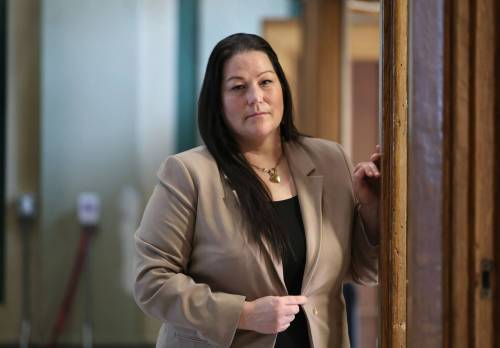
Supervised drug consumption site will be grounded in culture, compassion: facility’s leader

Scott Billeck 7 minute read Preview

Supervised drug consumption site will be grounded in culture, compassion: facility’s leader

Scott Billeck 7 minute read Friday, Apr. 17, 2026

Winnipeg’s first supervised consumption site is being designed as a culturally grounded health space where people struggling with addiction will be met with familiarity, dignity and support from the moment they enter.

Read
Friday, Apr. 17, 2026
No Subscription Required

False information, misleading images rife in Manitoba-based AI-driven 'news' service

Eva Wasney 19 minute read Preview
No Subscription Required

False information, misleading images rife in Manitoba-based AI-driven 'news' service

Eva Wasney 19 minute read Friday, May. 1, 2026

In a rapidly evolving media landscape, the rise of Boring News, an AI-generated news outlet, highlights the growing tension between technology and journalism. While it aims to fill local news gaps across Canada, the outlet is plagued by inaccuracies and ethical concerns, prompting debate on the future of credible reporting.

Read
Friday, May. 1, 2026
No Subscription Required

Why claims of sentience can’t guide black bear policy

Mark Hall 5 minute read Preview
No Subscription Required

Why claims of sentience can’t guide black bear policy

Mark Hall 5 minute read Thursday, Apr. 16, 2026

The modern debate over sustainable-use bear hunting often hinges on a few claims including bears are sentient, therefore humans have no moral right to hunt them.

It’s a powerful emotional argument, but it collapses under scientific scrutiny and ecological reality. Sentience is real. Bears and other animals do feel.

But the leap from “animals feel” to “humans must never hunt” is not supported by biology, ethics or conservation science. If we want wildlife policy that protects species and ecosystems, we need to separate what sentience is from what animal rights activists want it to mean.

In scientific terms, sentience refers to the capacity to feel or perceive, not the ability to make moral judgments.

Read
Thursday, Apr. 16, 2026
No Subscription Required

EPA may ease regulation of chemical plastic recycling, and environmentalists worry

Jennifer Mcdermott, The Associated Press 7 minute read Preview
No Subscription Required

EPA may ease regulation of chemical plastic recycling, and environmentalists worry

Jennifer Mcdermott, The Associated Press 7 minute read Saturday, May. 9, 2026

The Environmental Protection Agency is reconsidering whether facilities that recycle plastic chemically should be held to the same strict air pollution standards as incinerators.

The possible change is alarming environmental advocates who say it would lead to more dangerous pollution spewing into communities, with fewer or no checks at the federal level. The plastics industry disputes that, saying it would clear up confusion while still controlling emissions.

The world is pumping millions of tons of plastic pollution into the environment every year. While dozens of countries and many environmental groups have urged caps on production, industry and several big oil-producing countries have resisted, arguing instead for improvements in reuse and recycling.

Chemical recycling uses heat or chemicals to break down plastics. The main method, a process known as pyrolysis, has long been regulated as incineration by the Clean Air Act. The EPA limits emissions from incinerators of nine air pollutants, including toxic particulates, heavy metals and dioxins.

Read
Saturday, May. 9, 2026
No Subscription Required

‘Just staggering’: city’s homelessness crisis worsening, new data reveals

Scott Billeck 6 minute read Preview
No Subscription Required

‘Just staggering’: city’s homelessness crisis worsening, new data reveals

Scott Billeck 6 minute read Tuesday, Apr. 14, 2026

Winnipeg’s homelessness crisis is accelerating, not easing, as new data released Monday shows more people are falling into homelessness than are finding a way out.

Read
Tuesday, Apr. 14, 2026
No Subscription Required

Few food innovations as polarizing as genetic modification

Laura Rance 4 minute read Saturday, Apr. 11, 2026

Most of us have been eating foods derived from genetically modified crops for a generation or so, and so far, none of the ills attributed to modern food systems have been traced back to their use.

Except, perhaps our propensity towards overeating.

Since their introduction in the mid-1990s, genetically modified crops have taken over nearly half of the global area sown to soybeans, canola and corn.

The foods from these varieties, which are most often genetically modified to allow farmers to use herbicides that kill weeds but not the crop, are the same as traditional varieties in every measurable way.

No Subscription Required

Not consulted on Clear Lake motorboating: Chief

Connor McDowell 5 minute read Preview
No Subscription Required

Not consulted on Clear Lake motorboating: Chief

Connor McDowell 5 minute read Saturday, Apr. 11, 2026

The chief of Keeseekoowenin Ojibway First Nation says he did not consent to the return of motorboats at Clear Lake.

Read
Saturday, Apr. 11, 2026
No Subscription Required

Liberals set to debate age restrictions for social media

Kyle Duggan, The Canadian Press 4 minute read Preview
No Subscription Required

Liberals set to debate age restrictions for social media

Kyle Duggan, The Canadian Press 4 minute read Saturday, May. 2, 2026

MONTREAL - Liberal party members will soon grapple with the question of whether children and young teens should be barred from accessing social media accounts for platforms such as TikTok, Instagram, Reddit and YouTube.

The policy resolution is expected to hit the floor at the Liberal party policy convention in Montreal for debate and a vote on Saturday.

Jonathan Nuss, the head of the Outremont Liberal riding association, is one of the main proponents of a resolution calling on the party to ensure social media platforms limit user accounts to Canadians aged 16 and older.

The Montreal lawyer and father of two young children said he wants this resolution to kick-start a national debate on addictive technologies and the harmful effects social media can have on young children — a debate that's already happening among parents across the country.

Read
Saturday, May. 2, 2026