WEATHER ALERT

Misinformation, disinformation and malinformation: how to determine what's real

Please review each article prior to use: grade-level applicability and curricular alignment might not be obvious from the headline alone.

Fewer than one in five Manitobans are sure they know fabricated online content when they see it: survey

Ben Waldman 5 minute read Preview

Fewer than one in five Manitobans are sure they know fabricated online content when they see it: survey

Ben Waldman 5 minute read Tuesday, Jan. 6, 2026

When Weekly World News stories about a half-boy, half-bat lined supermarket checkout lanes in the 1990s, most consumers — including Probe Research partner Curtis Brown — could readily, easily and confidently identify the eye-grabbing tabloid reports as false.

“When it comes to (content generated by) AI, people have a bit less confidence,” says Brown. “Sometimes it’s very obviously so-called AI slop — like a historical figure talking about something contemporary. The last couple of months I’ve seen a lot of videos of JFK talking about what a fool his nephew is.”

Even if a quick Google search to note RFK Jr. was nine when his uncle was assassinated in 1963 — marking such videos as debris in an artificial intelligence mudslide — new media literacy polling conducted by Probe for the Free Press reveals that only 18 per cent of Manitobans feel very confident that they can identify whether video footage is “fake or AI-generated.”

Of the 1,000 Manitobans randomly surveyed by Probe between Nov. 25 and Dec. 10, 13 per cent believed that they’d personally shared video, images or text on social media that they didn’t realize was fake.

Read
Tuesday, Jan. 6, 2026

Open AI, Microsoft face lawsuit over ChatGPT’s alleged role in Connecticut murder-suicide

Dave Collins, Matt O'brien And Barbara Ortutay, The Associated Press 6 minute read Preview

Open AI, Microsoft face lawsuit over ChatGPT’s alleged role in Connecticut murder-suicide

Dave Collins, Matt O'brien And Barbara Ortutay, The Associated Press 6 minute read Saturday, Dec. 13, 2025

SAN FRANCISCO (AP) — The heirs of an 83-year-old Connecticut woman are suing ChatGPT maker OpenAI and its business partner Microsoft for wrongful death, alleging that the artificial intelligence chatbot intensified her son's “paranoid delusions” and helped direct them at his mother before he killed her.

Police said Stein-Erik Soelberg, 56, a former tech industry worker, fatally beat and strangled his mother, Suzanne Adams, and killed himself in early August at the home where they both lived in Greenwich, Connecticut.

The lawsuit filed by Adams' estate on Thursday in California Superior Court in San Francisco alleges OpenAI “designed and distributed a defective product that validated a user’s paranoid delusions about his own mother.” It is one of a growing number of wrongful death legal actions against AI chatbot makers across the country.

“Throughout these conversations, ChatGPT reinforced a single, dangerous message: Stein-Erik could trust no one in his life — except ChatGPT itself," the lawsuit says. “It fostered his emotional dependence while systematically painting the people around him as enemies. It told him his mother was surveilling him. It told him delivery drivers, retail employees, police officers, and even friends were agents working against him. It told him that names on soda cans were threats from his ‘adversary circle.’”

Read
Saturday, Dec. 13, 2025
No Subscription Required

Tools we use to determine what to trust

Calvin Brown 5 minute read Thursday, Dec. 11, 2025

I rarely use Facebook, but I recently took a brief look. I was reminded how annoying it is when I was presented with numerous posts, photos and videos from people I don’t know. One caught my attention. It was a video of three adult male moose, all with huge antlers, attacking a colourfully decorated bus. Could the video possibly be real?

Curiously, it reminded me of a sentence in the memorandum of understanding between Prime Minister Mark Carney and Alberta Premier Danielle Smith. It says, “Canada and Alberta remain committed to achieving net zero greenhouse gas emissions by 2050.” Is that a true statement?

How can I know if either is true? For the moose video, I could try examining it carefully for oddities. For the politicians’ assertion, I could delve into their past statements about climate change. But that’s rather impractical. Given the deluge of information I encounter every day, I couldn’t possibly research every statement to check its veracity. What should I do?

I could use a common tactic. I could rely on shortcuts.

Scams, threats and fake opportunities: stay sharp

Editorial 4 minute read Preview

Scams, threats and fake opportunities: stay sharp

Editorial 4 minute read Tuesday, Nov. 25, 2025

Hopefully, this editorial is not coming to you as a posthumous publication.

And yes, we’re backing into this editorial a bit. (In newspaper terms, burying the lede. Hopefully, not burying its author.

But here goes: this is your regular reminder that e-mail scams abound, and come in all shapes, sizes, and threats of danger, most often imaginary. They put the pressure on with the severity of dangers you face, and urge you to act quickly.

Don’t.

Read
Tuesday, Nov. 25, 2025
No Subscription Required

The inconvenient truth: Thomas King’s admission he isn’t Cherokee hits hard

Niigaan Sinclair 5 minute read Preview
No Subscription Required

The inconvenient truth: Thomas King’s admission he isn’t Cherokee hits hard

Niigaan Sinclair 5 minute read Monday, Nov. 24, 2025

Intentionally or not, the real-life consequences of King’s story is that his inability to find out the truth of his own identity, which apparently wasn’t hard for others, meant Canadians were duped, Indigenous peoples were marginalized, and all of us are left to ask a lot of questions.

Read
Monday, Nov. 24, 2025
No Subscription Required

Child advocates urge government to bring back online harms legislation

Anja Karadeglija, The Canadian Press 4 minute read Preview
No Subscription Required

Child advocates urge government to bring back online harms legislation

Anja Karadeglija, The Canadian Press 4 minute read Thursday, Dec. 4, 2025

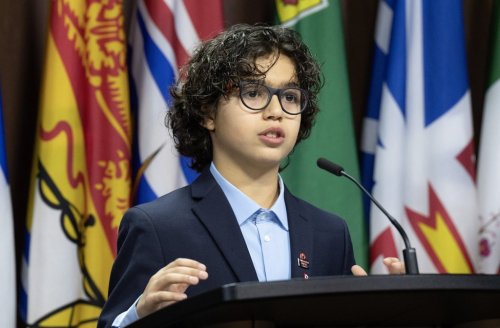
OTTAWA - The dangers children face online constitute a national emergency, a coalition of child advocates and medical organizations said Thursday as they called for the federal government to take action.

"Unlike every other industry that affects children, from cars to pharmaceuticals to toys to food safety, the tech industry has been allowed to self-regulate with tragic consequences," said Andrea Chrysanthou, chair of the board for Children First Canada, at a press conference on Parliament Hill.

The advocates say children are being exploited, extorted, bullied — and in some cases, kids have died as a result of online harms.

Dr. Margot Burnell, president of the Canadian Medical Association, said doctors see the negative health impacts of social media use firsthand.

Read
Thursday, Dec. 4, 2025

A Kansas county agrees to pay $3 million and apologize over a raid on a small-town newspaper

John Hanna And Heather Hollingsworth, The Associated Press 6 minute read Preview

A Kansas county agrees to pay $3 million and apologize over a raid on a small-town newspaper

John Hanna And Heather Hollingsworth, The Associated Press 6 minute read Wednesday, Nov. 12, 2025

TOPEKA, Kan. (AP) — A rural Kansas county has agreed to pay a little more than $3 million and apologize over a law enforcement raid on a small-town weekly newspaper in August 2023 that sparked an outcry over press freedom.

Marion County sheriff's officers were involved in the raid on the Marion County Record and helped draft search warrants used by Marion city police to enter the newspaper's offices, the publisher's home and the home of a local city council member.

“They intentionally wanted to harass us for reporting the news, and you’re not supposed to do that in a democracy,” the editor and publisher, Eric Meyer, said Tuesday. He added he hoped the payment was large enough to discourage similar actions against other news organizations in the future.

The raid prompted five federal lawsuits against the county, the city of Marion and local officials. Meyer's 98-year-old mother Joan, the paper's co-owner, died of a heart attack the next day, something he blames on the stress of the raid.

Read
Wednesday, Nov. 12, 2025

Top BBC bosses resign after criticism of the broadcaster’s editing of a Trump speech

The Associated Press 5 minute read Preview

Top BBC bosses resign after criticism of the broadcaster’s editing of a Trump speech

The Associated Press 5 minute read Monday, Nov. 10, 2025

LONDON (AP) — The head of the BBC and the British broadcaster's top news executive both resigned Sunday after criticism of the way the organization edited a speech by U.S. President Donald Trump.

The BBC said Director-General Tim Davie and news CEO Deborah Turness had both decided to leave the corporation.

Britain’s publicly funded national broadcaster has been criticized for editing a speech Trump made on Jan. 6, 2021, before protesters attacked the Capitol in Washington.

Critics said the way the speech was edited for a BBC documentary last year was misleading and cut out a section where Trump said he wanted supporters to demonstrate peacefully.

Read
Monday, Nov. 10, 2025
No Subscription Required

Winnipeg students develop critical aptitude essential for navigating media landscape

Melissa Martin 14 minute read Preview
No Subscription Required

Winnipeg students develop critical aptitude essential for navigating media landscape

Melissa Martin 14 minute read Friday, Oct. 31, 2025

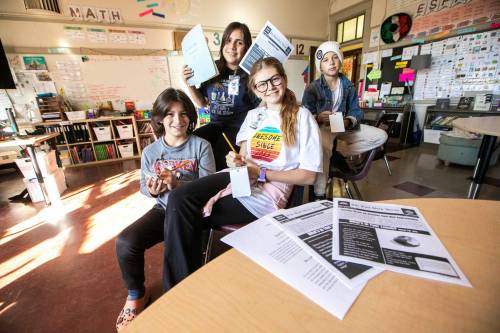
One day in the fall of 2024, two of Lily Godinez Goodman’s Grade 5 students came to her with a question: Why didn’t their Earl Grey School have a newspaper, they wondered — and if they started one, would she serve as editor-in-chief?

Read
Friday, Oct. 31, 2025
No Subscription Required

Advocacy in the age of Wi-Fi

Bella Luna Zuniga 5 minute read Thursday, Oct. 30, 2025

When the internet first arrived in the mid-1990s, it screeched. Literally.

It screamed its way into our homes through the telephone lines, a metallic cry that sounded like the future forcing its way through. We waited through the static, convinced that life was about to get easier. People said it would save us time, let us work from home and give us more hours with our families.

No one mentioned that it would also move into our bedrooms, our pockets and our dreams. No one could have imagined that it would change how we fight, how we march, how we plead for justice. That the fight for justice itself would become a digital labyrinth where truth moves slowly and attention moves fast.

Back then, when a heroine from a popular early-2000s television show was dumped with nothing but a handwritten note, it became a cultural tragedy. There was nothing noble about writing your cowardice on a Post-it. A few years later, a company fired hundreds by email and it made national news. Today, we “quietly quit” through apps without blinking, edit our grief into reels, add the music the app suggests and call it closure.