Misinformation, disinformation and malinformation: how to determine what's real

Please review each article prior to use: grade-level applicability and curricular alignment might not be obvious from the headline alone.

No Subscription Required

The pitfalls of increased use of AI in policing

Christopher J. Schneider 5 minute read Tuesday, Apr. 21, 2026

As a part of its body-worn camera program, the RCMP recently completed a pilot project using artificial intelligence to draft reports. The AI-generated reports are created from audio captured from officers’ body cameras. A report can be drafted in mere seconds. The pilot, which ran for about six months and concluded in January, occurred across eight detachments in British Columbia generating nearly 800 reports.

Harnessing AI to write police reports is replete with some serious and unresolved concerns and must be immediately discontinued.

It isn’t even entirely clear why police need to use AI in the first place.

The primary justification for the expanding use of AI to generate police reports across law enforcement is to free police from the administrative burden of having to write reports in the first place. The idea is that officers could do more relevant police work, presumably patrol work.
No Subscription Required

Former minister Catherine McKenna blasts the heads of Canadian oil companies

Stéphane Blais, The Canadian Press 5 minute read Preview
No Subscription Required

Former minister Catherine McKenna blasts the heads of Canadian oil companies

Stéphane Blais, The Canadian Press 5 minute read Monday, May. 11, 2026

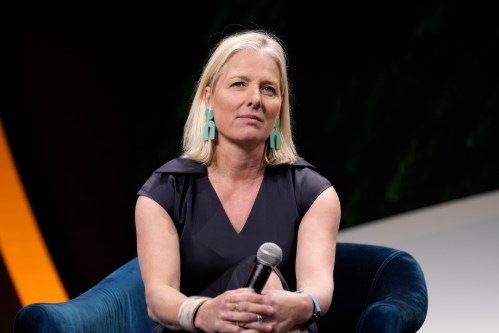
MONTRÉAL - Former environment minister Catherine McKenna says the leaders of Canada's oil industry are figures close to American President Donald Trump who are "taking us for fools" and putting both the economy and environment at risk.

Canada's official greenhouse gas inventory was published last week. It showed that in 2024, oil and gas production was the only sector in the country to have increased its greenhouse gas emissions.

"In Canada, we expect, Canadians expect everyone to step up and do their parts. But instead, we have oil and gas, which is largely foreign-owned, largely U.S.-owned, who aren't doing their part. All they're doing is increasing our emissions and demanding subsidies," McKenna said in an interview while at Montreal's climate summit last week.

She adds that oil companies are "demanding that Canadian taxpayers pay the bill for cleaning up the pollution they cause and building pipelines they won’t risk their own money on."

Read
Monday, May. 11, 2026
No Subscription Required

Credible journalism takes time, effort, human intelligence

Jen Zoratti 5 minute read Saturday, Apr. 18, 2026

There’s an idiom in journalism: the goat must be fed. The proverbial goat has changed over the years. It used to be the next day’s paper. Then it was the 24-hour news cycle. Then the 12-hour news cycle. Then it was websites.

No Subscription Required

Long-term data lacking about the religiosity of Gen Z

John Longhurst 5 minute read Preview
No Subscription Required

Long-term data lacking about the religiosity of Gen Z

John Longhurst 5 minute read Wednesday, Apr. 22, 2026

There’s been lots of media attention recently about the idea of youth religious revival — that young people, especially those from Gen Z, are flocking to church.

It all started in April last year, when the Bible Society in the United Kingdom shared the results of a poll it commissioned from YouGov, a prominent online marketing organization. That poll showed a 16 per cent increase in church attendance in the U.K. by young people ages 18-24.

This was, the Bible Society contended, “dramatic” proof of a “quiet revival” among youth in that country.

Skeptics quickly pushed back. The reason it was “quiet,” they said, was because there was no other poll, including those done by the U.K. Anglican and Catholic churches themselves, that had found anything like the Bible Society’s results. Not only that, they pointed out that anyone who visited most any church on a Sunday morning could see for themselves how few young people were in attendance.

Read
Wednesday, Apr. 22, 2026

Indigenous Winnipeggers undercounted, underserved: report

Scott Billeck 4 minute read Preview

Indigenous Winnipeggers undercounted, underserved: report

Scott Billeck 4 minute read Friday, Apr. 17, 2026

Winnipeg’s First Nations and Métis population may be vastly undercounted, raising questions about how governments fund services for Indigenous communities, a new report says.

The new estimate, contained in the “Our Health Counts First Nations & Métis Winnipeg” report, says the population could be four times larger than what was recorded by the 2021 census. The report pegs the population of First Nations and Métis people in Winnipeg at between 248,000 and 379,000 people based on its survey of 1,090 adults and 306 children, most of whom identified as First Nations or Métis.

In contrast, the 2021 census recorded 90,000 Indigenous people in the city.

The study was produced by a partnership of the Aboriginal Health and Wellness Centre of Winnipeg, the Well Living House Action Research Centre, and Indigenous health organizations.

Read
Friday, Apr. 17, 2026
No Subscription Required

False information, misleading images rife in Manitoba-based AI-driven 'news' service

Eva Wasney 19 minute read Preview
No Subscription Required

False information, misleading images rife in Manitoba-based AI-driven 'news' service

Eva Wasney 19 minute read Friday, May. 1, 2026

In a rapidly evolving media landscape, the rise of Boring News, an AI-generated news outlet, highlights the growing tension between technology and journalism. While it aims to fill local news gaps across Canada, the outlet is plagued by inaccuracies and ethical concerns, prompting debate on the future of credible reporting.

Read
Friday, May. 1, 2026
No Subscription Required

Why claims of sentience can’t guide black bear policy

Mark Hall 5 minute read Preview
No Subscription Required

Why claims of sentience can’t guide black bear policy

Mark Hall 5 minute read Thursday, Apr. 16, 2026

The modern debate over sustainable-use bear hunting often hinges on a few claims including bears are sentient, therefore humans have no moral right to hunt them.

It’s a powerful emotional argument, but it collapses under scientific scrutiny and ecological reality. Sentience is real. Bears and other animals do feel.

But the leap from “animals feel” to “humans must never hunt” is not supported by biology, ethics or conservation science. If we want wildlife policy that protects species and ecosystems, we need to separate what sentience is from what animal rights activists want it to mean.

In scientific terms, sentience refers to the capacity to feel or perceive, not the ability to make moral judgments.

Read
Thursday, Apr. 16, 2026
No Subscription Required

EPA may ease regulation of chemical plastic recycling, and environmentalists worry

Jennifer Mcdermott, The Associated Press 6 minute read Preview
No Subscription Required

EPA may ease regulation of chemical plastic recycling, and environmentalists worry

Jennifer Mcdermott, The Associated Press 6 minute read Saturday, May. 9, 2026

The Environmental Protection Agency is reconsidering whether facilities that recycle plastic chemically should be held to the same strict air pollution standards as incinerators.

The possible change is alarming environmental advocates who say it would lead to more dangerous pollution spewing into communities, with fewer or no checks at the federal level. The plastics industry disputes that, saying it would clear up confusion while still controlling emissions.

The world is pumping millions of tons of plastic pollution into the environment every year. While dozens of countries and many environmental groups have urged caps on production, industry and several big oil-producing countries have resisted, arguing instead for improvements in reuse and recycling.

Chemical recycling uses heat or chemicals to break down plastics. The main method, a process known as pyrolysis, has long been regulated as incineration by the Clean Air Act. The EPA limits emissions from incinerators of nine air pollutants, including toxic particulates, heavy metals and dioxins.

Read
Saturday, May. 9, 2026
No Subscription Required

‘Just staggering’: city’s homelessness crisis worsening, new data reveals

Scott Billeck 6 minute read Preview
No Subscription Required

‘Just staggering’: city’s homelessness crisis worsening, new data reveals

Scott Billeck 6 minute read Tuesday, Apr. 14, 2026

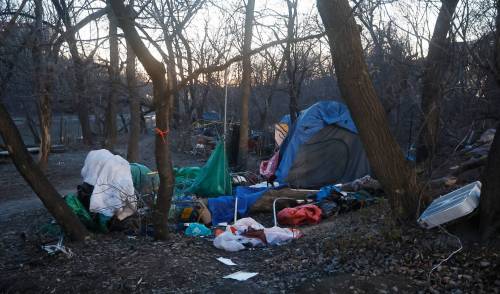
Winnipeg’s homelessness crisis is accelerating, not easing, as new data released Monday shows more people are falling into homelessness than are finding a way out.

Read
Tuesday, Apr. 14, 2026
No Subscription Required

The need for regulation in a digital age

Andrew Lodge 5 minute read Monday, Apr. 13, 2026

Mark Zuckerberg, CEO of Meta and co-founder of Facebook, has been under increased scrutiny in past months after being forced to testify in a Los Angeles courtroom over allegations that Meta-owned Instagram is designed to be addictive, especially when it comes to kids.