

The Blue Jays’ long-term plans haven’t changed despite the pandemic
Advertisement
Read this article for free:
or
Already have an account? Log in here »
To continue reading, please subscribe:
Digital Subscription
One year of digital access for only $1.44 a week*
- Enjoy unlimited reading on winnipegfreepress.com
- Read the E-Edition, our digital replica newspaper
- Access News Break, our award-winning app
- Play interactive puzzles
*Billed as $5.77 plus GST every four weeks. After 52 weeks, price increases to the regular rate of $19.95 plus GST every four weeks. Offer available to new and qualified returning subscribers only. Cancel any time.
To continue reading, please subscribe:
Add Free Press access to your Brandon Sun subscription for only an additional
$1 for the first 4 weeks*
- Enjoy unlimited reading on winnipegfreepress.com
- Read the E-Edition, our digital replica newspaper
- Access News Break, our award-winning app
- Play interactive puzzles
*Your next Brandon Sun subscription payment will increase by $1.00 and you will be charged $17.95 plus GST for four weeks. After four weeks, your payment will increase to $24.95 plus GST every four weeks.
Read unlimited articles for free today:
or
Already have an account? Log in here »
Hey there, time traveller!
This article was published 23/03/2021 (2040 days ago), so information in it may no longer be current.
The last 12 months have been unlike any the Blue Jays have faced. But despite the uncertainty and the changing landscape that comes with operating during a pandemic, the overall vision has not changed.
The Jays have been on record for years saying that, when the time was right, they would spend to augment an ambitious rebuild with the goal of turning the franchise into a perennial contender. The investments weren’t scheduled to come all at once but in stages that would be aligned with the progression of the club.
The influx of cash began two years ago with the signing of Hyun-Jin Ryu. It continued this winter through a series of high-profile adds, which included signing George Springer to the largest contract in franchise history. If all goes well in 2021, additional money will be available from ownership to raise payroll even higher.
What’s remarkable is that the increased operating expenses come at a time when revenue, at least once rising salaries are factored in, has never been lower. The Jays spent last season in Buffalo, this year they’re expected to be away from Toronto until at least July, and it’s anyone’s guess when they will be able to start packing Rogers Centre to its fullest capacity.
There will be operating losses, that much is a given. One could easily argue the drop in revenue should be mitigated by the soaring valuations of professional sports teams, but most individual owners prefer not to view things that way. They want to make a profit each year, or at the very least, limit the losses. Nothing is more important than their bottom line, not even winning.
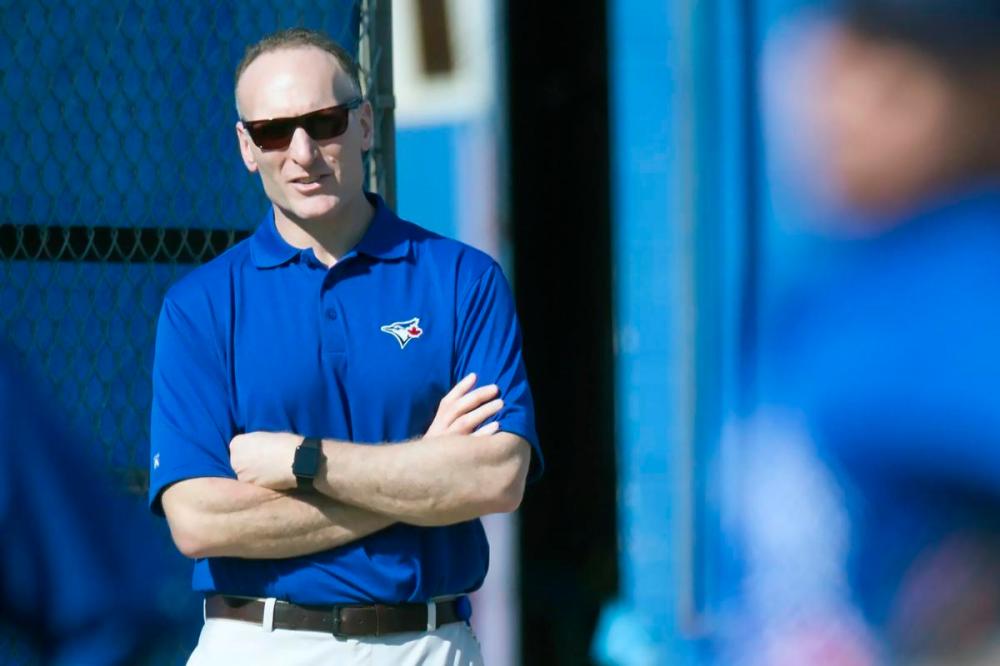
It’s currently a different scenario with the Blue Jays and ownership group Rogers Communications. President Mark Shapiro sold his bosses on a long-term vision, one that has been outlined verbally through the media and via presentations at the board level. The thought process: Invest now and the payout will come later. The coronavirus and ensuing economic downturn had little to no impact on that stated mission.
“I think what we’ve seen is the absolute best of our ownership structure that has allowed us to really just not change our vision” said Shapiro, who believes the Jays are a full year ahead of their original plan. “We’ve just stayed on course, we haven’t done anything exceptional. We haven’t taken a New England Patriot model, which is kind of alter the way we normally do business. We’ve just stayed on plan.”
That wouldn’t have been possible without Rogers, which arguably has more resources at its disposal than any owner in the sport. And if it feels weird to read praise for Rogers from a non-Sportsnet entity, trust me, it’s even stranger to write. For years, most of the dialogue surrounding this team was about ownership’s unwillingness to spend. To its credit, the narrative appears to be changing.
There have been glimpses at the upside of this market before, even after the World Series era of the early 1990s. In 2013, the Jays had the league’s eighth-highest payroll, but within two years the money was starting to dry up. The only thing that allowed it to continue was an improbable run in 2015 when former GM Alex Anthopoulos knew his job was in jeopardy and decided to go for it at the trade deadline.
If Anthopoulos didn’t anticipate being replaced at the end of the year, it’s unlikely the bulk of those 2015 trades would have happened. But he did, and once the team started winning, fans packed the ballpark and Rogers was motivated to ride the wave and continue spending. The downside, with one of the league’s oldest rosters, the expiry date was just around the corner.
Outside of that brief stretch from 2013 to 2018, the Jays have typically operated with a payroll in the bottom third of the league for the better part of 25 years. When questions arose about when that spending would increase, the answer — regardless of which front-office regime did the talking — was typically tied to the club’s performance and the number of fans coming through the gates.
It wasn’t an “if you build it, they will come” scenario from “Field of Dreams.” Instead, it was more like a “Jerry McGuire” demand — “Show me the money” —of the fan base. The situation this time is different; investments are being made through free agency before supporters are even allowed in the building.
The easiest way to ensure the piggy bank remains open is by winning games. If the Jays make a deep run in the post-season, there’s little doubt additional resources will follow. But treating this upcoming season as the end-all, be-all would be a mistake. The franchise’s window of opportunity extends well beyond this year.

Even if injuries, or a lack of quality starting pitching, derail the club’s chances at contending, this that shouldn’t mean it’s back to square one. An argument can be made that, with a young core in place, another round of investments should be made next winter even if 2021 goes belly up. Shapiro will be the one tasked with convincing ownership to stick with the plan, even as the financial losses begin to pile up.
“That probably strikes at the core of what my job is,” Shapiro admitted. “My job is to sit down, interpret the results, ensure that we are not too emotional or too momentum-driven on a small piece of information on a small subset of data.
“We look at the bigger picture. We look at their trajectory over two, three years in the past, as well as two, three, four years in the future … In the six years that I’ve been communicating with our ownership group, it seems that approach has resonated, that we haven’t taken a short-term approach.”
According to the contract-tracking website Spotrac, the Jays are currently have the 13th-highest payroll in the majors. That’s still not where this team should be but it’s a big improvement over last year’s 19th-place ranking. At this point next year, they should be in the top 10 regardless of how this season plays out. Toronto is one of the biggest markets in North America and slowly, but surely, the organization is starting to act like it.
Gregor Chisholm is a Toronto-based baseball columnist for the Star. Follow him on Twitter: @GregorChisholm or reach him via email: gchisholm@thestar.ca
Related Articles
McCullers agrees to $85M deal with Astros for 2022-26








Advertisement Advertise With Us
Advertisement Advertise With Us