

Clear up the confusion on ‘first dose’ vaccine strategy
Advertisement
Read this article for free:
or
Already have an account? Log in here »
To continue reading, please subscribe:
Monthly Digital Subscription
$0 for the first 4 weeks*
- Enjoy unlimited reading on winnipegfreepress.com
- Read the E-Edition, our digital replica newspaper
- Access News Break, our award-winning app
- Play interactive puzzles
*No charge for 4 weeks then price increases to the regular rate of $19.95 plus GST every four weeks. Offer available to new and qualified returning subscribers only. Cancel any time.
Monthly Digital Subscription
$4.99/week*
- Enjoy unlimited reading on winnipegfreepress.com
- Read the E-Edition, our digital replica newspaper
- Access News Break, our award-winning app
- Play interactive puzzles
*Billed as $19.95 plus GST every four weeks. Cancel any time.
To continue reading, please subscribe:
Add Free Press access to your Brandon Sun subscription for only an additional
$1 for the first 4 weeks*
*Your next subscription payment will increase by $1.00 and you will be charged $16.99 plus GST for four weeks. After four weeks, your payment will increase to $23.99 plus GST every four weeks.
Read unlimited articles for free today:
or
Already have an account? Log in here »
Hey there, time traveller!
This article was published 28/03/2021 (1742 days ago), so information in it may no longer be current.
Some confusion is no doubt inevitable as we continue the long, wearisome fight against COVID-19.
The dreaded “third wave” is now upon us, and health officials warn the number of cases could soar over the Passover-Easter holidays. It’s no time to let down our guard, says Dr. Theresa Tam, the chief public health officer.
Yet Ontario is easing its foot off the pandemic brake, ever so slightly. In Toronto, for example, people have been cramming outdoor dining patios for a week now, and you’ll soon be able to book an appointment at a barber or nail salon.
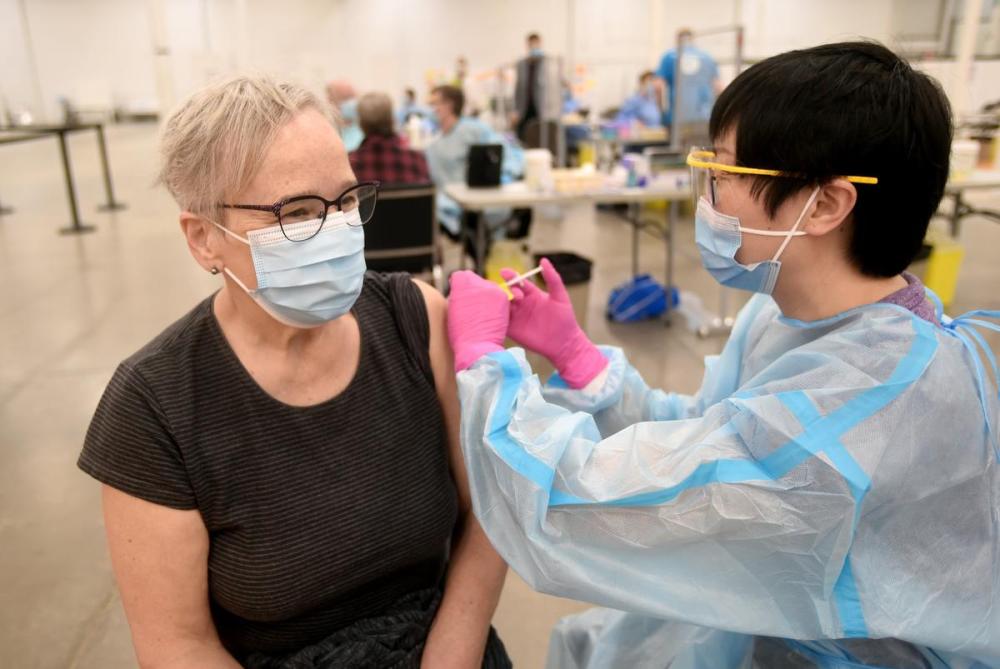
It’s confusing, but it’s the kind of confusion we’ve become used to over the past year. Governments are constantly changing the rules, opening up when the pandemic pulls back, then shutting down (always too late) when it snaps back with a vengeance.
But other types of confusion are more serious, especially if they threaten to undermine confidence in the only proven weapon against the pandemic — vaccines. And that’s the case in the increasingly sharp disagreement among experts on the wisdom of stretching out the period between first and second doses to as long as four months.
This is no small detail; getting as many people as possible vaccinated with their first shot as quickly as possible is key to the inoculation strategy in most provinces. It means limited supplies can be stretched much further. It’s the reason why many Canadians are getting a shot sooner than they had expected, and the national mood has brightened considerably despite the third wave upsurge.
Which all sounds fine, except that the reasoning underlying the first-dose strategy is being called into question by a succession of studies that suggest delaying a second shot of vaccine for months may be exposing some vulnerable groups — the elderly and cancer patients, for example — to a heightened risk of getting COVID-19.
Worse, there’s rising suspicion in some quarters that the “first dose first” strategy is just a bit too convenient for a government under intense criticism for the initial slow delivery of vaccine doses. The accusation is that corners are being cut and scientific evidence put aside in order to get more people vaccinated.
To be clear, there’s no evidence of any political manipulation. The first-dose strategy was approved in early March by the federal National Advisory Committee on Immunization (NACI), an arms-length group of experts, and adopted by many provinces, including Ontario.
But it’s also true that vaccine suppliers still recommend second shots only three weeks after the first one (Pfizer) and four weeks (Moderna). Not as long as four months.

It’s true that NACI explicitly said it was recommending a longer delay “in the context of limited COVID-19 vaccine supply” (i.e. not because of new studies). And it’s true that Ottawa’s own chief science adviser, Dr. Mona Nemer, disagrees with the recommendation and calls it a “population-level experiment.”
All that is contributing to mistrust about provincial vaccine programs, mistrust fed in recent days by studies from Britain, Denmark and Germany suggesting that various groups, including elderly nursing home residents and cancer patients, are at greater risk if their second dose is delayed beyond the limits set by the drug companies.
Now NACI says it’s having second thoughts, or at least new thoughts, about its recommendation on first doses. It says more evidence is becoming available and it may issue new advice. Some experts suggest it should urge quicker second shots, at least for those most vulnerable.
Remember, this is the same advisory group that first said the AstraZeneca vaccine shouldn’t be given to people over 65, only to quickly reverse course on that crucial point. Provincial vaccination plans were thrown for a loop.
Medical experts and public health authorities need to get on the same page quickly on the first-dose issue. They need to make clear that their advice is truly based on science, not on what’s most convenient for governments. Confusion on such a basic point will only undermine public confidence.